PVC tarpaulin is a heavy-duty, waterproof fabric made by coating woven polyester scrim with polyvinyl chloride (PVC) resin. It lasts 5 to 10 years in outdoor conditions and outperforms polyethylene alternatives in strength, weather resistance, and weldability. For buyers in agriculture, construction, and logistics, choosing the right grade of PVC tarpaulin can mean the difference between reliable long-term protection and costly replacements.
Most buyers make the same mistake. They look at price per square meter and pick the cheapest option. Six months later, they are replacing torn covers, dealing with leaks, or watching UV damage turn their investment into scrap. The real cost of a tarpaulin is not what you pay upfront. It is what you spend over its entire lifespan.
In this guide, you will learn exactly what PVC tarpaulin is, how it is manufactured, and which specifications match your application. For a broader overview of all tarpaulin types and grades, see our complete tarpaulin guide. You will get a clear framework for comparing grades, understanding technical data sheets, and calculating total cost of ownership. By the end, you will know precisely which PVC tarpaulin to order and why.
Key Takeaways
- PVC tarpaulin lasts 3 to 5 times longer than PE tarpaulin, with a typical service life of 5 to 10 years depending on grade and exposure.
- GSM (grams per square meter) is the single most useful metric for selecting the right grade: 500 to 650 GSM for general use, 700 to 900 GSM for industrial applications, and 1000+ GSM for membrane structures.
- The three coating methods — knife coating, hot-melt calendering, and cold lamination — produce different performance levels at different price points.
- Quality PVC tarpaulin achieves over 200 kPa hydrostatic pressure, remains flexible to -30 degrees Celsius, and can be welded for leak-proof seams.
- Total cost of ownership often favors PVC over PE for any application lasting more than 2 years, despite the higher initial price.
What Is PVC Tarpaulin?
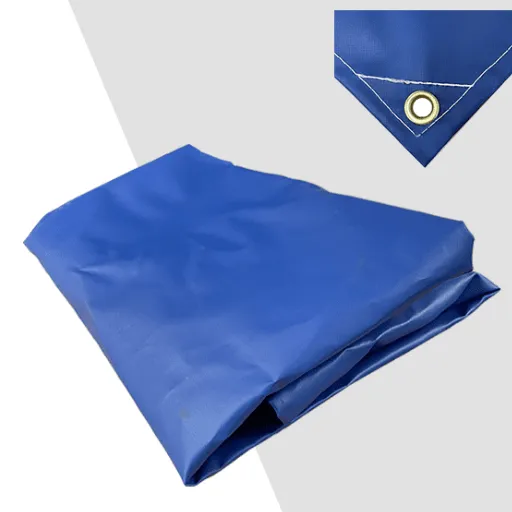
PVC tarpaulin is a composite material. At its core is a woven polyester scrim — a grid of high-tenacity polyester yarns that provides structural strength and tear resistance. This scrim is saturated or laminated with layers of PVC resin, plasticizers, stabilizers, and functional additives. The result is a flexible, waterproof sheet that withstands extreme weather, chemical exposure, and mechanical stress.
The polyester base typically uses yarns rated at 500D, 1000D, or 2000D denier. Higher denier means thicker, stronger fibers. The weave density — measured in threads per inch — also matters. A 20-by-20 weave offers more structural integrity than a 9-by-9 weave. The PVC coating then bonds to this fabric, filling gaps and creating a continuous waterproof barrier. Looking for dependable PVC tarpaulin products for transportation, construction, or agricultural use? Linyi Chenlai Plastic Products Co., Ltd. is ready to provide tailored manufacturing solutions for your business.
How PVC Tarpaulin Differs from PE Tarpaulin
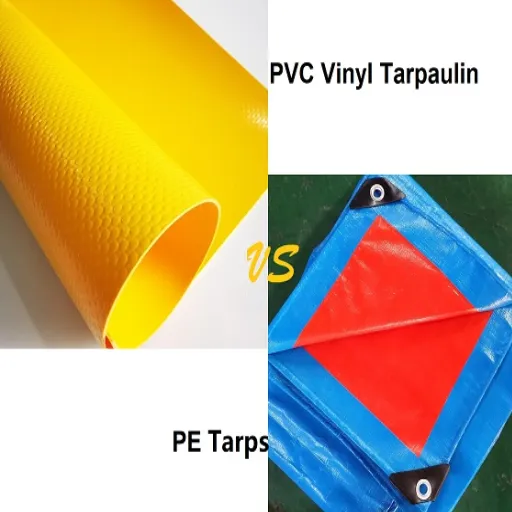
Buyers often confuse PVC tarpaulin with PE (polyethylene) tarpaulin. The differences are significant. PVC tarpaulin uses a polyester scrim base with PVC coating, while PE tarpaulin uses a woven HDPE base with LDPE film lamination. PVC weighs 400 to 1,200 GSM. PE weighs 50 to 350 GSM. PVC lasts 5 to 10 years. PE lasts 1 to 3 years.
The most important functional difference is weldability. PVC can be high-frequency welded or hot-air welded, creating seams as strong as the base material. PE cannot be welded. Seams must be sewn or taped, creating weak points where water and stress concentrate. For any application where seam integrity matters — truck covers, pond liners, inflatable structures — PVC is the only sensible choice.
Temperature performance is another clear divider. Standard PVC tarpaulin remains flexible to -20 degrees Celsius, with specialized cold-flex grades rated to -30 degrees Celsius or lower. PE becomes brittle below -15 degrees Celsius, risking cracks and edge failure in cold climates.
When should you choose PE instead? For short-term applications under 12 months, temporary emergency coverage, or situations where lowest upfront cost is the only priority. For everything else, PVC tarpaulin delivers lower total cost of ownership. Looking for dependable PVC tarpaulin products for transportation, construction, or agricultural use? Linyi Chenlai Plastic Products Co., Ltd. is ready to provide tailored manufacturing solutions for your business.
How PVC Tarpaulin Is Manufactured
Understanding PVC tarpaulin manufacturing helps buyers evaluate quality and match specifications to needs. The manufacturing process has three main stages: scrim weaving, PVC coating, and post-production finishing.
Stage 1: Polyester Scrim Weaving
The process begins with high-tenacity polyester yarns. These yarns are woven into a scrim using either plain weave or ripstop patterns. Plain weave creates a simple over-under structure. Ripstop incorporates thicker reinforcement threads at intervals, preventing tears from spreading. For heavy-duty PVC tarpaulin, manufacturers typically use 1000D by 1000D yarn with densities of 20 by 20 or 30 by 30 threads per square inch.
Stage 2: PVC Coating
Three coating methods produce different quality levels.
Knife coating delivers the highest quality. Liquid PVC resin saturates the polyester scrim. Precision knives scrape off excess material, leaving a uniform coating thickness. The coated fabric then passes through a high-temperature dryer that fuses the PVC to the scrim. Knife-coated PVC tarpaulin offers superior peel strength, the longest outdoor durability, and compatibility with advanced topcoats like PVDF for self-cleaning surfaces. This is the method used for premium truck covers, industrial tents, and architectural membranes.
Hot-melt calendering is the most popular method for mid-range products. Pre-made PVC films are laminated to adhesive-pre-treated scrim under high heat and pressure. The result is near knife-coating quality at a lower cost. Hot-melt calendered PVC tarpaulin sheet is widely used for flex banners, inflatable products, and swimming pool liners. Production widths can reach 5.1 meters, making this method ideal for large-format applications.
Cold lamination is the most economical option. PVC films bond to scrim using pressure and adhesive without high heat. Production speed is high and running costs are low. However, bond strength is weaker and lifespan is shorter. Cold-laminated products suit light-duty tarps, PVC bags, and short-term agricultural covers.
Stage 3: Quality Control and Finishing
After coating, every roll undergoes inspection. Manufacturers check for pinholes, uneven coating, and adhesion defects. Accepted rolls move to finishing, where they may receive surface treatments, edge trimming, embossing, or grommet installation. Flame retardants, UV stabilizers, and anti-mildew agents are added during the PVC formulation stage, not as afterthoughts.
At Linyi Chenlai Plastic Products Co., Ltd., our tarpaulin factory uses advanced quality control at every stage. Rigorous testing ensures each batch meets exacting standards for tensile strength, waterproofing, and dimensional stability. Each production run is documented with full traceability from raw material batch to finished roll.
PVC Tarpaulin Specifications by Grade
GSM — grams per square meter — is the most reliable indicator of PVC tarpaulin performance. Higher GSM means more material, which translates directly to greater strength, durability, and weather resistance. Here is how the grades break down.
Specification Comparison by Grade
| Grade | GSM | Thickness | Tensile Strength | Tear Strength | Temp Range | Best Applications |
|---|---|---|---|---|---|---|
| Light duty | 300 to 450 | 0.2 to 0.35 mm | 1,500 to 2,000 N/5cm | 250 to 350 N | -10 to +60 degrees C | Temporary covers, light cargo, indoor use |
| Medium duty | 500 to 650 | 0.35 to 0.55 mm | 2,500 to 3,000 N/5cm | 350 to 500 N | -20 to +70 degrees C | Truck tarps, construction covers, general outdoor |
| Heavy duty | 700 to 900 | 0.6 to 0.8 mm | 2,800 to 4,000 N/5cm | 500 to 700 N | -30 to +70 degrees C | Industrial curtains, marine, roofing, event tents |
| Extra heavy duty | 1000+ | 0.8 to 1.5 mm | 4,000 to 7,500 N/5cm | 700+ N | -40 to +80 degrees C | Membrane structures, air domes, permanent installations |
These figures represent typical ranges for quality PVC tarpaulin. Budget products may fall below these thresholds. Premium products may exceed them. Heavy-duty PVC tarpaulin at 700+ GSM handles the toughest industrial and marine environments where failure is not an option. Always request a technical data sheet from your supplier and verify values against your application requirements.
How to Read a Technical Data Sheet
Understanding PVC tarpaulin specifications on a technical data sheet is essential for comparing grades. Tensile strength measures resistance to pulling forces, reported in Newtons per 5 centimeters (N/5cm) or megapascals (MPa). Tear strength measures resistance to rip propagation. Adhesion or peel strength measures how well the PVC coating bonds to the polyester scrim. Hydrostatic pressure measures waterproofing performance in kilopascals (kPa) or millimeters of water column (mmH2O). Quality PVC tarpaulin exceeds 200 kPa or 3,000 mmH2O.
Common test standards include DIN 53354 for tensile strength, DIN 53356 for tear strength, ASTM D5035 as an alternative tensile standard, and ISO 527 for international tensile testing. Organizations like ASTM International and ISO maintain these standards. A reputable supplier should provide test reports citing specific standards, not vague claims.
When Raj Patel, a procurement manager for a mid-sized logistics company in Mumbai, first ordered PVC tarpaulin for his fleet, he requested quotes from three suppliers. Two sent glossy brochures. Only one sent actual technical data sheets with test results. That supplier’s 650 GSM product showed 2,800 N/5cm tensile strength and 4,200 mmH2O hydrostatic pressure — well above the minimums for his application. Two years later, those truck covers are still performing. The competitor’s products, bought by a colleague at a lower price, were replaced within 14 months. The data sheet made the difference. At Linyi Chenlai Plastic Products Co., Ltd., we manufacture premium PVC tarpaulins that combine waterproof protection, flexibility, and long-lasting durability. Reach out today for customized support.
Key Properties and Performance
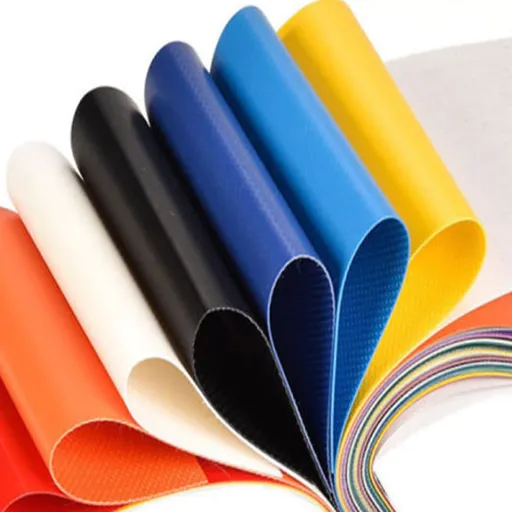
Beyond raw specifications, understanding how PVC tarpaulin performs in real conditions helps buyers make informed decisions. Here are the properties that matter most.
Waterproof PVC Tarpaulin Performance
Waterproof PVC tarpaulin creates a fully waterproof barrier, not merely water-resistant. The dense PVC coating creates a continuous barrier. When seams are welded using hot-air or high-frequency welding, the result is a leak-proof joint. This matters for pond liners, cargo covers, and any application where moisture intrusion causes damage. By contrast, PE tarpaulin is water-resistant at 25 to 60 kPa hydrostatic pressure. PVC achieves over 200 kPa. That is the difference between a light shower and a monsoon.
UV Resistance
Outdoor PVC tarpaulin includes UV stabilizers — typically hindered amine light stabilizers, or HALS — that absorb and dissipate ultraviolet radiation. Quality grades maintain over 70 percent of their original tensile strength after 3 to 5 years of continuous sun exposure. Lower-grade products may degrade significantly faster. For tropical and desert climates, specifying UV-stabilized PVC tarpaulin is not optional. It is essential.
Cold Weather Performance
Standard PVC tarpaulin formulations remain flexible to -20 degrees Celsius. Specialized cold-flex grades, using modified plasticizers, perform to -30 degrees Celsius or lower. This flexibility prevents cracking during installation and use in freezing conditions. PE tarpaulin becomes brittle below -15 degrees Celsius, making PVC the clear choice for cold-climate agriculture, winter construction, and logistics in northern regions.
Flame Retardancy
For construction sites, event venues, and industrial facilities, fire safety is non-negotiable. PVC tarpaulin can be formulated to meet major fire safety standards including NFPA 701 for the United States, EN 13501-1 and DIN 4102 B1 for Europe, and GB 8624 B1 for China. These certifications require testing by accredited laboratories. Always request certification documentation for flame-retardant grades. Untreated PE tarpaulin melts at low temperatures with flaming drips, creating serious safety hazards.
Chemical Resistance
PVC tarpaulin resists oils, acids, solvents, ammonia, and most agricultural chemicals. This makes it ideal for industrial spill containment, fuel transfer covers, and farm environments where fertilizer and pesticide exposure is constant. PE offers limited chemical resistance, breaking down when exposed to hydrocarbons and strong solvents.
PVC Tarpaulin Uses by Industry
Different industries demand different specifications. Matching the right PVC tarpaulin grade to the application ensures optimal performance and value.
Agriculture
Farmers use PVC tarpaulin for crop protection covers, greenhouse glazing, livestock shelter roofing, hay and grain storage, pond liners, and farm equipment covers. The material’s UV resistance prevents degradation under constant sun. Anti-mildew additives protect against humid conditions. For most agricultural applications, 500 to 750 GSM provides the right balance of durability and handling weight. Learn more about agricultural tarpaulin solutions.
Construction
Construction sites demand the most from PVC tarpaulin. Scaffolding enclosures must withstand wind and debris. Temporary roofing must shed heavy rain for weeks or months. Debris containment screens protect workers and the public. Material storage covers keep lumber, steel, and concrete dry. Most construction applications require 650 to 900 GSM with fire-retardant certification. Reinforced edges and welded seams are critical for safety and performance. Explore construction-grade tarpaulin options.
Transportation and Logistics
Truck and trailer covers are among the most common uses for PVC tarpaulin. The material must resist wind at highway speeds, shed rain during loading and transit, and endure constant tension from tie-downs. Side-curtain trucks use lighter 500 to 650 GSM materials. Flatbed covers and container liners use 650 to 750 GSM for maximum protection. Welded seams prevent leaks at joints. Grommets spaced every 30 to 50 centimeters allow secure fastening.
Industrial and Commercial
Industrial curtains divide warehouse spaces. Welding screens protect workers from arc flash. Equipment covers shield machinery from dust and moisture. Event tents and inflatable structures rely on PVC tarpaulin for structural integrity and weather protection. These applications typically require 700 to 1000+ GSM, depending on span and load requirements.
How to Choose the Right PVC Tarpaulin
Selecting the correct PVC tarpaulin grade does not require an engineering degree. It requires answering five straightforward questions.
Step 1: Define Your Application
What are you covering? For how long? Under what conditions? A temporary construction cover for three months has different requirements than a permanent warehouse curtain. Be specific about dimensions, attachment methods, and exposure to wind, rain, sun, and chemicals.
Step 2: Assess Climate and Environment
Climate dictates critical specifications. Tropical and humid environments need anti-mildew treatment and strong UV stabilization. Arctic conditions demand cold-flex grades rated to -30 degrees Celsius or below. Coastal areas require enhanced salt resistance. Desert environments need maximum UV ratings and light colors to reflect heat. Chemical exposure requires verifying compatibility with the specific substances involved.
Step 3: Determine Required Lifespan
If you need coverage for under 2 years, PE tarpaulin may offer lower total cost despite more frequent replacement. For 2 to 5 years, medium-duty PVC tarpaulin at 500 to 650 GSM is typically the sweet spot. For 5 to 10+ years, heavy-duty or extra heavy-duty PVC tarpaulin is the only economical choice.
Step 4: Check Regulatory Requirements
Construction sites, public events, and certain industrial applications may require fire-retardant certification. Transportation across borders may require REACH compliance for European markets. Always verify regulatory requirements before ordering.
Step 5: Match to Grade and Supplier
Use the specification table above to match your requirements to a GSM grade. Then evaluate suppliers on three criteria: can they provide verified technical data sheets? Do they offer the customization you need? Can they deliver on your timeline?
When Elena Voss took over procurement for a German construction firm expanding into Poland, she faced a typical dilemma. Her predecessor had always ordered the cheapest covers available — 450 GSM PE tarps at roughly 1.20 euros per square meter. They lasted one season. Elena calculated total cost of ownership: purchase, installation labor, replacement, and disposal over five years. The PE route cost 8.50 euros per square meter over the lifecycle. A 750 GSM PVC tarpaulin at 4.80 euros upfront would last the full five years with minimal maintenance. Total cost: 4.80 euros per square meter. She switched to PVC and cut her covering costs by 43 percent.
Need help matching specifications to your project? Our team at Linyi Chenlai Plastic Products Co., Ltd. can review your requirements and recommend the exact grade, finish, and features for your application. Get a free specification consultation.
PVC Tarpaulin Maintenance and Longevity
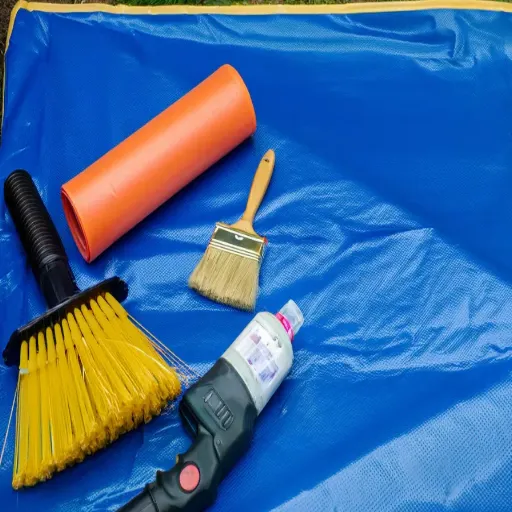
Proper maintenance extends PVC tarpaulin lifespan significantly. Neglect cuts it short. The difference is simple habits.
Cleaning
Clean PVC tarpaulin with pH-neutral soap and water. Use a soft brush for stubborn dirt. Rinse with low-pressure water — under 100 bar pressure to avoid damaging the coating. Avoid solvents, abrasive cleaners, and high-pressure washers aimed directly at seams. Clean monthly in dusty or polluted environments. Clean quarterly in normal conditions.
Storage
Always dry PVC tarpaulin completely before rolling for storage. Wet storage breeds mildew, even on treated material. Roll loosely around a core with minimum 100 millimeter diameter. Avoid sharp folds that create stress points. Store in a cool, dry place away from direct sunlight and chemicals. Never store near heat sources or petroleum products, which can degrade PVC.
Inspection
Inspect monthly during active use. Check for punctures, frayed edges, loose grommets, and seam separation. Repair small punctures promptly with PVC patch kits. Replace grommets that show corrosion or loosening. Address minor issues before they become major failures. A 10-minute repair can prevent a complete replacement.
Environmental Considerations
Sustainability matters to modern buyers. PVC tarpaulin carries environmental considerations that informed buyers should understand.
REACH and RoHS Compliance
Quality PVC tarpaulin for European markets meets REACH regulations, ensuring controlled use of hazardous substances. RoHS compliance restricts specific toxic materials in the manufacturing process. Reputable manufacturers provide certification for both. These standards protect end users and the environment without compromising product performance.
Phthalate-Free Plasticizers
Traditional PVC plasticizers like DOP have raised health and environmental concerns. Modern formulations use alternatives like DINP and DOTP, which offer comparable flexibility with improved safety profiles. Many buyers now specify phthalate-free PVC tarpaulin, particularly for applications involving food contact, children’s products, or sensitive environments.
Recyclability and End of Life
PVC is technically recyclable, though infrastructure varies by region. Some manufacturers now offer recycled-content PVC tarpaulin. Bio-based plasticizers are emerging, though they currently represent a small share of the market. The EU Green Deal and similar initiatives worldwide are accelerating development of more sustainable PVC formulations.
The most significant environmental advantage of PVC tarpaulin is longevity. A product that lasts 10 years replaces five products that last 2 years. Fewer replacements mean less manufacturing energy, less transportation, and less landfill waste. From a lifecycle perspective, durable PVC often has a lower environmental impact than cheaper, disposable alternatives. Market analysis from Future Market Insights confirms that demand for long-life protective materials continues to grow across all major regions.
Frequently Asked Questions
How Long Does PVC Tarpaulin Last?
Quality PVC tarpaulin lasts 5 to 10 years in outdoor conditions. Light-duty grades at 300 to 450 GSM may last 3 to 5 years. Heavy-duty grades at 700+ GSM can exceed 10 years with proper maintenance. Lifespan depends on UV exposure, climate, mechanical stress, and maintenance frequency.
Is PVC Tarpaulin Better Than PE Tarpaulin?
For applications lasting more than 2 years, yes. PVC tarpaulin outlasts PE tarpaulin 3 to 5 times over, offers superior waterproofing (over 200 kPa vs. 25 to 60 kPa), can be welded for leak-proof seams, and remains flexible in cold weather down to -30 degrees Celsius. PE tarpaulin is lighter and cheaper upfront but requires frequent replacement.
What GSM PVC Tarpaulin Do I Need?
Choose GSM based on application stress:
- 300 to 450 GSM: Temporary covers, light indoor use
- 500 to 650 GSM: Truck tarps, general construction, agriculture
- 700 to 900 GSM: Industrial curtains, marine, roofing, event tents
- 1000+ GSM: Permanent membrane structures, air domes
Can PVC Tarpaulin Be Welded?
Yes. PVC tarpaulin can be welded using hot-air welding or high-frequency (RF) welding. Hot-air welding achieves 90 to 100 percent of the parent material strength. RF welding at 27 MHz creates seamless joints ideal for inflatables and tension structures. PE tarpaulin cannot be welded.
Is PVC Tarpaulin Fire Retardant?
PVC tarpaulin can be formulated to meet fire safety standards including NFPA 701, EN 13501-1, DIN 4102 B1, and GB 8624 B1. Fire-retardant grades are essential for construction sites, event venues, and industrial facilities. Always request certification documentation from your supplier.
How Do I Clean and Maintain PVC Tarpaulin?
Clean with pH-neutral soap and water using a soft brush. Rinse with low-pressure water under 100 bar. Dry completely before storage. Roll loosely around a minimum 100 mm core. Store in a cool, dry place away from direct sunlight and chemicals. Inspect monthly during active use.
Contact Linyi Chenlai Plastic Products Co., Ltd. to explore high-strength PVC tarpaulin solutions designed for demanding outdoor and industrial environments.
Conclusion
PVC tarpaulin is one of the most versatile and cost-effective protective materials available to industry today. Its combination of waterproofing, UV resistance, chemical resistance, and weldability makes it indispensable across agriculture, construction, transportation, and industrial applications.
The five key takeaways for selecting PVC tarpaulin are simple. Match GSM to application stress. Verify technical specifications with data sheets, not marketing claims. Consider climate, regulatory requirements, and total cost of ownership. Inspect and maintain the material regularly. Choose a supplier who provides transparency, customization, and consistent quality.
At Linyi Chenlai Plastic Products Co., Ltd., we manufacture PVC tarpaulin roll and finished products in grades from 300 to 1200 GSM. Our waterproof tarpaulin meets international standards for tensile strength, hydrostatic pressure, and fire safety. We offer custom sizes, colors, grommet placement, reinforced edges, and logo printing to match your exact specifications.
Ready to protect your assets with the right PVC tarpaulin? Request a free quote today and our team will recommend the exact grade and features for your project.