Custom color tarpaulin is PVC- or PE-coated fabric manufactured to a precise color reference beyond standard stock colors. Color matching is typically performed against Pantone, RAL, or physical samples. For procurement managers and engineers, color is not a cosmetic afterthought. It governs thermal load, UV lifespan, site safety, and brand consistency across fleets, structures, and equipment.
Most buyers specify dimensions, GSM, and coating before they think about color. That sequence is understandable, but it can create problems. A dark green tarpaulin installed on a scaffold in Phoenix will behave differently from the same fabric in Oslo. A fleet operator who orders corporate-blue side curtains without a retained sample may find the next batch drifts toward navy. Color choice is inseparable from performance, and performance is what your operation depends on.
In this guide, you will learn how custom color matching works for PVC-coated fabrics, why color affects thermal and UV behavior, and how to specify color in an RFQ so your supplier delivers exactly what you approved. We will also cover the quality controls that separate a reliable supply chain partner from a one-time vendor.
Key Takeaways
- Custom color tarpaulin is matched to Pantone, RAL, or physical samples and requires a dedicated dye batch, which raises MOQ and lead time compared with stock colors.
- Light colors reflect heat and UV, extending service life in sunny climates; dark colors absorb heat, which can accelerate coating degradation unless UV stabilizer loading is increased.
- Lightfastness ratings (ISO 105-B02, grade 6–8) predict how well a pigment resists fading; colorant choice must be verified alongside base fabric and coating specifications.
- Batch consistency depends on retained samples, Delta E tolerance, and in-line color monitoring during coating.
- A complete RFQ should state the color reference, expected UV exposure, acceptable tolerance, GSM, coating type, and required certifications such as NFPA 701 or REACH/RoHS.
What Is Custom Color Tarpaulin?
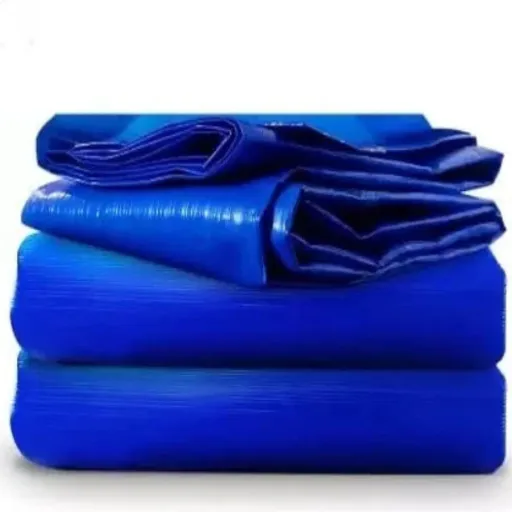
Custom color tarpaulin is engineered fabric produced to a buyer-specific color rather than a manufacturer’s standard stock palette. The base is usually PVC-coated polyester or PE-laminated woven material, and the color is introduced through a masterbatch or coating paste blended to match a reference.
Standard stock colors, including blue, green, black, white, gray, red, yellow, beige, and orange, are pre-formulated and produced in volume. They ship faster and cost less because the manufacturer does not need to stop production to create a new color batch. Custom colored tarpaulin, by contrast, requires a separate pigment formulation, lab dip approval, and often a minimum order quantity.
The three most common color-reference systems are:
- Pantone Matching System (PMS): A universal color language used heavily in branding and corporate identity work.
- RAL Classic: A European standard common in architectural, industrial, and safety applications.
- Physical sample: A swatch, fabric remnant, or object supplied by the buyer for visual matching.
Each system has strengths. Pantone codes work well for fleet graphics and OEM products where brand consistency matters. RAL is practical when the tarpaulin must coordinate with painted steel, architectural membranes, or safety equipment. Physical samples remove ambiguity but require careful handling because lighting, texture, and nearby colors can shift perception.
Why Custom Color Tarpaulin Performance Goes Beyond Aesthetics
Color influences how a custom color tarpaulin performs in the field. The effect is measurable in thermal load, UV exposure, visibility, and brand compliance.
Heat Absorption and Thermal Load
Dark pigments absorb a larger share of the solar spectrum. A black or dark green PVC tarpaulin in direct sun can reach surface temperatures 20–40°C above ambient, while a white or silver equivalent stays much closer to air temperature. That heat transfers into the coating, the polyester base, and whatever the fabric covers.
For cargo covers, excessive heat can damage temperature-sensitive goods or increase refrigeration load. For PVC tarpaulin truck side curtains, thermal cycling stresses seams and welded joints. For temporary roofing or event tents, a dark canopy turns the enclosed space into a greenhouse. In hot climates, light colors are usually the better engineering choice.
Dark colors are not without value. In cold climates, heat absorption helps shed snow and ice and can protect equipment from freezing. The point is not that one color is universally superior; it is that color should be selected for the operational environment, not only for appearance.
UV Resistance and Fade Behavior
UV radiation degrades polymers. The rate depends on the pigment, the UV stabilizer package, and the coating chemistry. Lightfastness testing under ISO 105-B02 assigns a grade from 1 to 8, where grade 6–8 is preferred for outdoor PVC tarpaulins.
Light colors such as white, silver, and beige reflect UV and generally exhibit slower visible fading. Dark and bright colors, especially red, yellow, and orange, can fade more noticeably because the pigment molecules absorb higher-energy photons. To compensate, dark formulations often require higher loadings of UV absorbers and hindered-amine light stabilizers (HALS).
A technically sound supplier will state the lightfastness rating for the proposed pigment, not just claim “UV resistant,” when quoting custom color tarpaulin. Ask for the test report. If a supplier cannot provide it, the color performance is an assumption.
Visibility and Safety Compliance
On construction sites, in traffic control, or around hazardous equipment, color is a safety signal. High-visibility orange, yellow, and lime green improve detection distance and reduce incident risk. In Europe, safety colors often reference EN ISO 20471. In North America, ANSI/ISEA 107 governs high-visibility apparel, and similar principles apply to site coverings and barriers.
When safety is the primary driver, color selection should be documented in the project specification. A shade that looks “close enough” in the office may fail to meet the required luminance and chromaticity values on site.
Branding and Corporate Identity
Fleet operators, equipment manufacturers, and event companies often treat color as a brand asset. A logistics provider whose trailers are matched to a corporate blue cannot accept variance between orders. An OEM that integrates custom colored tarpaulin into finished products needs the same hue across production years.
In these cases, color becomes a procurement requirement with tolerance limits. The buyer and supplier must agree on a reference, a measurement method, and an acceptable Delta E, the numerical distance between the target color and the production sample.
Standard vs. Custom Color Tarpaulin: What Buyers Should Know
Stock Colors
Stock colors are pre-formulated and kept in regular production. They offer shorter lead times, lower MOQs, and predictable pricing. For many industrial applications, a standard blue, gray, or green is functionally adequate.
When Custom Matching Is Necessary
Custom color tarpaulin matching is justified when:
- Corporate or fleet branding requires a specific hue.
- The tarpaulin must match architectural elements, painted steel, or existing equipment.
- Safety standards mandate a precise high-visibility shade.
- The product is sold under a private label with established color expectations.
- The buyer needs color consistency across multiple orders over time.
| Factor | Stock Colors | Custom Color Tarpaulin |
|---|---|---|
| Lead time | Days | 1–3 weeks after lab dip approval |
| MOQ | Low | 1,000–5,000 m² for PVC; ~2 tons for PE |
| Color range | Limited standard palette | Matched to Pantone, RAL, or sample |
| Cost | Base price | +10–20% plus lab dip cost |
| Best for | Generic industrial use | Branding, safety, OEM, long-term consistency |
Cost and Lead-Time Implications
Custom colors typically add 10–20% to the base material cost and extend lead time by several days to two weeks. The exact impact depends on order volume, color complexity, and whether the supplier already stocks a close base pigment for custom color tarpaulin orders.
Standard custom color MOQs for PVC-coated fabric often fall between 1,000 and 5,000 square meters, or roughly 2 tons for PE-based materials. Trial orders may be possible at lower volumes, but the per-unit cost rises. Lab dips and approved samples usually require 7–14 days before production begins.
Need a precise color match for your next project? Work with a custom tarpaulin manufacturer that supports Pantone, RAL, and sample-based matching. We will confirm feasibility, MOQ, and lead time for your specification.
PVC Tarpaulin Color Matching: How the Process Works
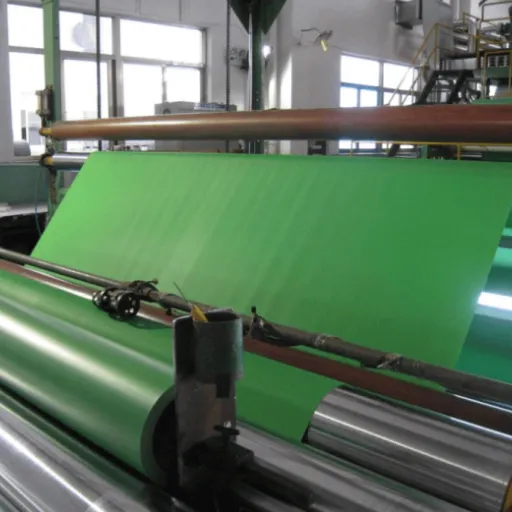
The color-matching process follows a clear sequence. Understanding each step helps buyers set realistic expectations and evaluate supplier capability.
Step 1: Reference Submission
The buyer submits a Pantone tarpaulin color code, RAL code, or physical sample. For printed tarpaulins, vector artwork in AI, EPS, or PDF format at 300 dpi or higher is also required to position logos or graphics accurately. The supplier uses this reference to formulate a color paste or masterbatch.
Step 2: Lab Dip and Color Approval
The supplier produces a small lab dip, a hand-sized sample coated with the proposed formulation. The buyer evaluates the sample under standardized lighting, typically D65 daylight, to avoid the color shifts that occur under warm office lighting or cool warehouse LEDs.
Color tolerance is expressed as Delta E. A Delta E below 1.0 is generally indistinguishable to the human eye. Values between 1.0 and 2.0 are acceptable for most industrial work. Above 2.0, the difference becomes visible and may be rejected for brand-critical applications.
Step 3: Masterbatch Integration
Once approved, the color masterbatch is blended into the PVC paste or PE coating at a controlled ratio. Pigment dispersion matters. Poor dispersion creates streaks, specks, and variation across the roll. Quality manufacturers use high-shear mixing. They also filter the paste before coating to remove undispersed pigment agglomerates. Learn more about how laminated fabric layers interact with coatings to understand why adhesion and coating uniformity affect both color and durability.
Step 4: Production and Quality Verification
During coating of custom color tarpaulin, in-line color monitoring checks the film for uniformity across the web. After coating, the fabric is tested for the same mechanical properties required of any industrial tarpaulin: tensile strength, tear resistance, adhesion, and seam integrity. UV and lightfastness testing may also be performed, depending on the specification.
A retained sample from the approved production batch should be kept by both supplier and buyer. That sample becomes the reference for future orders and removes disputes about whether a later batch has drifted.
Color Selection by Application
Choosing the right custom color tarpaulin for an application means balancing thermal performance, UV exposure, safety requirements, and brand consistency.
Transportation and Logistics
Fleet colors and corporate identity drive many transport applications. Neutral colors such as gray, black, and beige are popular for resale and lease fleets because they show less road grime. High-visibility accents in orange or yellow improve safety around loading bays and curtain-sider trailers.
For PVC tarpaulin truck side curtains, light colors can reduce interior temperature during summer routes, while darker colors may be preferred in cold-climate operations. The choice should be documented in the fleet specification so replacement curtains match over the vehicle’s service life.
Construction and Infrastructure
Construction sites favor high-visibility orange, yellow, and lime green for scaffolding wraps, debris netting, and hazard barriers. Neutral gray and black are common for dust control, temporary roofing, and equipment covers where aesthetics and dirt concealment matter.
When a scaffold sheeting color is selected for safety, verify that the pigment meets the relevant high-visibility standard. A color that merely “looks bright” may not deliver the required daytime conspicuity.
Agriculture and Aquaculture
In agriculture, white and silver reflect heat and reduce thermal stress on crops, livestock, and stored materials. Green is used where light diffusion or blending with the environment is desired. For pond liners and tank covers, custom color tarpaulin in dark colors such as black reduces algae growth by limiting light penetration.
Aquaculture applications often specify black or dark gray for fish farming tarpaulin because those colors limit light transmission and resist UV degradation in constant sun-and-water exposure.
Events, Tents, and Architectural Membranes
White dominates event tents and temporary structures because it reflects heat and provides a neutral canvas for lighting. Blackout tarpaulin is specified where complete light blocking is required, such as exhibition halls, grow rooms, or photographic dark spaces. Brand-matched corporate event structures require precise Pantone or RAL matching across all fabric panels.
Industrial Equipment and Machinery Covers
Gray, black, and beige are standard for machinery covers, generator wraps, and industrial curtains. These colors convey a professional appearance and hide dust, oil, and abrasion. For outdoor storage, industrial tarpaulin color selection should favor UV-stabilized light gray or silver over black to extend cover life.
How to Specify Custom Color Tarpaulin in Your RFQ
A complete RFQ removes ambiguity and reduces rework. Include the following:
- Color reference system and code: State Pantone, RAL, or describe the physical sample being sent.
- Application and environment: Describe where the tarpaulin will be used, including sun exposure, temperature range, and chemical contact.
- Acceptable color tolerance: Define Delta E limits or require supplier confirmation.
- Retained sample request: Ask that a production sample be retained for future orders.
- Lightfastness and UV stabilizer requirements: Reference ISO 105-B02 grade 6–8 for demanding outdoor use.
- Base fabric and coating specifications: Include GSM, tensile strength, tear resistance, coating type, and flame-retardant needs such as NFPA 701. Before finalizing color, confirm the base fabric and coating match the application. Our waterproof tarp material guide explains how GSM, coating chemistry, and waterproof ratings interact with long-term outdoor exposure.
- Certifications: Specify REACH, RoHS, or other environmental and safety compliance requirements.
When Elena, a procurement manager for a European logistics fleet, added a retained-sample clause and a Delta E limit of 1.5 to her RFQ, she eliminated the color-drift problems that had plagued her previous supplier. Her next three orders arrived within tolerance. Her trailers maintained a consistent corporate identity across depots in three countries.
Quality Checklist for Custom Color Orders
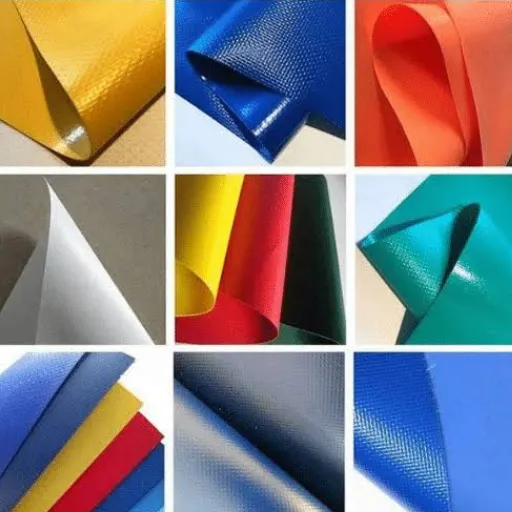
Before approving production of your custom color tarpaulin, confirm the supplier can demonstrate:
- Lab dip approval: A physical sample approved under standard lighting before mass production.
- Color consistency across the roll: No visible banding, streaking, or edge-to-center variation.
- Lightfastness test report: ISO 105-B02 rating matched to the intended environment.
- Batch-to-batch tolerance documentation: How the supplier controls Delta E across repeat orders.
- Retained sample policy: A reference sample kept for future production matching.
- Compliance confirmation: Certificates for NFPA 701, REACH, RoHS, or other applicable standards.
A supplier who treats these items as standard practice is operating as a supply chain partner. A supplier who resists them is treating color matching as a guess.
Download our custom tarpaulin specification checklist to capture color, GSM, coating, and certification requirements in one RFQ-ready document. Request the checklist from our engineering team.
Frequently Asked Questions
What is the best color for long-term outdoor custom color tarpaulin use?
Silver, white, and light gray generally last longest in sunny climates because they reflect UV and reduce heat buildup. The exact answer depends on the coating quality and UV stabilizer package, not color alone.
Can you match any Pantone tarpaulin color or RAL shade?
Most colors can be matched closely, but not all. Neon, metallic, and extremely saturated shades may fall outside the achievable range of PVC or PE pigments. A lab dip confirms feasibility before production.
What should industrial buyers prioritize during industrial tarpaulin color selection?
Lightfastness ratings, UV stabilizer loading, and the operating environment should come first. Light colors reduce thermal stress in sunny climates. High-visibility shades must meet relevant safety standards such as EN ISO 20471 or ANSI/ISEA 107.
Why do dark-colored tarps fade faster than light-colored ones?
Dark pigments absorb more UV energy, which accelerates chemical breakdown. Higher UV stabilizer loading can offset this, but the formulation must be engineered for the specific pigment.
What is the typical MOQ for custom color tarpaulin?
For PVC-coated fabric, MOQs commonly range from 1,000 to 5,000 square meters. PE-based materials may be quoted by tonnage, often starting around 2 tons. Trial quantities are sometimes available at higher per-unit cost.
How much does custom color matching add to the cost?
Expect a 10–20% premium over standard stock colors, plus any lab dip and sample approval costs. Complex colors, small volumes, and strict tolerance requirements increase the premium.
Will my custom color look identical across multiple production batches?
It should, if the supplier uses retained samples, controlled masterbatch ratios, and Delta E monitoring. No industrial process is perfectly identical, but a disciplined supplier keeps variation within an agreed tolerance.
Does color choice affect flame-retardant certification?
Colorant can influence combustion behavior and smoke emission. If NFPA 701 or DIN 4102-B1 certification is required, the final colored formulation, not just the base fabric, must be tested and certified.
Conclusion
Custom color tarpaulin is a specification decision, not a decorative one. The right color reduces thermal load, extends UV life, meets safety standards, and protects brand consistency across fleets and product lines. The wrong color, matched without process control, creates operational risk that outlasts any unit-cost saving.
When you source custom color tarpaulin, specify the color reference, the environment, the acceptable tolerance, and the required certifications. Demand lab dips, retained samples, and test reports. A custom tarpaulin manufacturer who can deliver those controls is the kind of partner your operation can depend on.
If you are evaluating a custom color project, send us your specification. Our engineering team will review the color reference, recommend the appropriate PVC-coated fabric construction, and confirm lead time, MOQ, and compliance documentation before production begins.