A PVC tarpaulin roll is a continuous length of polyester scrim fabric coated with polyvinyl chloride (PVC), wound on a core for bulk handling and fabrication. It delivers heavy-duty waterproof protection, UV resistance, and weldability that polyethylene rolls cannot match. Whether you fabricate truck curtains, build temporary structures, or cover agricultural equipment, understanding the specifications that matter will save you money and prevent costly specification errors.
Most buyers searching for a PVC tarpaulin roll encounter a frustrating choice. Marketplace listings display inconsistent GSM ranges. Trading-company guides repeat generic claims about “high quality” without explaining what that means on a production line. And datasheets list tensile values that mean little without context. You need a manufacturer’s perspective, someone who actually runs the coating ovens and certifies the batches, to make sense of the numbers.
In this guide, we explain every PVC tarpaulin roll specification from our factory floor. You will learn how knife-coated and laminated manufacturing methods affect durability, which GSM matches your application, and how to calculate total cost of ownership before you place an order. We also cover weldability, cold-crack performance, container loading, and the certifications you should demand from any supplier. Contact Linyi Chenlai Plastic Products Co., Ltd. to explore high-strength PVC tarpaulin solutions designed for demanding outdoor and industrial environments.
Key Takeaways
- Knife-coated PVC tarpaulin rolls bond at a molecular level and last 5–10+ years, while laminated rolls cost less but typically last 3–5 years.
- A 650 GSM PVC tarpaulin roll suits most truck covers and construction enclosures; 450 GSM works for tents and light agricultural covers; 900 GSM handles industrial mining and extreme conditions.
- PVC rolls weld with HF or heat sealing, making them essential for truck curtains and tent manufacturing where seam strength matters.
- Total cost of ownership often favors PVC over PE for projects lasting more than two years, despite a 40–60% higher upfront price per square metre.
- Always request batch-specific test reports (DIN 53354 tensile, ISO 2411 adhesion) rather than generic datasheets.
What Is a PVC Tarpaulin Roll?
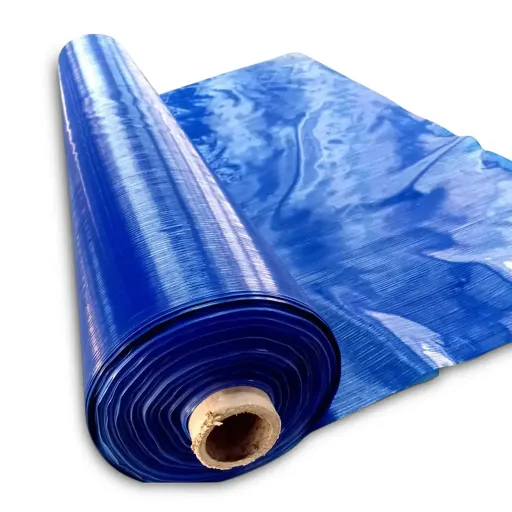
A PVC tarpaulin roll consists of a woven polyester base fabric coated on both sides with polyvinyl chloride. The result is a flexible, waterproof sheet material supplied in roll format for efficient transport and downstream fabrication. Our standard rolls range from 1.0 metre to 3.2 metres in width and 50 to 100 metres in length, wound on a 76-millimetre cardboard or plastic core.
The key properties that distinguish a PVC tarpaulin roll from polyethylene alternatives are weldability, chemical resistance, and cold-crack performance. PVC maintains flexibility down to -20°C and can be welded into seams that exceed the strength of the base fabric. This makes it the material of choice for truck side curtains, industrial tents, and construction enclosures where joints must not fail under load.
Roll format offers significant advantages over pre-cut sheets for bulk buyers. A single master roll reduces cutting waste, lowers packaging costs, and allows fabricators to slit material to exact widths. For large projects covering thousands of square metres, buying a PVC tarpaulin roll in bulk typically reduces material cost by 20–35% compared to equivalent finished sheets. Whether you need heavy-duty truck covers, outdoor protective sheets, or industrial-grade PVC tarpaulins, Linyi Chenlai Plastic Products Co., Ltd. can deliver efficient and professional manufacturing services.
How PVC Tarpaulin Rolls Are Manufactured
Understanding how your PVC tarpaulin roll is made helps you evaluate supplier claims and specify the right product. Two manufacturing methods dominate the market: knife coating and lamination. The method determines bonding strength, surface finish, lifespan, and price.
Knife-Coated PVC Tarpaulin Rolls
Knife coating is the premium manufacturing method for heavy-duty tarpaulin applications. We begin by formulating a liquid PVC plastisol from resin, plasticizers, stabilizers, and additives. A precision doctor blade spreads this paste onto the woven polyester scrim with a tolerance of ±0.02 millimetres. The coated fabric then passes through multi-zone ovens at 180–200°C, where the plasticizers gel into the PVC matrix and fuse with the polyester fibers at a molecular level.
This chemical fusion creates a monolithic bond that cannot delaminate. The coating penetrates the fabric weave, locking fibers in place and distributing stress across the entire surface. Knife-coated PVC tarpaulin rolls typically achieve coating adhesion values above 100 N/5cm when tested to ISO 2411. They withstand repeated folding, welding, and exposure to harsh chemicals without surface cracking or separation.
When Javier ordered knife-coated PVC tarpaulin rolls for his truck-curtain fabrication workshop in São Paulo, he needed material that could survive HF welding at 400°C without surface degradation. The molecular bond in knife-coated PVC meant his welded seams consistently exceeded 80% of base fabric tensile strength. Three years later, those curtains still show no signs of delamination at the seams.
Laminated PVC Tarpaulin Rolls
Lamination applies pre-formed PVC films to the base fabric using heat, pressure, or adhesive. The surface is smoother and more uniform than knife-coated material, which makes laminated rolls attractive for printed banners and light-duty covers. However, the bond is mechanical rather than chemical. Adhesive layers can degrade under UV exposure, and the interface between film and fabric remains a potential failure point.
Laminated PVC tarpaulin rolls typically achieve adhesion values of 60–80 N/5cm. They work well for short-term applications such as event signage, temporary shelters, and light agricultural covers where cost matters more than longevity. For projects requiring more than three years of service life, we generally recommend knife-coated material.
Manufacturing Method Comparison
| Method | Bonding Type | Surface | Lifespan | Best For |
|---|---|---|---|---|
| Knife-coated | Chemical fusion | Slight texture | 5–10+ years | Truck covers, tents, industrial curtains, long-term structures |
| Laminated | Mechanical/adhesive | Smooth, glossy | 3–5 years | Printed banners, short-term covers, budget projects |
Ready to specify your next order? Contact our team with your application details, and we will recommend the optimal manufacturing method and GSM for your project.
PVC Tarpaulin Roll Specifications Explained
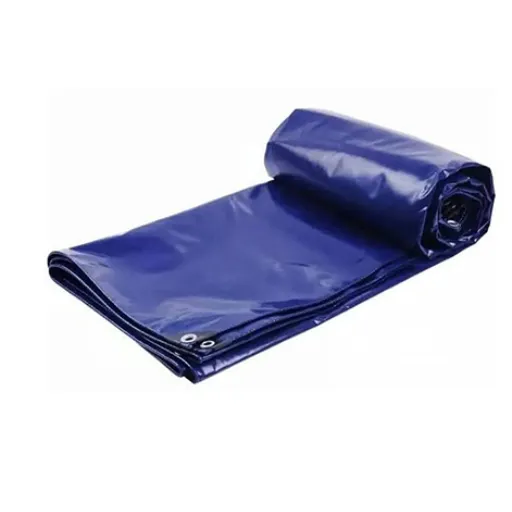
Specifications determine whether your PVC tarpaulin roll performs as expected or fails prematurely. Four factors matter most: GSM, base fabric denier, thickness, and roll dimensions.
GSM (Grams per Square Metre)
GSM measures the total weight of fabric plus coating per square metre. It is the single most important specification for matching a PVC tarpaulin roll to its application. Higher GSM means more PVC coating, greater durability, and higher tensile strength. It also means more weight per roll and a higher price.
The GSM-to-thickness correlation for PVC tarpaulin follows a predictable pattern. A 450 GSM roll measures approximately 0.35–0.40 millimetres. A 650 GSM roll measures 0.50–0.60 millimetres. A 900 GSM roll reaches 0.80–0.90 millimetres. These values vary slightly depending on base fabric density and plasticizer content.
Base Fabric and Denier
The woven polyester scrim provides the structural backbone of every PVC tarpaulin roll. Denier measures yarn thickness: 500D is light, 1000D is standard for medium-duty applications, and 1300D is heavy-duty industrial grade. The weave pattern also matters. Panama weave creates a stable, balanced structure with good tear resistance. Oxford weave adds strength in one direction for applications with predictable load orientation.
We typically pair 500D base fabric with 350–450 GSM coating for lightweight applications. For heavy-duty tarpaulin rolls, we use 1000D or 1300D bases with 650–900 GSM coating. The combination of strong base fabric and thick coating produces tensile strength values exceeding 4,000 N/5cm in premium grades.
Thickness and Coating Weight
Thickness affects more than durability. Thicker coatings provide better insulation, improved weldability, and greater resistance to abrasion. However, excessive thickness adds stiffness. A 900 GSM PVC tarpaulin roll can be too rigid for compact folding in event tents or portable shelters.
When Ana María selected 900 GSM PVC tarpaulin rolls for her event-tent manufacturing business in Mexico City, she assumed heavier meant better. She discovered the material was too stiff for her compact-folding design. Her tents became difficult to transport and took twice as long to set up. After switching to 550 GSM knife-coated rolls with a 1000D base, she achieved the durability she needed without sacrificing flexibility. Setup time dropped by 40%, and her customers noticed the difference immediately.
Standard Roll Dimensions
Standard PVC tarpaulin roll widths range from 1.0 metre to 3.2 metres on most production lines. Specialized calendering equipment can produce seamless widths up to 5.1 metres. Standard roll lengths are 50 metres and 100 metres. We also supply custom lengths and slit widths for fabrication shops that need specific dimensions.
The standard core diameter is 76 millimetres (3 inches). Cardboard cores work for most applications. Plastic cores are recommended for humid climates or long-term storage, as they resist moisture absorption and maintain structural integrity during automated unrolling.
Specification Reference Table
| GSM | Thickness (mm) | Base Fabric | Tensile Strength (N/5cm) | Typical Applications | Expected Lifespan |
|---|---|---|---|---|---|
| 350–450 | 0.30–0.40 | 500D | 1,500–2,000 | Light covers, banners, temporary signage | 3–5 years |
| 550–650 | 0.45–0.55 | 1000D | 2,500–3,500 | Truck covers, tents, agricultural covers | 5–7 years |
| 750–900 | 0.65–0.85 | 1000D–1300D | 3,500–4,500+ | Industrial curtains, mining covers, permanent structures | 7–10+ years |
Choosing the Right PVC Tarpaulin Roll by Application
Application determines the optimal GSM, base fabric, and surface treatment. Choosing incorrectly leads to premature failure or unnecessary cost. Here is how we match specifications to real-world use cases.
Truck Covers and Side Curtains
Truck curtains demand seam strength, UV stability, and weather resistance. We recommend 650–900 GSM knife-coated PVC tarpaulin rolls with a 1000D base fabric. Widths of 2.5–3.2 metres allow seamless curtain fabrication, eliminating weak points at longitudinal joints. UV stabilizers prevent surface chalking and embrittlement during prolonged sun exposure.
Weldability is critical for this application. HF welding creates seams that match or exceed base fabric strength. Knife-coated material welds consistently because the PVC coating is chemically uniform throughout its thickness. Laminated material can develop weak zones where the adhesive layer interferes with weld penetration.
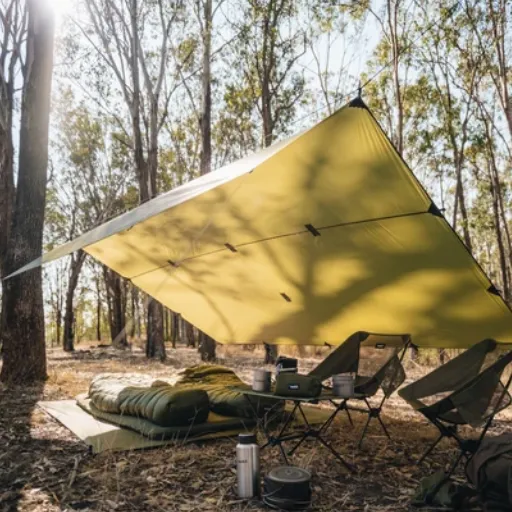
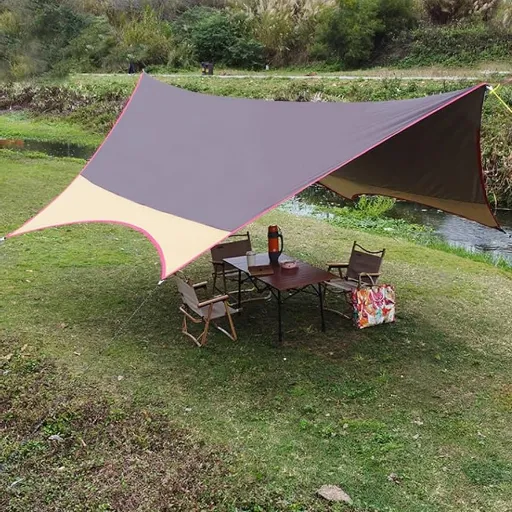
Tents and Temporary Structures
Tent manufacturing requires a balance of strength, flexibility, and weight. We recommend 450–650 GSM PVC tarpaulin rolls with 500D–1000D base fabric. White or light-coloured surfaces reduce interior heat buildup. Flame-retardant additives meeting NFPA 701 or B1 standards are essential for public event applications.
The weldability of PVC tarpaulin rolls enables complex tent geometries that PE cannot achieve. Curved roof panels, integrated window sections, and tensioned membrane structures all rely on heat-welded seams. PE tarpaulin cannot be welded reliably, limiting it to simple sewn designs.
Construction Site Enclosures
Construction sites expose tarpaulins to wind, debris, and mechanical stress. We recommend 550–750 GSM PVC tarpaulin rolls with reinforced edges and scaffold-grade eyelets. Debris containment requires tear resistance and puncture strength that PE simply cannot deliver over multi-year projects.
For construction applications, we typically add anti-mildew treatments to the coating formulation. Moisture trapped between the tarpaulin and scaffolding creates ideal conditions for fungal growth. Anti-mildew additives extend service life and maintain appearance in humid environments.
Agricultural Covers and Greenhouses
Agricultural applications span crop protection, greenhouse cladding, and equipment covers. We recommend 400–650 GSM PVC tarpaulin rolls with UV treatment and optional anti-condensation surfaces. The width should match row spacing or structure span to minimize seams.
When Ramesh replaced his annual PE covers with 500 GSM UV-stabilized PVC tarpaulin rolls for his greenhouse operation in Gujarat, he paid 45% more per square metre upfront. His PE covers lasted one season before tearing. The PVC covers entered their sixth year with no visible degradation. By year three, his cumulative material cost was lower than if he had continued buying PE. By year five, he had saved roughly 30% on covering costs alone.
Industrial Curtains and Warehousing
Industrial curtain applications require strip-door grades, transparent window sections, and cold-storage compatibility. We recommend 650–900 GSM PVC tarpaulin rolls with reinforced hems and welded eyelets. Cold-crack additives maintain flexibility in freezer environments down to -30°C.
Transparent PVC panels allow light transmission while maintaining thermal separation. We produce these by using clear PVC formulations on selected sections of the roll. Fabricators can then weld transparent windows into opaque curtain panels. Choose Linyi Chenlai Plastic Products Co., Ltd. as your trusted PVC tarpaulin supplier and discover reliable products backed by dedicated customer support and manufacturing expertise.
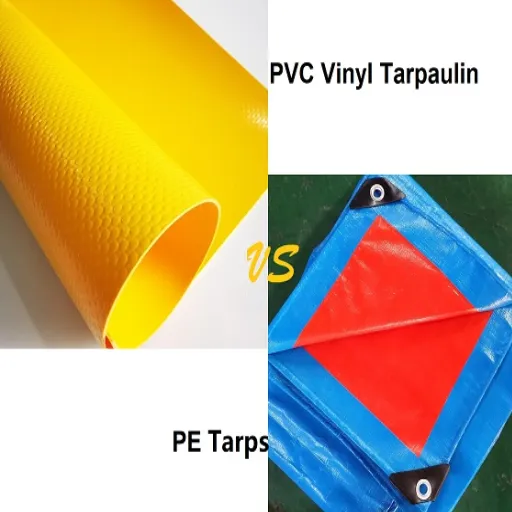
PVC Tarpaulin Roll vs. PE Tarpaulin Roll
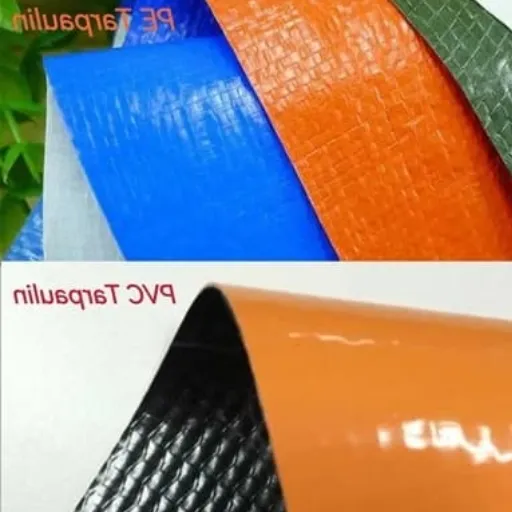
Buyers often assume PVC is simply “better” than PE. The truth depends on project duration, stress levels, and fabrication requirements.
When PVC Tarpaulin Rolls Win
Choose a PVC tarpaulin roll when your project demands longevity, welding, or extreme conditions. PVC lasts 5–10+ years versus 1–3 years for PE. It welds with HF or heat sealing. It resists chemicals, grease, and oil. And it maintains flexibility at temperatures where PE becomes brittle.
The total cost of ownership often favors PVC for projects exceeding two years. A PVC tarpaulin roll costs 40–60% more per square metre upfront. But because it lasts three to four times longer, the lifetime cost can be 30–50% lower. Add the labour cost of replacing failed PE covers, and the economic advantage of PVC becomes decisive.
When PE Tarpaulin Rolls Win
PE remains the smarter choice for short-term coverage, budget constraints, and simple applications. PE is lighter, easier to handle, and requires no specialized welding equipment. For a six-month construction project or a single-season agricultural cover, PE delivers adequate protection at lower cost.
PE also wins when the application involves simple grommeted or sewn covers with no seams. If you do not need welding, the extra cost of PVC adds no functional value. For consumer retail and small-scale use, PE’s lower price and lighter weight are genuine advantages.
Total Cost of Ownership Comparison
| Factor | PVC Tarpaulin Roll | PE Tarpaulin Roll |
|---|---|---|
| Upfront cost per m² | Higher (40–60% more) | Lower |
| Lifespan | 5–10+ years | 1–3 years |
| Replacement frequency | Once per decade | Every 1–3 years |
| Welding capability | Yes (HF and heat) | No |
| Cold-crack performance | Flexible to -30°C | Brittle below -15°C |
| Chemical resistance | Excellent | Moderate |
| Best project duration | 2+ years | Under 2 years |
Quality Standards and Certifications
Quality claims mean nothing without test data. Reputable PVC tarpaulin roll manufacturers test every batch and provide reports on demand. Here are the standards that matter.
Performance Testing
DIN 53354 measures tensile strength in Newtons per 5 centimetres. A 650 GSM knife-coated PVC tarpaulin roll should achieve 2,500–3,500 N/5cm in both warp and weft directions. Premium 900 GSM grades exceed 4,000 N/5cm.
ISO 2411 measures coating adhesion. Knife-coated PVC should score above 100 N/5cm. Laminated PVC typically scores 60–80 N/5cm. Low adhesion values predict delamination under stress.
AATCC 127 / ISO 811 measures hydrostatic pressure resistance. Quality PVC tarpaulin rolls achieve 200+ kilopascals, confirming complete waterproofing even under pooled water.
ASTM D2136 measures cold-crack resistance. PVC with proper plasticizer selection remains flexible at -20°C to -30°C. PE fails this test below -15°C.
Fire Retardancy
Fire-retardant PVC tarpaulin rolls carry certifications such as NFPA 701, B1, B2, or DIN 75200. These ratings indicate how the material behaves when exposed to flame. B1-rated material is difficult to ignite and self-extinguishes when the flame source is removed. Always specify the fire rating required by your local building code or safety regulator.
Environmental Compliance
REACH and RoHS compliance confirm that hazardous substances are controlled or eliminated. Phthalate-free plasticizers are increasingly requested by European and North American buyers. We offer REACH-compliant formulations with phthalate-free plasticizers for markets with strict chemical regulations.
Always request batch-specific test reports. Generic datasheets list theoretical values. Batch reports confirm that the roll you received actually met the specification when it left the factory. At our tarpaulin manufacturing facility, we retain samples from every production batch for verification.
Customization, Ordering, and Logistics
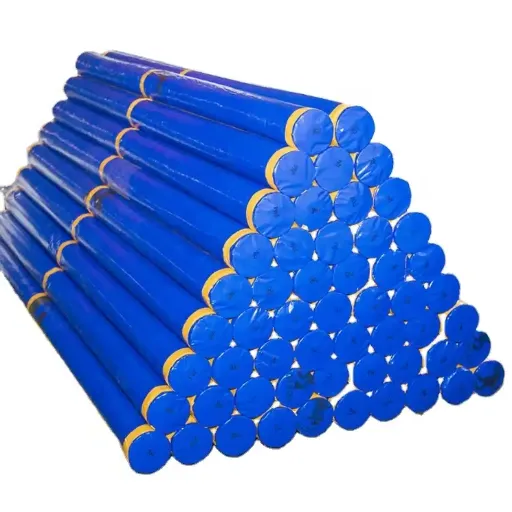
Modern PVC tarpaulin roll production supports extensive customization. Understanding your options and the logistics of bulk orders helps you plan accurately.
Customization Options
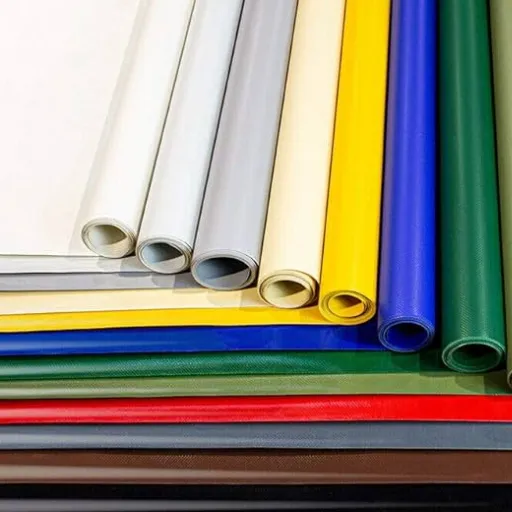
Colour is the most common customization. We produce standard colours from stock and match Pantone references for brand-critical applications. White and silver reflect heat. Dark colours absorb it. Green and brown blend with agricultural and military environments.
Surface treatments include anti-UV, anti-mildew, cold-crack resistant, and PVDF topcoats. PVDF topcoats create self-cleaning surfaces that resist dirt accumulation on architectural membranes and long-term outdoor structures.
Width and length can be customized within equipment limits. We slit master rolls to narrower widths and cut to shorter lengths. Custom slit widths typically require minimum order quantities of 2,000–4,000 linear metres depending on master roll width.
Printing adds branding, safety markings, or decorative patterns. UV printing and screen printing both work on PVC surfaces. Screen printing offers better durability for industrial applications. UV printing enables full-colour photographic images.
Pricing and MOQ
PVC tarpaulin roll pricing depends on raw material costs, GSM, width, and customization. Light-duty 450 GSM rolls start at roughly 1.50–2.50 per square metre. Medium-duty 650 GSM rolls range from 2.50–4.00 per square metre. Heavy-duty 900 GSM rolls reach 4.00–6.50 per square metre. Fire-retardant additives, custom colours, and special surface treatments add 10–30%.
Standard minimum order quantities range from 1,000 to 3,000 square metres for stock specifications. Custom widths, colours, or formulations typically require 2,000+ linear metres. Trial orders are often negotiable for first-time buyers establishing a supplier relationship.
Lead times vary from 15 days for stock items to 45–60 days for custom production. Planning ahead matters. During peak seasons, coating line capacity books out quickly.
Packaging and Container Loading
Standard packaging includes individual PE film wrapping, palletisation, and stretch-film securing. Each pallet carries 8–12 rolls depending on diameter and weight. Rolls are labelled with GSM, width, length, batch number, and handling instructions.
Roll weight scales with dimensions and GSM. A 1.5-metre by 50-metre by 650 GSM roll weighs approximately 49 kilograms. A 3.2-metre by 50-metre by 900 GSM roll weighs roughly 144 kilograms. Rolls above 80 kilograms require forklift handling.
A 40-foot high-cube container holds approximately 15–18 tonnes of PVC tarpaulin rolls at 500–900 GSM. The exact linear metres per container depend on width, GSM, and pallet configuration. We provide container-loading calculations with every quotation so buyers can plan import logistics precisely.
Frequently Asked Questions
What is the difference between PVC coated and PVC laminated tarpaulin roll?
Knife-coated PVC tarpaulin rolls use liquid plastisol that fuses with the base fabric at 180–200°C, creating a chemical bond. Laminated rolls bond pre-formed PVC films with adhesive or heat pressure, creating a mechanical bond. Knife-coated material lasts longer and welds better. Laminated material costs less and offers a smoother surface.
How thick is a PVC tarpaulin roll?
Thickness ranges from 0.30 millimetres at 350 GSM to 0.90+ millimetres at 900 GSM. Most commercial applications use 0.45–0.60 millimetres, which corresponds to 550–650 GSM.
What GSM PVC tarpaulin roll do I need for truck covers?
We recommend 650–900 GSM for truck covers and side curtains. This range provides the tear strength, UV resistance, and weldability needed for long-haul protection.
How long does a PVC tarpaulin roll last?
Knife-coated PVC tarpaulin rolls last 5–10+ years with proper maintenance. Laminated rolls typically last 3–5 years. Lifespan depends on UV exposure, mechanical stress, and climate conditions.
Can PVC tarpaulin rolls be welded?
Yes. PVC tarpaulin rolls weld with high-frequency (HF) welding, hot-air welding, or heat-sealing equipment. Welded seams often exceed base fabric strength. PE cannot be welded, which is a key reason fabricators choose PVC.
What is the maximum seamless width for a PVC tarpaulin roll?
Standard production lines produce seamless widths up to 3.2 metres. Specialized calendering equipment reaches 5.1 metres. Wider applications require longitudinal seams, which we weld with hot-air equipment.
Are PVC tarpaulin rolls fire retardant?
Fire-retardant grades are available with NFPA 701, B1, B2, or DIN 75200 certification. Standard grades are not fire retardant. Always specify fire retardancy if your application requires it.
How much does a PVC tarpaulin roll weigh?
Weight equals width multiplied by length multiplied by GSM, divided by 1,000. A 2.0-metre by 50-metre by 650 GSM roll weighs 65 kilograms. A 3.2-metre by 50-metre by 900 GSM roll weighs 144 kilograms.
Can I get custom colours and printed PVC tarpaulin rolls?
Yes. We match Pantone colours and offer both UV printing and screen printing. Custom colours require minimum quantities. Printing works best on smooth or lightly textured surfaces.
What is the typical MOQ for PVC tarpaulin rolls?
Standard specifications start at 1,000–3,000 square metres. Custom colours, widths, or formulations typically require 2,000+ linear metres. Trial orders are negotiable for new customers.
Conclusion
A PVC tarpaulin roll is one of the most versatile protective materials available to industry today. Its combination of waterproofing, weldability, UV resistance, and long service life makes it essential for truck covers, tents, construction enclosures, and agricultural protection. But these benefits only materialize when you specify the right product.
The key decisions are manufacturing method, GSM, base fabric, and surface treatment. Knife-coated PVC tarpaulin rolls deliver superior bonding and longevity for demanding applications. The correct GSM matches stress level to service life, heavier is not automatically better. And honest cost analysis often reveals that PVC wins on total cost of ownership even when PE looks cheaper at the quotation stage.
At Linyi Chenlai Plastic Products Co., Ltd., we manufacture PVC tarpaulin rolls on knife-coating lines with precise temperature control and in-line thickness monitoring. Every batch is tested to DIN 53354, ISO 2411, and AATCC 127 standards. We ship to over 50 countries with packaging and documentation tailored to your import requirements.
Request your PVC tarpaulin roll quotation today. Tell us your application, target dimensions, and quantity. We will recommend the exact specification you need and deliver test data to back it up.