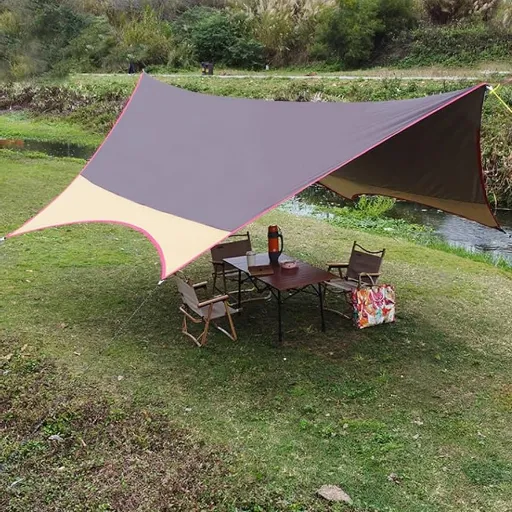
A tarpaulin for camping is a large sheet of waterproof or water-resistant material used to create shelter, cover gear, or protect a tent footprint. The right camping tarpaulin keeps you dry, extends your living space, and costs far less than most tents. Whether you are a weekend car camper, a scout leader, or a family planning a summer holiday, understanding materials, sizes, and setup methods will help you choose a tarpaulin that lasts.
Here is the problem. Most camping-tarp guides are written by ultralight backpackers who measure value in grams saved. That advice works if you hike twenty miles a day. It fails if you drive to a campsite, run a youth programme, or want one shelter that survives five seasons of rain and sun. We manufacture tarpaulins for farms, construction sites, and outdoor programmes across more than 50 countries. We know what heavy-duty PE and PVC can do in real weather, and we know where consumer guides leave gaps.
In this guide, you will learn how to pick a camping tarpaulin material, size it for your group, set it up in six common configurations, and maintain it for years. You will also see when a tarpaulin beats a tent, when it does not, and how camps or outfitters can order custom sizes at scale. Request a factory-direct quote from Linyi Chenlai Plastic Products Co., Ltd. for waterproof tarp products.
Key Takeaways
- PE tarpaulins are the best value for car camping, family trips, and scout camps; PVC tarpaulins last longest for basecamp and group dining shelters.
- Size your tarpaulin by group count and pitch style: 8×10 ft for two people, 10×12 ft for a family, 16×20 ft or larger for group dining shelters.
- A sloped pitch with tight guy lines prevents water pooling, which is the main reason camping tarps fail in heavy rain.
- Heavy-duty camping tarpaulins often cost less per night than ultralight silnylon tarps because they last many more seasons.
- Camps, scout troops, and outdoor programmes can reduce long-term costs with custom-sized, branded tarpaulins ordered in bulk.
What Is a Tarpaulin for Camping?
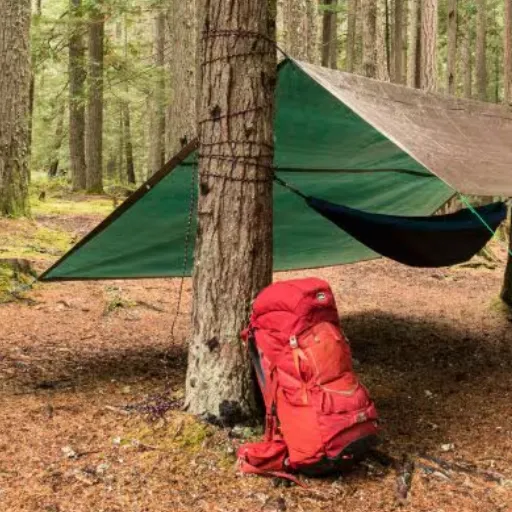
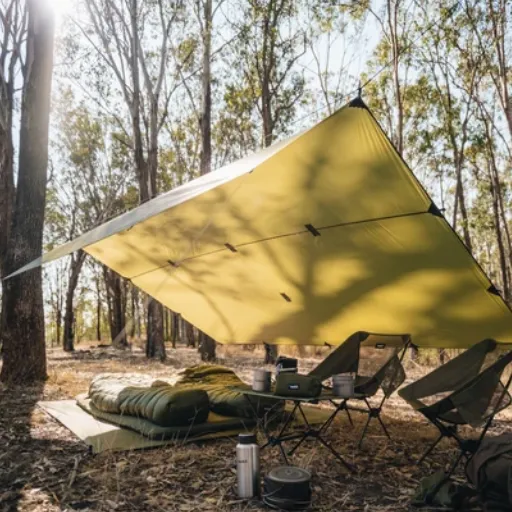
A camping tarpaulin is a flexible sheet, usually with reinforced edges and grommets, that you pitch with ropes, stakes, poles, or trees to create shelter. Campers also use smaller tarpaulins as ground cloths, tent footprints, or rain covers for firewood and packs.
The word “tarpaulin” comes from nautical use, but today it covers many materials. In camping, you will see polyethylene (PE), polyvinyl chloride (PVC), silicone-coated nylon (silnylon), and polycotton. Each material trades weight, cost, and durability differently. We will cover those trade-offs in detail below.
A tarpaulin differs from a tent in one obvious way: it has no built-in floor, bug netting, or poles. That open design is both a strength and a weakness. It gives you ventilation, views, and flexible space, but it also exposes you to insects, cold drafts, and blowing rain if you pitch it poorly.
For a broader look at how tarpaulins are used beyond camping, see our complete guide to tarpaulin applications.
Tarp vs Tent: When a Tarpaulin Shelter Makes Sense
Most campers already own a tent. So why bother with a tarpaulin?
A tarpaulin shelter wins when you want flexibility, ventilation, or a large covered area without carrying a heavy tent. It works well for cooking in light rain, creating shade at a beach campsite, or adding a vestibule to an existing tent. In warm weather, a tarpaulin can be cooler and drier than a fully enclosed tent because air flows through it.
A tent still wins when you need bug protection, privacy, or a sealed environment for cold or windy nights. Beginners often feel safer in a tent. Families with small children usually prefer one. Backpackers in alpine terrain, where wind and snow are serious hazards, should rely on a proper mountain tent rather than a tarpaulin.
Mini-story: When the Patel family camped in Cornwall last August, they brought a three-person tent for sleeping and a 4×5 m PE tarpaulin for the picnic area. On the second day, a steady drizzle arrived. While neighbouring campers huddled inside their tents, the Patels cooked breakfast, played cards, and stored wet boots under the tarpaulin. Their tent stayed dry because muddy gear never went inside. That single tarpaulin turned a rainy weekend into a comfortable trip.
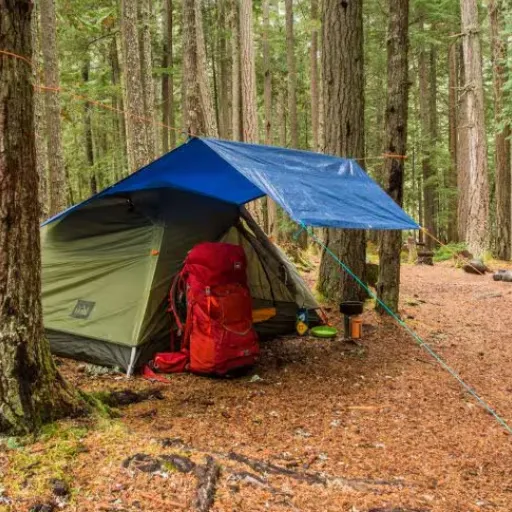
Hybrid setups are often the smartest choice. A tarpaulin over the front of a tent creates a covered porch for muddy boots and cooking gear. A tarpaulin hung between two cars gives car campers a shaded social area. In these cases, the tarpaulin is not replacing the tent; it is extending it.
Camping Tarpaulin Materials Explained
Material choice is the single biggest decision when buying a tarpaulin for camping. The right material depends on how often you camp, how much weight you can carry, and what weather you expect.
PE (Polyethylene) Tarpaulin: Affordable, Reliable, Heavy-Duty
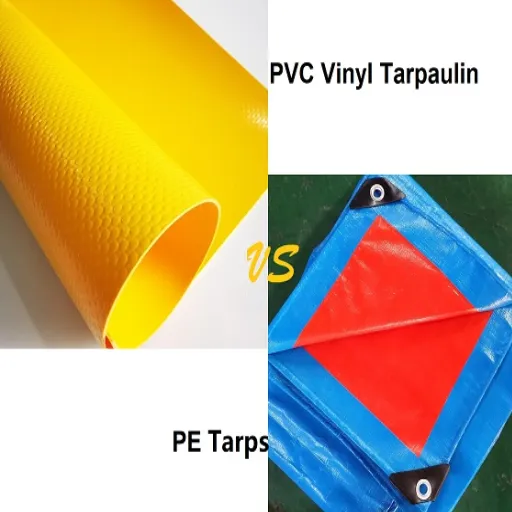
PE tarpaulins are the workhorse of family camping, scout camps, and car camping. They are made from woven polyethylene fibres sealed with a polyethylene coating. Good-quality PE tarpaulins are waterproof, UV-resistant, and tear-resistant.
For camping, look for PE tarpaulins between 120 and 300 GSM (grams per square metre). A 120 GSM tarpaulin is fine for occasional fair-weather shade. A 180 GSM tarpaulin handles most general camping. A 240 GSM or 300 GSM tarpaulin stands up to strong wind, heavy rain, and repeated use across multiple seasons.
PE tarpaulins are lighter and cheaper than PVC. They fold smaller and are easier to handle. Their weakness is long-term UV exposure. After two to four seasons of regular summer use, the material can become brittle and prone to tearing at grommets. For campers who take two or three trips per year, that lifespan is perfectly acceptable.
PVC Tarpaulin: Premium Heavy-Duty for Multi-Season Use
PVC tarpaulins are heavier and more expensive than PE, but they last much longer. A well-made PVC tarpaulin can last five to fifteen years, even with regular outdoor use. The material is thicker, often 450 GSM to 900 GSM, and seams are usually heat-welded rather than sewn.
PVC tarpaulins excel in basecamp shelters, group dining flies, and semi-permanent camp structures. Scout troops, summer camps, and glamping operators often choose PVC because the cost-per-season is lower over time. The downside is weight. A large PVC tarpaulin is not something you carry on a backpacking trip.
If you want to understand the technical differences in depth, read our full waterproof tarpaulin specifications guide.
Silnylon and Polycotton: When Ultralight Matters
Silnylon is silicone-impregnated nylon. It is extremely light and packable, which is why thru-hikers and ultralight backpackers love it. Polycotton is a blend of polyester and cotton. It is heavier than silnylon but quieter, more breathable, and less prone to condensation.
These materials make sense when every gram matters. For a multi-week backpacking trip, a 250 g silnylon tarpaulin can replace a 1.5 kg tent. For car camping, family trips, or group camps, the high price and delicate nature of silnylon rarely justify the weight savings.
Material Comparison Table
| Material | Weight | Cost | Durability | Best For |
|---|---|---|---|---|
| PE (120-180 GSM) | Light | Low | 1-3 seasons | Occasional camping, ground sheets |
| PE (240-300 GSM) | Medium | Low-Medium | 3-5 seasons | Family camping, scout camps, car camping |
| PVC (450-900 GSM) | Heavy | Medium-High | 5-15 seasons | Basecamp, group dining shelters, long-term use |
| Silnylon | Very light | High | 2-5 seasons | Ultralight backpacking, thru-hiking |
| Polycotton | Medium | High | 3-7 seasons | Bushcraft, wet climates, quiet shelters |
What Size Tarpaulin Do You Need for Camping?
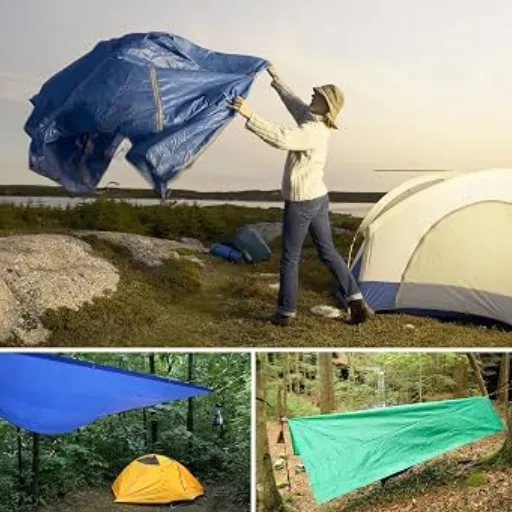
Size depends on how many people you shelter and how you plan to pitch the tarpaulin. A tarpaulin pitched as an A-frame covers less usable floor area than the same tarpaulin pitched as a flat dining fly.
As a general rule, add at least 1-2 feet of length and width beyond the footprint you need. This extra fabric becomes the sloped walls that keep rain out. For hammock camping, you need even more diagonal coverage to block wind-blown rain.
Sizing Recommendations by Use
| Use Case | Recommended Size | Notes |
|---|---|---|
| Solo backpacking | 6×8 ft or 8×8 ft | Plow point or diamond pitch |
| Two people | 8×10 ft or 9×9 ft | A-frame or lean-to |
| Family of four | 10×12 ft or 12×14 ft | Dining shelter or tent porch |
| Group dining (8-12 people) | 16×20 ft or larger | Flat or A-frame dining fly |
| Hammock camping | 11×11 ft or 12×12 ft | Asymmetric or square pitch |
| Vehicle shelter | 10×16 ft or 12×20 ft | Covers one side of a van or SUV |
If you are unsure, go one size larger. Extra fabric gives you more pitching options and better weather protection. A tarpaulin that is too small forces you to pitch it low and tight, which reduces living space and increases the chance of failure in wind.
For a detailed breakdown of standard sheet dimensions, see our tarpaulin sheet size guide.
How to Set Up a Tarpaulin Shelter for Camping
Setting up a tarpaulin shelter is straightforward once you understand the basics. The goal is a tight, sloped pitch that sheds water and resists wind. A loose or flat tarpaulin will collect rainwater and eventually fail.
- Choose your site. Look for high, level ground that drains naturally. Avoid spots under dead branches or below slopes where water might run down.
- Decide your pitch. Match the configuration to the weather. A low A-frame handles storms. A lean-to gives shade and airflow.
- Set your ridgeline. Tie a strong cord between two trees, or use trekking poles or tarp poles. The ridgeline should be slightly above head height.
- Drape the tarpaulin over the ridgeline. Centre the fabric so both sides are equal. Attach the centre tie-outs to the ridgeline with cord or Prusik knots.
- Stake the corners. Pull each corner outward at a 45-degree angle. Use taut-line hitches so you can adjust tension.
- Tension all edges. The fabric should be drum-tight. Any sag will collect water.
- Test for drainage. Spray the tarpaulin with water or wait for light rain. Adjust any low spots where water pools.
Mini-story: In 2023, a scout troop in the Lake District pitched a 12×16 ft PE tarpaulin flat over their cooking area to “maximise headroom.” After four centimetres of overnight rain, the centre sagged under a pool of water. The weight tore a grommet, dumping twenty litres of water onto the stove. The lesson: slope and tension matter more than material strength.
For complex pitches, carry extra cord and stakes. A basic tarpaulin setup uses six to eight stakes. A storm-ready setup may use twelve or more.
Popular Tarpaulin Configurations for Camping
The same tarpaulin can become several different shelters depending on how you fold and stake it. Here are the six most useful configurations.
A-Frame. Drape the tarpaulin over a ridgeline and stake both sides to the ground. This is the most weather-resistant shape. Pitch it low for storms and higher for airflow.
Lean-To. Stake one long edge to the ground and raise the opposite edge with poles or a tree. It gives shade, wind protection, and an open view. It is best for fair weather or as a windbreak.
Plow Point / Trekking-Pole Pitch. Stake three corners to the ground and lift the fourth corner with a trekking pole. It creates a small pyramid for one person. Quick to set up and surprisingly storm-resistant.
Diamond Pitch. Tie one corner to a tree at head height and stake the opposite corner to the ground. Spread the other two corners wide. This minimalist pitch is popular with hammock campers.
Half-Pyramid. Similar to plow point, but with a rectangular tarpaulin folded to create a closed back and sloped roof. Good for wet-weather solo camping.
Dining Fly / Flat Pitch. Stretch the tarpaulin flat above a picnic table or social area using poles and guy lines. This requires careful tensioning and a slight slope to shed rain. It is the best shape for group camps.
Camping Tarpaulins by Use Case
Different camping styles need different tarpaulins. A one-size-fits-all recommendation misses the point.
Backpacking and Thru-Hiking. Weight is the priority. A silnylon or lightweight PE tarpaulin between 6×8 ft and 9×9 ft works well. Practice your knots before the trip.
Car Camping and Family Trips. Weight does not matter. A 240 GSM PE tarpaulin in a 10×12 ft or 12×14 ft size gives you a dining shelter, gear cover, and tent porch in one piece.
Hammock Camping. You need diagonal coverage. An 11×11 ft or 12×12 ft square tarpaulin lets you pitch a diamond or asymmetric shelter that blocks wind-driven rain from the sides.
Basecamp and Overlanding. Durability matters more than packability. A 300 GSM PE or 450+ GSM PVC tarpaulin stands up to weeks of sun, wind, and rain.
Group, Scout, and Outdoor-Education Camps. Large dining flies and patrol shelters are the priority. Multiple 16×20 ft or larger tarpaulins, often custom-sized and colour-coded, keep groups organised and dry.
If your camp needs heavy-duty options, explore our heavy-duty tarpaulin range.
Heavy-Duty and Basecamp Tarpaulins
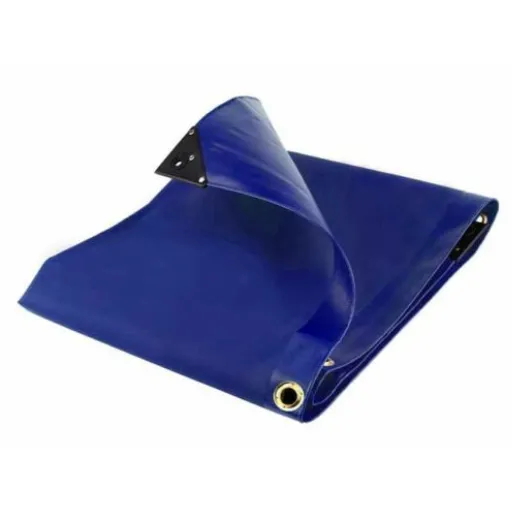
Heavy-duty tarpaulins are where manufacturer quality becomes visible. Cheap tarpaulins fail at the weakest points: grommets pull out, seams split, and coatings degrade after one season of UV exposure.
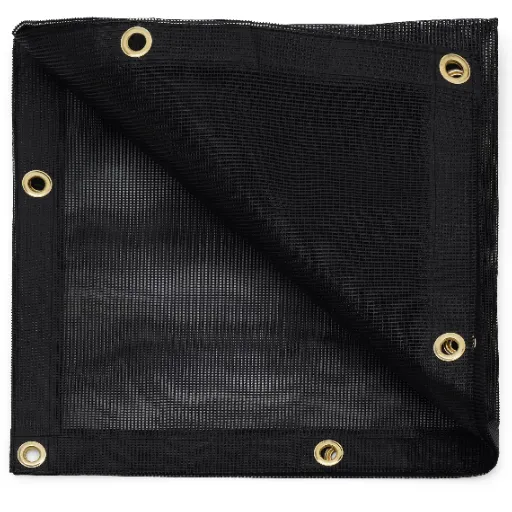
A heavy-duty camping tarpaulin should have reinforced corners, heat-sealed or welded seams, and aluminium or brass grommets set at close intervals. The fabric should resist tearing even after UV exposure.
GSM is the simplest way to judge PE and PVC tarpaulins for camping:
- 120-180 GSM: Light-duty shade and occasional rain cover.
- 180-240 GSM: General camping, fair-weather trips, ground sheets.
- 240-300 GSM: Family camping, scout camps, regular wet-weather use.
- 300-450 GSM: Basecamp, overlanding, semi-permanent shelters.
- 450+ GSM: Commercial shelters, group dining flies, multi-year use.
Mini-story: Mike, a scout leader in Yorkshire, replaced his troop’s fleet of cheap blue 120 GSM tarpaulins with 240 GSM PE tarpaulins custom-sized for patrol sites. The old tarpaulins lasted one season before grommets tore and corners frayed. The new ones entered their fourth season in 2026 with no failures. The upfront cost was higher, but the cost-per-camper dropped by more than half.
Cost-per-night is a useful way to compare tarpaulins. A 300 USD silnylon tarpaulin used on ten nights per year for three years costs 10 USD per night. A 50 USD 240 GSM PE tarpaulin used on the same schedule, if it lasts five years, costs 1 USD per night. For car campers and groups, the math strongly favours heavy-duty PE. Get a tailored waterproof tarp solution from Linyi Chenlai Plastic Products Co., Ltd. for your next project.
Caring for Your Camping Tarpaulin
A tarpaulin will last longer if you dry it, clean it, and store it properly.
Dry before storing. Never pack a wet tarpaulin into a tight stuff sack. Mildew will weaken the fabric and create permanent odours. Hang it in the sun or garage until completely dry.
Clean gently. Rinse off mud with a hose. For stubborn dirt, use a soft brush and mild soap. Avoid harsh detergents or pressure washers, which can damage waterproof coatings.
Repair small tears in the field. Carry a roll of tarpaulin repair tape or a small tube of seam sealer. A torn corner can be reinforced with a square of fabric and strong adhesive.
Replace grommets when needed. A pulled grommet does not mean the tarpaulin is finished. Repair kits with replacement grommets are inexpensive and easy to use.
Store loosely. Long-term storage in a tight roll stresses the fabric and coatings. Fold loosely or hang the tarpaulin in a dry, rodent-free space.
Bulk and Custom Tarpaulin for Group Camping
Camps, scout troops, outdoor-education programmes, and festival organisers often need many tarpaulins at once. Buying off-the-shelf tarpaulins in standard sizes usually wastes money and creates a mismatched fleet.
Custom tarpaulin orders let you specify exact dimensions, colours, grommet spacing, and corner reinforcement. You can add logos or colour-code shelters by group. Bulk pricing reduces the per-unit cost significantly.
When ordering custom tarpaulins for a camp, consider:
- Size standardisation. Choose two or three standard sizes for different uses rather than a unique size for every shelter. This simplifies replacement and storage.
- Grommet spacing. Closer grommets give more pitching options in wind.
- Colour coding. Different colours for dining shelters, first-aid stations, and storage reduce confusion.
- Lead time. Custom orders typically need several weeks, so plan before the camping season.
- Certifications. For institutional buyers, fire-retardant or safety-certified materials may be required.
Learn more about custom sizing and branding options on our custom tarpaulin design page. To see how our manufacturing supports large orders, visit our tarpaulin factory.
Frequently Asked Questions
What is the best material for a camping tarpaulin?
PE is the best all-round material for family and group camping because it balances cost, weight, and durability. PVC is best for long-term or commercial shelters. Silnylon is ideal only for ultralight backpacking.
What size tarp do I need for camping?
Use 8×10 ft for two people, 10×12 ft for a family of four, and 16×20 ft or larger for group dining shelters. Add extra length if you use an A-frame pitch.
Can you use a tarpaulin as a tent?
Yes, with the right configuration and site selection. A plow point or A-frame pitch can replace a tent in warm, dry weather. In cold, windy, or buggy conditions, a tent is safer and more comfortable.
Are PE tarpaulins truly waterproof for camping?
Yes, quality PE tarpaulins are waterproof. Check the hydrostatic head rating if you expect heavy rain. A rating of 1,500 mm handles light rain, 3,000 mm handles moderate rain, and 5,000 mm+ handles heavy storms.
What GSM is best for a camping tarpaulin?
180 GSM is fine for occasional fair-weather camping. 240 GSM suits most family and scout camping. 300 GSM or higher is best for basecamp, wet climates, or multi-season use.
How do you stop water pooling on a flat camping tarp?
Create tension and slope. Use a ridgeline or centre pole to raise the middle, and pull all edges tight with guy lines. Any sag will become a water trap.
Can I use my camping tarpaulin as a ground sheet?
Yes, but place a thin groundsheet or footprint underneath to protect the tarpaulin from abrasion. Sand, gravel, and twigs can wear holes in the coating over time.
Conclusion
Choosing the right tarpaulin for camping does not have to be complicated. Match the material to your camping style, size it for your group and pitch, and set it up tight and sloped. PE tarpaulins handle most family, scout, and car-camping needs at low cost. PVC tarpaulins justify their higher price when you need a shelter that lasts many seasons. Ultralight materials have their place, but they are not the only answer.
A good camping tarpaulin expands your campsite, protects your gear, and turns bad weather into a minor inconvenience. Camps and outdoor programmes can stretch budgets further with custom-sized, bulk-ordered tarpaulins built for repeated use.
Ready to equip your next trip or camp programme? Browse our range of waterproof tarpaulins or contact us for a custom quote tailored to your size, quantity, and delivery needs.