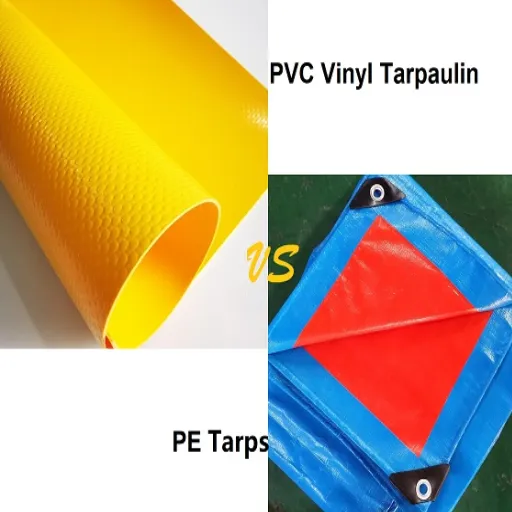
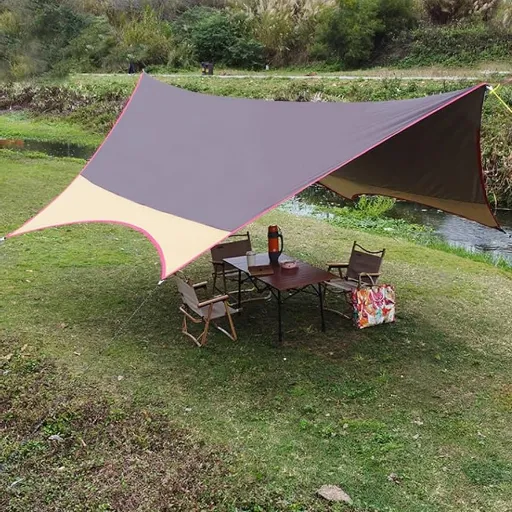
PVC tarpaulin quality standards are the measurable benchmarks that determine whether a tarpaulin will protect your assets for years or fail when you need it most. These standards cover everything from the weight and tensile strength of the base fabric to the waterproof rating, UV resistance, seam welding integrity, and international certifications that verify manufacturing consistency.
A construction manager in Southeast Asia learned this lesson the hard way. He purchased PVC tarpaulin based on price alone, trusting the supplier’s claim of “heavy-duty quality.” Three months later, monsoon rains hit. Seams split along the welded edges. Water poured onto covered equipment worth thousands of dollars. The project faced costly delays, and the replacement tarpaulin took two weeks to source. The root cause was not bad luck. It was a failure to verify PVC tarpaulin quality standards before purchase.
If you have ever stared at a supplier quotation and wondered what separates premium PVC tarpaulin from a substandard imitation, you are not alone. Buyers across construction, agriculture, logistics, and industrial sectors struggle to evaluate quality beyond price and appearance. This guide solves that problem. You will learn exactly which physical performance metrics to demand, which international certifications matter, how factory quality control processes work, and how to evaluate samples using a practical buyer checklist. Linyi Chenlai Plastic Products Co., Ltd. specializes in producing weather-resistant PVC tarpaulins with excellent tear strength and reliable performance in challenging conditions.
Key Takeaways
- High-quality PVC tarpaulin ranges from 300 GSM for light-duty use to 900+ GSM for industrial applications, with tensile strength exceeding 2,500 N/5cm on heavy-duty grades.
- ISO 9001, ASTM D751, EN 13501, and GB/T standards provide the most reliable frameworks for verifying PVC tarpaulin quality across global markets.
- Welded seams should retain at least 80% of the base fabric’s tensile strength, and hydrostatic head ratings above 10,000mm indicate genuine waterproof performance.
- Buyers can spot substandard product by checking for uneven coating, weak grommet pull-out strength, missing certification documentation, and inconsistent coloration.
- Application-specific requirements vary significantly: construction demands higher abrasion resistance, agriculture prioritizes UV stability, and transportation use requires superior wind-load tolerance.
What Are PVC Tarpaulin Quality Standards?
Definition and Scope
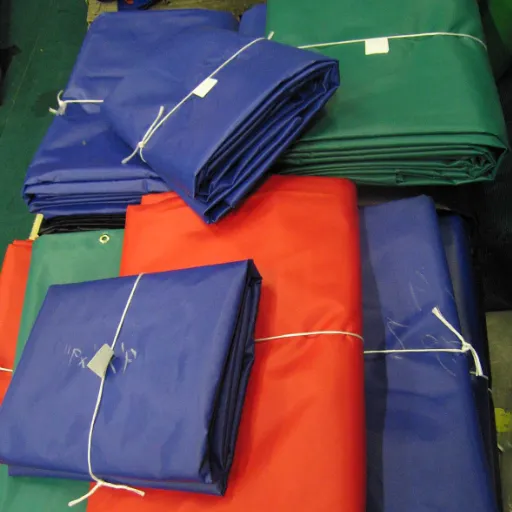
PVC tarpaulin quality standards are the established technical criteria that define how a PVC coated fabric should perform, look, and endure under specific conditions. These standards cover four core dimensions: material composition, physical performance, construction workmanship, and safety compliance.
Material composition standards regulate the PVC resin grade, plasticizer content, stabilizer additives, and base fabric weave density. Physical performance standards measure tensile strength, tear resistance, waterproof rating, UV stability, temperature tolerance, and abrasion resistance. Construction workmanship standards govern coating uniformity, welding strength, grommet reinforcement, dimensional stability, and color consistency. Safety compliance standards address fire retardancy, chemical safety under REACH and RoHS, and environmental impact.
Why Standards Matter for Buyers
Quality standards are not academic exercises. They directly predict how a tarpaulin will behave in the field. A tarpaulin that meets verified PVC tarpaulin specifications will resist tearing under wind load, maintain waterproof integrity during prolonged rain exposure, and retain structural strength after years of UV exposure. One that falls short will degrade faster, require earlier replacement, and potentially expose your project to liability.
For procurement managers and project engineers, standards provide an objective framework for supplier evaluation. Instead of relying on sales claims, you can request test reports against recognized benchmarks. For distributors, understanding these standards helps you source products that will not generate customer complaints or returns. And for any buyer operating in regulated industries, such as construction or transportation, certified materials may be a legal requirement rather than a preference.
Want to understand how these standards are enforced during production? Explore our detailed overview of the tarpaulin manufacturing process to see how raw materials become finished, certified products.
Key Physical Performance Standards for PVC Tarpaulin
Physical performance metrics are the foundation of PVC tarpaulin quality standards. They tell you what the material can withstand before it fails.
GSM and Weight Classification
GSM, or grams per square meter, is the most basic indicator of PVC tarpaulin density and durability. Light-duty PVC tarpaulin typically ranges from 300 to 400 GSM. This weight suits temporary covers, light shading, and indoor applications where mechanical stress is minimal. Medium-duty grades fall between 400 and 600 GSM. These handle agricultural covers, general construction use, and truck covers under moderate conditions. Heavy-duty PVC tarpaulin starts at 600 GSM and can exceed 900 GSM for industrial applications such as warehouse dividers, heavy equipment covers, and permanent roofing structures.
The GSM value correlates directly with material thickness, coating weight, and overall durability. However, GSM alone does not guarantee quality. A high-GSM tarpaulin with poor coating adhesion or weak base fabric will still fail prematurely. Always pair GSM evaluation with tensile strength and other performance data.
Tensile Strength and Tear Resistance
Tensile strength measures how much force the fabric can withstand before breaking. Industry tests typically report results in newtons per 5 centimeters (N/5cm) or megapascals (MPa). Heavy-duty PVC tarpaulin should achieve at least 2,500 N/5cm in both warp and weft directions. Premium grades often reach 3,500 to 4,000 N/5cm.
Tear resistance is equally important. A tarpaulin under wind load experiences tearing forces at grommet points and along seams. Quality PVC coated tarpaulin resists tear propagation through reinforced weave patterns and strong coating-to-fabric bonds. ASTM D751 provides standardized test methods for measuring both tensile strength and tear resistance in coated fabrics.
Hydrostatic Head and Waterproof Performance
Waterproof capability is measured using the hydrostatic head test, which determines the water pressure a fabric can resist before leaking. Quality waterproof PVC tarpaulin achieves hydrostatic head ratings between 10,000mm and 20,000mm. For reference, 10,000mm means the fabric can withstand a column of water 10 meters tall without penetration.
Be cautious of vague claims like “waterproof” without test data. Reputable suppliers specify the hydrostatic head rating and the test standard used. If a supplier cannot provide this number, the waterproof performance is unverified.
UV Resistance and Weather Aging
UV radiation degrades PVC over time, causing embrittlement, color fading, and loss of tensile strength. Standard PVC tarpaulin without UV stabilizers may show significant degradation within 12 to 18 months of direct sun exposure. UV-enhanced grades, formulated with stabilizer additives and protective coatings, maintain performance for 7 to 10 years.
UV resistance testing typically involves accelerated aging in a Xenon arc weatherometer, which simulates prolonged sun exposure in compressed timeframes. Request UV aging test data from suppliers, especially for agricultural and outdoor storage applications where sun exposure is constant.
Temperature Tolerance
Quality PVC tarpaulin performs reliably across a broad temperature range. Most industrial-grade products tolerate temperatures from -30C to +70C without cracking, stiffening, or deforming. Cold crack resistance is particularly important for construction and logistics applications in northern climates, where material flexibility at low temperatures prevents tearing during installation and wind stress.
Abrasion and Flex Resistance
Abrasion resistance determines how well the tarpaulin surface withstands rubbing against rough materials, such as concrete, metal edges, or transport cargo. Flex resistance measures how many bending cycles the material endures before surface cracking occurs. Both metrics matter for applications involving frequent handling, rolling, or folding, such as truck covers and temporary shelters.
Whether you need heavy-duty truck covers, outdoor protective sheets, or industrial-grade PVC tarpaulins, Linyi Chenlai Plastic Products Co., Ltd. can deliver efficient and professional manufacturing services.
Construction and Workmanship Standards
Physical performance starts with raw materials, but construction quality determines whether that performance survives real-world use.
Coating Uniformity and Adhesion
PVC coating must cover the base fabric evenly, without thin spots, bubbles, or pinholes. Coating weight is measured in grams per square meter independently of total GSM. Quality PVC tarpaulin maintains consistent coating weight across the full roll, typically verified by spot testing at multiple points.
Coating adhesion measures how strongly the PVC layer bonds to the base fabric. In peel tests, quality adhesion exceeds 15 N/cm. Poor adhesion leads to delamination, where the coating separates from the fabric during flexing or exposure to heat and moisture. Delamination is one of the first visible signs of substandard manufacturing.
Welding and Seaming Strength
PVC tarpaulin is often fabricated into large panels by welding multiple sheets together. The two primary methods are heat-sealed welding and high-frequency welding. High-frequency welding generally produces stronger, more consistent seams because it generates heat from within the material rather than applying external heat.
A critical workmanship standard requires welded seams to retain at least 80% of the base fabric’s tensile strength. Seams that fall below this threshold become the weak point of the entire tarpaulin. When evaluating heavy-duty tarpaulin specifications, always request seam strength test data alongside base fabric metrics.
Grommet and Reinforcement Standards
Grommets create attachment points for ropes, bungees, and tie-downs. Quality standards address both grommet material and installation strength. Brass or stainless steel grommets resist corrosion better than aluminum in outdoor environments. Reinforcement patches around grommet holes, typically made from additional fabric layers or heat-bonded reinforcing film, distribute stress and prevent tear-out under wind load.
Pull-out strength testing measures the force required to tear a grommet from the fabric. Industry benchmarks vary by application, but grommets on heavy-duty PVC tarpaulin should withstand pull-out forces exceeding 200 N without failure.
Dimensional Stability
Dimensional stability measures how much the fabric shrinks or stretches after exposure to heat, water, or mechanical stress. Excessive shrinkage causes fitted covers to pull loose. Excessive stretch leads to sagging and water pooling. Quality PVC tarpaulin maintains shrinkage below 2% after standard heat and water exposure cycles.
Color Fastness and Appearance
Color fastness measures resistance to fading from UV exposure, washing, and abrasion. Standard tests use the Blue Wool Scale or Gray Scale for assessment. Delta E values quantify color difference, with values below 1.0 indicating virtually imperceptible change and values above 3.0 indicating visible fading.
Consistent color across batches matters for branded applications and aesthetic installations. Reputable manufacturers maintain batch-to-batch color tolerance within Delta E 1.5 to ensure uniformity.
International Quality Certifications and Standards
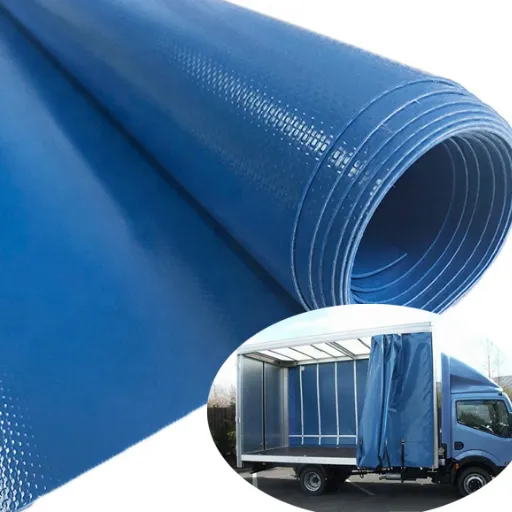
Certifications provide independent verification that a manufacturer’s quality claims are legitimate. Understanding which certifications apply to your market helps you filter suppliers effectively.
ISO 9001: Quality Management Systems
ISO 9001 is the most widely recognized quality management certification. It does not guarantee product quality directly. Instead, it certifies that the manufacturer follows documented, repeatable processes for quality control, traceability, and continuous improvement. For buyers, ISO 9001 certification indicates that the supplier takes quality seriously enough to submit to external audits and maintain systematic records.
Always verify ISO 9001 certification through the issuing body’s online registry. Fraudulent certificates exist, and a supplier claiming ISO certification should have no objection to sharing the certificate number for verification.
ASTM Standards for the US Market
ASTM International publishes test methods widely used for PVC tarpaulin evaluation in North America. Key standards include ASTM D751, which covers coated fabrics testing methods including breaking strength, tear resistance, and coating adhesion, and ASTM D4833, which measures puncture resistance. Requesting ASTM-compliant test reports ensures that supplier data was collected using recognized, reproducible methods.
EN Standards and REACH Compliance for Europe
European buyers should look for EN standards compliance. EN 13501 addresses fire reaction classification, critical for construction and event applications where fire safety regulations apply. REACH compliance confirms that the product does not contain restricted substances above threshold limits, protecting both human health and environmental safety. RoHS compliance, while originally developed for electronics, is increasingly requested for coated fabrics to confirm the absence of hazardous heavy metals.
GB Standards for Chinese Manufacturing
China produces approximately 40% of global PVC tarpaulin exports, so understanding Chinese standards is essential for buyers sourcing from this region. GB/T standards, such as GB/T 8948 for PVC coated fabrics, define domestic quality benchmarks. Reputable Chinese export manufacturers design production to meet both GB/T requirements and international standards such as ISO and ASTM.
At Linyi Chenlai, we manufacture PVC tarpaulin sheet and roll products to client specifications that align with ISO, ASTM, EN, and GB/T standards depending on destination market requirements.
Fire-Retardant Certifications
Fire-retardant PVC tarpaulin is mandatory for many construction, industrial, and event applications. Common certifications include NFPA 701 for the US market, BS 7838 for the UK, and DIN 4102 for Germany. Each standard uses different test methods, so a product certified to NFPA 701 may require additional testing for European markets. Always confirm that the fire certification matches the regulatory requirements of your specific project location.
Environmental and Safety Certifications
Growing buyer awareness around sustainability has increased demand for environmental certifications. REACH compliance addresses chemical safety in European markets. RoHS restricts hazardous substances. Some manufacturers now offer tarpaulin produced with reduced plasticizer content or recycled base fabric components. While fully biodegradable PVC tarpaulin remains technically challenging, eco-friendly material innovations are advancing rapidly.
If your project requires certified materials for regulatory or corporate sustainability reasons, request documentation before placing orders. Reputable suppliers maintain current certificates and provide them without delay.
Need certified PVC tarpaulin with full documentation? Contact Linyi Chenlai to request ISO 9001 certificates, ASTM test reports, REACH compliance statements, and custom certification packages for your specific market requirements.
Quality Control Process: From Factory to Finished Product
Understanding how manufacturers enforce standards helps you evaluate whether a supplier’s quality claims are credible. The quality control process operates in four stages.
Raw Material Inspection
Quality begins with the raw materials. PVC resin is graded by polymerization degree, K-value, and impurity levels. Higher-grade resin produces stronger, more flexible coatings. Reputable manufacturers verify each incoming resin batch against certificates of analysis from their chemical suppliers. Additives including plasticizers, stabilizers, UV inhibitors, and color pigments are similarly checked for consistency and concentration.
Base fabric, typically polyester woven cloth, is inspected for weave uniformity, thread count, and tensile properties before coating. Fabric with inconsistent weave density will produce coated material with weak spots that testing may not catch if samples are taken from stronger areas.
In-Process Testing
During coating, technicians monitor coating thickness, adhesion, and uniformity in real time. Calibrated thickness gauges check multiple points across the fabric width. Coating weight is sampled and weighed to confirm it falls within specification. If deviation is detected, production parameters are adjusted before the full batch is completed.
Fabric strength is spot-checked during production using portable tensile testers. This in-process verification catches problems early, reducing waste and ensuring that out-of-specification material does not proceed to finishing.
Finished Goods Inspection
After coating and cooling, every roll undergoes visual inspection for surface defects including pinholes, bubbles, scratches, and color variation. Some manufacturers perform 100% inspection. Others use statistically valid sampling protocols based on acceptable quality levels.
Final performance spot-testing validates that the finished product meets tensile strength, tear resistance, and hydrostatic head requirements. These tests are destructive, so they are performed on samples rather than the full roll. The sample location is recorded to maintain traceability.
Third-Party Laboratory Verification
For high-value orders or regulated applications, independent third-party laboratory testing provides additional assurance. Labs such as SGS, Bureau Veritas, and Intertek test samples against specified standards and issue formal test reports. These reports carry more weight than internal factory data because the testing body has no commercial interest in the outcome.
If your project requires third-party verification, specify this requirement in your purchase order and agree on the testing standard, sample size, and laboratory selection before production begins. Learn more about how our tarpaulin factory integrates third-party verification into large-batch production workflows.
How to Evaluate PVC Tarpaulin Quality as a Buyer
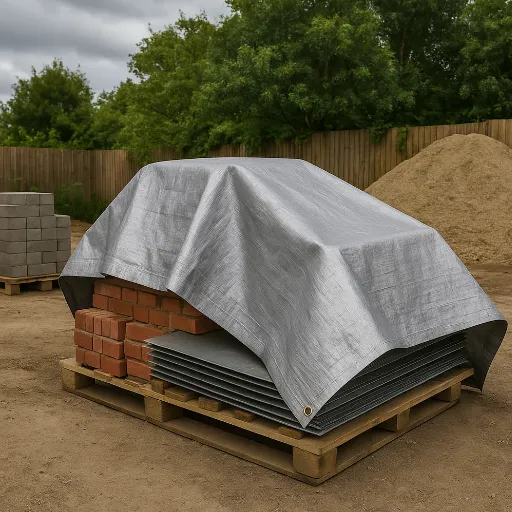
Even if you are not a materials engineer, you can apply practical evaluation techniques to separate quality products from inferior alternatives.
The Buyer Quality Checklist
Use this checklist when evaluating samples and supplier documentation:
- Request GSM specification and confirm it matches your application requirements.
- Verify tensile strength and tear resistance test data, including the test standard used.
- Confirm hydrostatic head rating with numerical value, not just “waterproof” claims.
- Check UV resistance data for outdoor applications, including expected lifespan.
- Review seam strength test reports, specifically the percentage of base fabric strength retained.
- Inspect coating uniformity by holding the sample to light and checking for thin spots or pinholes.
- Verify grommet reinforcement and pull-out strength if applicable.
- Confirm relevant certifications: ISO 9001, fire retardancy, REACH, or others as required.
- Request batch traceability documentation for large orders.
- Compare quoted specifications against independent test standards, not just supplier datasheets.
Red Flags: Signs of Substandard PVC Tarpaulin
Certain visual and documentation indicators suggest poor quality control. Watch for uneven coating thickness, visible pinholes when backlit, weak or loose grommets, inconsistent color across the sample, and strong chemical odors that indicate excessive or low-grade plasticizer use.
Documentation gaps are equally telling. A supplier who cannot provide test report numbers, certification body contact information, or clear specification datasheets may not be conducting proper quality control. Be especially wary of certificates that lack verifiable registration numbers or that reference testing standards vaguely without specific test method designations.
Questions to Ask Your Supplier
The following questions reveal whether a supplier understands and enforces PVC tarpaulin quality standards:
- What is the tensile strength of this grade, and which ASTM or ISO test method was used?
- Can you provide the certificate number for your ISO 9001 certification so I can verify it?
- What is the hydrostatic head rating, and do you have third-party test data?
- How do you control coating uniformity across the full roll width?
- What is your seam strength standard as a percentage of base fabric strength?
- Can you provide REACH or RoHS compliance documentation for European markets?
- What is your defect rate, and what is your policy for handling out-of-specification material?
Suppliers who answer these questions clearly and provide documentation quickly demonstrate quality maturity. Evasive or vague responses should raise concerns.
Sample Testing on Receipt
When your order arrives, perform simple checks before accepting delivery. Unroll a sample section and inspect for visible defects. Check that the stated width and length match your order. Perform a basic flexibility test by folding the material sharply. Quality PVC tarpaulin should bend without surface cracking or delamination. If the material feels excessively stiff, thin, or brittle, request test report verification before approving the batch.
Application-Specific Quality Considerations
Different applications place different demands on PVC tarpaulin. Matching standards to use cases prevents both under-specification and unnecessary cost.
Construction and Industrial Use
Construction sites subject tarpaulin to abrasion against concrete and steel, heavy wind loads, and potential exposure to chemicals. For these environments, prioritize high tensile strength above 3,000 N/5cm, abrasion-resistant coatings, and fire-retardant certification where local regulations require it. Waterproof tarpaulin performance in construction also demands high hydrostatic head ratings because standing water and prolonged rain exposure are common.
Agriculture and Outdoor Storage
Agricultural applications prioritize UV resistance and mildew resistance over maximum tensile strength. A greenhouse cover in tropical regions faces constant UV exposure and humidity. UV-enhanced grades with 7 to 10 year lifespans provide better value than marginally cheaper standard grades that degrade in 3 years. Mildew-resistant additives prevent biological growth on stored covers, extending usable life.
Transportation and Truck Covers
Truck covers experience dynamic stress from highway speeds, wind shear, and repeated fastening. Prioritize tear resistance and grommet strength. Flex resistance matters because drivers frequently fold and unfold covers during loading and unloading. Weight also becomes a consideration. Excessively heavy tarpaulin increases fuel consumption and handling difficulty.
Temporary Shelters and Event Structures
Event and shelter applications often face fire safety regulations and structural load requirements. Fire-retardant certification is frequently mandatory. Structural load standards ensure that tensioned fabric does not sag excessively or tear under snow accumulation. Color consistency across multiple panels also matters for aesthetic installations.
When Maria Ortiz organized a regional trade show in São Paulo, she assumed all PVC tarpaulin would meet the venue’s fire safety requirements. Two weeks before the event, the venue inspector rejected her supplier’s material because it lacked NFPA 701 certification. She had to rush-order certified panels at premium pricing, and the original supplier refused a refund because “fire certification was not specified in the order.” The lesson: always match certification standards to venue and regulatory requirements before purchasing.
Conclusion
PVC tarpaulin quality standards transform vague supplier claims into verifiable, comparable data. By understanding GSM classification, tensile strength benchmarks, hydrostatic head ratings, seam welding requirements, and international certifications, you gain the ability to evaluate suppliers objectively and protect your projects from costly material failures.
The most important standards to remember are these. Verify GSM and tensile strength against your application’s mechanical demands. Confirm waterproof performance with a specific hydrostatic head rating, not marketing language. Demand seam strength data showing at least 80% of base fabric performance. Check that certifications such as ISO 9001, ASTM D751, EN 13501, or REACH are current and verifiable. And always request documentation before placing orders, not after problems arise.
Quality PVC tarpaulin is an investment, not an expense. The difference between certified, tested material and an untested alternative often determines whether your cover performs for a decade or fails within a season.
Ready to source PVC tarpaulin that meets international quality standards? Contact Linyi Chenlai Plastic Products Co., Ltd. today to request a detailed quotation, certification documentation, and custom specifications tailored to your project requirements. Our quality control processes align with ISO, ASTM, EN, and GB/T standards, ensuring that every roll we produce delivers the durability and reliability your application demands.