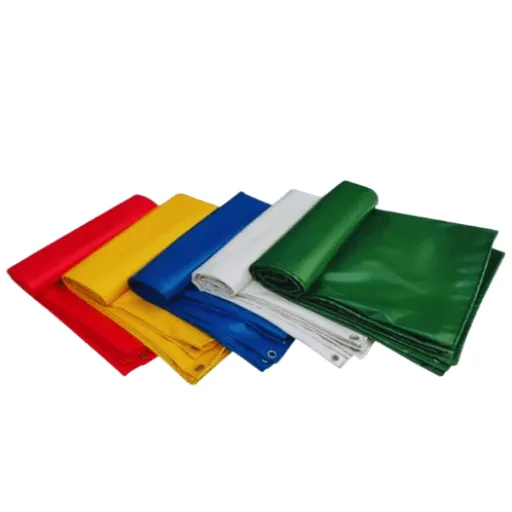
PVC tarpaulin lasts 5–10 years and is ideal for heavy-duty, long-term industrial applications, while poly (PE) tarpaulin lasts 1–3 years and suits short-term, budget-conscious projects. The right choice depends on your expected service life, climate conditions, and total cost of ownership — not just the upfront price per square meter.
Last year, a construction contractor in northern China contacted us after his third PE cover failed in a single winter. Each replacement cost him 800. Over three years, he spent 2,400 on covers that tore at the grommets, became brittle in the cold, and leaked at the seams. When he finally switched to a 650 GSM PVC tarpaulin, the upfront cost was $2,200 — but that cover is still performing perfectly after four years. His total cost of ownership dropped by nearly 60%.
This guide breaks down the real differences between PVC and poly tarpaulin. You will learn how each material is made, how they perform side by side, and how to choose the right one for your specific application — with the data you need to make a confident decision. At Linyi Chenlai Plastic Products Co., Ltd., we manufacture premium PVC tarpaulins that combine waterproof protection, flexibility, and long-lasting durability. Reach out today for customized support.
Key Takeaways
- PVC tarpaulin lasts 3–5 times longer than PE (5–10 years vs. 1–3 years) and achieves waterproof ratings above 200 kPa compared to PE’s 25–60 kPa
- PE tarpaulin costs 3–5 times less upfront (0.30–1.50/m² vs. 2.50–8.00/m²) making it the smarter choice for short-term or temporary coverage under one year
- PVC remains flexible to -30°C while PE becomes brittle below -15°C, a critical difference for cold-climate applications
- PVC seams can be RF welded for permanent waterproofing; PE relies on stitching or heat-sealing and will eventually leak at seams
- Total cost of ownership often favors PVC for any application lasting longer than 2–3 years despite the higher initial investment
What Is the Difference Between PVC and Poly Tarpaulin?
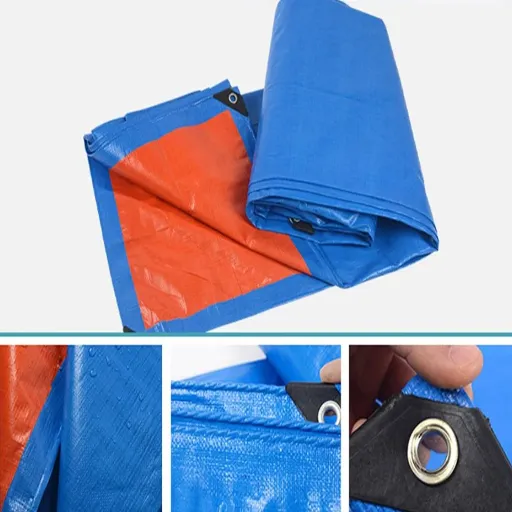
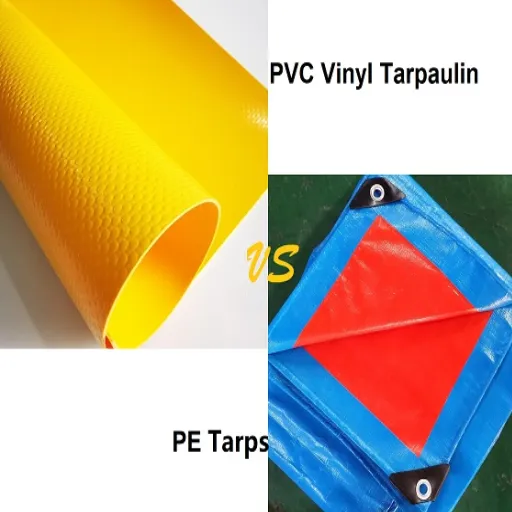
The fundamental difference starts at the molecular level. PVC tarpaulin is a coated fabric. Polyethylene (PE) tarpaulin is a laminated woven sheet. That distinction drives every performance difference that matters in the field.
Material Composition
PVC tarpaulin begins with a woven polyester scrim — a grid of polyester yarns ranging from 500 denier to 2000 denier. This base fabric is saturated or coated with polyvinyl chloride resin, blended with plasticizers that add flexibility, stabilizers that prevent degradation, and UV inhibitors that protect against sun damage. The PVC penetrates and encapsulates the polyester fibers, creating a unified composite material where the fabric and coating act as one.
PE tarpaulin starts with a woven high-density polyethylene (HDPE) fabric, typically 800 to 1200 denier. This woven base is then laminated on both sides with a layer of low-density polyethylene (LDPE) that is extruded as a molten film and pressed onto the fabric surface. The result is a three-layer sandwich: LDPE film, HDPE weave, LDPE film.
Manufacturing Process Contrast
The manufacturing process explains why PVC outperforms PE in durability. PVC coating uses either knife-over-roll coating or hot-melt calendering. In knife coating, a precision blade spreads liquid PVC compound onto the polyester scrim at controlled thickness. The material then passes through an oven that cures the PVC into a solid, flexible layer that penetrates the fabric weave. In calendering, heated rollers press and fuse PVC compound into the fabric under pressure. Both methods create a chemical and mechanical bond between coating and fabric.
PE lamination uses a different approach. Molten LDPE is extruded as a thin film and immediately pressed onto the woven HDPE base. The bond is thermal and mechanical, not chemical. The LDPE sits on top of the weave rather than penetrating it. This is faster and cheaper to produce, but the coating is more vulnerable to delamination under stress, especially at fold points and grommet locations.
Why this matters for buyers: The PVC-to-polyester bond is permanent. The LDPE-to-HDPE bond is surface-level. When you fold, flex, and tension a tarpaulin repeatedly, PVC’s integrated structure resists separation. PE’s laminated layers can eventually peel apart — especially at seams, corners, and grommet reinforcements.
Side-by-Side Specification Comparison
Specifications tell the real story. Below is a comprehensive comparison based on industry standards and our own quality control data at Linyi Chenlai.
| Property | PVC Tarpaulin | PE (Poly) Tarpaulin |
|---|---|---|
| Base Fabric | Polyester scrim (500D–2000D) | HDPE woven fabric (800D–1200D) |
| Coating Type | PVC resin with plasticizers | LDPE lamination |
| GSM Range | 300–1200+ | 60–300 |
| Thickness | 0.2–1.5 mm | 0.08–0.25 mm |
| Tensile Strength | 1500–7500 N/5cm | 400–1200 N/5cm |
| Tear Strength | 250–700+ N | 80–200 N |
| Waterproof Rating | >200 kPa | 25–60 kPa |
| UV Resistance | 3–5 years with stabilizers | 6–18 months without inhibitors |
| Temperature Range | -30°C to +70°C (std), -40°C to +80°C (special) | -15°C to +60°C |
| Expected Lifespan | 5–10 years | 1–3 years |
| Weight | Heavy (stiff when new) | Lightweight (flexible) |
| Weldability | RF weldable, hot-air weldable | Not weldable |
| Repairability | Weld patches, adhesive bonds | Tape patches, limited repair |
| Fire Resistance | FR grades available (NFPA 701, DIN 4102 B1) | Limited availability |
| Cost per m² | 2.50–8.00 | 0.30–1.50 |
| Cost per year/m² | 0.25–0.80 | 0.10–0.50 |
How to Read These Numbers
Tensile strength measures how much pulling force the material withstands before breaking. A construction site enclosure in high wind needs high tensile strength — which is why 650+ GSM PVC is standard for scaffolding covers.
Tear strength matters at grommets, corners, and any point where the tarpaulin is under tension. PE tarpaulin’s lower tear strength is why you see ripped grommets and corner failures after a single season of use.
Hydrostatic head (waterproof rating) measures water pressure resistance. PVC’s >200 kPa rating means it can withstand the equivalent of a fire hose spray indefinitely. PE’s 25–60 kPa is adequate for rain but will eventually allow water penetration under ponding or sustained pressure.
Key Performance Differences Explained
Durability and Lifespan
PVC tarpaulin is built for longevity. The integrated PVC-polyester structure resists abrasion, puncture, and flex fatigue. In our testing, a 600 GSM PVC tarpaulin withstands over 50,000 Martindale abrasion cycles before showing wear. Equivalent PE material shows wear after 5,000–8,000 cycles.
PE tarpaulin degrades through a different mechanism. UV radiation breaks down the polyethylene polymer chains. Wind flexing causes micro-cracks at fold lines. Temperature cycling expands and contracts the LDPE lamination, gradually weakening the bond to the HDPE base. The result is predictable: within 12–18 months of continuous outdoor exposure, standard PE loses 30–50% of its original tensile strength.
The total cost of ownership calculation changes everything. Consider a 500 m² construction site cover needed for five years:
- PE option: 0.60/m2×500m2=300 upfront. Replace every 18 months. Five-year cost: 300×3.3replacements=∗∗990**
- PVC option: 3.50/m2×500m2=1,750 upfront. No replacements. Five-year cost: $1,750
At first glance, PE seems cheaper. But factor in labor for removal, disposal, and reinstallation — typically 150–300 per replacement — and the PE total rises to 1,440–1,440–1,890. The PVC option is actually more economical, plus you avoid the operational disruption of mid-project cover failures.
Waterproofing Performance
PVC achieves true waterproofing through both material and construction. The PVC compound itself is hydrophobic and impermeable. More importantly, PVC seams can be radio-frequency welded or hot-air welded, creating a molecular bond that is as strong and waterproof as the parent material. A properly welded PVC seam will not leak for the life of the tarpaulin.
PE relies on stitching, heat-sealing, or taping for seams. Stitching creates hundreds of needle holes — each a potential leak point. Heat-sealing melts the LDPE layers together, but the bond is weaker than the parent material and degrades faster under UV and flex stress. Tape bonding is even less durable, especially in hot climates where adhesive softens.
For applications where waterproofing failure is catastrophic — grain storage, equipment protection, cargo covers — PVC’s welded seams are non-negotiable.
Cold Weather Performance
This is where the material science gap becomes dramatic. Quality PVC tarpaulin remains flexible to -30°C, and specialized cold-flex grades maintain performance to -40°C. This is achieved through plasticizer chemistry that keeps the PVC compound pliable at extreme low temperatures.
PE has no such protection. Below -15°C, polyethylene transitions from ductile to brittle. Fold a PE tarpaulin at -20°C and it will crack. Grommet pull-through failures spike in winter because the material no longer absorbs stress through flex — it fractures instead.
For any application in northern climates, high-altitude regions, or cold storage environments, PE is simply not suitable for year-round use. Get in touch with Linyi Chenlai Plastic Products Co., Ltd. to discuss custom PVC tarpaulin specifications, colors, thickness options, and production requirements.
UV and Sun Exposure
PVC incorporates UV stabilizers and HALS (Hindered Amine Light Stabilizers) that absorb and neutralize UV radiation before it degrades the polymer. Quality PVC maintains over 70% of its original tensile strength after 3–5 years of continuous tropical sun exposure.
Standard PE tarpaulin has minimal UV protection unless specifically treated with UV inhibitors. Even treated grades offer only 12–24 months of reliable UV resistance. In desert or high-altitude environments with intense UV, untreated PE can show surface cracking within 3–6 months.
Weight and Handling
PVC is heavier — roughly 2–4× the weight per square meter depending on GSM. A 10 m × 6 m cover at 600 GSM PVC weighs approximately 36 kg. The same size in 200 GSM PE weighs about 12 kg. This matters for manual deployment, shipping costs, and storage volume.
However, the weight difference is less significant than buyers assume. For fixed installations — truck side curtains, warehouse dividers, scaffolding enclosures — the tarpaulin is installed once and remains in place. The handling advantage of PE only matters for applications requiring frequent deployment and removal. Get in touch with Linyi Chenlai Plastic Products Co., Ltd. to discuss custom PVC tarpaulin specifications, colors, thickness options, and production requirements.
When to Choose PVC Tarpaulin
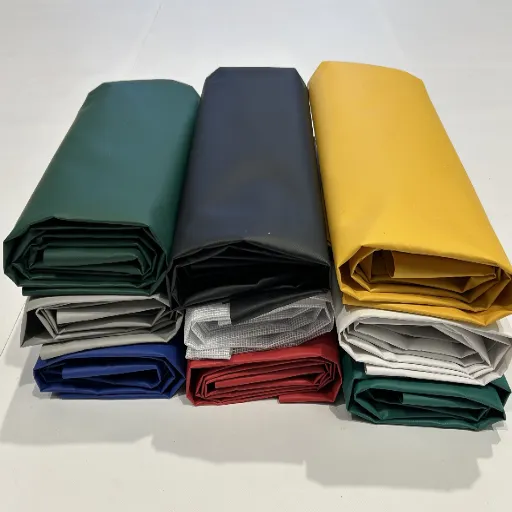
PVC is the right material when performance, longevity, and reliability outweigh upfront cost considerations.
Best Applications for PVC
Long-term industrial covers. Any cover expected to remain in service for more than two years should be PVC. The material pays for itself through elimination of replacement costs and avoidance of failure-related downtime.
Truck and trailer side curtains. The combination of abrasion resistance, welded seams, and UV stability makes PVC the global standard for commercial vehicle curtains. PE simply cannot match the durability required for daily road exposure.
Construction site enclosures. Fire-retardant PVC grades meet NFPA 701 and DIN 4102 B1 standards required by construction safety regulations. PE fire-retardant options are limited and less reliable.
Membrane structures and tensioned roofs. PVC’s high tensile strength and weldability enable engineered tension structures that PE cannot support.
Cold climate applications. Any environment where temperatures drop below -15°C eliminates PE from consideration.
Chemical exposure environments. PVC resists oils, acids, solvents, ammonia, and agricultural fertilizers. PE degrades when exposed to hydrocarbons and certain chemicals.
Applications requiring welded seams. If the cover must be absolutely waterproof — pond liners, liquid containment, precision equipment protection — PVC welding capability is essential.
When to Choose PE (Poly) Tarpaulin
PE is not a inferior material — it is a different material with different strengths. Honest assessment of your needs may reveal PE as the smarter choice.
Best Applications for PE
Short-term construction covers. Protecting material piles for 2–6 months. The low upfront cost makes sense when the cover will be discarded at project completion.
Emergency and disaster relief. Lightweight PE tarpaulins can be airlifted, hand-carried, and rapidly deployed by relief teams. Speed and portability matter more than longevity in emergency response.
Agricultural seasonal covers. Row covers, temporary greenhouse roofing, and seasonal crop protection where the cover is stored during off-season. PE’s light weight makes seasonal installation and removal practical.
One-time transport protection. Covers for single cargo movements where the tarpaulin will not be reused.
Budget-constrained projects. When capital is limited and the application allows for shorter service life, PE delivers adequate protection at a fraction of the cost.
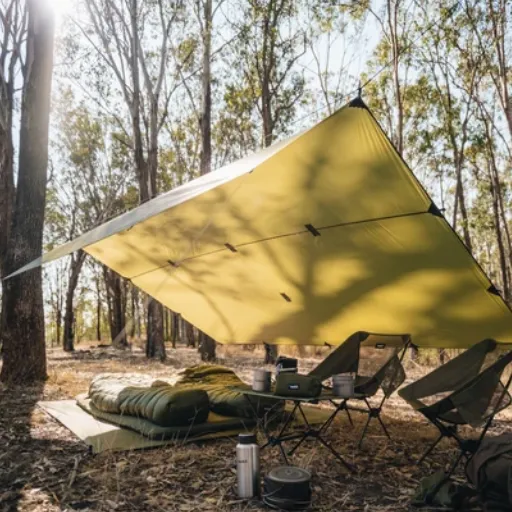
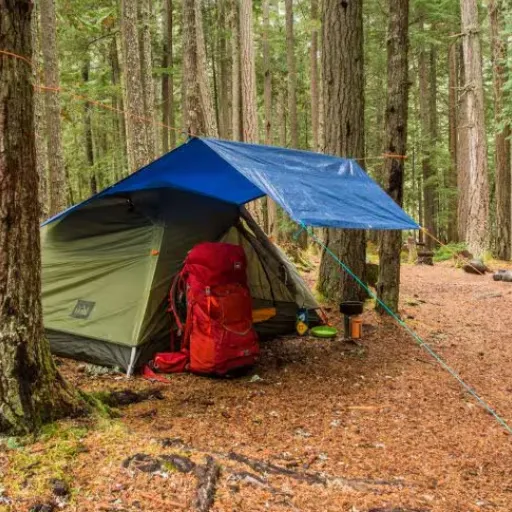
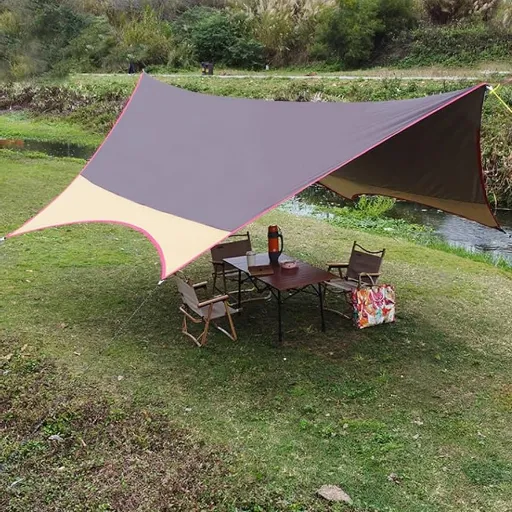
Lightweight recreational use. Camping ground sheets, temporary shade structures, and outdoor event covers where easy handling is prioritized over longevity.
Why PE Wins in These Scenarios
PE’s advantages are real: lower cost, lighter weight, faster deployment, and greater recyclability at end of life. For applications under 12 months where waterproofing failure is manageable and handling speed matters, PE is the rational choice.
The key is matching material to timeline. Using PE for a 5-year project is false economy. Using PVC for a 3-month cover is unnecessary expense.
Industry-Specific Recommendations
Agriculture
Agricultural applications span both materials depending on the specific use case.
Choose PVC for: Grain storage covers, livestock shelter roofing, pond liners, and permanent greenhouse cladding. These applications require multi-year service life, resistance to animal contact, and tolerance to ammonia from livestock waste. Recommended GSM: 500–750 for general agricultural use, 800+ for pond liners.
Choose PE for: Seasonal row covers, temporary frost protection, haystack covers for single-season use, and shade netting for nursery stock. The light weight allows farmers to deploy and remove covers without machinery. Recommended GSM: 120–200.
A dairy farm in Shandong Province learned this lesson the hard way. They covered their silage bunker with 180 GSM PE tarpaulin to save money. Within 14 months, UV degradation had embrittled the material. A windstorm shredded the cover, exposing 200 tonnes of silage to rain. The spoilage cost exceeded 4,000—farmorethanthe800 difference a 600 GSM PVC cover would have cost.
Construction
Construction is PVC’s strongest domain — but PE still has a role.
Choose PVC for: Scaffolding enclosures, debris containment netting, multi-year site protection, concrete curing covers, and any application where fire-retardant certification is required. Construction sites operate for 1–5 years, and PVC’s durability matches this timeline. Recommended GSM: 650–900 for general construction; fire-retardant grades mandatory for scaffolding.
Choose PE for: Temporary material pile covers during initial site preparation, short-term weather protection for equipment delivery, and dust suppression during demolition phases under 3 months. Recommended GSM: 180–260.
A commercial builder in Jiangsu used 900 GSM fire-retardant PVC for a 3-year high-rise project. The scaffolding enclosure remained intact through two typhoon seasons and three winters. Their previous project used 260 GSM PE that required four replacements over the same period, adding $6,000 in material and labor costs.
View our construction tarpaulin range engineered for site safety and long-term weather protection →
Transportation and Logistics
Transport applications heavily favor PVC due to mechanical stress and seam requirements.
Choose PVC for: Truck and trailer side curtains, flatbed trailer covers, container linings, and warehouse divider curtains. The abrasion from road grit, constant tensioning, and need for welded seams make PVC the only viable choice for commercial vehicle applications. Recommended GSM: 500–750 for truck covers; 900+ for container curtains.
Choose PE for: One-time cargo covers for non-abrasive goods, lightweight dunnage, and temporary warehouse floor protection. Recommended GSM: 100–180.
Disaster Relief and Emergency Response
Speed and weight trump longevity in emergency scenarios.
Choose PE for: Emergency shelter roofing, temporary medical facility covers, and rapid-deployment protection. PE’s light weight (often under 100 GSM for emergency grades) allows a single person to deploy a 4 m × 6 m cover without assistance. Aid organizations specify PE for exactly this reason.
Choose PVC for: Semi-permanent field hospitals, command centers, and logistics hubs operating for 6+ months in disaster zones. Once the emergency phase transitions to recovery, PVC’s durability becomes valuable. Recommended GSM: PE 100–150 for emergency; PVC 450–650 for extended operations.
Environmental Considerations
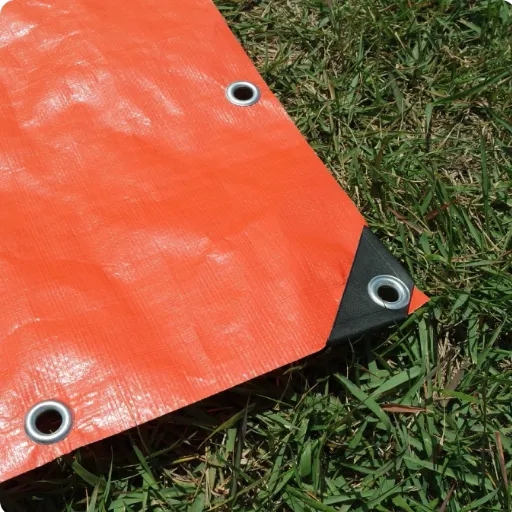
Sustainability in tarpaulin selection is more nuanced than “recyclable equals better.”
PVC Environmental Profile
PVC’s primary environmental advantage is longevity. A tarpaulin that lasts 10 years replaces three to five shorter-lived alternatives. The environmental cost of manufacturing, shipping, and disposing of multiple PE covers often exceeds the impact of producing one PVC cover.
Modern PVC tarpaulin production addresses traditional concerns. Phthalate-free plasticizers such as DINP and DOTP have replaced older formulations. REACH-compliant and RoHS-certified PVC is standard for export markets. Bio-based plasticizers derived from renewable sources are entering commercial production, though they currently add 15–25% to material cost.
PVC recycling is technically feasible but logistically challenging. The composite nature (PVC + polyester scrim) requires separation processes that are not universally available. However, end-of-life PVC can be ground and used in lower-grade applications such as road mats and industrial flooring.
PE Environmental Profile
PE’s environmental advantage is recyclability. Pure PE tarpaulin (without reinforcement tapes or mixed materials) can be recycled through standard HDPE/LDPE streams. The material has lower embodied energy per square meter than PVC, and the manufacturing process consumes less energy.
The disadvantage is replacement frequency. Three PE tarpaulins manufactured, shipped, and disposed of over 5 years generate more cumulative environmental impact than one PVC cover — even accounting for PVC’s more complex chemistry.
The Sustainability Verdict
For applications under 12 months, PE’s recyclability advantage is meaningful. For applications over 3 years, PVC’s durability creates the lower lifetime environmental footprint. At Linyi Chenlai, we offer REACH-compliant and phthalate-free options for both materials, allowing buyers to optimize for their specific timeline and sustainability priorities.
How to Make the Right Decision: A 4-Step Framework
Step 1: Define Expected Service Life
This single question eliminates half the complexity.
- Under 1 year → PE is likely sufficient
- 1–3 years → Evaluate PE with UV inhibitors or consider light-duty PVC (300–450 GSM)
- 3+ years → PVC is almost always the better investment
Step 2: Assess Environmental Conditions
Map your operating environment against material limits:
- Temperature: Will temperatures drop below -15°C? If yes, PVC is required.
- UV exposure: Continuous tropical or desert sun favors PVC’s superior UV resistance.
- Chemical exposure: Oils, fertilizers, solvents, or acids in the environment eliminate untreated PE.
- Wind load: High wind environments need PVC’s superior tensile and tear strength.
Step 3: Check Regulatory Requirements
Construction scaffolding, public event structures, and transportation applications often mandate fire-retardant materials. PVC fire-retardant grades (NFPA 701, DIN 4102 B1, EN 13501-1) are widely available. PE fire-retardant options are limited and may not meet stringent codes.
Step 4: Calculate Total Cost of Ownership
Use this formula for any application over 12 months:
TCO = (Purchase Price + Installation Labor + Replacement Costs + Disposal Costs) ÷ Years of Service ÷ Coverage Area
Example for a 300 m² warehouse divider needed for 4 years:
- PE option: 0.80/m2×300m2=240. Replace twice. Installation 100×3=300. Disposal 50×3=150. TCO = (240+300 + 150)÷4÷300=∗∗0.58/m²/year**
- PVC option: 4.00/m2×300m2=1,200. No replacement. Installation 150.Disposal50. TCO = (1,200+150 + 50)÷4÷300=∗∗1.17/m²/year**
In this case, PE is cheaper per year — but only because the application is relatively sheltered and the replacement count is low. For outdoor, high-stress applications, the math typically reverses.
Frequently Asked Questions
Is PVC tarpaulin worth the extra cost over PE?
For applications lasting longer than 2–3 years, yes. The total cost of ownership — including replacements, labor, and disposal — typically favors PVC within 24–36 months. For short-term use under 12 months, PE is the more economical choice.
Can PE tarpaulin be used for permanent applications?
Not reliably. Standard PE tarpaulin degrades within 1–3 years under continuous outdoor exposure. Even UV-treated PE grades rarely exceed 3–4 years of service life. For any “permanent” installation, PVC is the appropriate material.
Which material is more waterproof?
PVC is substantially more waterproof. It achieves hydrostatic pressure ratings above 200 kPa compared to PE’s 25–60 kPa. More importantly, PVC seams can be welded to create permanent waterproof bonds, while PE seams rely on stitching or heat-sealing that will eventually leak.
Can you weld PE tarpaulin like PVC?
No. PE cannot be radio-frequency welded or hot-air welded to the same standard as PVC. PE seams must be stitched, heat-sealed (which creates a weaker bond), or taped. None of these methods match the durability and waterproofing of a welded PVC seam.
Which is better for cold climates?
PVC is the clear choice for cold climates. Quality PVC remains flexible to -30°C, with specialized grades performing to -40°C. PE becomes brittle below -15°C and will crack under flexing or wind load.
Is PE or PVC more eco-friendly?
It depends on your timeframe. PE is more readily recyclable and has lower embodied energy per square meter. However, PVC’s 3–5× longer lifespan means fewer replacements, less manufacturing impact, and less disposal volume over time. For long-term applications, PVC often has the lower lifetime environmental footprint.
Can I get custom sizes in both materials?
Yes. At Linyi Chenlai, we manufacture both PVC and PE tarpaulins in custom dimensions, colors, and configurations including grommet spacing, reinforced edges, welded seams, and logo printing. Minimum order quantities and lead times vary by specification.
Conclusion
Choosing between PVC and poly tarpaulin is not about finding the “best” material. It is about finding the right material for your timeline, climate, application, and budget.
PE tarpaulin delivers excellent value for short-term coverage, emergency response, and budget-sensitive projects. Its low cost and light weight make it the pragmatic choice when service life is measured in months, not years.
PVC tarpaulin dominates long-term industrial applications through superior durability, waterproofing, cold resistance, and weldability. Its higher upfront cost converts to lower total cost of ownership for any project lasting beyond two to three years.
The five factors that should drive your decision are: expected service life, climate conditions, regulatory requirements, seam waterproofing needs, and total cost of ownership — in that order. Get these right, and you will select a tarpaulin that performs reliably for its entire intended lifespan.
Ready to specify the right material for your project? Contact Linyi Chenlai Plastic Products Co., Ltd. for expert guidance, custom sizing, and competitive quotes on both PVC and PE tarpaulins. Our team will help you match the exact GSM, coating, and features your application demands.