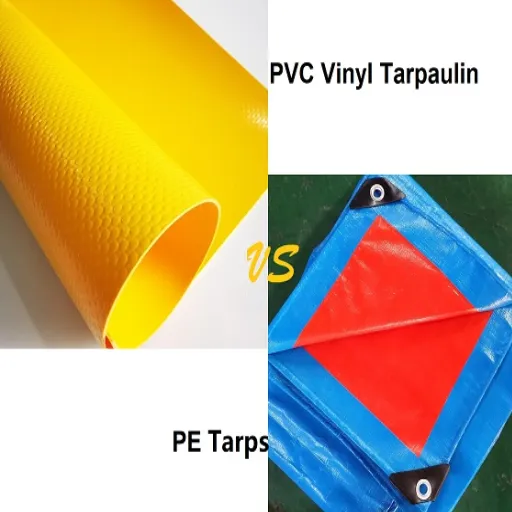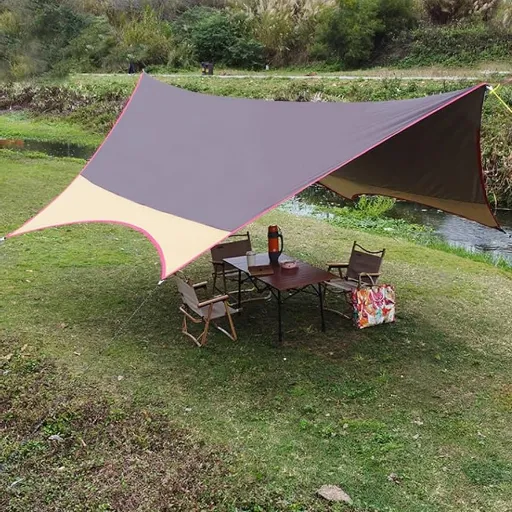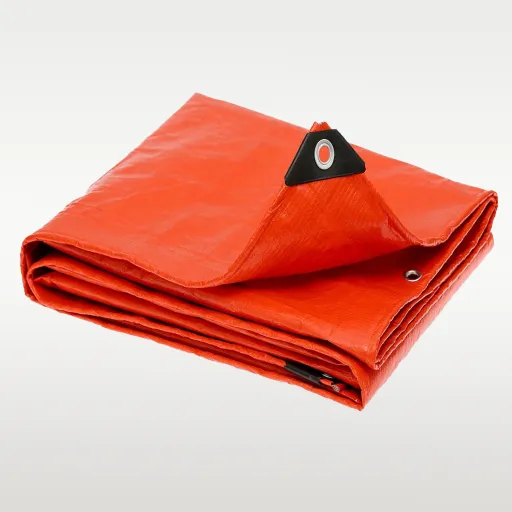
PVC tarpaulin manufacturing transforms raw polyester fabric and PVC resin into durable, weather-resistant material through three primary methods: knife-over-roll coating, hot-melt lamination, and adhesive lamination. Each method produces different performance characteristics, from lightweight covers to heavy-duty industrial fabrics that last over a decade.
But here’s what most buyers don’t realize: the manufacturing method alone determines whether your tarpaulin survives three seasons or fifteen years. When Marcus Chen, a procurement manager for a mid-sized logistics company in Rotterdam, switched suppliers in 2024, he thought all PVC tarpaulins were essentially the same. His first shipment, made through basic cold lamination, developed seam failures within eight months. His second supplier used knife-over-roll coating with proper quality control. Those tarps are still in service today, two years later, protecting cargo through harsh North Sea winters.
This guide explains every step of PVC tarpaulin manufacturing, from raw material selection to finished product testing. Whether you’re sourcing tarpaulins for agriculture, construction, or transportation, you’ll understand what happens inside the factory, which quality standards actually matter, and how to evaluate manufacturers before placing your order. Get in touch with Linyi Chenlai Plastic Products Co., Ltd. to discuss custom PVC tarpaulin specifications, colors, thickness options, and production requirements.
Key Takeaways
- PVC tarpaulin manufacturing uses three distinct methods (knife coating, hot-melt lamination, adhesive lamination) that produce vastly different durability and performance levels.
- The production process involves nine critical steps, with quality control checkpoints at every stage separating premium manufacturers from budget operations.
- Knife-over-roll coating delivers the highest quality (10+ year lifespan) but costs more; hot-melt lamination balances quality and cost for general applications.
- China produces 25.5% of the world’s PVC tarpaulins, with integrated supply chains from polyester yarn to finished coating that deliver both quality and competitive pricing.
- Modern sustainability innovations include phthalate-free plasticizers, water-based coating systems, and energy-efficient curing that reduce environmental impact without sacrificing performance.
What Is PVC Tarpaulin? Understanding the Material
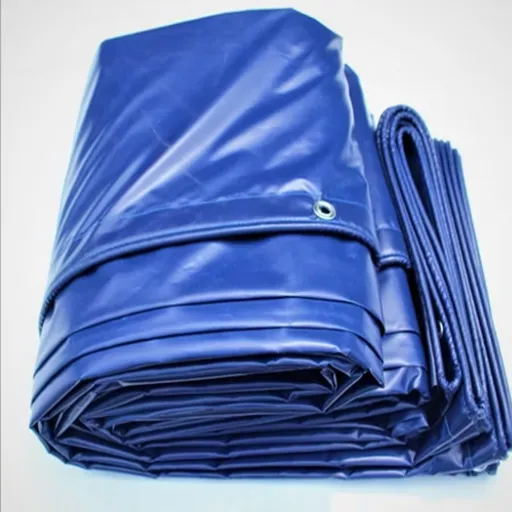
PVC tarpaulin is a three-layer composite material. At its core sits a woven polyester fabric called the scrim. PVC coating bonds to both sides of this scrim, creating a flexible, waterproof, and tear-resistant sheet. The result handles temperatures from -40 degrees C to +70 degrees C, resists UV degradation for years, and withstands thousands of Newtons of tensile force per 5-centimeter strip.
The manufacturing process determines everything. The same polyester base fabric, processed through different methods, can produce a lightweight 350-gram-per-square-meter cover for temporary event shelters or an industrial-grade 1,100-gsm membrane for architectural tension structures. The difference lies not in the raw materials alone but in how those materials are prepared, bonded, cured, and finished.
Common specifications buyers encounter:
- GSM (grams per square meter): Total weight ranging from 240 gsm (light banners) to 2,700 gsm (heavy inflatable structures)
- Denier: Yarn thickness, typically 500D to 1,300D for the polyester base fabric
- Weave pattern: Plain weave for general use, Panama 2×2 weave for 40% greater tear strength
- Coating adhesion: Measured in Newtons per 5 centimeters, with industrial grade requiring minimum 100N/5cm per ISO 2411
Understanding these specifications matters because they directly map to manufacturing capabilities. A factory equipped only for cold lamination cannot produce heavy-duty industrial tarpaulins no matter what they claim. The equipment, process controls, and technical expertise must match the product specification.
Want to understand how these specifications translate to real-world performance? Our heavy-duty tarpaulin guide breaks down exactly what GSM, denier, and weave pattern mean for your specific application.
The Three Primary PVC Tarpaulin Manufacturing Methods
Every PVC tarpaulin factory uses one or more of three core manufacturing technologies. The method chosen affects cost, durability, flexibility, and suitable applications. Understanding these differences helps buyers match product specifications to actual needs instead of overspending on unnecessary features or, worse, under-specifying for demanding environments.
Knife-Over-Roll Coating: The Premium Standard
Knife-over-roll coating represents the gold standard for high-performance PVC tarpaulin. In this process, liquid PVC paste resin — mixed with plasticizers, stabilizers, pigments, and performance additives — is spread evenly across the polyester scrim using a precision-adjusted doctor blade. The coated fabric then passes through high-temperature curing ovens where the PVC gelates and fuses to the base fabric at temperatures between 160 degrees C and 220 degrees C.
The result is a chemical bond between PVC and polyester that no other method achieves. Coating adhesion consistently exceeds 100N/5cm. Thickness control stays within plus or minus 0.02 millimeters across the full roll width. The surface remains flexible even in sub-zero temperatures, and the finished product typically carries a 10- to 15-year service life in outdoor applications.
Best applications for knife-coated tarpaulin:
- Heavy-duty truck covers and trailer side curtains
- Architectural membrane structures and tensile roofs
- Inflatable boats, castles, and advertising structures
- Industrial curtains and warehouse partition walls
- Liquid containment and geomembrane applications
The trade-off is cost. Knife coating requires more expensive paste resin, precision equipment, longer production cycles, and highly skilled operators. Factories running this method invest significantly more in machinery and quality control infrastructure.
Hot-Melt Lamination: The Balanced Solution
Hot-melt lamination dominates mainstream PVC tarpaulin production because it delivers near-knife-coating quality at lower cost. The process begins with pre-formed PVC films manufactured through calendering — heating and rolling PVC compound into uniform sheets. These films are then bonded directly to the polyester scrim using heat and pressure, without separate adhesive layers.
Temperature control is critical. The bonding zone operates between 150 degrees C and 180 degrees C. Computer-controlled rollers maintain consistent pressure across the full fabric width. The absence of adhesive simplifies the process, reduces material costs, and produces a clean bond with good peeling strength.
Where hot-melt lamination excels:
- General-purpose covers and agricultural shelters
- Tents, awnings, and camping applications
- Event covers and temporary structures
- Medium-duty transportation covers
- Budget-conscious projects requiring 3- to 7-year lifespan
The finished product offers excellent flexibility, consistent quality, and good weather resistance. While not matching knife coating for extreme durability, hot-melt laminated tarpaulins serve the majority of commercial and industrial applications at a more accessible price point.
Adhesive Lamination: The Specialized Approach
Adhesive lamination creates a multi-layer sandwich structure: PVC film, thermosetting adhesive (typically polyurethane or acrylic-based), woven polyester scrim, another adhesive layer, and a second PVC film. Heat curing cross-links the adhesive, creating chemical bonds that deliver exceptional airtightness and hydrostatic pressure resistance.
This method excels where containment and pressure resistance matter most. The multi-layer construction achieves superior performance in applications involving air pressure, liquid containment, or environments where even microscopic leaks cause failure.
Typical adhesive-laminated applications:
- Inflatable structures requiring airtight seams
- Water tanks and liquid containment systems
- High-pressure industrial applications
- Specialty products requiring multi-layer performance
The complexity of adhesive formulation, precise layer alignment, and extended curing times make this the most expensive manufacturing method. However, for applications where failure is not an option, adhesive lamination delivers unmatched performance.
Manufacturing Method Comparison
| Factor | Knife Coating | Hot-Melt Lamination | Adhesive Lamination |
|---|---|---|---|
| Lifespan | 10-15 years | 3-7 years | 5-10 years |
| Cost | Highest | Moderate | High |
| Coating adhesion | >100N/5cm | 80-100N/5cm | >100N/5cm |
| Flexibility | Excellent | Very good | Good |
| Airtightness | Moderate | Moderate | Excellent |
| Production speed | Slower | Faster | Slowest |
| Best for | Heavy-duty, long-term | General-purpose | Containment, inflatable |
Step-by-Step: The Complete PVC Tarpaulin Production Process
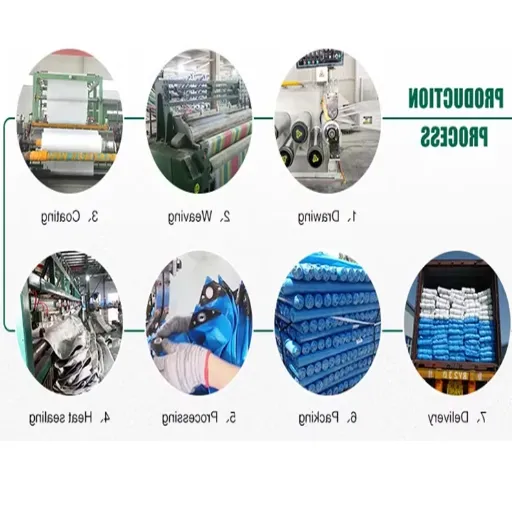
Modern PVC tarpaulin manufacturing follows a nine-step production flow. Each step contains quality control checkpoints that separate professional factories from operations cutting corners. Understanding this process helps buyers ask the right questions during supplier evaluation and spot red flags before committing to large orders.
Step 1: Raw Material Preparation
Manufacturing begins with two inputs: the base fabric and the PVC compound.
Base fabric selection involves choosing polyester yarn by denier (thickness), tenacity (strength), and weave pattern. High-tenacity polyester at 1,000D to 1,300D provides the strength foundation for industrial-grade tarpaulins. The yarn is woven on industrial looms into scrim fabric, typically at densities of 20 by 20 or 23 by 23 threads per 10 centimeters.
PVC compound preparation starts with PVC resin — either paste resin for knife coating or suspension/emulsion resin for lamination. Additives are blended in precise ratios:
- Plasticizers (DOP, DINP, or DOTP) provide flexibility
- Heat stabilizers prevent degradation during high-temperature processing
- UV absorbers and HALS stabilizers extend outdoor lifespan
- Flame retardants enable fire-safety certifications
- Pigments provide color consistency
- Anti-fungal agents resist mold and mildew growth
Incoming material inspection verifies supplier certificates of analysis, checks fabric weight and yarn count, and tests chemical purity. Factories skipping this step risk batch-to-batch variation that undermines final product consistency.
Step 2: Base Fabric Weaving
Polyester yarn feeds into high-speed industrial looms that interlace warp (lengthwise) and weft (crosswise) threads. The weave pattern selected directly impacts tear resistance:
- Plain weave: Simple over-under pattern, cost-effective, suitable for general applications
- Panama 2×2 weave: Two warp threads cross two weft threads, creating a basket-like structure with approximately 40% greater tear strength than plain weave
- Twill weave: Diagonal rib pattern offering good drape and medium tear resistance
Quality weaving maintains consistent tension, uniform thread spacing, and minimal defects. Fabric rolls are inspected for broken threads, uneven density, and width variation before advancing to pre-treatment.
Step 3: Fabric Pre-Treatment
Raw woven fabric requires preparation before coating or lamination. Pre-treatment typically includes three operations:
- Heat setting: Fabric passes through a stenter frame at controlled temperature, removing residual moisture, setting dimensions, and eliminating wrinkles. This step prevents shrinkage during subsequent high-temperature coating.
- Scorching (optional): A brief high-temperature pass removes surface fuzz and loose fibers that would interfere with coating adhesion.
- Primer application: Some applications require a bonding agent to improve PVC-to-polyester adhesion, particularly for heavy-duty industrial products.
Skipping or under-performing pre-treatment causes coating delamination, dimensional instability, and premature product failure. Professional factories control pre-treatment temperature within plus or minus 2 degrees C and maintain detailed batch records. Contact Linyi Chenlai Plastic Products Co., Ltd. to explore high-strength PVC tarpaulin solutions designed for demanding outdoor and industrial environments.
Step 4: PVC Compound Preparation
The PVC compound must be homogeneous, properly plasticized, and free of contaminants before application.
For knife coating, paste resin mixes with plasticizers in high-speed dispersers until a smooth, viscous liquid forms. Viscosity testing confirms the compound flows evenly during application. Color matching against approved standards ensures batch-to-batch consistency.
For lamination methods, PVC compound passes through calendering machines — a series of heated rollers that progressively thin and flatten the material into uniform films. Calendering temperature, roller gap, and line speed determine film thickness, surface finish, and mechanical properties. Film thickness typically ranges from 0.15mm to 0.50mm per layer depending on final product specification.
Step 5: Coating or Lamination Application
This is the core manufacturing step where base fabric and PVC become a composite material.
Knife coating: The pre-treated scrim passes over a support roll beneath a precision knife. The knife gap, set to within 0.01mm tolerance, controls coating thickness. Multiple coating passes build layers to achieve target GSM. Between passes, the material enters curing ovens where partial gelation sets each layer before the next is applied.
Hot-melt lamination: Pre-formed PVC films align above and below the scrim. The sandwich passes through heated compression rollers where temperature and pressure fuse the PVC to the fabric. No separate adhesive is needed — the heat-activated PVC bonds directly to the polyester and to itself through the weave openings.
Adhesive lamination: A precisely metered adhesive layer applies to both PVC films. The scrim enters between the films, and the assembly passes through a curing zone where heat cross-links the adhesive. Cure time and temperature depend on adhesive chemistry, typically 120 degrees C to 160 degrees C for 30 to 90 seconds.
Real-time monitoring systems track coating weight, thickness, and adhesion during application. Inline sensors flag deviations immediately, allowing operators to adjust parameters before defective material accumulates.
Step 6: Heat Treatment and Curing
After initial application, the composite material requires controlled heat treatment to complete the chemical bonding process.
For knife-coated products, curing ovens operate at 180 degrees C to 220 degrees C. The PVC undergoes gelation — transforming from a paste to a solid, elastic state — and fusion, where polymer chains cross-link with the fabric surface. Cure time depends on coating thickness, oven temperature, and line speed. Under-curing produces soft, weak coating. Over-curing causes brittleness and cracking.
For laminated products, the bonding zone maintains 150 degrees C to 180 degrees C. The goal is activating adhesive bonds without degrading the PVC film or polyester base. Precise temperature profiling across the full material width ensures uniform curing.
Step 7: Cooling and Surface Finishing
After curing, rapid and uniform cooling prevents warping, residual stress, and surface defects. Cooling drums or air cooling systems bring material temperature below 40 degrees C before winding.
Surface finishing options extend functionality and appearance:
- Embossing: Rollers imprint matte, glossy, or textured patterns onto the surface
- Lacquering: Acrylic or PVDF topcoats add UV resistance, self-cleaning properties, or printability
- Anti-static treatment: Reduces dust attraction for clean-room and sensitive applications
- Anti-mildew coating: Prevents fungal growth in humid environments
Each finishing option requires additional process steps, quality verification, and careful parameter control.
Step 8: Quality Control Testing
Quality control in PVC tarpaulin manufacturing operates at three levels: inline monitoring, laboratory testing, and batch certification.
Inline monitoring checks:
- Coating thickness across full roll width (laser or nuclear gauge)
- Visual surface inspection (automated camera systems or trained operators)
- Pinhole detection (electrical conductivity testing for waterproof layers)
- Width and length measurement
- Winding tension consistency
Laboratory testing on representative samples verifies:
- Tensile strength (ISO 1421): Force required to break the material, typically 1,500 to 5,000 N/5cm depending on grade
- Tear strength (ASTM D751): Resistance to tear propagation, 400 to 800 N for industrial grades
- Coating adhesion (ISO 2411): Bond strength between PVC and fabric, minimum 100N/5cm for industrial applications
- Water resistance (ISO 811): Hydrostatic pressure before leakage, often exceeding 3,000 mmH2O
- Cold-crack resistance: Flexibility at -30 degrees C to -40 degrees C without cracking
- Accelerated weathering (QUV / ASTM G154): Simulates months of UV exposure in days
- Flame retardancy (EN 13501-1, NFPA 701): Self-extinguishing properties and burn characteristics
Traceability systems link each finished roll to raw material lot numbers, production parameters, and test results. Barcoding and electronic batch records enable rapid response if issues emerge after shipment.
Step 9: Cutting, Fabrication, and Packaging
The final production stage converts bulk rolls into finished products ready for shipment.
Precision cutting uses CNC-controlled equipment to achieve dimensional tolerances within plus or minus 2 millimeters. Computerized nesting software optimizes material utilization, minimizing waste.
Edge finishing and joining employ several techniques:
- Hot air welding: Heated air melts PVC edges for strong, waterproof seams
- High-frequency (RF) welding: Electromagnetic energy generates heat within the PVC for molecular-level bonding — the strongest seam method
- Hot wedge welding: A heated wedge presses between overlapping layers, creating continuous bonded seams
- Sewing with reinforced tape: Traditional stitching with waterproof tape backing for specific applications
Hardware installation adds grommets, eyelets, ropes, and reinforcement patches at stress points. Custom fabrication includes logo printing, specialized shapes, and accessories.
Export packaging protects products during ocean or air freight. Rolls wrap in protective film, palletize with corner protection, and label with batch numbers, dimensions, and handling instructions. Documentation includes packing lists, certificates of analysis, and compliance declarations. Contact Linyi Chenlai Plastic Products Co., Ltd. to explore high-strength PVC tarpaulin solutions designed for demanding outdoor and industrial environments.
Quality Control Standards in PVC Tarpaulin Manufacturing
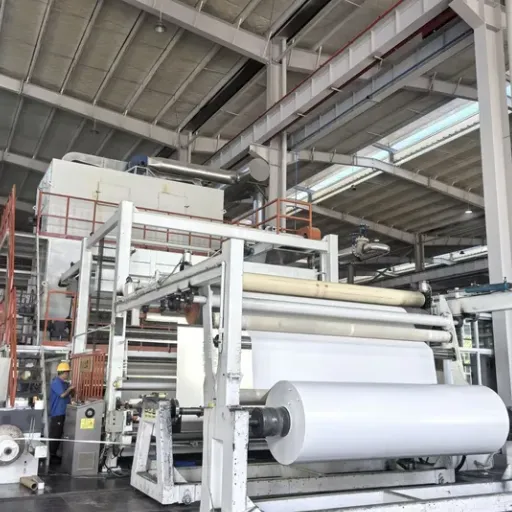
Quality standards separate professional manufacturers from operations producing inconsistent or substandard material. Buyers should verify which standards a factory follows and, more importantly, how those standards are implemented in daily production.
Management System Certifications
- ISO 9001:2015: Quality management systems providing the foundational framework for consistent processes, documentation, and continuous improvement
- ISO 14001: Environmental management systems addressing waste, emissions, and resource consumption
These certifications require third-party audit by accredited bodies. However, certification alone does not guarantee quality — implementation discipline matters more than the certificate on the wall.
Performance Testing Standards
| Standard | Test Parameter | Industrial-Grade Requirement |
|---|---|---|
| ISO 1421 | Tensile strength | >2,500 N/5cm (warp and weft) |
| ISO 2411 | Coating adhesion | >100 N/5cm |
| DIN 53363 | Tear strength (trapezoidal) | >400 N |
| ISO 811 | Water resistance | >3,000 mmH2O |
| ASTM D751 | Tear resistance | Per specification grade |
| QUV / ASTM G154 | UV weathering | >70% retention after 2,000 hours |
| ISO 22196 | Antibacterial efficacy | >99% reduction |
Regulatory Compliance Standards
Regional markets require specific compliance:
- European Union: REACH chemical safety, RoHS restricted substances, CE marking
- United States: NFPA 701 (fire retardancy), ASTM E84 (surface burning), California Prop 65
- China: GB 8624 B1 (fire classification), GB/T 17591 (flame-retardant fabrics)
- Maritime applications: IMO FTP Code for shipboard use
Third-party testing by SGS, Bureau Veritas, or TUV provides independent verification beyond factory self-certification.
When evaluating a manufacturer’s quality claims, request actual test reports for recent production batches, not generic certificates. At Linyi Chenlai, every production batch undergoes laboratory testing, and Technical Data Sheets accompany every shipment so customers know exactly what they’re receiving.
Why China Leads in PVC Tarpaulin Manufacturing
China produces 25.5% of the world’s PVC tarpaulins, with the broader Asia-Pacific region commanding 42.8% of global market share. This dominance stems from structural advantages that few other regions can replicate.
Integrated supply chains concentrate in eastern China’s industrial corridor. Zhejiang, Jiangsu, and Shandong provinces host polyester yarn producers, PVC resin manufacturers, weaving operations, coating factories, and logistics hubs within hours of each other. A factory in Linyi, Shandong can source polyester scrim from a weaver 50 kilometers away, PVC resin from a petrochemical plant 100 kilometers away, and additives from specialty chemical suppliers in the same province. This proximity reduces lead times, transportation costs, and inventory requirements.
Manufacturing infrastructure built over three decades provides unmatched scale. Major Chinese PVC tarpaulin factories operate annual capacities of 60 to 220 million square meters across multiple advanced production lines. This scale enables investment in automated inspection systems, precision coating equipment, and in-house testing laboratories that smaller operations cannot afford.
Technical workforce development has created deep expertise. China’s vocational education system and on-the-job training programs produce machine operators, quality technicians, and process engineers with specialized knowledge in polymer coating and textile processing.
Export logistics integration means efficient container loading, documentation, and shipping. Major ports like Qingdao, Shanghai, and Ningbo handle enormous volumes of manufactured goods daily, providing competitive freight rates and frequent sailings to global destinations.
For buyers, these advantages translate to competitive pricing without sacrificing quality — provided you select manufacturers with proper quality systems rather than chasing the lowest bid from unverified suppliers.
Sustainability Innovations in Modern PVC Tarpaulin Production
The PVC tarpaulin industry faces legitimate environmental concerns: traditional plasticizers, VOC emissions during coating, and end-of-life disposal challenges. Leading manufacturers are addressing these issues through concrete innovations, not greenwashing.
Phthalate-free plasticizers replace conventional DOP and DINP with alternatives like DOTP (dioctyl terephthalate) or bio-based plasticizers derived from plant oils. These alternatives maintain flexibility performance while eliminating substances restricted under REACH and similar regulations.
Water-based coating systems reduce volatile organic compound emissions by replacing solvent-based processes. While not yet suitable for all applications, water-based technology is rapidly improving and already viable for many standard products.
Energy-efficient curing uses improved oven insulation, heat recovery systems, and infrared heating that reduces energy consumption by 20% to 30% compared to conventional systems. Some factories install solar arrays to power production lines.
Closed-loop cooling systems recirculate process water instead of discharging it, reducing both water consumption and thermal pollution.
Production waste recycling reprocesses trim scrap, off-spec rolls, and startup material back into lower-grade products or compound feedstock. This diverts significant material from landfills.
Extended producer responsibility programs are emerging in Europe and gaining traction globally. Manufacturers design products for eventual recycling and take responsibility for end-of-life collection and processing.
These innovations matter to buyers because sustainability requirements increasingly appear in procurement specifications, especially for government contracts, multinational corporations, and environmentally conscious brands. Manufacturers investing in sustainable processes today will have competitive advantages as regulations tighten.
How to Evaluate a PVC Tarpaulin Manufacturer
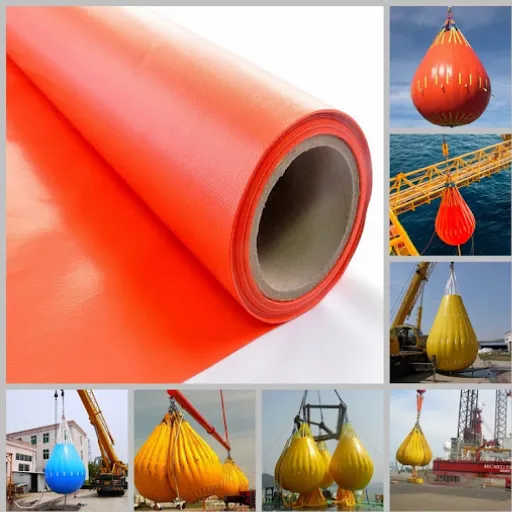
Choosing the right manufacturing partner requires looking beyond price and brochure claims. Use this checklist to systematically evaluate potential suppliers.
Certifications and documentation:
- Valid ISO 9001:2015 certificate from an accredited body
- Product test reports from the last 6 months (not generic certificates)
- REACH or RoHS compliance documentation for EU markets
- Fire safety test reports matching your required standard (NFPA 701, EN 13501-1, etc.)
Production capabilities:
- Manufacturing methods available (can they produce what you need?)
- Maximum roll width and length capabilities
- GSM range they can produce
- In-house testing laboratory (not outsourced)
- Production capacity relative to your order volume
Quality systems:
- Incoming material inspection procedures
- In-process monitoring systems (thickness, temperature, adhesion)
- Finished product testing protocols
- Batch traceability system
- Non-conforming product handling process
Red flags that should disqualify a supplier:
- Cannot provide recent, product-specific test reports
- Vague about manufacturing methods or equipment
- No quality manual or documented procedures
- Unwilling to allow factory audit or third-party inspection
- Significantly undercuts market pricing (quality has a cost floor)
- Missing required certifications for your target market
Questions to ask before placing an order:
- What manufacturing method will you use for my specification, and why?
- Can you provide test reports from a recent batch of similar material?
- What is your typical defect rate, and how do you handle quality issues?
- What is your maximum production capacity per month for this product?
- Can you accommodate factory audits or third-party inspections?
- What is your typical lead time from order confirmation to shipment?
When Sarah Okonkwo, a purchasing director for a West African agricultural distributor, applied this framework in 2025, she eliminated three of five potential suppliers immediately based on missing certifications. The remaining two she visited in person. One factory had impressive equipment but chaotic material handling and no incoming inspection. The other — her eventual partner — showed her detailed batch records, invited her to watch inline testing, and provided third-party SGS reports without hesitation. Her first shipment matched specifications exactly. Her second and third shipments matched just as closely.
Conclusion
PVC tarpaulin manufacturing combines material science, precision engineering, and rigorous quality control to produce material that protects assets across agriculture, construction, transportation, and dozens of other industries. The three manufacturing methods — knife coating, hot-melt lamination, and adhesive lamination — each serve distinct applications with different cost and performance profiles. The nine-step production process, from raw material preparation through cutting and packaging, contains dozens of decision points where quality either accumulates or erodes.
The key takeaways for buyers are straightforward. First, match the manufacturing method to your application — premium durability requires knife coating, general applications work well with hot-melt lamination, and containment applications need adhesive lamination. Second, verify quality systems rather than trusting claims — request actual test reports, check certifications, and audit factories when possible. Third, understand that China manufacturing offers genuine advantages in supply chain integration, scale, and expertise when you choose the right partner.
As the global PVC tarpaulin market grows toward $24.7 billion by 2033, manufacturing quality becomes the decisive competitive factor. Factories investing in precision equipment, automated quality monitoring, and sustainable processes will capture market share from operators relying on outdated methods and minimal quality control.
Ready to source PVC tarpaulin from a manufacturer that prioritizes quality at every production step? Contact Linyi Chenlai Plastic Products Co., Ltd. for specifications, samples, and a detailed quotation tailored to your application requirements. Our production facilities in Linyi, Shandong combine advanced coating technology with comprehensive quality testing to deliver tarpaulins that perform reliably year after year.