Custom PVC tarpaulin is a heavy-duty, waterproof industrial fabric made from PVC-coated polyester that can be engineered to exact specifications. Manufacturers can adjust the weight, width, color, surface treatment, and hardware to match everything from truck covers to aquaculture liners. Getting those specifications right means the difference between a cover that lasts ten years and one that tears in the first season.
Marcus, a procurement manager for a Midwest logistics company, learned this the hard way. He ordered 450 GSM custom PVC tarpaulin for his fleet of flatbed trucks, assuming the “heavy-duty” label would hold up on interstate routes. Eight months later, wind flap had shredded the edges. UV exposure had turned the surface brittle. His replacement order cost 40% more than if he had specified 750 GSM with reinforced hems from the start. The wrong specification didn’t just waste money. It put his drivers’ cargo at risk.
This guide solves that problem. Whether you are sourcing tarpaulin for construction, agriculture, transportation, or industrial manufacturing, you will learn exactly how to choose the right GSM, coating, and finishing options. You will understand what information manufacturers need to quote accurately. And you will avoid the specification mistakes that cost buyers time and money.
Here is what we will cover: what custom PVC tarpaulin actually is, how to choose the right GSM for your application, the seven customization options that matter most, how PVC compares to PE tarpaulin, industry-specific recommendations, the manufacturing process from sample to delivery, certification standards, and a practical checklist for requesting your first quote. Contact Linyi Chenlai Plastic Products Co., Ltd. to explore high-strength PVC tarpaulin solutions designed for demanding outdoor and industrial environments.
Key Takeaways
- Custom PVC tarpaulin ranges from 300 GSM (light-duty) to 900+ GSM (extreme duty), and choosing the wrong weight is the most expensive mistake buyers make.
- PVC coated polyester outlasts PE tarpaulin by 5–10 years but costs more upfront; the break-even point usually arrives within eighteen months for continuous outdoor use.
- The seven critical customization options are size, GSM, color, base fabric denier, surface treatment, fabrication finishing, and branding.
- Most custom orders follow a five-step process: specification confirmation, lab dip approval, production, quality control, and finishing/delivery.
- Always request a technical data sheet that breaks down total GSM into base fabric weight and coating weight before placing a bulk order.
What Is Custom PVC Tarpaulin?
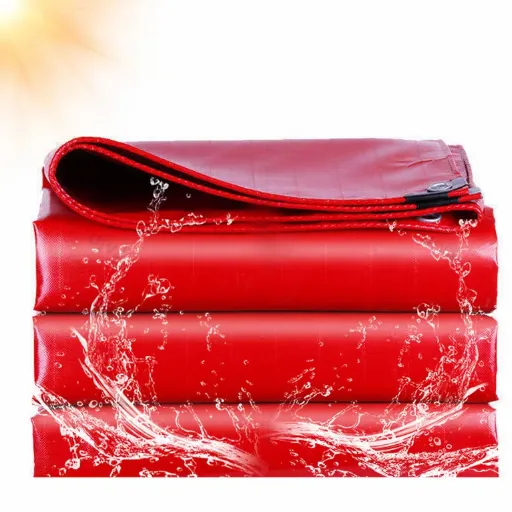
PVC tarpaulin is an industrial fabric built from a polyester scrim base that gets coated or laminated with polyvinyl chloride. The result is a flexible, waterproof, and tear-resistant material that performs in temperatures from -30°C to +70°C. When we say “custom,” we mean the manufacturer engineers the product to your exact requirements rather than pulling it from a stock catalog.
Stock tarpaulin comes in standard widths, colors, and weights. Custom PVC tarpaulin lets you specify every variable. You choose the width (typically 1.02 meters to 5.1 meters seamless, with welded options for larger sizes). You choose the weight measured in grams per square meter (GSM). You choose the color, sometimes matched to RAL or Pantone standards. You add surface treatments like UV stabilizers, anti-mildew coatings, or flame retardants. And you specify fabrication details like grommet spacing, reinforced corners, and welded hems.
The global plastic tarpaulin market is valued at approximately $8.5 billion in 2025, with steady demand from construction, agriculture, and logistics sectors. Custom specifications make up a growing share of that market because buyers increasingly recognize that one-size-fits-all stock options fail in demanding environments.
PVC Coated vs. PVC Laminated: What Is the Difference?
Not all PVC tarpaulin is built the same way. The two main production methods create very different performance profiles.
PVC coated tarpaulin uses a knife-coating process. Liquid PVC paste spreads directly onto the polyester base fabric, penetrates the weave, and bonds under heat and pressure. The coating adheres strongly to every fiber. This creates higher tear strength, better abrasion resistance, and a longer service life. Knife-coated PVC is the standard for heavy-duty applications like truck curtains, industrial covers, and long-term outdoor installations.
PVC laminated tarpaulin uses heat and adhesive to bond pre-formed PVC films to the base fabric. The process is faster and less expensive. Laminated products work well for light-duty and short-term applications like temporary event covers or indoor storage. However, the bond is not as strong. Under stress, the PVC film can separate from the base fabric. For buyers who need durability, coated is the better investment. Linyi Chenlai Plastic Products Co., Ltd. specializes in producing weather-resistant PVC tarpaulins with excellent tear strength and reliable performance in challenging conditions.
Understanding GSM: Choosing the Right Weight for Your Application
GSM stands for grams per square meter. It measures the weight density of the finished fabric. In the custom PVC tarpaulin world, GSM is the single most important specification because it directly correlates with durability, tensile strength, and lifespan.
Here is the critical point many buyers miss: GSM measures weight, not thickness or quality directly. Two tarpaulins with identical GSM can perform very differently depending on the base fabric quality, coating method, and polymer formulation. A precision-engineered 650 GSM tarpaulin on quality 1000D yarn can outperform a generic 900 GSM product with inferior materials.
GSM Ranges and What They Mean
| GSM Range | Category | Typical Thickness | Base Yarn | Expected Lifespan | Best For |
|---|---|---|---|---|---|
| 300–450 GSM | Light-duty | 0.30–0.45 mm | 500D–750D polyester | 1–2 years | Indoor storage, temporary protection, light covers |
| 450–650 GSM | Standard heavy-duty | 0.45–0.55 mm | 750D–1000D polyester | 5–10 years | Truck covers, construction site enclosures, industrial equipment |
| 650–900 GSM | Industrial heavy-duty | 0.55–0.80 mm | 1000D high-tenacity polyester | 5–10 years | Long-haul trucking, commercial curtains, aquaculture liners |
| 900+ GSM | Ultra/extreme duty | 0.80–1.00+ mm | 1000D–1300D polyester | 10+ years | Marine applications, inflatable structures, military shelters |
When evaluating GSM claims from suppliers, always request a technical data sheet that breaks down total GSM into base fabric weight and coating weight. If a supplier only provides a single number, that is a red flag. The ratio between base and coating affects flexibility, tear resistance, and weldability.
Application-Specific GSM Recommendations
Choosing the right GSM means matching the material to the stress it will face. Wind, tension, UV exposure, and abrasion all accelerate wear.
Transportation and truck covers: 600–750 GSM is the industry standard for commercial flatbed and curtain-side trucks. The material must resist highway wind speeds, repeated folding, and constant UV exposure. For long-haul fleets operating in high-wind corridors, 750–900 GSM with a 1000D Panama weave provides the best return on investment.
Construction and scaffolding: 450–650 GSM works for most site enclosures and material covers. Scaffold sheeting sees high wind loads but usually faces less direct UV than trucking applications. Flame-retardant treatments are often mandatory for construction site compliance.
Agriculture and greenhouses: 550–750 GSM balances light transmission with durability. Greenhouse covers need UV stabilization to prevent degradation during months of continuous sun exposure. Anti-mildew treatments are essential in humid growing environments.
Aquaculture and pond liners: 650–750 GSM with anti-mildew and pond-safe formulations. The material sits in constant contact with water and organic matter. Poor specification here leads to biofilm buildup, liner failure, and stock loss.
Marine and inflatable structures: 900+ GSM is the minimum. These applications require maximum tensile strength, chemical resistance, and the ability to hold air or water pressure under stress.
Not sure which GSM fits your application? Request a free sample from our standard range so you can evaluate weight, flexibility, and coating quality before committing to a bulk order.
7 Key Customization Options Every Buyer Should Know
When you order custom PVC tarpaulin, you are not just buying a sheet of plastic. You are engineering a product to solve a specific problem. Here are the seven parameters that matter most.
1. Size and Width
Standard seamless widths run from 1.02 meters to 5.1 meters. For finished tarpaulins wider than 5.1 meters, manufacturers weld rolls together using hot-air or high-frequency welding. Always specify exact finished dimensions, including any overlap requirements. Ordering slightly too small is one of the most common and expensive mistakes.
2. GSM and Thickness
As we covered above, GSM determines durability. Match the weight to your application’s stress level. Remember to request the base fabric GSM and coating weight separately on your technical data sheet.
3. Color
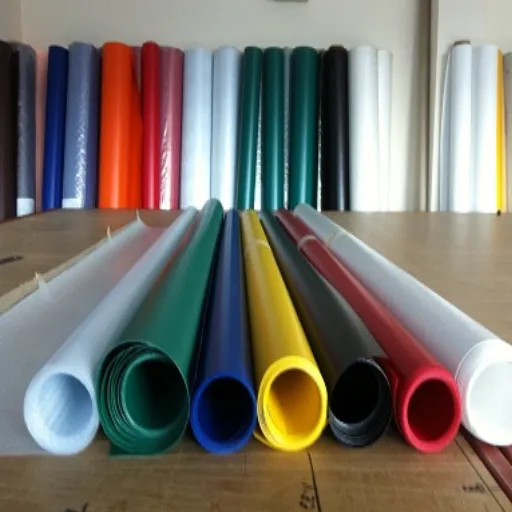
Standard colors include blue, green, silver, white, and orange. Custom orders can match RAL or Pantone codes, typically with a color tolerance of Delta E ≤ 1.5. Color choice is not just aesthetic. Dark colors absorb more heat. Light colors reflect sunlight and stay cooler. White or silver tarpaulin can reduce interior temperatures by 10–15°C compared to black.
4. Base Fabric Denier
Denier measures the thickness of the individual polyester yarns. Higher denier means stronger structural fibers. Common options include 500D (light-duty), 750D (medium-duty), and 1000D (heavy-duty). For extreme applications, 1300D is available. Panama weave resists stretching under tension better than plain weave, making it the better choice for tensioned applications like truck curtains.
5. Surface Treatments
Additives extend performance in specific environments:
- UV stabilizers extend outdoor lifespan from 1–2 years to 5–10+ years.
- Anti-mildew treatments prevent fungal growth in humid conditions.
- Flame retardants meet safety standards like NFPA 701, B1, or M2.
- Anti-static coatings reduce dust attraction and static discharge.
- Self-cleaning or PVDF treatments reduce dirt adhesion on architectural applications.
6. Fabrication and Finishing
Raw roll material is only half the product. Finishing turns it into a functional cover:
- Grommets and eyelets: Brass or aluminum, typically spaced 50–100 cm apart.
- Reinforced hems: Double-folded edges with rope-in-hem for high-tension applications.
- D-rings and straps: For tie-down points that must bear heavy loads.
- Welded seams: Hot-air or high-frequency welding creates stronger, waterproof seams than sewing.
- Pockets and zippers: For applications requiring access points or tensioning rods.
7. Printing and Branding
Digital printing, screen printing, or logo branding turns your tarpaulin into a mobile advertisement. Most manufacturers can print in multiple colors on one or both sides. This is especially popular for transportation companies, event organizers, and retailers who want branded covers.
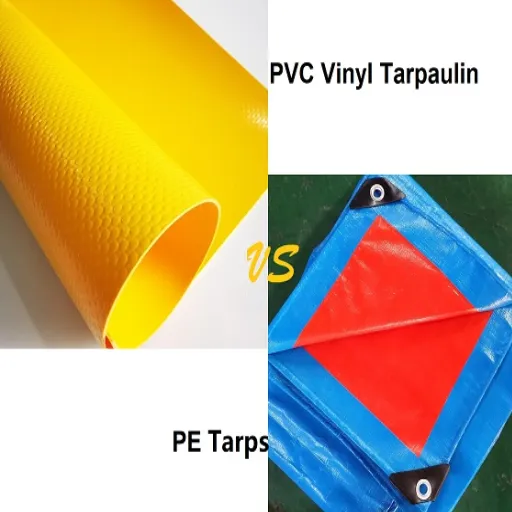
Custom PVC Tarpaulin vs. PE Tarpaulin: Which Should You Choose?
Buyers often face a simple question: should I choose PVC or polyethylene (PE)? The answer depends on your timeline, budget, and application stress.
| Feature | PVC Coated Tarpaulin | PE Tarpaulin |
|---|---|---|
| Durability | 5–10+ years | 6–12 months |
| Tear strength | 1500–3000 N/5cm | 600–800 N/5cm |
| UV resistance | Excellent with stabilizers | Poor, degrades quickly |
| Seam strength | Weldable (waterproof) | Sewn or heat-sealed |
| Weight | Heavier (300–900+ GSM) | Lighter (60–300 GSM) |
| Flexibility in cold | Remains flexible to -30°C | Becomes brittle below 0°C |
| Cost per square meter | Higher upfront | Lower upfront |
| Best for | Long-term outdoor, industrial | Temporary, disposable covers |
The Chen Construction team in Texas faced this exact decision in 2024. They had been buying 180 GSM PE tarpaulin to cover building materials on job sites. Each cover lasted three to four months before tearing. Over a two-year project, they bought six replacements per cover position. When they switched to 550 GSM custom PVC tarpaulin with reinforced edges, the upfront cost was 3x higher. But each cover lasted the full project duration. Their total covering cost dropped by 35%, and they eliminated the labor of repeatedly installing replacements.
For short-term needs under six months, PE is more economical. For anything longer, or for applications where failure creates liability or operational downtime, custom PVC tarpaulin is the smarter investment.
Industry Applications and Recommended Specifications
Different industries place different demands on tarpaulin. Here is how to match specifications to real-world use cases.
Transportation and Truck Covers
Commercial trucks need covers that resist 100+ km/h wind speeds, repeated folding, and constant UV exposure. Standard specifications include:
- GSM: 600–750 GSM for regional transport; 750–900 GSM for long-haul
- Base fabric: 1000D polyester, Panama weave
- Finishing: Rope-in-hem, eyelets every 50 cm, reinforced corners
- Treatment: UV stabilizers, optional flame retardant for hazardous cargo
Curtain-side trucks also require high weld strength at the seams because the fabric flexes with every loading cycle. Knife-coated PVC is strongly preferred over laminated for this application. Get in touch with Linyi Chenlai Plastic Products Co., Ltd. to discuss custom PVC tarpaulin specifications, colors, thickness options, and production requirements.
Construction and Scaffolding
Construction sites need scaffold sheeting that contains debris, blocks wind, and protects workers. Key specs:
- GSM: 450–650 GSM
- Treatment: Flame retardant (typically B1 or NFPA 701 certified)
- Finishing: Eyelets for tensioning to scaffold poles, reinforced edges
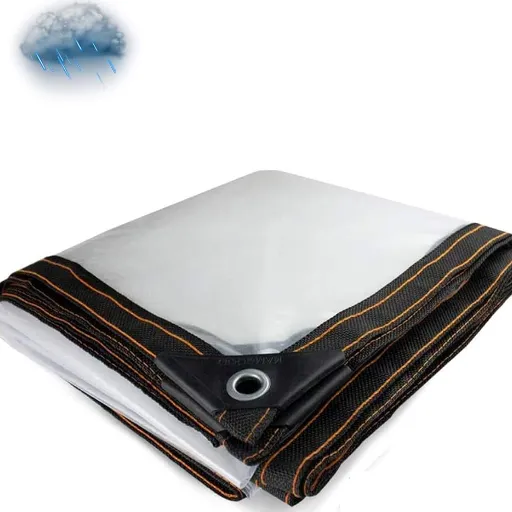
- Transparency: Some applications need semi-transparent sheeting to allow light through while maintaining containment
Many jurisdictions require flame-retardant certification for construction site tarpaulin. Always verify local regulations before ordering.
Agriculture and Greenhouses
Agricultural buyers need durability balanced with light management and humidity resistance. Sarah, a greenhouse operator in Florida, learned that lesson when she ordered stock green tarpaulin for her tomato houses. The dark color absorbed too much heat, raising interior temperatures above 40°C and stressing her plants. When she switched to custom white 650 GSM PVC tarpaulin with 30% light diffusion, her yields improved and her covers lasted four years instead of one.
Recommended agricultural specs:
- GSM: 550–750 GSM
- Treatment: UV stabilizers, anti-mildew
- Color: White or silver for heat reflection; clear or translucent for greenhouse covers
- Finishing: Reinforced edges with grommets for securing to frame structures
Aquaculture and Pond Liners
Pond liners and fish farming tanks require waterproof, chemically stable materials that resist organic buildup. Specifications include:
- GSM: 650–750 GSM minimum
- Treatment: Anti-mildew, pond-safe formulation (no leaching chemicals)
- Finishing: Welded seams for watertight integrity; no sewn seams
- Color: Black or dark green to inhibit algae growth
The Custom Manufacturing Process: What to Expect
Understanding the production process helps you plan timelines and avoid delays. Most custom PVC tarpaulin orders follow five stages.
Step 1: Specification Confirmation
You submit your requirements: application, dimensions, GSM, color, treatments, finishing details, and quantity. A reputable manufacturer reviews these specs and asks clarifying questions. This step prevents costly mistakes. Vague specifications are the leading cause of production errors and disputes.
Step 2: Lab Dip and Sample Approval
For custom colors, the manufacturer produces a lab dip — a small sample showing the exact color match. You approve the color before full production begins. This gate matters more than price. A color mismatch on a 10,000 square meter order is expensive to fix. Most manufacturers also provide A4-size material samples so you can verify GSM, flexibility, and coating quality.
Step 3: Production
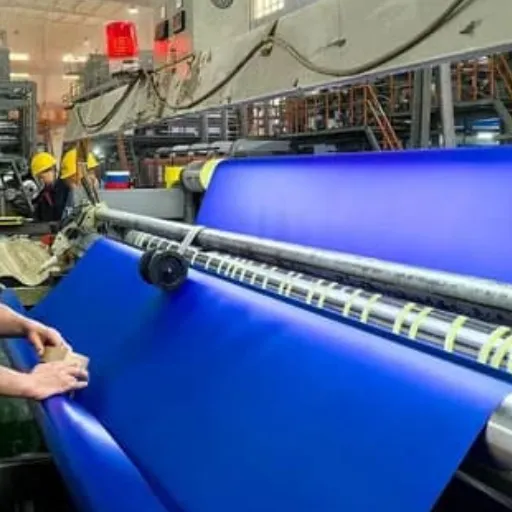
Once samples are approved, production begins. Coating lines apply PVC to the polyester base fabric. Calendering presses bond and smooth the material. Cooling rollers set the finish. Quality control technicians monitor thickness, adhesion, and color consistency throughout the run.
Step 4: Quality Control
Finished rolls undergo testing for tensile strength, tear resistance, adhesion, and color accuracy. Reputable manufacturers keep batch test records and can provide certificates of compliance on request. At Linyi Chenlai Plastic Products, every batch undergoes rigorous inspection before release.
Step 5: Finishing and Delivery
Raw rolls move to the fabrication department for cutting, welding, sewing, and hardware installation. Finished products are inspected, packed, and prepared for shipment. Standard lead times range from 15–25 business days for roll material and 25–35 days for finished fabricated tarpaulins, depending on order complexity.
Ready to start your custom order? Contact our team with your specifications and we will guide you through every step from sample to delivery.
Certifications and Standards: What Matters for Your Application
Depending on your industry and destination market, certain certifications may be required or expected. Here are the most common.
Flame Retardancy:
- NFPA 701: US standard for fire-resistant textiles
- B1 (DIN 4102): German/European classification for difficult-to-burn materials
- M2 (NF P 92-503): French fire classification
- EN 13501-1: European harmonized fire performance standard
Construction sites, event venues, and transportation of hazardous materials typically require flame-retardant certification.
Environmental and Safety:
- RoHS: Restricts hazardous substances in electrical and electronic equipment; relevant for tarpaulin used in controlled environments
- REACH: EU regulation on chemical safety
- ISO 9001: Quality management system certification for the manufacturer
Performance Testing:
- ISO 1421: Tensile strength and elongation
- ISO 2411: Coating adhesion
- ISO 3801: Fabric weight (GSM) determination
When sourcing from overseas manufacturers, request third-party test reports from ISO 17025 accredited laboratories. In-house test data is useful, but independent verification adds credibility and reduces risk.
How to Request a Quote: A Buyer’s Checklist
Accurate quotes require accurate information. Use this checklist to prepare your inquiry and receive precise pricing faster.
- Application: Describe what the tarpaulin will cover or protect.
- Finished dimensions: Length, width, and quantity needed.
- GSM preference: Or describe the stress level and we can recommend.
- Color: Standard or custom (provide RAL/Pantone if custom).
- Base fabric: 500D, 750D, or 1000D (we can advise if unsure).
- Surface treatments: UV, anti-mildew, flame retardant, etc.
- Fabrication details: Grommet spacing, hemming, D-rings, welding, etc.
- Packaging: Roll length, core size, or individual finished piece packing.
- Delivery location: For accurate shipping quotes and Incoterms.
- Timeline: When do you need the material in hand?
The more detail you provide, the more accurate your quote. Vague requests like “heavy-duty blue tarpaulin for trucks” force manufacturers to guess, which leads to pricing that may not match your actual needs.
Conclusion
Custom PVC tarpaulin is one of the most versatile protective materials available. But its performance depends entirely on getting the specifications right. The wrong GSM wastes money. The wrong coating method shortens lifespan. The wrong finishing details create installation headaches.
You now know how to evaluate GSM ranges, choose between coated and laminated PVC, match specifications to your industry, and prepare a complete quote request. You understand the manufacturing process from lab dip to delivery. And you know which certifications matter for compliance.
The bottom line is simple: precision in specification saves more money than negotiating a lower price on the wrong product. A well-specified custom PVC tarpaulin outperforms stock alternatives by years, reduces replacement costs, and protects the assets underneath it.
At Linyi Chenlai Plastic Products, we manufacture custom PVC tarpaulin to exact specifications for clients across agriculture, construction, transportation, and industrial sectors. We offer free A4 samples so you can verify quality before placing a bulk order. We guide you through specification, provide lab dip approval for custom colors, and deliver on timelines that keep your projects moving.
Contact us today with your requirements. We will send you a sample, review your application, and provide a detailed quote with no obligation.