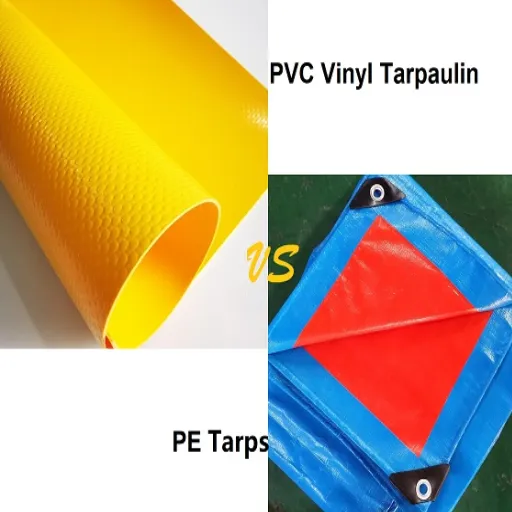
PVC coated tarpaulin is a polyester fabric base coated with polyvinyl chloride (PVC) on both sides, creating a waterproof, UV-resistant, and highly durable material that typically outlasts standard polyethylene covers by 5 to 10 years. A standard PE tarpaulin might cost half the price upfront, but over a five-year period, a single PVC coated tarpaulin often delivers a 60% cost saving.
If you’re tired of replacing torn, faded covers every season, you’re not alone. Most buyers understand that PVC tarpaulin is stronger than PE, but few know how to match specifications like GSM, coating weight, and base fabric weave to their actual application. That mismatch leads to overpayment for unnecessary features, or premature failure from underspecification.
By the end of this guide, you’ll understand exactly what technical specifications your project requires. We’ll cover how PVC coating works, how to read technical datasheets, industry-specific recommendations for agriculture and construction, and the right questions to ask any supplier before placing an order. Looking for dependable PVC tarpaulin products for transportation, construction, or agricultural use? Linyi Chenlai Plastic Products Co., Ltd. is ready to provide tailored manufacturing solutions for your business.
Key Takeaways
- PVC coated tarpaulin lasts 5-10 years versus 1-2 years for standard PE covers, delivering lower total cost of ownership.
- Coating weight (GSM) ranges from 400GSM to 1200GSM; agriculture typically needs 450-550GSM while construction demands 600GSM+.
- Welded seams, UV stabilizers, and reinforced hems are non-negotiable features for industrial-grade performance.
- Customization options include size, color, grommet spacing, logo printing, and fire-retardant additives.
- REACH-compliant and phthalate-free formulations are available for European and environmentally conscious buyers.
What Is PVC Coated Tarpaulin?
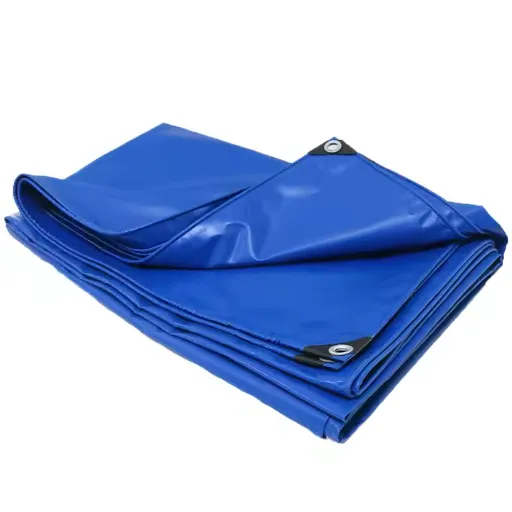
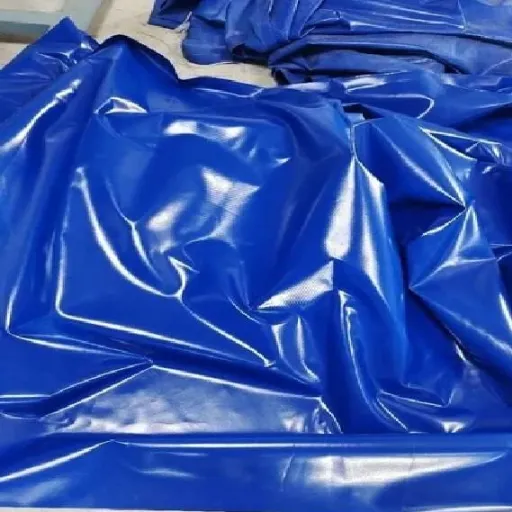
PVC coated tarpaulin begins with a woven polyester base fabric. Manufacturers apply liquid PVC to both sides of this base using knife-coating or laminating processes. The result is a flexible, reinforced composite material that combines the tensile strength of woven polyester with the waterproofing and chemical resistance of PVC.
The thickness and quality of the PVC layer determine critical performance characteristics. A thin coating might resist light rain but fail under sustained exposure or physical abrasion. A heavy coating adds durability, rigidity, and longevity, but also weight and cost. Understanding this balance is the first step to buying the right product.
How PVC Coating Works
In the knife-coating process, a blade spreads liquid PVC compound across the woven polyester base at a precisely controlled thickness. The material then passes through an oven that cures the coating, bonding it permanently to the fabric. For double-sided PVC coated tarpaulin, this process repeats for the reverse side.
Some manufacturers use calendering, where heated rollers press PVC film onto the base fabric. Knife-coated products generally achieve better adhesion and flexibility, making them preferable for applications requiring foldability and seam welding. At Linyi Chenlai Plastic Products Co., Ltd., we use advanced coating lines that control thickness within ±5% tolerance to ensure consistent quality across every batch. Get in touch with Linyi Chenlai Plastic Products Co., Ltd. to discuss custom PVC tarpaulin specifications, colors, thickness options, and production requirements.
PVC Coated Tarpaulin vs. Standard PE Tarpaulin
Buyers often assume all plastic covers are essentially the same. That assumption costs money.
| Feature | PVC Coated Tarpaulin | Standard PE Tarpaulin |
|---|---|---|
| Lifespan | 5-10 years | 1-2 years |
| Waterproofing | Fully waterproof with welded seams | Water-resistant; stitching leaks |
| UV Resistance | UV stabilizers prevent degradation | Fades and becomes brittle quickly |
| Tear Strength | 150-400N (industrial grade) | 50-100N (light duty) |
| Temperature Range | -20°C to +70°C | 0°C to +40°C |
| Seam Construction | Heat-welded, no leaks | Sewn, needle holes allow water ingress |
| Weight | Heavier (stronger) | Lightweight (less durable) |
| Cost per Year | Lower over time | Higher due to replacement frequency |
Maria runs a 200-acre vegetable farm in Shandong Province. For years, she bought standard PE covers to protect her greenhouse crops through winter. Every spring, she discarded the brittle, torn sheets and bought new ones. Three years ago, she switched to 500GSM PVC coated tarpaulin with UV stabilizers. Those same covers are still in place today, delivering an estimated 70% reduction in annual covering costs.
Want to see how heavy-duty specifications compare for your industry? Explore our heavy-duty tarpaulin options to find the right GSM for your application.
Key Benefits of PVC Coated Tarpaulin
Industrial buyers choose PVC coated tarpaulin for specific performance advantages that directly translate into operational benefits. Here are the core benefits that separate PVC from alternative materials:
Superior Waterproof Performance
PVC is inherently hydrophobic. Unlike woven PE, which can wick moisture through stitching holes, PVC coated tarpaulin uses heat-welded seams that create a continuous waterproof barrier. This matters for applications where even minor leakage causes damage.
UV Resistance and Outdoor Longevity
Quality PVC tarpaulin includes UV stabilizers that absorb or reflect ultraviolet radiation. Without this protection, any plastic material degrades rapidly under direct sunlight. With proper UV treatment, PVC coated tarpaulin maintains over 80% of its original tensile strength after three years of continuous outdoor exposure.
Tear Strength and Abrasion Resistance
The woven polyester base provides structural integrity that unsupported films cannot match. PVC coating adds abrasion resistance, protecting the base fabric from friction damage during installation, transport, and use.
Chemical and Oil Resistance
PVC resists oils, grease, and many industrial chemicals. This makes PVC coated tarpaulin suitable for manufacturing facilities, workshops, and transport applications where chemical exposure is likely.
Weldable Seams
Perhaps the most underappreciated benefit: PVC can be heat-welded rather than sewn. Welded seams eliminate needle holes, creating stronger joints that do not leak. For roofing, containment, and transport covers, this single feature justifies the upgrade from PE.
Mold and Mildew Resistance
PVC coated surfaces do not absorb moisture, preventing the mold and mildew growth that degrades organic and porous materials. This is critical for agricultural storage and long-term outdoor installations.
Choose Linyi Chenlai Plastic Products Co., Ltd. as your trusted PVC tarpaulin supplier and discover reliable products backed by dedicated customer support and manufacturing expertise.
Technical Specifications Explained
Buying PVC coated tarpaulin without understanding specifications is like buying tires without knowing the load rating. The numbers on the datasheet directly predict real-world performance.
Understanding GSM and Coating Weight
GSM stands for grams per square meter. It measures the total weight of the finished material, including both the base fabric and the PVC coating. Industrial-grade PVC coated tarpaulin generally ranges from 400GSM to 1200GSM.
- 400-500GSM: Light industrial use, temporary covers, indoor applications
- 550-650GSM: Standard outdoor use, agriculture, general construction
- 700-900GSM: Heavy-duty applications, long-term roofing, truck side curtains
- 1000GSM+: Extreme duty, industrial curtains, high-wind environments
Higher GSM does not automatically mean better. A 1200GSM tarpaulin is overkill for a seasonal greenhouse cover and unnecessarily heavy to handle. Conversely, a 450GSM product will fail on a construction scaffolding enclosure exposed to wind and falling debris.
Base Fabric and Weave
The hidden foundation of every PVC coated tarpaulin is the base fabric. Most industrial products use polyester, though nylon appears in some specialized applications. The weave density, measured in denier and thread count, determines tear resistance and dimensional stability.
A 1000D polyester base with a dense plain weave offers excellent strength-to-weight ratio. Some manufacturers use leno weave for improved tear propagation resistance. When comparing products, ask about base fabric specifications, not just total GSM. A cheap 600GSM product with a weak base fabric will underperform a well-engineered 550GSM alternative. Whether you need heavy-duty truck covers, outdoor protective sheets, or industrial-grade PVC tarpaulins, Linyi Chenlai Plastic Products Co., Ltd. can deliver efficient and professional manufacturing services.
Additional Treatments and Features
Beyond base fabric and coating weight, several treatments modify performance:
- UV stabilizers: Essential for any outdoor application exceeding three months
- Fire retardant additives: Required for construction sites, event venues, and public spaces; look for DIN 4102 B1 or NFPA 701 certifications
- Anti-mildew agents: Recommended for humid climates and agricultural use
- Cold crack resistance: Special plasticizers maintain flexibility below -20°C for cold-climate applications
- Anti-static treatment: Important for electronic manufacturing and explosive environments
Every additional treatment adds cost. Specify only what your application requires.
Applications by Industry
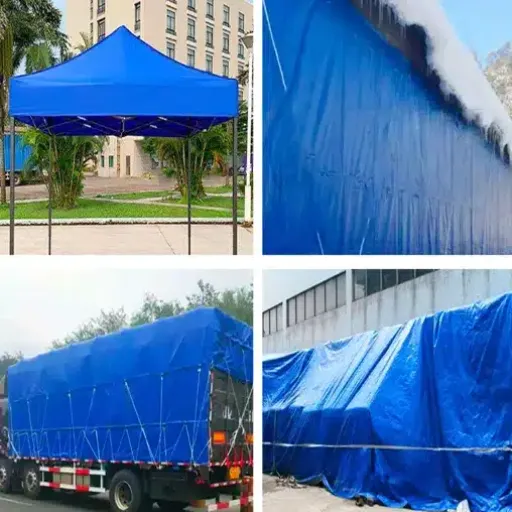
The right PVC coated tarpaulin for a strawberry greenhouse differs significantly from the right specification for a highway construction site. Match the material to the mission.
Agriculture and Farming
Agricultural applications demand a balance of durability, light transmission (where relevant), and handling convenience. Common uses include:
- Greenhouse covers: 450-550GSM with UV stabilizers; clear or diffused options available
- Crop protection: Lighter weights for seasonal frost protection; heavier weights for wind barriers
- Equipment and machinery covers: 550-650GSM with reinforced corners and grommets
- Grain and produce storage: Waterproof, mildew-resistant formulations
Maria’s story illustrates the agricultural value proposition clearly. Her 500GSM UV-stabilized covers protect seedlings through harsh winters without the annual replacement cycle that consumed her maintenance budget.
For detailed guidance on agricultural specifications, visit our dedicated resource on tarpaulin for agriculture.
Construction and Industrial
Construction sites punish protective materials. Falling debris, high winds, constant handling, and exposure to chemicals demand maximum durability.
- Scaffolding enclosures: 650-750GSM with fire-retardant certification; welded seams prevent water and dust migration
- Temporary roofing: 700GSM+ with reinforced eyelets at close intervals; must withstand wind uplift
- Debris and dust containment: Mid-weight options with proper fastening systems
- Site hoarding and privacy screens: Printed PVC coated tarpaulin with company branding
The team at Horizon Construction had a problem. Their scaffolding debris netting kept failing during monsoon season, sending water and construction dust onto the street below. Their project manager specified 650GSM PVC coated tarpaulin with welded seams and reinforced eyelets. The material survived six months of heavy rain and wind without a single tear, allowing the project to stay on schedule and avoid costly safety violations.
For construction-specific recommendations, see our guide to tarpaulin for construction.
Transport and Logistics
Transport applications prioritize aerodynamics, secure fastening, and weather resistance at highway speeds.
- Truck and trailer covers: 600-750GSM with rope-in hems or buckle systems; low-friction coatings ease loading
- Container covers: Heavy-duty options with corner reinforcements
- Pallet covers: Lightweight 400-500GSM for short-haul protection
A logistics company in Germany needed truck covers that could withstand autobahn speeds and Alpine weather. Standard covers ripped at the corners within months. They ordered custom-sized PVC coated tarpaulin with double-stitched hems, brass grommets at 50cm intervals, and their company logo printed along the sides. Two years later, the covers still perform like new, and the branded printing turned every delivery into a mobile advertisement.
Every application has unique demands. If you’re unsure which specifications fit your project, contact our team for tailored recommendations.
How to Choose the Right PVC Coated Tarpaulin
Selecting the correct specification requires answering five questions:
1. What is the exposure duration?
Temporary covers (under six months) can use lighter GSM with basic UV treatment. Permanent or semi-permanent installations demand heavier materials with full UV stabilization.
2. What environmental stresses apply?
Wind load, snow load, chemical exposure, and temperature extremes each push different performance requirements. A cover in coastal Norway faces different challenges than one in inland Australia.
3. How often will workers handle the material?
Frequent removal and reinstallation increase abrasion and fatigue. Choose heavier base fabrics and reinforced edges for high-cycle applications.
4. What fastening method is required?
Grommets, eyelets, rope hems, and Kedar welds each suit different mounting systems. Specify fastening during manufacturing, not as an afterthought.
5. What regulations apply?
Construction sites, public events, and food-handling facilities often require fire-retardant or food-safe certifications. Verify compliance requirements before ordering.
When comparing quotes from multiple suppliers, ensure you’re comparing equivalent specifications. One supplier’s 600GSM may use a inferior base fabric compared to another’s 550GSM. Request base fabric denier, coating adhesion test results, and seam strength data.
For a broader overview of tarpaulin selection principles, refer to our complete tarpaulin guide.
Customization Options from a Manufacturer’s Perspective
One of the greatest advantages of working directly with a PVC coated tarpaulin manufacturer is the breadth of customization available. Off-the-shelf products force compromises. Custom manufacturing eliminates them.
Size and Dimensions
Manufacturers can produce panels in virtually any dimension, either as single large sheets or seamed modular panels. For oversized applications like warehouse partitioning or stadium roofing, modular construction allows easier transport and installation while maintaining waterproof integrity through field welding.
Color and Transparency
Standard colors include blue, green, white, black, and silver. Specialized colors match corporate branding or specific functional needs, white reflects heat for agricultural use, black blocks light for storage applications, and high-visibility orange enhances safety on construction sites. Transparent or translucent options allow light passage for greenhouse and skylight applications.
Grommet and Eyelet Configuration
Grommet spacing, diameter, and reinforcement type should match your fastening system. Standard spacing is 50cm or 100cm, but custom intervals accommodate unconventional framing. Brass, aluminum, and stainless steel grommets suit different corrosion environments.
Edge Reinforcement and Webbing
Edges experience the highest stress during installation and wind loading. Options include:
- Folded and welded hems for clean, strong edges
- Reinforced webbing sewn or welded along edges for high-tension applications
- Rope-in hems for truck and trailer covers
- Kedar welds for tension-frame systems
Printing and Branding
Screen printing and digital printing apply logos, safety instructions, or advertising directly to the PVC surface. Unlike PE, PVC accepts high-quality printing that resists fading. For construction hoarding, event sponsorship, and transport fleets, branded PVC coated tarpaulin doubles as a marketing surface.
Specialized Formulations
Beyond standard formulations, manufacturers can adjust the PVC compound for specific requirements: increased cold flexibility for arctic environments, enhanced chemical resistance for industrial settings, or reduced-flame formulations for safety-critical applications.
Explore our tarpaulin sheet options to see standard sizes and customization capabilities.
Care, Maintenance, and Storage
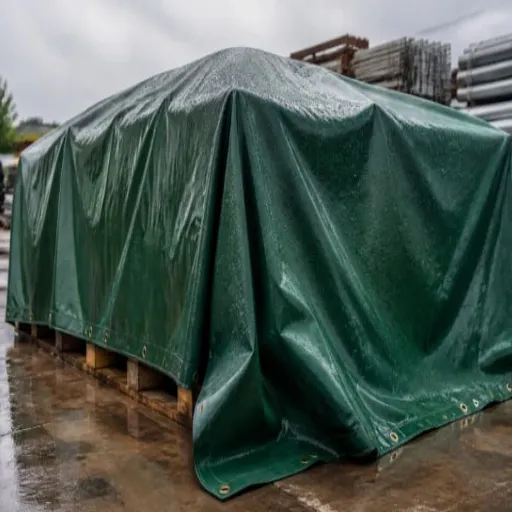
Proper maintenance extends the service life of PVC coated tarpaulin significantly. Neglect turns a 10-year product into a 3-year product.
Cleaning
Clean PVC coated tarpaulin with mild soap and water. Avoid harsh solvents, abrasives, or petroleum-based cleaners that can degrade the PVC surface. For stubborn dirt, a soft-bristle brush works well. Rinse thoroughly and allow the material to dry completely before storage.
Storage
Always store PVC coated tarpaulin dry and clean. Moisture trapped during storage promotes mold growth on surface contaminants and can cause permanent staining. Fold rather than cramming into tight spaces; sharp creases stress the base fabric over time. Ideal storage conditions are cool, dry, and away from direct sunlight.
Repair
Minor cuts and punctures can be repaired using PVC patch kits or hot-air welding. For field repairs, adhesive patches provide a temporary solution. For permanent repairs, professional hot-air welding restores original strength. Keep damaged areas clean and dry before applying patches.
Inspection
Inspect installed covers seasonally. Check grommets for pull-out, seams for separation, and surfaces for cracking or crazing. Early detection of wear allows scheduled replacement rather than emergency failure during critical weather events.
Sustainability and Compliance Considerations
Sustainability in industrial plastics is not a contradiction. It is a design choice.
REACH and RoHS Compliance
For export to European Union markets, PVC coated tarpaulin must comply with REACH regulations regarding restricted substances. RoHS compliance addresses hazardous substance limits in electrical and electronic equipment but increasingly influences general manufacturing standards. Reputable manufacturers provide compliance documentation on request.
Phthalate-Free Formulations
Traditional PVC plasticizers used phthalates that raised environmental and health concerns. Modern formulations use alternative plasticizers that maintain flexibility without the associated risks. Specify phthalate-free products when supplying environmentally regulated markets or health-sensitive applications.
Fire Safety Standards
Fire-retardant PVC coated tarpaulin must meet recognized standards:
- DIN 4102 B1: German standard for low-flammability building materials
- NFPA 701: US standard for fire-resistant textiles and films
- EN 13501-1: European classification for construction product fire performance
Always request test certificates rather than accepting verbal assurances of compliance.
End-of-Life Considerations
PVC is recyclable through specialized industrial processes that recover the base polymer. The long service life of PVC coated tarpaulin reduces replacement frequency, lowering total material consumption compared to disposable alternatives. Some manufacturers now offer products with recycled content in the base fabric or coating compound.
For buyers prioritizing environmental responsibility, our waterproof tarpaulin range includes eco-friendly material options designed to reduce environmental impact without compromising performance. Contact Linyi Chenlai Plastic Products Co., Ltd. to explore high-strength PVC tarpaulin solutions designed for demanding outdoor and industrial environments.
Frequently Asked Questions
How long does PVC coated tarpaulin last?
With proper specification and maintenance, PVC coated tarpaulin lasts 5 to 10 years in outdoor applications. Lifespan depends on GSM, UV stabilization quality, installation method, and environmental exposure. A 650GSM UV-stabilized product on a well-designed frame in a temperate climate can exceed 10 years. The same product flapping loosely in a coastal storm zone might last 4 years.
Is PVC tarpaulin completely waterproof?
Yes, quality PVC coated tarpaulin is fully waterproof when properly manufactured and installed. The critical factor is seam construction: heat-welded seams are waterproof, while sewn seams create potential leak paths. For absolute waterproofing, specify welded seams and avoid punctures during installation.
What GSM do I need for my application?
Agricultural greenhouse covers typically use 450-550GSM. Construction scaffolding and debris containment need 600-750GSM. Heavy-duty truck covers and long-term roofing require 700GSM or higher. Light-duty temporary covers may use 400GSM. When in doubt, specify one grade heavier than your initial estimate; the cost difference is small compared to premature failure.
Can PVC coated tarpaulin be recycled?
Yes, through specialized PVC recycling facilities that process industrial waste. The material cannot go into standard municipal recycling. The environmental advantage of PVC coated tarpaulin lies primarily in its durability: replacing a PE cover five times consumes more total material than one PVC cover over the same period.
What is the difference between PVC and PE tarpaulin?
PVC coated tarpaulin uses a woven fabric base coated with PVC, offering superior strength, weldability, and longevity. PE tarpaulin is typically an extruded woven polyethylene sheet, lighter and cheaper but far less durable. PVC suits long-term industrial applications; PE suits short-term, light-duty, or disposable uses.
Does PVC tarpaulin become brittle in cold weather?
Standard formulations remain flexible to approximately -20°C. For climates with temperatures below this threshold, specify cold-crack-resistant formulations with specialized plasticizers that maintain flexibility to -30°C or lower.
How do I clean mold off PVC coated tarpaulin?
Wash the affected area with a solution of mild detergent and water. For persistent mold, use a diluted bleach solution (1 part bleach to 10 parts water), rinse thoroughly, and dry completely. Avoid abrasive scrubbing that damages the PVC surface.
Conclusion
PVC coated tarpaulin represents a strategic investment in protection, not merely a purchase of covers. The material’s superior durability, waterproofing, and customization options make it the right choice for agricultural, construction, and transport applications where failure is expensive.
Remember the core selection principles: match GSM to stress levels, specify UV stabilizers for outdoor use, demand welded seams for waterproofing, and verify compliance certifications for regulated industries. The cheapest option is rarely the most economical over time.
Protect your assets with PVC coated tarpaulin built to your exact specifications. Request a free quote today and discover how the right material delivers long-term value for your operation.
At Linyi Chenlai Plastic Products Co., Ltd., we manufacture PVC coated tarpaulin for customers in over 50 countries. From standard sizes to fully custom formulations, we help businesses find protective solutions that perform. Contact our team to discuss your project requirements.