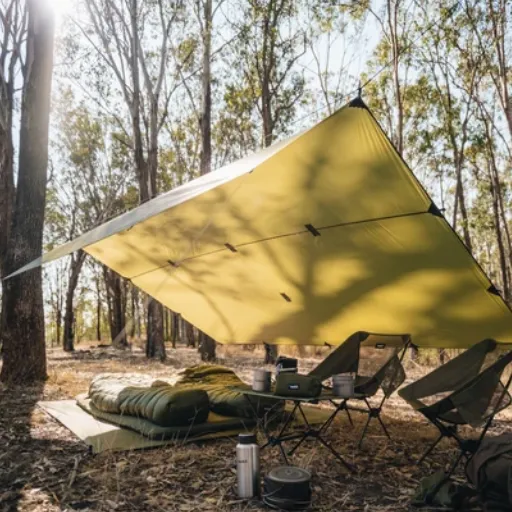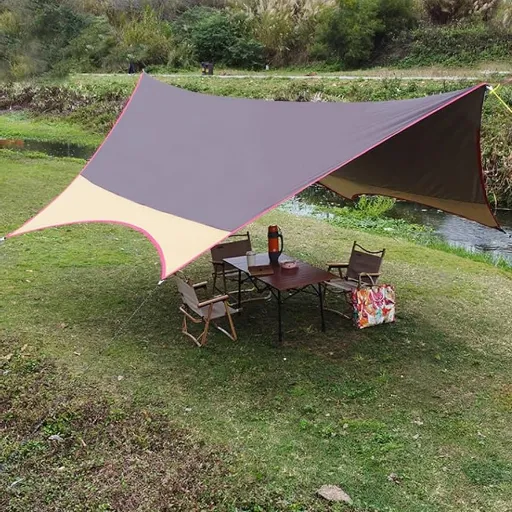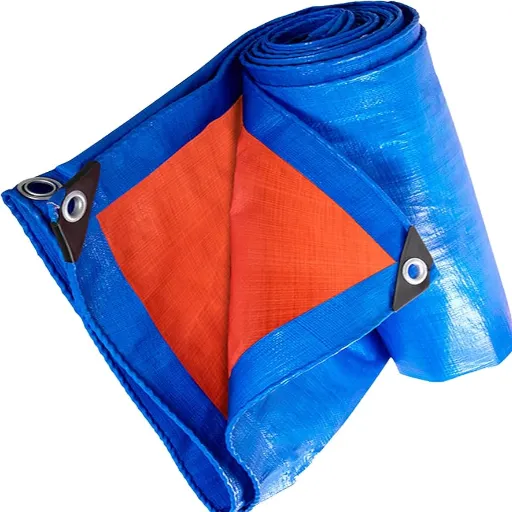
A custom tarpaulin is a made-to-measure protective cover engineered to exact dimensions, materials, and performance specifications for a specific application. Unlike standard off-the-shelf covers, custom tarpaulins eliminate gaps, reduce wind damage, and often last two to three times longer in demanding environments.
A poorly fitted cover is not just inconvenient. It is a liability. Wind gaps tear fabric. Water pools in folds. UV exposure accelerates degradation at stress points. For businesses protecting high-value assets, the cost of a poor fit often exceeds the price of a precision-made cover.
You already know that standard sizes do not work for every project. This guide gives you the exact specifications, pricing benchmarks, and manufacturer evaluation criteria needed to order the right custom tarpaulin with confidence. We will cover material selection, customization features, production timelines, 2026 pricing, and how to verify a direct manufacturer. Whether you need 500 square meters or 50,000, the information below will help you make a decision that protects your assets and your budget.
Looking for a reliable custom tarpaulin manufacturer? Contact Linyi Chenlai Plastic Products Co., Ltd. today for tailored waterproof tarp solutions designed to meet your exact specifications.
Key Takeaways
- Custom tarpaulins are engineered to exact dimensions and specifications, eliminating the gaps and stress points that cause premature failure in standard covers.
- PVC-coated polyester delivers the longest lifespan for heavy-duty applications, while PE offers a cost-effective solution for seasonal agricultural use.
- Factory-direct pricing for custom tarpaulin ranges from 0.12/sqmforlight−dutyPEto3.50/sqm for heavy-duty coated PVC, with volume discounts starting at 10,000 sqm.
- Total cost of ownership calculations often show custom covers costing less per year than repeatedly replacing ill-fitting standard tarps.
- Always verify a direct manufacturer by requesting ISO 9001 certification, third-party test reports, and batch traceability before placing an order.
What Is a Custom Tarpaulin?
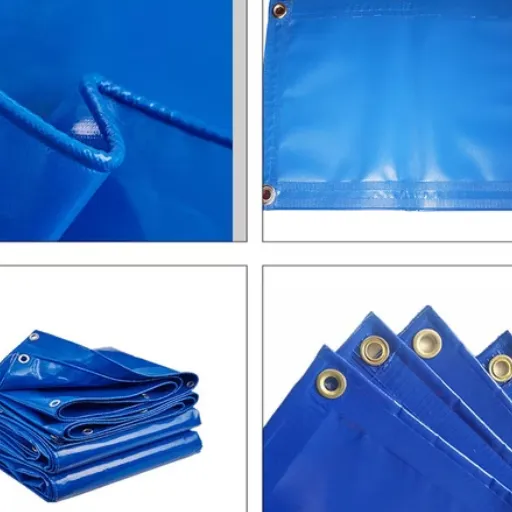
A custom tarpaulin is a tailored protective cover manufactured to meet precise customer requirements rather than produced in fixed standard dimensions. The customization process typically involves specifying exact measurements, selecting base materials and GSM weight, choosing colors or branded printing, and adding hardware such as grommets, D-rings, or reinforced hems.
Custom tarpaulins differ from standard products in four critical ways. First, they fit the application exactly, which eliminates flapping, pooling, and edge wear. Second, they use materials optimized for the specific environment, whether that means UV stabilization for tropical agriculture or fire-retardant coatings for construction sites. Third, they include hardware positioned where the customer needs it, not where a mass-production template dictates. Fourth, they can incorporate branding, access panels, or transparent windows that standard products cannot offer.
If you are ready to explore material options, browse our range of heavy-duty tarpaulins engineered for demanding environments.
Custom Tarpaulin vs. Standard Tarpaulin: Which Do You Need?
Not every project requires a custom solution. Understanding when standard products suffice and when customization delivers return on investment is the first step toward a smart procurement decision.
When Standard Tarpaulin Works
Standard tarpaulins are ideal for short-term, general-purpose coverage. If you need immediate protection for firewood, a temporary construction barrier, or a basic ground cover, off-the-shelf products offer low cost and fast availability. Standard sizes such as 6×8 feet, 10×12 feet, or 20×30 feet cover many common applications without modification.
When Custom Tarpaulin Delivers ROI
Customization becomes essential when fit, durability, or specialized performance directly impacts operational success. Irregular shapes, high-value asset protection, extreme weather exposure, and regulatory compliance all demand precision engineering.
When a European logistics distributor switched from off-the-shelf truck covers to custom-fitted tarpaulins, replacement orders dropped by 60% in the first two years. The difference was not the material. It was the fit. Standard tarps flapped at highway speeds, fraying edges and tearing grommets. Custom covers eliminated the problem entirely.
From transportation covers to construction and agricultural tarps, we provide customized waterproof tarpaulin solutions for customers worldwide. Reach out to our team today.
| Factor | Standard Tarpaulin | Custom Tarpaulin |
|---|---|---|
| Upfront cost | Lower | Higher |
| Availability | Immediate | 15–35 days |
| Size range | Fixed dimensions | Any dimension or shape |
| Material choice | Limited | Full range including specialty formulations |
| Lifespan | 1–3 years | 5–15 years depending on material |
| Total cost of ownership | Often higher due to replacement | Typically lower per year of service |
Custom Tarpaulin Materials: PE, PVC, and Specialty Fabrics
Choosing the right material is the most important technical decision in the custom tarpaulin procurement process. The material determines waterproofing performance, tear resistance, UV stability, weight, and ultimately the lifespan of the cover.
PE (Polyethylene) Tarpaulin
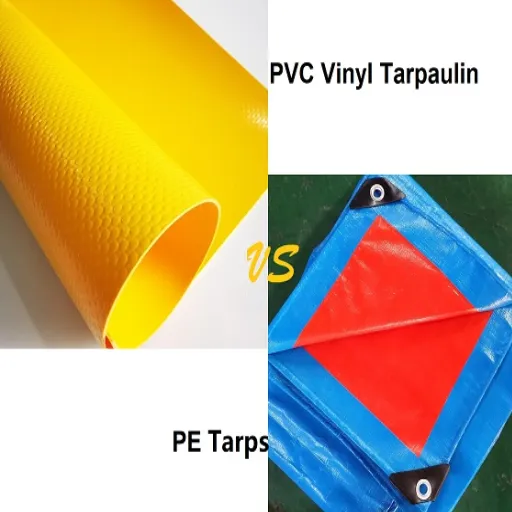
PE is a lightweight, flexible thermoplastic that offers excellent value for short-term and seasonal applications. Custom PE tarpaulins typically range from 70 GSM for light-duty use to 300 GSM for extra heavy-duty coverage. They are fully waterproof, easy to handle, and recyclable at end of life.
PE is the preferred choice for agricultural businesses that need large-area crop protection or temporary equipment covers. It is also the most cost-effective option for distributors who want to offer affordable custom-sized products to their customers.
PVC-Coated Polyester Tarpaulin
PVC-coated polyester is the gold standard for heavy-duty custom tarpaulin applications that demand long-term reliability. The polyester base fabric provides high tensile strength, while the PVC coating delivers 100% waterproofing, chemical resistance, and UV stability. Custom PVC tarpaulins range from 300 GSM for general covers to 1,200 GSM for extreme industrial use.
This material is ideal for truck and trailer covers, construction enclosures, permanent event structures, and any application where failure carries significant cost. With proper UV stabilization and maintenance, premium PVC custom tarpaulins can last 10 to 15 years outdoors.
Canvas and Specialty Fabrics
Canvas and poly-cotton blends offer breathability for applications where condensation management matters. Micro-perforated fabrics allow air circulation beneath the cover, making them suitable for pergolas, livestock shelters, and certain agricultural storage scenarios. These materials trade some waterproofing performance for improved airflow and reduced greenhouse effect.
From transportation covers to construction and agricultural tarps, we provide customized waterproof tarpaulin solutions for customers worldwide. Reach out to our team today.
| Material | GSM Range | Best For | Estimated Lifespan |
|---|---|---|---|
| PE (Polyethylene) | 70–300 | Agriculture, temporary covers, budget projects | 1–3 years |
| PVC-Coated Polyester | 300–1,200 | Truck covers, construction, industrial, long-term | 5–15 years |
| Canvas / Poly-Cotton | 400–650 | Breathable shelters, aesthetic applications | 3–7 years |
Customization Features Explained
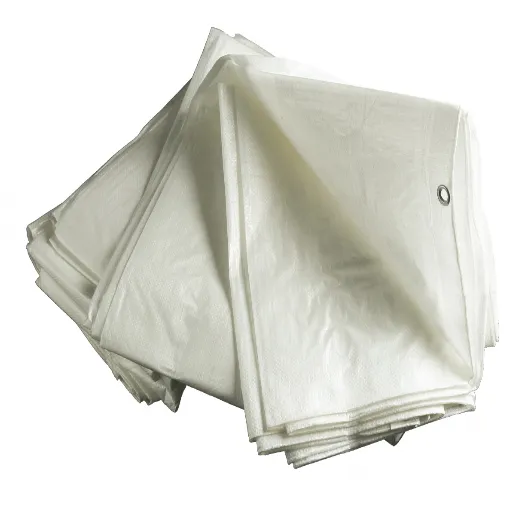
Beyond material selection, modern custom tarpaulin manufacturing offers a wide range of features that enhance performance, installation convenience, and branding.
Exact Dimensions and Shape
Custom tarpaulins can be manufactured to any length, width, or shape. A custom size tarpaulin eliminates the compromises of standard dimensions, ensuring complete coverage without excess material or dangerous gaps. Standard roll widths reach 5.1 meters on modern coating lines, and larger panels can be heat-welded together for oversized applications. Precision cutting ensures the cover matches your structure, vehicle, or equipment with only the necessary overlap for secure fastening.
Color Matching and Logo Printing
Standard colors include blue, green, white, black, red, and yellow. Pantone color matching is available for orders above 5,000 square meters. Logo printing uses UV-cured, screen, or digital methods depending on resolution requirements and order volume. Custom branding transforms functional covers into mobile advertising for logistics fleets and event installations.
Grommets, D-Rings, and Reinforced Edges
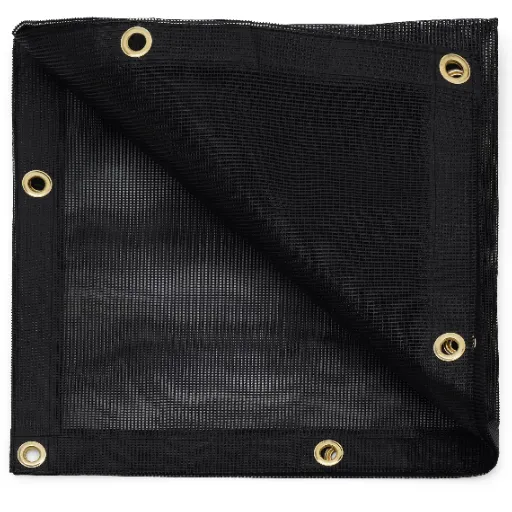
Hardware placement is fully customizable. Brass eyelets suit general outdoor use. Stainless steel grommets resist corrosion in marine or chemical environments. D-rings handle higher tension loads than standard eyelets. Reinforced corners with extra PVC layers prevent tear-out at the most stress-prone points.
Special Coatings
UV stabilizers extend outdoor lifespan by reducing photodegradation. Fire-retardant treatments meet NFPA 701, DIN 4102 B1, and M2 standards for safety-critical applications. Anti-mildew and anti-fungal coatings protect covers in humid agricultural and tropical environments. Anti-static finishes are available for industrial and explosive-atmosphere settings.
The Custom Tarpaulin Manufacturing Process
Understanding the production workflow helps buyers plan timelines, evaluate suppliers, and set realistic expectations for quality control.
Step-by-Step Production Timeline
The typical custom tarpaulin manufacturing process follows five stages. First, the engineering team reviews specifications and confirms material selection, dimensions, and hardware requirements. Second, the factory produces an A4 sample or prototype for customer approval. Third, after sample sign-off, mass production begins with 24/7 in-line quality monitoring. Fourth, finished batches undergo final testing including tensile strength, hydrostatic pressure, and coating adhesion checks. Fifth, the order is packed and shipped.
Standard OEM orders with existing specifications take 15 to 25 days from approval to shipment. Complex ODM projects requiring custom polymer formulations or unique weaving patterns may take 25 to 45 days.
OEM vs. ODM: What’s the Difference?
OEM manufacturing applies your branding to proven standard specifications. It offers lower MOQs, typically 3,000 to 5,000 square meters, and faster turnaround. ODM manufacturing engineers a custom formulation or weave pattern from scratch. It requires higher MOQs, usually 10,000 to 15,000 square meters, but delivers proprietary performance characteristics that competitors cannot replicate.
Industry Applications: Real-World Scenarios
Custom tarpaulins serve diverse industries. The examples below illustrate how precision engineering solves specific operational challenges.
Agriculture
Agricultural businesses use custom tarpaulins for crop protection, livestock shelters, hay and grain storage, greenhouse coverings, and equipment protection. Custom sizing ensures complete coverage of irregular storage bays. UV stabilization prevents degradation during long sunny seasons. Reinforced edges withstand frequent handling and tie-down.
Sarah operates a 200-hectare farm in Nigeria. For years, she used standard PE sheets to protect her maize harvest during the rainy season. Every season, she replaced them. In 2024, she invested in a custom size tarpaulin solution — UV-resistant covers with reinforced edges matched to her storage bays. Two years later, the same covers are still in use. Her annual cover cost dropped by 70%.
Construction
Construction companies rely on custom tarpaulins for scaffolding enclosures, debris containment, temporary roofing, and material protection. Fire-retardant options meet site safety regulations. Exact-fit enclosures reduce wind noise and prevent debris escape that can lead to regulatory fines.
Logistics and Transportation
Truck and trailer covers must fit precisely to reduce wind drag, improve fuel efficiency, and prevent cargo damage. Custom fleet branding turns every vehicle into a moving billboard. Reinforced mounting points aligned to specific chassis configurations extend hardware lifespan and reduce roadside failure.
Custom Tarpaulin Pricing Guide for 2026
Transparency in pricing builds trust. The table below shows current factory-direct pricing ranges by material and grade. Actual quotes depend on exact specifications, order volume, and shipping terms.
PE Tarpaulin Pricing
| Grade | GSM Range | Price per sqm (USD) | Typical MOQ |
|---|---|---|---|
| Light duty | 70–120 | 0.12–0.30 | 3,000–5,000 sqm |
| Medium duty | 120–180 | 0.30–0.50 | 3,000–5,000 sqm |
| Heavy duty | 180–250 | 0.50–0.75 | 2,000–5,000 sqm |
| Extra heavy duty | 250–300 | 0.75–1.10 | 2,000–5,000 sqm |
PVC Tarpaulin Pricing
| Grade | GSM Range | Price per sqm (USD) | Typical MOQ |
|---|---|---|---|
| Laminated | 300–450 | 0.85–1.25 | 1,000–3,000 sqm |
| Standard coated | 500–650 | 1.45–2.10 | 1,000–3,000 sqm |
| Heavy duty coated | 700–900 | 2.30–3.50 | 1,000–3,000 sqm |
| Fire retardant | 650–900 | Base + 0.30–0.50 | 1,000–3,000 sqm |
Volume Discounts
Orders above 10,000 square meters typically receive 10% to 15% reductions from baseline pricing. Orders above 20,000 square meters or full container loads can achieve 15% to 25% savings. Annual contracts with scheduled deliveries often unlock an additional 8% to 12% discount.
Factory prices have risen 3% to 5% since 2024 due to increases in labor and energy costs. Trading companies typically add 15% to 30% markup above factory-direct rates. Sourcing directly from manufacturers in Linyi and Shandong province remains the most cost-effective path for bulk buyers.
Ready to see how custom sizing fits your project? Request a free sample and detailed quotation from our team.
How to Choose a Custom Tarpaulin Manufacturer
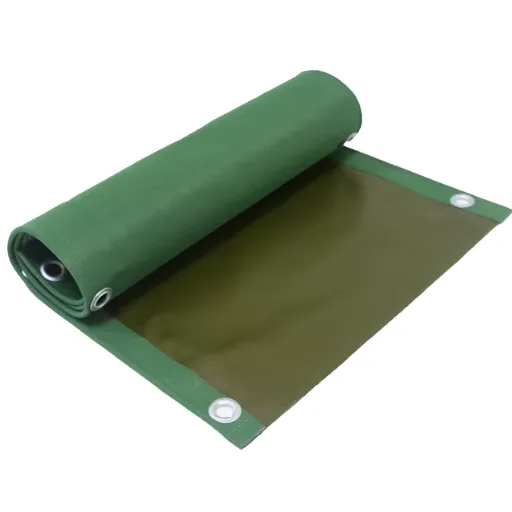
The custom tarpaulin manufacturer you choose determines product quality, delivery reliability, and the long-term value of your investment. Not every supplier advertising custom production operates its own factory.
Direct Manufacturer vs. Trading Company
Direct manufacturers control every stage of production, from raw material sourcing to final quality inspection. They offer faster communication, lower prices, and full accountability for defects. Trading companies resell products from third-party factories. They may offer broader catalogs but add markup, introduce communication delays, and often cannot guarantee batch consistency.
Chen, a procurement manager in Malaysia, learned the hard way that not every supplier with a factory photo is a direct manufacturer. His first order through a trading company arrived with inconsistent GSM weights and no batch test reports. Delivery was three weeks late. When he switched to a verified direct manufacturer with ISO 9001 certification and in-line quality control, lead times stabilized and defect rates fell to near zero.
Six Documents Every Buyer Should Request
- ISO 9001 certificate with manufacturing scope
- Technical Data Sheet for the specified material
- Third-party test reports for tensile strength and hydrostatic pressure
- Fire-retardant certification where applicable (NFPA 701, DIN 4102 B1)
- REACH or RoHS compliance declaration for export to European markets
- Production facility video or virtual tour verification
Red Flags to Avoid
Be cautious of suppliers who cannot provide named engineering contacts, refuse video calls from the factory floor, or offer pricing significantly below market rates. Unrealistically low quotes often indicate material substitution, reduced coating weights, or skipped quality control steps.
At Linyi Chenlai Plastic Products Co., Ltd., we maintain in-house production facilities with precision cutting, advanced coating lines, and rigorous quality control. Our team works directly with procurement managers to engineer covers that match exact specifications. We provide full batch traceability, third-party test reports, and samples for evaluation before bulk production begins.
Caring for Your Custom Tarpaulin
Proper maintenance extends the service life of any custom cover. Simple care routines protect your investment and ensure consistent performance across seasons.
Cleaning Guidelines
Remove loose dirt with a soft brush or low-pressure water spray. For stubborn stains, use mild soap and water. Avoid harsh solvents, abrasive brushes, or high-pressure washers that can damage coatings or weaken seam welds. Allow the cover to dry completely before folding for storage.
Storage Best Practices
Store clean, dry tarpaulins in a cool, dark location away from direct sunlight and chemicals. Fold loosely rather than tightly to prevent crease-related stress. If possible, roll rather than fold heavy-duty PVC covers to preserve coating integrity at fold lines.
Inspection Schedule
Inspect covers before each season or deployment cycle. Check grommets and reinforced edges for early wear. Patch small punctures promptly using compatible repair tape or heat-welding patches. Replacing a single damaged section early prevents the need for full cover replacement later.
With proper care, a premium custom PVC tarpaulin can deliver 10 to 15 years of reliable service. A well-maintained PE cover typically lasts 3 to 5 years in moderate climates.
Frequently Asked Questions
What is the minimum order quantity for custom tarpaulin?
Trial orders for standard specifications typically start at 50 to 200 square meters. Production-scale OEM orders generally require 3,000 to 5,000 square meters. ODM projects with custom formulations usually need 10,000 to 15,000 square meters.
How long does custom tarpaulin production take?
A4 material samples ship within 3 to 5 days. Prototype samples take 7 to 14 days. Standard bulk production requires 15 to 25 days after sample approval. Large OEM or complex ODM orders may take 25 to 45 days.
Can I print my company logo on custom tarpaulin?
Yes. Logo printing is available through UV-cured digital printing, screen printing, or eco-solvent methods. Vector files in AI, EPS, or PDF format at 300 DPI or higher produce the best results. Pantone color matching is available for orders above 5,000 square meters.
Are custom tarpaulins fully waterproof?
PVC-coated custom tarpaulins are 100% waterproof when properly manufactured and seam-welded. PE tarpaulins are waterproof but may allow minor seepage at seams under sustained hydrostatic pressure. Always specify your waterproofing requirements during the consultation phase.
What is the best material for a custom agricultural tarpaulin?
For seasonal crop protection and budget-conscious operations, PE tarpaulin at 120 to 180 GSM offers excellent value. For long-term equipment covers, livestock shelters, or repeated-use applications, a custom PVC tarpaulin at 500 to 650 GSM delivers superior durability and a lower total cost of ownership.
How do I verify a direct manufacturer?
Request ISO 9001 certification with manufacturing scope, ask for a third-party factory audit report, demand Technical Data Sheets with verified test results, and schedule a video call from the production floor. Direct manufacturers welcome transparency. Trading companies often deflect or delay these requests.
Conclusion
Custom tarpaulins deliver precision, durability, and long-term value that standard covers cannot match. The right material, exact dimensions, and purpose-built hardware transform a simple cover into a reliable asset-protection system. For agricultural operations, construction sites, and logistics fleets alike, the total cost of ownership often favors custom tarpaulin manufacturing over repeated replacement of off-the-shelf products.
The key to success lies in choosing the right material for your environment, specifying exact requirements, and partnering with a verified custom tarpaulin manufacturer who offers transparent pricing, batch traceability, and rigorous quality control.
At Linyi Chenlai Plastic Products Co., Ltd., we engineer custom tarpaulin solutions tailored to your exact needs. From material selection and sample approval to mass production and global delivery, our team manages every step with the precision and accountability your project demands.
Protect your assets with covers that fit. Contact us today to request a free sample, discuss your specifications, and receive a detailed quotation for your next custom tarpaulin order.