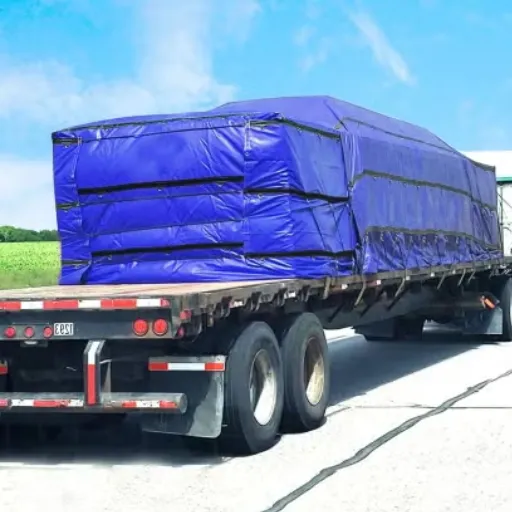
A custom truck tarpaulin is a made-to-specification cover built to fit a specific truck, trailer, or cargo load. The right cover protects goods, reduces wind drag, and lasts for years. The wrong one tears at the grommets, flaps on the highway, and costs more in replacements than it saves.
We manufacture truck tarpaulins for fleets, distributors, and OEM partners across logistics, construction, and agriculture. Over time, we have seen the same specification mistakes cause premature failures. This guide shares what we ask buyers before we cut a single metre. You will learn how to measure your load, choose the right material and GSM, specify hardware, and compare true cost over the life of the cover. Our experts can recommend the most suitable waterproof tarpaulin materials based on your application, budget, and performance requirements. Contact us for professional guidance.
Key Takeaways
- A custom truck tarpaulin is measured by trailer width plus twice the load height plus overlap for tie-downs.
- PVC-coated polyester suits long-haul fleets; PE works for short-term or budget coverage.
- Standard fleet duty calls for 600–750 GSM; heavy-duty flatbed and curtain-side use needs 750–900 GSM.
- Finished tarpaulin size is 3–6% smaller than cut size, so always specify finished dimensions.
- Factory-direct sourcing can cut unit cost by 20–35% at volume while improving specification control.
What Is a Custom Truck Tarpaulin?
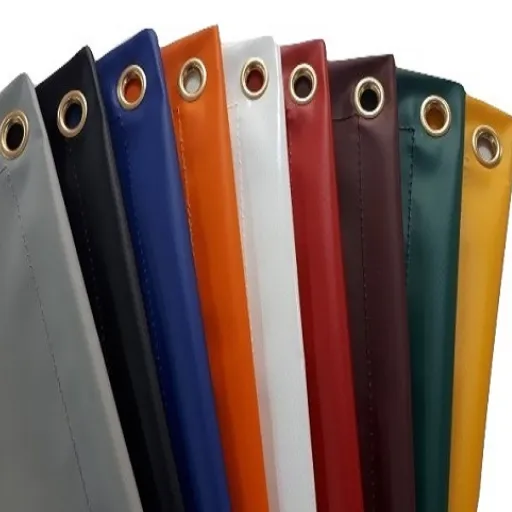
A custom truck tarpaulin is a protective cover manufactured to exact dimensions, material grades, and hardware requirements for a specific vehicle or cargo type. Unlike standard off-the-shelf sheets, it accounts for trailer width, load height, drop length, grommet placement, and reinforcement points.
Typical applications include flatbed trailers, curtain-side trucks, dump trucks, and specialised haulers. These covers are used in logistics, construction, agriculture, mining, and disaster relief. A well-specified cover keeps cargo dry, secure, and compliant with road-safety regulations.
Why Custom Truck Tarpaulins Outperform Standard Sizes
Off-the-shelf tarpaulins are cheaper upfront, but they rarely fit well enough for professional use. A custom truck tarpaulin solves four problems that standard sizes create.
Exact Fit Reduces Wind Flapping and Tearing
A cover that is too large flaps at highway speeds. That flapping generates fatigue at grommets and seams. A cover that is too small leaves cargo exposed and strains the tie-down points. Custom sizing matches the load precisely, reducing wear and fuel-wasting drag.
Cargo-Specific Reinforcements Extend Service Life
Lumber loads need extra drop length. Steel coils need abrasion-resistant corners. Dump trucks need tension-compatible panels. A custom specification adds reinforcement exactly where stress occurs.
Fleet Branding and Colour Consistency
Fleet operators and distributors often need matching colours, printed logos, and consistent packaging. Custom production supports these requirements across repeat orders.
Integration with Roll-Tarp and Side-Curtain Systems
Automated roll-tarp systems and curtain-side trailers need precise panel dimensions and hardware spacing. Standard sheets cannot integrate with these systems without modification.
Request a free consultation and product quote from Linyi Chenlai Plastic Products Co., Ltd. and discover how our custom waterproof tarpaulins can support your business needs.
How to Measure a Truck for a Custom Tarpaulin
Accurate measurement is the most important step in ordering a custom truck tarpaulin. The standard formula works for most flatbed and trailer applications.
The Standard Sizing Formula
Use these steps to calculate the finished dimensions you need:
- Measure the trailer bed width at its widest point.
- Measure the load height from the bed floor to the highest point of the cargo or rack.
- Add twice the load height to the width to allow for side drops.
- Add 60–90 cm of overlap per side for secure fastening.
- Measure the bed length and add front and rear overlap.
- Round up to the nearest standard roll width or seam-friendly dimension.
For example, a flatbed measuring 2.5 m wide with a 2 m load height needs roughly 2.5 m + (2 × 2 m) + 1.5 m overlap = 8 m finished width.
Cut Size vs Finished Size
This is where many buyers make a costly mistake. Cut size is the raw fabric dimension before hemming and seaming. Finished size is the actual dimension after edges are folded and reinforced. Finished tarpaulins are typically 3–6% smaller than cut size.
Always specify finished size when ordering. If your supplier quotes cut size, add the hem allowance or confirm the final usable area. A cover that looks correct on the cutting table can be too small once the edges are finished.
Measuring Flatbeds, Trailers, and Curtain-Siders
For flatbeds, measure the inside width and length of the bed. For curtain-siders, measure the frame opening and track height. The cover must clear rails, hinges, and locking hardware. Leave at least 10 cm of clearance on curtain-sider panels to prevent snagging.
Measuring Dump Trucks and Irregular Loads
Dump trucks often need tapered or angled panels. Measure the front wall height, rear wall height, bed width, and bed length. For irregular loads, take photos and provide a sketch. A manufacturer can often reduce seams by cutting panels to match the shape rather than forcing a rectangle over a non-rectangular load.
Adding Overlap for Tie-Downs and Wind Resistance
Overlap is not extra material. It is the margin that lets you secure the cover under the trailer rails or around the load. For highway use, 60–90 cm per side is standard. For high-wind routes, use the larger overlap and add extra grommets.
From transportation covers to construction and agricultural tarps, we provide customized waterproof tarpaulin solutions for customers worldwide. Reach out to our team today.
Choosing the Right Truck Tarpaulin Material
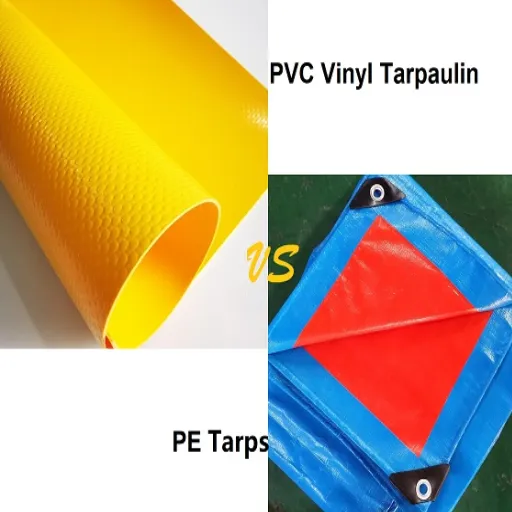
Material selection determines lifespan, weight, waterproofing, and repairability. The three main options for truck covers are PVC-coated polyester, PE (polyethylene), and mesh or canvas.
PVC-Coated Polyester for Long-Haul and Heavy-Duty Fleets
PVC truck tarpaulin is the standard for professional fleets. It consists of a woven polyester base fabric coated with PVC on both sides. This construction delivers high tear strength, welded seams, and UV stability. A quality PVC cover lasts 3–6 years under daily fleet duty and 5–10 years in occasional use.
PVC is heavier than PE, but it resists abrasion, chemicals, and highway wind. It can also be repaired by heat welding, which extends service life.
PE Tarpaulin for Temporary and Budget Coverage
PE tarpaulin is made from woven HDPE fibres laminated with LDPE. It is lighter, cheaper, and easier to handle than PVC. PE works well for short-term coverage, seasonal fleets, or emergency use.
The trade-off is durability. PE tarps usually need replacement within 1–2 years under continuous outdoor exposure. They cannot be welded; tears tend to propagate along the weave. For fleets that swap covers frequently, PE can still deliver lower cost-per-use if replacement cycles are planned.
Mesh and Canvas When Breathability Matters
Mesh tarpaulins allow airflow, making them suitable for aggregate, sand, and agricultural loads where wind resistance and condensation matter. Canvas is breathable and biodegradable, but it absorbs water and lacks the strength of PVC or PE. These materials are niche choices, not general-purpose truck covers.
PE vs PVC Truck Tarpaulin Comparison
| Feature | PE Tarpaulin | PVC Tarpaulin |
|---|---|---|
| Best for | Short-term, budget, seasonal use | Long-haul, heavy-duty, fleet use |
| Typical GSM | 160–250 | 450–900 |
| Lifespan | 1–2 years | 3–10 years |
| Waterproofing | Good when new | Excellent long-term |
| UV resistance | 6–24 months | 3–7+ years |
| Repair method | Tape or patch | Heat welding |
| Weight | Lightweight | Heavier |
| Cost per m² | Lower upfront | Lower over lifespan |
For a deeper look at waterproof options, see our waterproof tarpaulin buying guide.
Selecting the Correct GSM for Your Truck Application
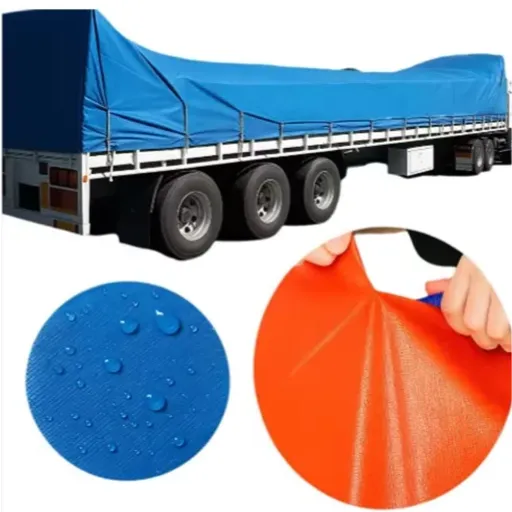
GSM stands for grams per square metre. It measures fabric weight and density. Higher GSM generally means greater durability, tear resistance, and UV stability. For truck applications, the wrong GSM causes either premature failure or unnecessary cost.
Light-Duty (400–550 GSM)
Light-duty PVC or heavy PE in this range suits occasional use, short-haul routes, and mild weather. It is not recommended for daily fleet duty or high-wind highways.
Medium-Duty (550–750 GSM)
This is the standard range for most commercial truck covers. A 650 GSM PVC truck tarpaulin balances durability, weight, and cost for regional logistics and general freight.
Heavy-Duty (750–900 GSM)
Heavy-duty GSM is ideal for flatbed lumber tarps, steel hauling, curtain-side trailers, and extreme weather. These covers resist tearing at grommets and hold up under sustained tension.
Cargo-Specific GSM Recommendations
| Cargo / Application | Recommended GSM | Key Reinforcement |
|---|---|---|
| General freight | 550–650 | Standard hems, brass grommets |
| Flatbed lumber | 750–900 | 8-foot drop, reinforced corners |
| Steel coils | 650–750 | Abrasion patches, tight weave |
| Dump truck / aggregate | 600–750 | Roll-system compatible, tension rails |
| Curtain-side trailer | 750–900 | Panama weave, welded seams |
| Extreme weather / mining | 900+ | Heavy-duty base fabric, FR coating |
For more on heavy-duty specifications, explore our heavy-duty tarpaulin options.
Reinforcement and Hardware That Determine Durability
The fabric is only part of the system. Reinforcement and hardware determine where a custom truck tarpaulin will fail first.
Rope-Reinforced Hems and Welded Seams
Rope-reinforced hems prevent edge tearing when the cover is pulled tight. Welded seams are stronger than stitched seams for waterproofing and load bearing. In our factory, we use heat-sealed seams for PVC covers because they outperform stitching under ponding water and wind load.
Grommet Spacing, D-Rings, and Corner Patches
Standard grommet spacing is 50–100 cm. For high-wind or highway use, 50 cm spacing is safer. Brass grommets resist rust better than steel. D-rings distribute load more evenly than grommets on heavy covers. Corner patches and bar-tacked webbing reduce tear-out at the highest-stress points.
Compatibility with Roll-Tarp and Side-Curtain Systems
If you use a roll-tarp system, specify panel width to match the spool and track. For curtain-siders, confirm eyelet spacing matches the trailer’s sliding hardware. A mismatch here means the cover cannot be installed even if the dimensions are correct.
Logo Printing and Fleet Colour Matching
Custom printing supports branding, safety markings, and regulatory labels. Specify whether you need solvent, eco-solvent, UV, or latex printing. For fleet consistency, request colour matching against a sample or RAL code.
Climate, Compliance, and Road-Safety Considerations
Route and regulatory requirements change the specification. A cover built for tropical highways needs different treatment than one for winter mountain roads.
UV Stabilization for Tropical and High-Altitude Routes
UV exposure degrades PVC and PE over time. UV-stabilised formulations extend outdoor life significantly. For tropical or high-altitude routes, specify a UV rating and request test certification. Non-UV-stabilised material should never be used for long-term outdoor truck covers.
Cold-Crack Resistance for Winter Fleets
PVC can stiffen in extreme cold. Cold-crack ratings indicate the lowest temperature at which the material remains flexible. For winter operations below -20°C, request a cold-crack rated formulation to prevent splitting during handling.
Fire-Retardant Standards
Fire-retardant truck tarpaulins are required for hazardous materials and certain industrial loads. Common standards include NFPA 701 in the United States and EN 13501 in Europe. Always confirm the specific regulation your cargo or jurisdiction requires.
Cargo-Securement Compliance Basics
In the United States, FMCSA cargo securement rules require that cargo does not leak, spill, blow, or fall from a vehicle. In Europe, EN 12195 provides similar guidance. A properly specified custom truck tarpaulin helps meet these requirements by containing the load and resisting wind forces.
What to Ask a Truck Tarpaulin Manufacturer
Before placing a bulk order, confirm that your supplier can deliver consistent quality at the scale you need. Here are the questions that separate a reliable manufacturer from a trading company.
MOQ, Lead Time, and Sample Policy
Minimum order quantities vary. Factory-direct meaningful price breaks often start around 500 m² of a single specification. OEM programmes may require 3,000–5,000 m². Ask for production lead time and whether sample costs are credited against the bulk order.
Roll Width Capability and Seam Placement
Wide-width rolls reduce seams, which improves waterproofing and strength. Ask about maximum roll width and how seams will be placed on your cover. Fewer seams usually mean better performance.
Quality Certifications and Batch Testing
Look for ISO 9001 quality management, SGS testing, and relevant fire-retardant certifications. Request batch test certificates for tensile strength, tear strength, and seam strength. Batch traceability from raw material to finished goods is essential for large or repeat orders.
OEM and Private-Label Options for Distributors
If you are a distributor, ask about OEM colour matching, custom packaging, logo printing, and specification records for repeat orders. A manufacturer that retains production records can reproduce identical covers years later.
To understand our manufacturing capabilities, visit our tarpaulin factory.
Cost Guide: Custom Truck Tarpaulin Pricing (2026)
Price depends on material, GSM, additives, hardware, colour, and order volume. Factory-direct pricing for heavy-duty PVC truck covers typically ranges from 0.72–1.50 per square metre. Premium grades with specialised coatings or base fabrics can reach 1.50–3.70 per square metre.
Cost-Per-Year: PVC vs PE Over Five Years
A 200 GSM PE cover might cost 0.30persquaremetrebutneedreplacementevery12–18months.A650GSMPVCcoverat1.00 per square metre can last 5 years. Over a five-year cycle, the PE option costs roughly 1.00–1.50 per square metre in replacements, while the PVC option costs $1.00 per square metre once. Add the labour of fitting replacements, and PVC usually wins on the total cost of ownership.
What Drives Price
- GSM and base fabric: Higher GSM and denser weave cost more.
- Additives: UV stabilisers, fire retardants, and anti-mildew treatments add 10–25%.
- Colour: Standard colours are cheaper than custom-matched shades.
- Hardware: D-rings, reinforced corners, and special grommet spacing increase cost.
- Order volume: Larger orders reduce per-unit cost, especially when sourced factory-direct.
Real-World Specification Example
A construction contractor in Southeast Asia ordered standard 200 GSM PE covers for a fleet of dump trucks hauling aggregate. The covers lasted about 10 months before tearing at the corners. After switching to a 700 GSM PVC custom truck tarpaulin with reinforced corners and 50 cm grommet spacing, the covers lasted four years. The higher upfront cost was recovered in the second year through reduced replacement and downtime.
Frequently Asked Questions
What is the best material for a custom truck tarpaulin?
PVC-coated polyester is the best choice for most professional fleet applications because of its durability, repairability, and long service life. PE works for short-term or budget use.
How long does a PVC truck tarpaulin last?
Under daily fleet duty, a quality PVC truck tarpaulin lasts 3–6 years. In occasional or static use, it can last 5–10 years. Lifespan depends on UV exposure, handling, and maintenance.
What GSM do I need for a flatbed truck cover?
Flatbed truck covers generally need 750–900 GSM for heavy-duty lumber or steel hauling. General freight flatbeds can use 600–750 GSM.
Can I get my company logo printed on truck tarpaulins?
Yes. Custom truck tarpaulins can include logo printing, fleet colours, and safety markings. Specify the print method and provide artwork or a colour reference.
What is the difference between cut size and finished size?
Cut size is the raw fabric dimension before hemming. Finished size is the usable dimension after edges are folded and reinforced. Finished size is usually 3–6% smaller.
How do I stop a truck tarp from tearing at the grommets?
Use rope-reinforced hems, brass grommets spaced at 50 cm, and corner patches. Avoid over-tensioning the cover, which concentrates stress at the hardware.
Are truck tarpaulins required to be fire retardant?
Fire-retardant covers are required for certain hazardous materials and regulated industries. Requirements vary by jurisdiction and cargo type.
What is the typical MOQ for custom truck tarpaulins?
Factory-direct MOQs often start at 500 m² for a single specification. OEM and private-label programmes may require 3,000–5,000 m².
Conclusion
A custom truck tarpaulin is not just a sheet of fabric. It is a specification-driven system that must fit the load, survive the route, and meet safety requirements. The right choice depends on accurate measurement, the correct material and GSM, proper reinforcement, and a manufacturer that can reproduce the specification consistently.
At Linyi Chenlai Plastic Products Co., Ltd., we produce custom truck tarpaulins for fleets, distributors, and OEM partners worldwide. If you need help specifying your next order, contact us for a tailored quote or sample evaluation.