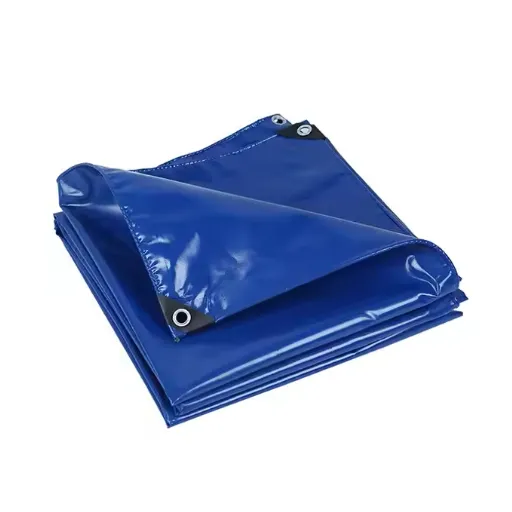
A custom tarpaulin is a protective cover manufactured to specific buyer-defined dimensions, materials, and hardware requirements rather than produced in standard pre-cut sizes. For agriculture, construction, and logistics buyers who need precise coverage, a custom tarpaulin eliminates material waste, ensures secure fastening, and delivers longer-lasting protection than off-the-shelf alternatives.
What if the standard tarpaulin you ordered last season is actually costing you money in wasted material and inadequate coverage?
Most buyers start with off-the-shelf sizes. They assume standard dimensions will fit their greenhouse, truck bed, or scaffolding structure. Then they discover the cover is too short on one side, leaves equipment exposed, or flaps dangerously in high winds because excess material has no proper anchor point. The result is wasted investment, damaged assets, and the hassle of reordering.
We understand that frustration. At Linyi Chenlai Plastic Products Co., Ltd., we manufacture custom tarpaulins for businesses across more than 50 countries. We have seen how the right custom sizing turns a frustrating purchase into a reliable, long-term asset.
In this guide, you will learn exactly how to measure for a custom tarpaulin, which material and GSM to choose for your application, what customization options are available, and how to work with a manufacturer to get precisely what you need. We will also share the one measurement mistake that causes more reorders than any other. Our experts can recommend the most suitable waterproof tarpaulin materials based on your application, budget, and performance requirements. Contact us for professional guidance.
Key Takeaways
- Custom tarpaulins are manufactured to your exact dimensions and specifications, eliminating the gaps and waste common with standard sizes.
- Always specify finished size, not cut size, when ordering, or your tarpaulin may arrive 3–6 inches smaller per side than expected.
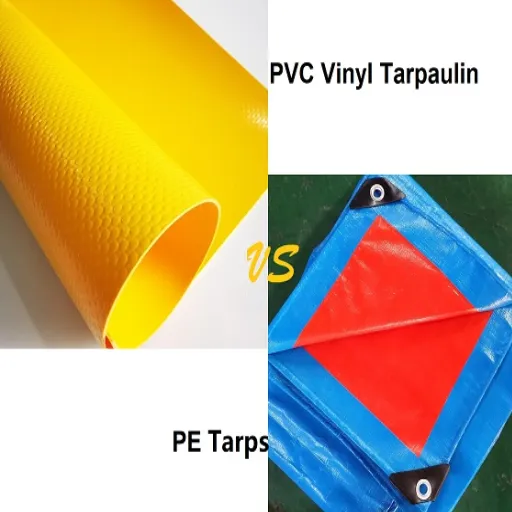
- PVC tarpaulins suit heavy-duty, long-term applications (5–15 years), while PE tarpaulins work for lightweight, temporary coverage (6 months–2 years).
- Agriculture, construction, and logistics each require different GSM ranges, hardware, and surface treatments for optimal performance.
- Ordering custom sizes from a direct manufacturer typically offers better value, faster turnaround, and more flexibility on minimum order quantities than working through trading companies.
What Is a Custom Tarpaulin and When Do You Need One?
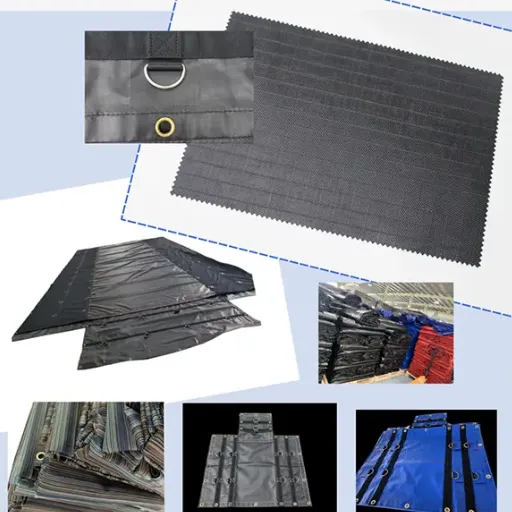
A custom tarpaulin is a made-to-measure protective cover engineered to your exact length, width, material weight, color, and hardware specifications. Unlike standard products sold in fixed dimensions, every element of a custom tarpaulin is tailored to the buyer’s application.
Standard sizes work well for general purposes. A 10-foot by 12-foot PE sheet might cover a small woodpile or protect garden furniture for a season. However, standard sizes rarely fit commercial applications precisely.
A greenhouse operator needs a seamless cover that matches the exact bay width. A construction manager needs scaffolding protection that reaches specific anchor points. A fleet operator needs truck covers that match trailer dimensions without dangerous overhang.
Maria runs a commercial greenhouse near Valencia, Spain. Last year she covered a new 12-meter by 30-meter polytunnel with three standard 10m × 15m tarpaulins. She spent €340 on the covers and another €180 on overlap seams and extra fastening rope to close the gaps.
Water still seeped through the overlaps during heavy rain. The leaks damaged €1,200 worth of seedling trays. Maria realized that saving money on standard sizes had created a costly problem.
This season, she ordered a single custom-sized UV-resistant tarpaulin with reinforced eyelets spaced exactly to her frame. The custom cover cost €420. It fit perfectly, needed no extra hardware, and protected her crops through three major storms. Maria spent less in total and eliminated the risk.
When should you choose a custom tarpaulin over a standard size? If your coverage area exceeds common stock dimensions, requires specific grommet placement, needs branded printing, or demands a precise material formulation, custom manufacturing is the practical choice.
If you are new to tarpaulin selection, start with our complete tarpaulin guide to understand material fundamentals. This article focuses specifically on custom sizing, measurement, and ordering.
Not sure whether custom sizing is right for your project? Contact our team for a free specification review and sample evaluation.
How to Measure for a Custom Size Tarpaulin
Ordering a custom tarpaulin starts with accurate measurement. The process is straightforward, but one common misunderstanding causes more problems than any other issue in the entire ordering process.
First, measure the length and width of the area you need to cover. Use a quality tape measure and record dimensions at the widest points. For three-dimensional objects like equipment or vehicles, measure length, width, and height to calculate the required drop on each side.
Second, add edge allowance for fastening. We recommend adding at least 15 to 30 centimeters (6 to 12 inches) per side for hems, eyelets, and secure tensioning. If you are covering a flatbed truck that measures 6 meters by 12 meters, add your edge allowance to both dimensions before placing the order.
Third, account for drape and overhang. Consider how the tarpaulin will sit. Will it lie flat, hang at an angle, or curve over a peaked structure? The way the material drapes affects how much length you need.
Fourth, map your fastening points. Note where existing anchors, rails, or tie-down points are located. Your manufacturer can place eyelets or grommets to align with these fixtures, which creates even tension and prevents wind damage.
Now for the critical concept: cut size versus finished size.
| Term | Definition | What to Order |
|---|---|---|
| Cut Size | The raw material dimension before hemming and edge finishing | Always larger than the final usable product |
| Finished Size | The actual usable dimension after hems are folded and sealed | Typically 3–6 inches (7–15 cm) smaller per side than cut size |
David manages a construction site in Nairobi. He ordered a “20 by 30 foot” tarpaulin for scaffolding protection. When it arrived, the actual usable surface was 19 feet 6 inches by 29 feet 6 inches.
The hem and grommet placement had consumed the difference. The tarpaulin did not reach the bottom anchor rails. David had to order a second cover with a 12-inch allowance on each dimension.
The delay cost his project two days of weather protection during the rainy season. The fix was simple. He had quoted cut size instead of finished size to his supplier.
Always ask your custom tarpaulin manufacturer whether their quoted dimensions represent cut size or finished size. At Linyi Chenlai, we quote finished size as standard because that is the measurement that actually covers your surface.
Common measurement mistakes include forgetting edge allowance, ignoring material shrinkage, and measuring only once for fleet orders where individual units may vary. Double-check every dimension, and request a technical drawing from your manufacturer if your application demands tight precision. Whether you need custom sizes, colors, thicknesses, or printing options, our team is ready to help you create the ideal waterproof tarpaulin for your project.
Key Customization Options Explained
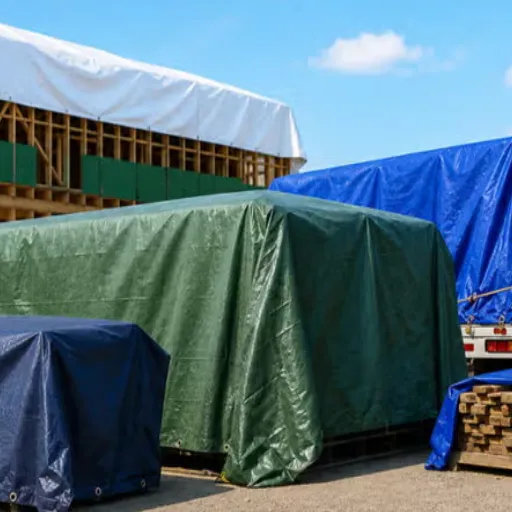
A custom tarpaulin is more than a specific length and width. Buyers can tailor material type, weight, color, hardware, and surface treatments to match exact operational requirements.
Material type is the most important decision. PVC coated polyester delivers maximum durability and waterproofing for heavy-duty, long-term use. PE laminated tarpaulins are lighter and more cost-effective for temporary or seasonal coverage. HDPE offers a middle ground with good UV resistance and lighter weight for agricultural applications.
GSM, or grams per square meter, indicates material thickness and density. Light-duty applications such as temporary ground covers may use 120 to 200 GSM. Medium-duty agriculture and general construction covers typically range from 250 to 450 GSM. Heavy-duty industrial, transport, and permanent structure applications demand 500 to 900 GSM or higher.
Color selection serves both practical and branding purposes. White or silver reflective covers reduce heat buildup in greenhouse applications. Dark green or brown blends into agricultural and landscaping environments. Custom Pantone matching is available for buyers who need fleet branding or corporate color consistency.
Hardware and edge finishing determine how well your tarpaulin performs under tension. Standard aluminum eyelets work for light use. Brass grommets resist corrosion in marine or high-humidity environments. Reinforced corners, welded hems, and double-stitched edges prevent tearing at stress points. D-rings and buckle straps are common choices for transport applications where wind flutter is a concern.
Surface treatments extend functional life. UV stabilization prevents degradation in climates with intense sun exposure. Anti-mildew coatings protect stored agricultural products. Flame-retardant treatments meet safety requirements for construction sites and public event venues. Always specify the certifications you need, such as ISO 9001 for quality management or NFPA 701 for flame resistance in the United States.
Custom printing allows logos, safety warnings, or branding to be applied directly to the tarpaulin surface. Screen printing and digital printing are both available depending on the complexity of the design and the order volume.
Our experts can recommend the most suitable waterproof tarpaulin materials based on your application, budget, and performance requirements. Contact us for professional guidance.
Choosing the Right Material for Your Application
The best custom tarpaulin for your project depends on where you will use it, what you are covering, and how long it needs to last. Agriculture, construction, and logistics each place different demands on material performance.
Agriculture buyers typically need UV-resistant covers that protect crops, equipment, and livestock without creating excessive heat. Greenhouse operators often choose transparent or diffused PVC in the 300 to 500 GSM range to balance light transmission with durability. Silage and hay covers need waterproof, tear-resistant materials that withstand prolonged outdoor exposure. For crop protection in open fields, 200 to 350 GSM PE or HDPE tarpaulins offer a lightweight, cost-effective seasonal solution.
Maria’s story illustrates why agriculture benefits from custom sizing. A single seamless greenhouse cover eliminates the leak points that standard-sized overlaps create. Custom eyelet spacing also ensures the cover tension matches the frame geometry, which prevents wind damage during storms.
Construction sites demand heavier materials. Scaffolding wraps, debris netting, and temporary roofing require 400 to 700 GSM PVC or mesh tarpaulins with reinforced edges and fire-retardant certification. Dust and debris containment covers need precise dimensions to seal work areas effectively. Custom sizing here is not a luxury. It is a safety and compliance requirement.
Logistics and transport applications prioritize tensile strength and secure fastening. Flatbed truck covers, trailer side curtains, and cargo wraps use 500 to 750 GSM PVC with welded seams and reinforced D-rings.
A cover that is too large creates dangerous wind drag on the highway. A cover that is too small leaves cargo exposed to rain and road grime. Custom sizing based on finished dimensions keeps loads secure and drivers compliant.
| Application | Recommended Material | GSM Range | Key Features |
|---|---|---|---|
| Agriculture (greenhouse) | PVC or HDPE | 300–500 | UV-resistant, light-transmitting options |
| Agriculture (crop cover) | PE or HDPE | 200–350 | Lightweight, seasonal, cost-effective |
| Construction (scaffolding) | PVC or mesh | 400–700 | Fire-retardant, reinforced edges |
| Construction (temporary roof) | PVC | 500–900 | Waterproof, high tear resistance |
| Transport (truck covers) | PVC | 500–750 | Welded seams, D-rings, high tensile strength |
| Industrial storage | PVC | 450–650 | Anti-mildew, UV stabilization |
For a deeper look at heavy-duty specifications, see our guide to heavy-duty tarpaulin options. If waterproofing is your primary concern, our overview of waterproof tarpaulin materials explains the technical differences between coating types. For agriculture-specific applications, see our detailed overview of tarpaulin for agriculture.
Working with a Custom Tarpaulin Manufacturer
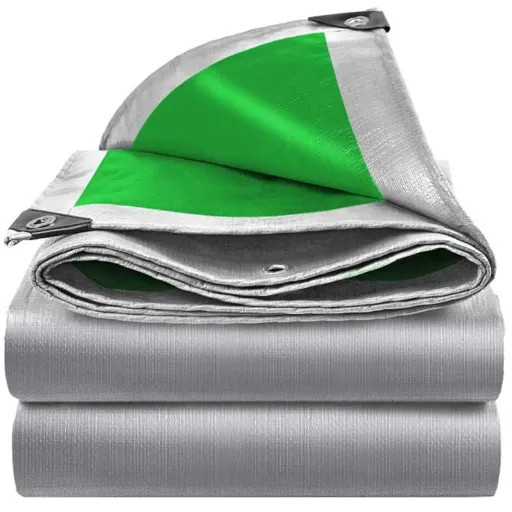
Choosing the right manufacturing partner matters as much as choosing the right specifications. A reliable custom tarpaulin manufacturer delivers consistent quality, clear communication, and on-time production.
Start by verifying that your supplier is a direct manufacturer, not a trading company. Direct manufacturers control their own production lines, material sourcing, and quality control processes. Trading companies add a markup and may lack the technical knowledge to troubleshoot specification issues. Ask for factory certification videos, ISO 9001 documentation, and production facility details.
Minimum order quantities vary by complexity. Stock-color custom sizes may start at 1,000 to 3,000 square meters. Custom colors matched to Pantone or RAL codes typically require 3,000 to 5,000 square meters.
Full custom formulations with unique polymer blends or specialized coatings may require 10,000 square meters or more. Some manufacturers, including Linyi Chenlai, offer flexible trial orders for first-time buyers who want to evaluate samples before committing to large volumes.
Lead times follow a predictable pattern. Sampling takes 7 to 14 days. Mass production typically requires 15 to 35 days depending on order size and customization complexity.
Shipping adds another 10 to 30 days for international orders. Plan your procurement cycle accordingly, and confirm production schedules in writing before placing a deposit.
Quality control should happen at multiple stages. Incoming raw materials should be tested for tensile strength and coating adhesion. In-process inspection checks dimensions, welding quality, and eyelet placement.
Finished goods testing verifies waterproofing, UV resistance, and overall workmanship. Request a quality control checklist from your supplier before production begins.
Warning signs of an unreliable supplier include reluctance to provide factory documentation, vague answers about material composition, pressure to skip sample approval, and pricing that seems significantly below market rates for the stated specifications. Quality materials and precise manufacturing have real costs. A quote that looks too good to be true usually is.
Understanding Custom Tarpaulin Costs and Value
Custom tarpaulin pricing depends on material type, GSM, dimensions, hardware, printing, and order volume. Understanding these cost drivers helps you budget accurately and avoid surprises.
PVC tarpaulins generally cost more per square meter than PE alternatives because the raw materials and coating processes are more complex. A 600 GSM PVC tarpaulin might range from 1.80to3.50 per square meter depending on order volume, color, and hardware. A 120 GSM PE tarpaulin might range from 0.30to0.80 per square meter. These are approximate figures for planning purposes. Actual quotes depend on current material costs and exchange rates.
Hardware adds cost but delivers performance. Reinforced hems, brass eyelets, and welded D-rings increase unit price. They also extend service life and reduce replacement frequency. Custom printing adds a per-unit or per-square-meter charge depending on the number of colors and the coverage area.
Volume discounts are standard in the industry. Orders below 3,000 square meters typically pay the highest per-unit rate. Orders between 5,000 and 10,000 square meters often see 10 to 20 percent reductions. Orders above 10,000 square meters can achieve 15 to 30 percent savings compared to small-volume pricing.
However, the most important cost consideration is total cost of ownership, not upfront price per square meter.
James operates a logistics fleet with 40 flatbed trucks in Australia. He initially bought 200 GSM PE truck covers because they were cheap at $0.45 per square meter. They lasted eight months in the harsh sun before tearing.
He switched to 650 GSM PVC custom truck tarpaulins at $2.10 per square meter. Those covers are now entering their sixth year of service. James spent more upfront. He spent far less over time, and his cargo damage claims dropped by 80%.
When you evaluate a custom tarpaulin quote, factor in expected service life, replacement frequency, maintenance costs, and the operational cost of inadequate protection. A higher GSM PVC tarpaulin that lasts eight years typically delivers better value than a low-cost PE alternative replaced every year.
Always request samples before mass production. A small sample allows you to verify material hand-feel, color accuracy, welding quality, and hardware strength. The cost of sampling is minimal compared to the risk of receiving a full production run that does not meet your expectations.
Eco-Friendly Custom Tarpaulin Options
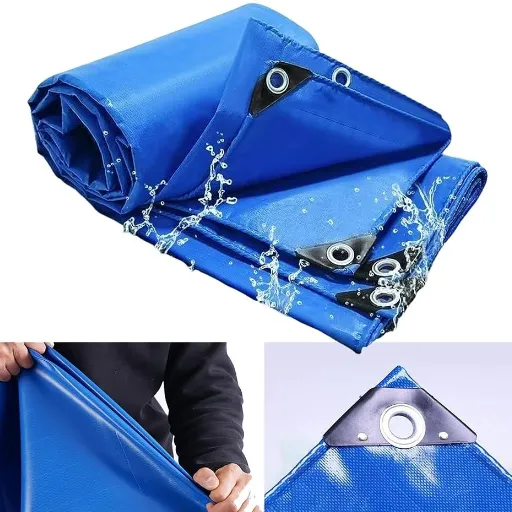
Sustainability is becoming a priority for buyers across every industry. Custom sizing itself reduces waste because you order only the material you need. Standard sizes often leave buyers with excess material that ends up in landfill.
Beyond precise sizing, material choices can reduce environmental impact. Some manufacturers now offer recycled-content PVC and PE tarpaulins that maintain performance standards while incorporating post-industrial or post-consumer material. Bio-based coatings and reduced-VOC production processes are also emerging options.
At Linyi Chenlai, we produce eco-friendly tarpaulins using sustainable materials and processes designed to minimize waste and energy consumption. Our precision cutting technology reduces offcut waste, and our quality control processes ensure that every meter of material meets specification. This eliminates the need for remanufacturing, which is one of the largest sources of carbon emissions in plastic production.
For buyers who need REACH-compliant materials for the European market, we provide full certification documentation. We also offer recyclable PE options for agricultural buyers who replace covers seasonally and want to reduce landfill impact.
Choosing an eco-friendly custom tarpaulin does not mean accepting lower performance. Modern sustainable formulations deliver the same waterproofing, UV resistance, and tear strength as conventional materials. The difference is in the environmental footprint, not the protection.
Conclusion
A custom tarpaulin is an investment in precision, durability, and operational efficiency. Standard sizes work for casual use. Commercial applications demand exact dimensions, the right material, and hardware configured to real-world conditions.
Remember the fundamentals. Measure carefully, specify finished size, and choose your material based on application and lifespan requirements. Verify your manufacturer’s quality control processes.
Request samples, confirm certifications, and calculate total cost of ownership before making your decision.
Whether you need a single custom-sized greenhouse cover or a fleet of branded truck tarpaulins, the right specification protects your assets and saves money over time. At Linyi Chenlai Plastic Products Co., Ltd., we engineer custom tarpaulins to your exact requirements and deliver them to businesses in over 50 countries.
Ready to order your custom tarpaulin? Contact us today for a free quote, technical consultation, and sample evaluation. Our team will review your measurements, recommend the ideal material and GSM for your application, and provide a detailed production timeline.