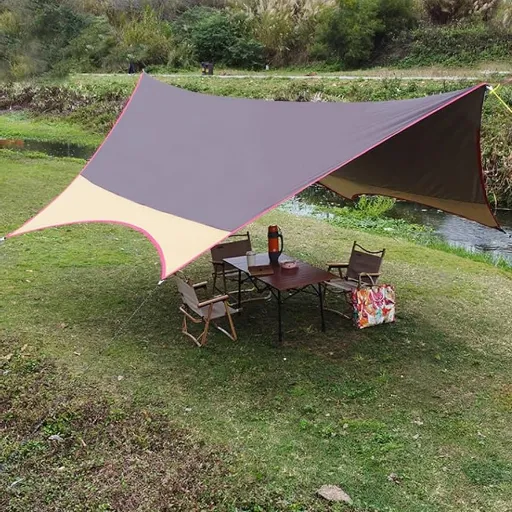
Custom printed tarpaulin combines durable weather protection with high-visibility branding, making it one of the most cost-effective outdoor advertising investments a business can make. The right printed cover depends on three factors: your artwork complexity, expected outdoor exposure, and order volume. Choose correctly, and your tarpaulin becomes a rolling billboard that protects assets and markets your brand simultaneously. Choose poorly, and you risk faded logos, peeling edges, and a cover that looks unprofessional before the first season ends.
When Marcus took over fleet operations at a mid-sized logistics company in Rotterdam, he inherited a problem. The company’s plain truck covers protected cargo adequately, but every vehicle was an unbranded white rectangle rolling through European highways. Marcus ran the numbers. A single branded truck cover, visible to thousands of drivers daily, cost less than one week of digital advertising. Within six months of switching to custom printed tarpaulin fleet covers, his company reported a measurable uptick in inbound inquiries. Drivers began recognizing their trucks on motorways. The covers paid for themselves in brand exposure alone.
That is the hidden power of printed tarpaulin. Most buyers think of it as protection first and decoration second. In reality, the best custom printed tarpaulin does both jobs exceptionally well. Whether you need construction site hoardings, event signage, fleet branding, or agricultural equipment covers, this guide will show you exactly how to specify, design, and order printed tarpaulins that look professional and endure years of outdoor exposure. Need a custom waterproof tarp with your logo or brand design? Contact Linyi Chenlai Plastic Products Co., Ltd. to explore our private-label and printing services.
Key Takeaways
- Screen printing delivers 5+ year durability for bold, limited-color designs at high volumes, while digital UV printing supports photo-quality graphics with lower minimum orders.
- Artwork must be 150 DPI minimum at final output size, in CMYK color mode, with 3–5 mm bleed and 15 mm safe zones from weld lines.
- PVC-coated polyester with a lacquered surface offers the best ink adhesion and print lifespan; PE works only for short-term or seasonal prints.
- Printed truck covers and construction banners generate 30,000–70,000 daily brand impressions at a fraction of traditional advertising cost.
- Always request a physical color proof before mass production; Delta E color tolerance should not exceed 1.5 for corporate branding consistency.
What Is Custom Printed Tarpaulin?
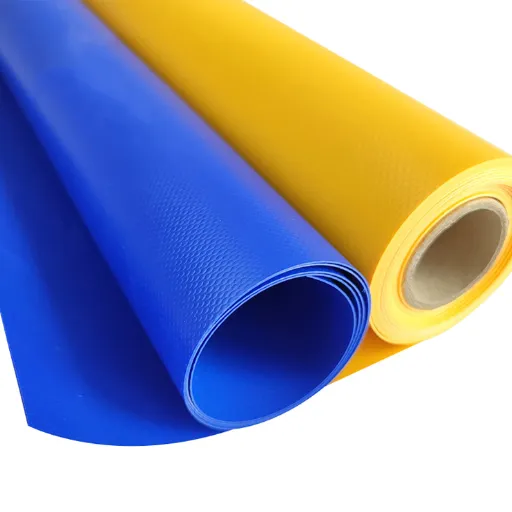
Custom printed tarpaulin is a heavy-duty protective cover manufactured from coated fabric, with logos, graphics, text, or safety markings applied directly to the surface using industrial printing methods. Unlike standard covers that serve a purely functional role, printed tarpaulin transforms every installation into a communication tool.
Businesses use custom printed tarpaulin for three primary purposes. Brand visibility turns trucks, scaffolding, and temporary structures into mobile advertisements. Professional site presence signals organization and credibility on construction projects and at outdoor events. Safety and compliance markings add reflective elements, warning labels, or instructional graphics that protect workers and visitors.
The customization options extend well beyond simple logos. You can specify exact dimensions, choose from single-sided or double-sided printing, match corporate Pantone colors, and add specialized finishes such as reflective ink or fire-retardant coatings. For a broader overview of sizing and material options, see our complete custom tarpaulin guide. Every specification affects how the print adheres, how colors appear, and how long the graphic remains crisp under sun, rain, and wind.
Whether you need custom sizes, colors, thicknesses, or printing options, our team is ready to help you create the ideal waterproof tarpaulin for your project.
Why Businesses Invest in Printed Tarpaulin Over Plain Covers
A plain tarpaulin protects your load. A printed one protects your load while marketing your brand to thousands of people every single day. That distinction explains why construction firms, logistics operators, event companies, and agricultural businesses increasingly specify custom printed tarpaulin instead of generic covers.
Brand Visibility and Mobile Advertising
Fleet operators have understood this for decades. A single truck with a branded cover traveling major routes generates an estimated 30,000 to 70,000 daily impressions. Compare that cost to a billboard rental or pay-per-click campaign. The cover is a one-time capital expense that advertises continuously for five years or more. For construction companies, printed scaffold banners and fence wraps turn an otherwise unsightly site perimeter into a professional showcase that advertises the developer to every pedestrian and driver passing by.
Professional Site Presence
First impressions matter. When a client visits a construction site and sees branded hoardings, clean logos, and professional color matching, they perceive organization and attention to detail. The same principle applies at agricultural trade shows, outdoor festivals, and temporary retail installations. A printed tent or stage backdrop signals that your business invests in quality. A plain white cover signals that you bought the cheapest option available.
Safety and Compliance Markings
Not all printing is decorative. High-visibility reflective ink on heavy-duty tarpaulin helps workers stay visible in low-light conditions. Warning labels printed directly onto covers eliminate the need for separate signs that can tear off or fade. Construction sites in particular benefit from printed safety instructions that remain legible regardless of weather.
Want to see how custom sizing and features work alongside printing? Explore our complete custom tarpaulin guide to understand the full range of options available.
Custom Printing Methods Explained
Not every printing method suits every design. The choice between screen printing, digital UV printing, and eco-solvent printing depends on your artwork complexity, color count, order volume, and durability requirements. Selecting the wrong method is one of the most expensive mistakes buyers make.
Screen Printing, Best for Bold, High-Volume Branding
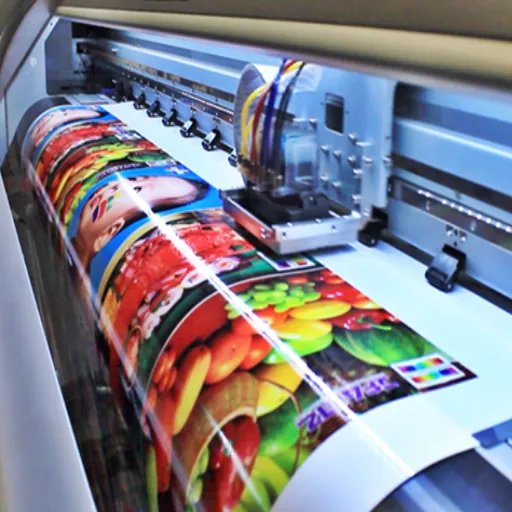
Screen printing forces ink through a fine mesh stencil onto the tarpaulin surface. It remains the gold standard for high-volume orders with bold, limited-color designs. Fleet logos, construction company names, and simple geometric patterns all perform exceptionally well with this method.
The advantages are significant. Screen-printed inks, especially when paired with a protective lacquer topcoat, can last five years or more in outdoor conditions. The per-unit cost drops dramatically at volume, making it economical for orders exceeding 3,000 square meters. Color consistency between batches is excellent because the same ink formulation is used throughout the run.
The limitations matter too. Screen printing supports roughly one to four colors efficiently. Complex gradients, photographic images, and designs with many colors require separate screens for each layer, which drives up setup cost and production time. If your artwork contains subtle shading or full-color photography, digital UV printing is the better choice.
Digital UV Printing, Best for Complex, Multi-Color Graphics
Digital UV printing uses inkjet technology to deposit UV-curable ink directly onto the substrate. The ink dries instantly under ultraviolet light, creating a hard, durable surface that resists scratching and fading.
This method excels at photographic quality, intricate gradients, and designs with dozens of colors. There are no screen setup costs, which makes digital UV printing economical for smaller runs and prototypes. Turnaround times are shorter because the printer reads your digital file directly without physical stencil preparation.
Durability is strong but slightly below screen printing for the most extreme environments. Expect three to five years of vibrant color in temperate climates before noticeable fading occurs. In tropical zones with intense UV exposure, lifespan may shorten to two to three years unless a protective over-lacquer is applied.
Eco-Solvent Printing, Best for Mid-Volume, Cost-Sensitive Orders
Eco-solvent printing sits between screen and digital UV in terms of cost and capability. The inks penetrate the tarpaulin surface slightly, creating a finish that resists water and mild abrasion.
This method works well for event signage, temporary banners, and seasonal covers where maximum longevity is not the primary concern. Eco-solvent prints typically last one to two years outdoors without additional protective coating. The color gamut is narrower than digital UV, and fine details can appear slightly softer. For short-term applications, however, the cost savings can be substantial.
| Print Method | Best For | Color Count | Typical MOQ | Outdoor Lifespan | Relative Cost |
|---|---|---|---|---|---|
| Screen Printing | Bold logos, fleet branding | 1–4 colors | 3,000+ sqm | 5+ years | Low at volume |
| Digital UV | Photos, gradients, complex art | Unlimited | 500+ sqm | 3–5 years | Medium |
| Eco-Solvent | Temporary banners, events | Moderate | 500+ sqm | 1–2 years | Lowest |
From transportation covers to construction and agricultural tarps, we provide customized waterproof tarpaulin solutions for customers worldwide. Reach out to our team today.
How to Prepare Artwork for Tarpaulin Printing
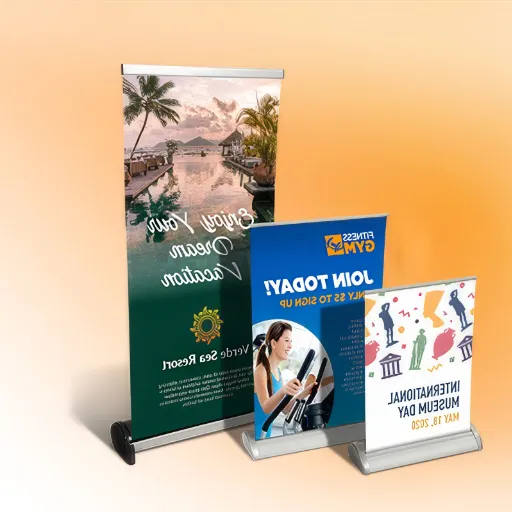
The most common cause of disappointing printed results has nothing to do with the printer. It has to do with the file the buyer sends. When Elena, a marketing coordinator for a German construction firm, submitted a low-resolution JPEG of her company’s logo for a 200-square-meter scaffold banner, the result was predictable. The bitmap image, pulled from the company website, contained only 72 DPI. Blown up to banner size, the edges looked fuzzy and unprofessional. The entire batch had to be reprinted, costing three weeks and several thousand euros.
Elena’s mistake is entirely avoidable. Here is exactly how to prepare artwork that produces crisp, accurate results.
File Formats That Manufacturers Prefer
Vector files are ideal. AI, EPS, or PDF formats with all fonts converted to outlines scale infinitely without losing quality. Logos, text, and geometric shapes should always be supplied as vector artwork.
Raster files are acceptable for photographic elements only. If your design includes photographs or complex digital artwork, supply TIFF or high-quality PNG files at a minimum of 150 DPI at the final output size. A common error is providing a 300 DPI file that measures only 10 centimeters wide, then expecting it to print clearly across a 5-meter banner. Resolution must be calculated at the final printed dimensions.
Resolution and Scaling
Calculate resolution based on viewing distance. For truck covers and construction banners viewed from 10 meters or more, 150 DPI at final size produces excellent results. For exhibition graphics viewed from 2 meters, aim for 200 to 300 DPI. When in doubt, ask your manufacturer for the specific DPI recommendation based on your print size and viewing distance.
Color Modes and Matching
Always supply artwork in CMYK color mode, not RGB. RGB colors are designed for screens and contain hues that physical inks cannot reproduce. If your brand uses specific Pantone or RAL codes, provide those reference numbers alongside your file.
Delta E measures the visible difference between your target color and the printed result. A Delta E of 1.5 or less is indistinguishable to the human eye. Corporate branding campaigns should specify this tolerance in writing. Reputable manufacturers will provide a physical color proof on the actual substrate before beginning mass production.
Bleed, Safe Zones, and Weld Lines
Add 3–5 millimeters of bleed on all sides. This extra area gets trimmed away after printing and ensures that color extends fully to the edge without leaving white strips.
Maintain a 15-millimeter safe zone from all edges, hems, and weld lines. Grommets, seams, and tensioning hardware can distort or obscure graphics placed too close to the perimeter. Critical logos and text should sit well inside this safe zone.
Choosing the Right Material for Printed Tarpaulin
The substrate you choose matters as much as the print method. Ink behaves differently on PVC-coated polyester than on polyethylene. Surface texture, coating chemistry, and lacquer finish all determine how vibrant your graphics appear and how long they last.
PVC-Coated Polyester, The Premium Choice for Printing
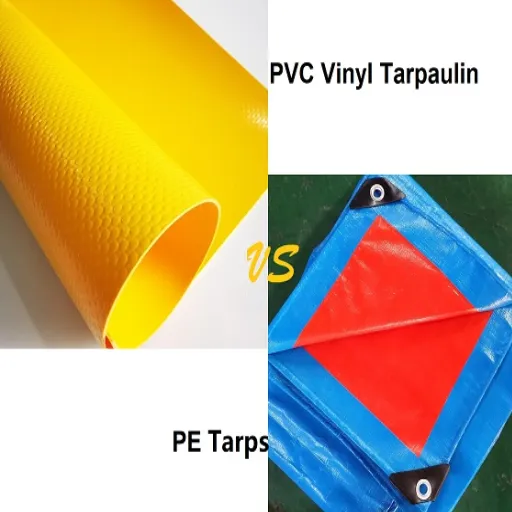
PVC-coated polyester is the industry standard for high-quality custom printed tarpaulin. The base fabric provides tear resistance and dimensional stability, while the PVC coating creates a smooth, sealed surface that accepts ink beautifully.
Lacquered PVC surfaces offer the best results. The lacquer acts as a receptive layer that locks ink into place and protects it from abrasion. Prints on lacquered PVC, when paired with UV-cured inks and a protective topcoat, can maintain color fidelity for five years or more. The substrate itself often lasts 10 to 15 years, meaning the fabric outlives the print.
PVC also supports specialized finishes. You can add UV absorbers, anti-mildew treatments, and fire-retardant additives without compromising print quality. For demanding applications such as fleet covers and long-term construction banners, PVC is the clear choice.
PE (Polyethylene), Budget-Friendly for Short-Term Prints
PE tarpaulin is lighter and less expensive than PVC. It works adequately for short-term prints such as seasonal agricultural covers, temporary event signage, or disposable promotional banners.
The challenge is surface energy. PE has a lower surface energy than PVC, which means inks do not adhere as strongly. Prints on PE tend to scratch and flake more easily, and color vibrancy is reduced. If you choose PE for printed applications, specify a Corona-treated surface that improves ink adhesion. Even with treatment, expect print lifespans of 12 to 18 months in outdoor conditions.
Blockout Tarpaulin, For Double-Sided and Backlit Applications
Standard tarpaulin is somewhat translucent. When light shines through from behind, graphics on the front can show through and create a ghosting effect. Blockout tarpaulin contains an opaque black or gray interlayer that prevents any light transmission.
This material is essential for double-sided printing, where each face carries different graphics. It is also necessary for backlit displays and any application where the reverse side must remain completely hidden. Blockout material costs slightly more than standard PVC, but the visual improvement is substantial.
Reflective and Specialty Materials
For safety applications, reflective inks and materials dramatically increase visibility at night. A printed warning sign on reflective waterproof tarpaulin ensures that workers and drivers see critical messaging regardless of lighting conditions. These materials cost more than standard options, but for high-risk environments, the safety benefit is invaluable.
Print Durability and Weather Resistance
A beautiful print means nothing if it fades to a pale shadow within a year. Understanding how weather affects printed tarpaulin helps you set realistic expectations and choose appropriate protection.
Expected Print Lifespan by Method
UV-cured digital prints on lacquered PVC typically last three to five years in temperate climates before noticeable fading occurs. In regions with intense sun exposure, such as the Middle East or Southeast Asia, lifespan may drop to two to three years without additional protective coating.
Screen-printed solvent inks with a lacquer topcoat offer the longest durability. Five years is common, and some applications exceed seven years in moderate climates. The thick ink deposit and protective overcoat create a barrier that UV rays penetrate slowly.
Eco-solvent prints generally last one to two years outdoors. They are best reserved for temporary or seasonal applications where longevity is less critical than upfront cost.
Understanding Accelerated Weathering Tests
Manufacturers often cite Xenon arc testing or ISO 105-B02 results. These tests simulate months or years of sun exposure in a compressed timeframe. A result of 1,000 to 2,000 Xenon arc hours roughly correlates to two to four years of real-world outdoor exposure in temperate zones.
Blue Wool Scale ratings provide another reference point. A rating of 6 to 7 indicates very good lightfastness suitable for most outdoor applications. Ratings below 5 suggest the print will fade noticeably within one to two years.
These numbers matter when comparing quotes. A supplier who cannot provide test data is asking you to trust their marketing claims instead of verified engineering.
Extending Print Life with Protective Coatings
UV absorbers and HALS (Hindered Amine Light Stabilizers) can be added to lacquer topcoats to extend print life by two to three times. These additives absorb or neutralize the UV radiation that breaks down ink pigments. For covers in extreme climates, the additional cost is almost always justified by the extended service life.
Climate Considerations
The same printed cover performs differently in Dubai than in Dublin. High UV intensity, salt air in coastal regions, industrial pollutants in urban centers, and temperature extremes all accelerate degradation. When specifying custom printed tarpaulin, always inform your manufacturer of the intended installation location. They can adjust ink formulations, coating chemistry, and material specifications to match the environment.
Applications and Real-World Examples
Custom printed tarpaulin serves industries that have little in common except a need for protection and visibility. The applications are remarkably diverse.
Fleet and Truck Covers
Branded truck covers protect cargo from weather while turning every delivery route into a marketing channel. The key is exact fit. A loose cover flaps in the wind, creating noise, drag, and premature wear at contact points. A precision-fit tarpaulin sheet reduces wind resistance, improves fuel efficiency, and presents a clean, professional graphic surface.
Fleet operators typically choose screen printing for simple two-color logos across large vehicle pools. The setup cost amortizes across hundreds of units, and the durability matches the vehicle service cycle.
Construction Site Branding and Hoardings
Construction fence wraps and scaffold banners serve a dual purpose. They contain debris and dust while displaying the developer’s brand, project renders, and safety information to the public. Municipalities increasingly require construction sites to install branded hoardings as a condition of permitting, making printed tarpaulin a compliance tool as well as a marketing asset.
These applications often require fire-retardant certification. DIN 4102 B1 and NFPA 701 are the most commonly requested ratings. Always verify that both the base material and the printed ink meet the required fire safety standard.
Events, Exhibitions, and Temporary Structures
Outdoor festivals, trade shows, and sporting events rely on printed tarpaulin for stage backdrops, tent walls, crowd barrier covers, and sponsor signage. The fast turnaround of digital UV printing is particularly valuable here, because event graphics often change from one show to the next. Lower minimum order quantities allow organizers to print season-specific messaging without committing to enormous volumes.
Agriculture and Rural Branding
Most manufacturers overlook agricultural applications entirely. That is a mistake. David, who runs a 400-hectare grain operation in Ukraine, orders custom printed tarpaulin equipment covers every spring. Each cover displays the farm name, equipment identification numbers, and maintenance schedules. When contractors or seasonal workers arrive, they know exactly which machine is which. The printed covers also protect combines and tractors from sun damage during the off-season.
Other agricultural uses include printed grain storage covers with handling instructions, livestock shelter branding that identifies ownership across shared grazing land, and crop zone markers that help workers navigate large fields. For farmers who sell at local markets, printed market stall covers reinforce brand recognition among regular customers.
Looking for durable covers that can handle agricultural workloads? Browse our heavy-duty tarpaulin options designed for demanding outdoor environments.
Ordering Custom Printed Tarpaulin: Pricing, MOQs, and Lead Times
Understanding the commercial mechanics of ordering helps you plan budgets and timelines accurately. Custom printed tarpaulin is not an off-the-shelf product, so lead times and minimums matter.
Typical Minimum Order Quantities
Screen printing requires physical stencil preparation for each color. This setup cost makes small runs economically unattractive. Most manufacturers set MOQs at 3,000 to 5,000 square meters for custom screen-printed orders. Below this threshold, the per-unit cost rises sharply.
Digital UV printing has no stencil cost. The printer reads your file directly. Consequently, MOQs are lower, often starting at 500 square meters. This flexibility makes digital UV ideal for prototypes, test markets, and events with variable graphics.
Eco-solvent printing follows similar MOQ structures to digital UV, though some suppliers will accept runs as small as 300 square meters for simple designs.
Understanding Print Setup Costs vs. Material Costs
When reviewing quotes, distinguish between material cost and print setup cost. Material is priced by square meter based on GSM, coating, and additives. Print setup includes file preparation, color matching, sample production, and stencil or machine calibration.
Screen printing carries the highest setup cost because each color requires a separate stencil. Digital UV setup is lower but not zero; file optimization, color profiling, and test prints still require labor and machine time. Always request an itemized quote so you understand what you are paying for.
Factory-Direct Pricing Benchmarks (2026)
Pricing varies by specification, but factory-direct sourcing typically offers 15 to 30 percent savings compared to trading company intermediaries. Standard PVC-coated polyester with single-color screen printing might range from 1.80to3.50 per square meter at volume, depending on GSM and finish. Multi-color digital UV printing on premium lacquered PVC can range from 4.00to7.00 per square meter.
These figures are indicative. Your actual price depends on order volume, material specification, print complexity, and finishing requirements. The most cost-effective approach is to define your application clearly, then request a detailed quotation rather than comparing headline prices.
Lead Times from Artwork Approval to Delivery
Sample production typically takes 5 to 7 days after artwork approval. This stage is non-negotiable for first-time orders. A physical sample confirms color accuracy, print clarity, and material feel before you commit to mass production.
Mass production runs 15 to 35 days depending on order size and factory schedule. Large OEM orders with complex multi-color printing may extend toward 45 days. Sea freight adds 20 to 40 days depending on destination. Air freight is available for urgent orders but increases logistics cost substantially.
Plan backward from your installation date. If you need covers ready for a March construction launch, begin discussions in November or December of the previous year.
Common Mistakes When Ordering Printed Tarpaulin
Even experienced buyers make expensive errors. Here are the most common pitfalls and how to avoid them.
Choosing the wrong material for the print method. PE is tempting because it is cheap, but it produces inferior print results. If your application requires professional graphics and multi-year durability, invest in PVC-coated polyester.
Providing low-resolution artwork. A web-ready JPEG at 72 DPI will never print clearly at banner size. Supply vector files where possible, and calculate raster resolution at the final output dimensions.
Ignoring bleed and safe zones. Logos placed too close to edges get cut off during hemming or obscured by grommets. Always maintain the 15-millimeter safe zone recommended by your manufacturer.
Skipping the physical color proof. Monitor screens display colors in RGB and are calibrated differently from one device to another. A color that looks perfect on your laptop may print as a noticeably different shade. A physical proof on the actual substrate eliminates this risk.
Failing to specify climate conditions. Ink formulations optimized for European temperate zones may degrade rapidly in tropical UV or desert heat. Tell your manufacturer exactly where the cover will be installed.
Focusing only on print cost, not total cost per year. A cheap print that fades in 18 months and must be replaced costs more over five years than a premium print that lasts five years from the start. Calculate cost per year of service, not just the initial invoice.
Conclusion
Custom printed tarpaulin is more than a protective cover with a logo pasted on top. When specified correctly, it is a dual-purpose asset that safeguards equipment, materials, and cargo while marketing your brand to thousands of people every day. The key is matching the right print method to your artwork, preparing files with professional precision, and selecting a substrate that supports both your protection needs and your visual goals.
Screen printing remains the durability champion for bold, high-volume branding. Digital UV printing opens the door to photographic quality and flexible order sizes. Eco-solvent printing fills the gap for temporary and seasonal needs. Regardless of method, success starts with clear communication: precise artwork, defined color standards, and honest discussion about where and how your covers will be used.
At Linyi Chenlai Plastic Products Co., Ltd., we manufacture custom printed tarpaulin in-house, from base fabric production through coating, printing, and finishing. This integrated approach ensures color consistency, batch traceability, and quality control at every stage. If you are planning a fleet branding project, construction site hoarding, or agricultural cover program, we can help you specify exactly what you need.
Request a free print sample and custom quote today → Submit your artwork, and our team will produce a physical proof on your specified material so you can evaluate color accuracy, print clarity, and surface finish before committing to mass production.