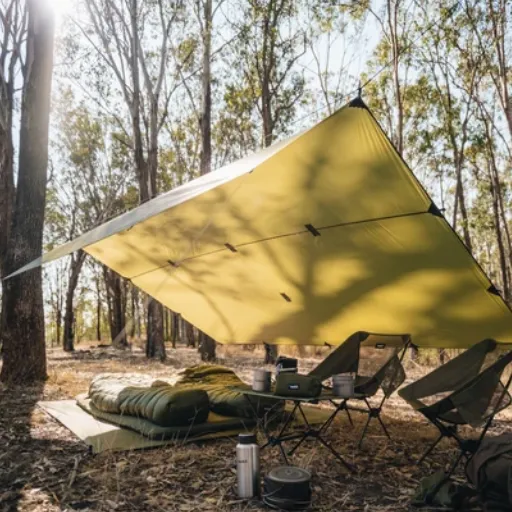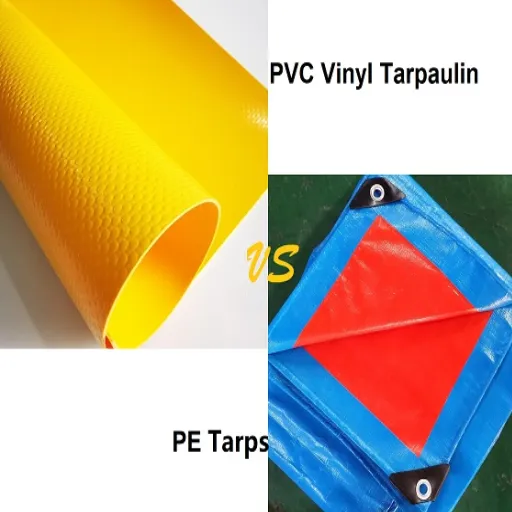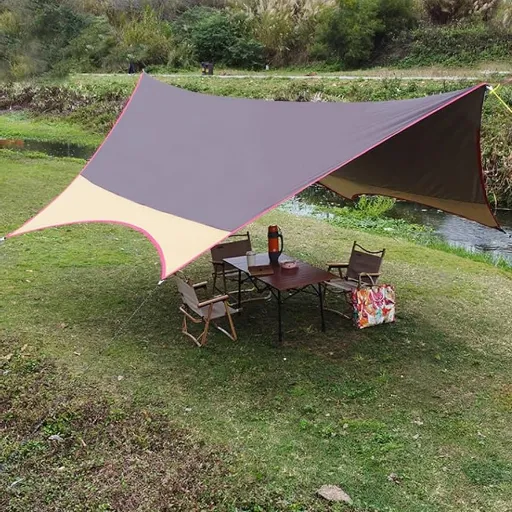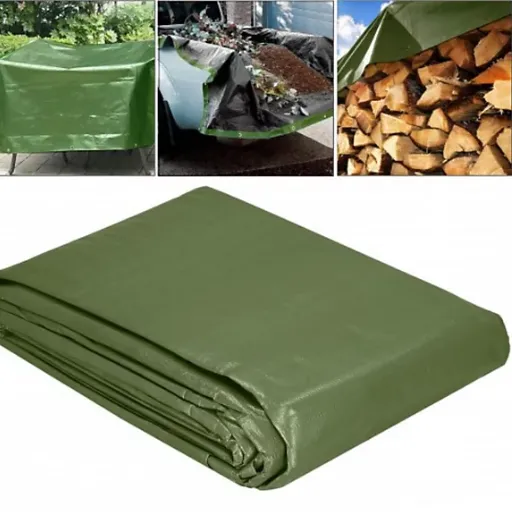
Have you ever seen one of those waterproof tarpaulins that you probably have in your possession right now – an easily assembled PVC or PE coated tarpaulin available in retail or wholesale markets in standard sizes ready for immediate application? Unlike tarps from rolls or getting a quotation for one rather to be precise from a drawing, they are packed in a certain square trim already attached with rope hems and eyelets at regular intervals. The standard sizes go within the range of 2m by 3m to 12m by 18m bed and with hydrostatic head value starting from 1500mm.
When that first order came in, one marketing oriented web store was supposed to have 50 “tarpaulin sheets 12×18 m” sent to Priya in their cutout measures. However, upon inspection it was discovered that the edges of the goods were not covered and had a lot of raw cut edges on them. By the end of the fourth week, her half of the temporary shelter’s 12×18 sheets had already started coming apart from the sides and corners due to the strain from the position occupied in the outdoor stand of the garden center in the UK. The cost of the replacement along with the additional expense of re-rigging the rack was around £2000 to her. The conclusion: the dimensions written on the price tags are just to give a rough idea. The coverall tape all the raw tarpaulin edges contained in the packaging, as opposed to the anywhere in the drawings of the product should be taken into consideration.
Have inquiries? Reach out to us, and we’ll be happy to assist you with any concerns.
Key Takeaways
- There are typical sizes of stock tarp sheets with weight sizes of about 2×3 meters to 12×18 meters in and. Special sizes which do not fit into this range are not common and usually are stated as custom sizes.
- The finishing of the edges whether raw, hemmed, taped, webbing bound has the most effect in real life. A hemmed sheet can even outlive two raw cut sheets or even three when in the same conditions.
- Grommet pitches are also essential and it depends on how much of the sheet is expected to be flying with the wind: 50 cm is suitable for high-load applications, 75 cm for standard outdoor use, and 100 cm for hanging light covers.
- The larger the scale the more important the Beyond this particular limit how much any packaging container can pack because a 40’ hc can load a folded 200gsm pe sheet of about 18000-22000 square metres or a folded 900gsm pvc of about 3500-4500 square metres.
- For detailed information about the materials and sizes, the features and the head depths, please refer to our catalogue. This article about the forms that are usually available in the material being purchased is readily available in sheets.
What Is a Waterproof Tarpaulin Sheet?

A waterproof tarpaulin sheet is a completed panel that has been cut from PVC-coated or PE-coated fabric, with edges sewn and reinforced in a factory, as well as with grommets attached before being dispatched. When some unit component is said to be a sheet, that is a panel of fixed dimensions, which does not require additional production. The goods are more costly per meter because of the labor costs involved in cutting, altering the sheet straightforward factory items into fittings for direct use in the works, enclose permanent outlines and fix in some other designs.
| Format | Sizing | Best for |
|---|---|---|
| Sheet | Fixed standard size | Buyers who want ready-to-use panels |
| Roll | Cut to order from bulk | OEMs converting tarpaulin into final products |
| Custom cover | Made to drawing | Single-use applications with non-standard shapes |
For the underlying material chemistry and what makes a tarpaulin truly waterproof (hydrostatic head, GSM, lamination, RF welding), see our waterproof tarpaulin pillar guide. This article stays narrowly on the buyer’s form-factor questions.
Want to skip the research and request a quote directly? Send your size, GSM, and finishing requirements through our quote form, and we’ll match the spec against our stocked grid within 24 hours.
Standard Sheet Sizes (Metric and Imperial)
With an aim of minimizing the production cost as well as delivery time for the ordered tarpaulin sheets, most of the manufacturing companies have assumed a fixed size grid. Purchases made in a size grid are cheaper and quicker to be delivered. However, any items that are sized out of the regular grid, will have to be produced to order resulting in more time taken to manufacture the products.
The information provided below is based on the Linyi chenlai company fixed stock sheet size table that is intended for the bulk stock production of these goods. In stock or manufacturing Floorcoverings are made in set sizes. Other addresses have last year tightly presented the same sizes.
| Metric (m × m) | Imperial (ft × ft) | Area (sqm) | Typical grommet count | Recommended GSM |
|---|---|---|---|---|
| 2 × 3 | 6.5 × 10 | 6 | 8 | 180–220 |
| 3 × 4 | 10 × 13 | 12 | 12 | 220–300 |
| 4 × 6 | 13 × 20 | 24 | 18 | 300–450 |
| 5 × 8 | 16.5 × 26 | 40 | 22 | 450–610 |
| 6 × 10 | 20 × 33 | 60 | 28 | 450–610 |
| 8 × 12 | 26 × 40 | 96 | 36 | 610–900 |
| 10 × 15 | 33 × 49 | 150 | 50 | 900–1,100 |
| 12 × 18 | 40 × 59 | 216 | 64 | 900–1,100 |
Linear-dimension tolerance on stocked sheets is typically ±2%. If your application needs tighter tolerance, specify it in the RFQ and expect a small surcharge. Sheets larger than 12×18 m are technically possible, but at that size most buyers move to custom covers or join two smaller sheets at a welded seam.
Edge-Finishing Options
Usually, tarpaulins tend to wear from the edges rather than the body, considering forces such as wind load, ultra-violet degradation, and handling exerted on the edge first which is why finishing is the most critical feature to consider.
Unturned. The alternative does not have polished edges and the tarp is unadorned, which only puts it a the cheapest option available per tarp. Suitable for vertical or slanting locations or single use applications where the tarps edge does not take loads. Not recommended for use in locations where wind is a predominant factor that may put some weight on the edge of the tarp.
Sidelined. In this type, an edge of an object is bent once, or even twice, and it is tucked under the rear leg of the object. Fold-once stance is better but the fold-once two lays are too inflexible one might just go for the fold-twice particularly for all external tarps.
Seam sealed or Welded. Use a reinforcement strip and bonding the hem with double side adhesive tape where needle holes are created. Seam Sealing or Welding Tape is primarily used when the purchaser wants a totally waterproof/hygienic sealing at the edge. This is commonly encountered in marine and relief tarps.
Webbed on the edge. It features a heavy polyester fabric edge that is sewn in the perimeter. This can contain additional reinforcement angles which increases the price. This level of reinforcement is normally reserved for industrial applications where decals need to be put into place and removed often.
A simplistic decision standard, as far as core and hem selection, is to avoid hemming the sheet if wind load is anticipated. Correspondingly, webbing-bound corners are a requirement when the sheet is used without being taken down but instead is repeatedly rigged daily.
We’re here to help! Feel free to contact our team for more information or support.
Grommets, Eyelets, and Reinforcement Points
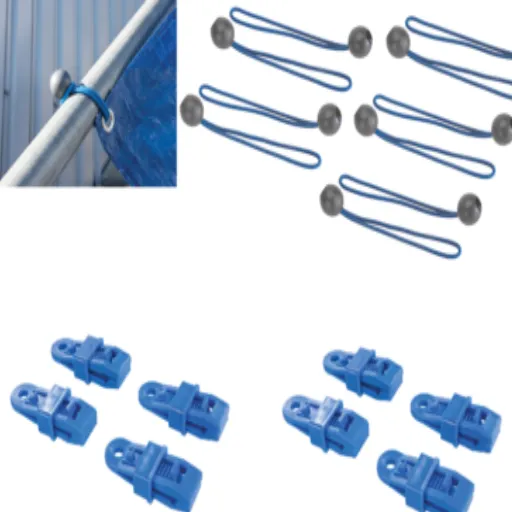
One of the most likely points of failure is the grommet, which is after the edge. Several customers, who omit the quality of the hole intended for the grommet, often end up happy with plastic or in general chinese aluminium grommets by everything goes down by the wind.
Material. The best kind of grommet for harsh conditions is made of brass, as it is exceptional in corrosion protection on the shore or in the industrial settings. For light to moderate applications, aluminum grommets are also recommendable. The worst kind of grommet that goes with the wind gravity or it might as well be used on temporary installation only indoors is plastic grommets.
Pitch (centre-to-centre spacing):
- 50 cm pitch, high wind exposure or repeated rigging
- 75 cm pitch, standard outdoor use, moderate wind
- 100 cm pitch, light cover applications, short service life
Corner reinforcement. Corners take the highest concentrated load. Standard practice is an extra patch of fabric welded over the corner. For sheets tied at the corners under tension, specify a D-ring corner or a webbing loop instead.
A common buyer mistake is to default to 100 cm pitch on a heavy-duty sheet to save grommets. The saving is small; the wind-load tear that follows is not.
Material Reference for Sheets
Sheets are typically supplied in two material families:
- PVC-coated polyester (450–1,100 GSM): long service life, weldable seams, suited to multi-year outdoor use and branded printing.
- PE laminated (90–300 GSM): lightweight, low cost, suited to single-season covers and disaster-relief kits.
For both materials, the ISO 811 standard sets the minimum waterproof rating at 1,500 mm hydrostatic head; sustained-rain applications typically need 5,000 mm or higher.
Material chemistry, GSM-by-application matrices, and manufacturing detail (RF welding, calendering, lamination) sit in the pillar. For PVC-specific sheet specifications, see our PVC waterproof tarpaulin reference. For the full material breakdown, the waterproof tarpaulin pillar guide is the source of truth.
Common Applications by Sheet Size
The right sheet size depends almost entirely on the application. Bigger is not always better; oversized sheets cost more to ship and become unwieldy on site.
Small (2×3 m to 4×6 m). Camping, garden cover, equipment shrouds, market stalls. PE 200 GSM with a single-fold hem and 100 cm grommet pitch handles most of these uses for one to two seasons.
Medium (5×8 m to 8×12 m). Vehicle covers, roof patches, agricultural feed covers, event canopies. PVC 450–610 GSM with a double-fold hem and 75 cm grommet pitch is the standard specification. For site-specific guidance, see tarpaulin sheets for construction sites.
Large (10×15 m and up). Construction stockpile covers, agricultural haystack covers, temporary shelter roofs. PVC 900–1,100 GSM with webbing-bound edges and 50 cm grommet pitch is the right baseline. For seasonal agricultural use, see our agricultural tarpaulin sheets range.
When Mehmet’s construction firm in Izmir specified 8×12 m PVC 610 GSM sheets with 75 cm pitch grommets to cover six pallets of cement, the sheets stayed in service for three winters before the first hem repair. The total cost worked out to less than half a euro per square metre per season.
Packaging, Palletisation, and Container Loading
In online shopping surveys, product packaging is overlooked by only one publication. For active clients, it is packaging which divides smoothly removing empty containers and a transportation nightmare.
Enclosed vs. Open. Typically, the sizes of up to 6 x 10 m can be sent in package and will be folded when shipped. For larger sizes, the wrapping protects from folding by twisting the sheet around a cardboard tube. Out of a given sample of above written length products, some will remain as folded sheets while the rest would be making cylindrical rolls.
Presentation is key in the marketing strategy, content is housed and extended to enfold some more papers within a vertically erected case spread out on a desk. It is important to consider the size of a protective envelope when such is used as excessive sizes of paper files tend to slouch in between folders.
Container loading benchmarks (40′ HC):
- 200 GSM PE folded: 18,000–22,000 sqm
- 600 GSM PVC folded: 7,500–10,000 sqm
- 900 GSM PVC folded: 3,500–4,500 sqm
Hardly had the relief agency coughed when, handed the relief kits requested by Karine’s promotional NGO, the provider delivered quite neatly polybagged, discharged in 18 pallets and loaded in a single 40’HC even atstanding fold of the 4’6 m high tarpaulin sheets. Later, Karina’s logistics manager mentioned it was the neatest load of sheeting that her stores had ever taken. From now on, all such relief consignments have the same order packing.
Need a stuffing plan for your order? Ask for a container-loading diagram with the quote. A clear plan covers pallet count, sheets per pallet, and total loaded sqm, and saves real time at the receiving end. Tour our manufacturing process if you want to see how the packaging side runs.
How to Specify a Waterproof Tarpaulin Sheet in an RFQ

A clear RFQ saves three rounds of back-and-forth with suppliers and prevents the raw-cut surprise from the introduction. Use this six-point structure:
- Confirm finished size and tolerance. State both metric and imperial; specify linear tolerance (default ±2%, tighter on request).
- Specify material and GSM. PVC or PE; exact GSM band; coating type if relevant.
- Confirm edge finish. Raw, hemmed (single or double fold), taped, or webbing-bound.
- Confirm grommet pitch and reinforcement. Material, pitch in centimetres, corner type.
- Specify packaging. Folded or rolled; polybag, carton, or pallet; cartons per pallet.
- Confirm certifications. REACH, RoHS, Prop 65 plasticiser status for export markets; fire-retardancy certificates if required.
A copy-paste sample paragraph: “Request for 200 sheets, 8×12 m finished size (±2% linear tolerance), 610 GSM laminated PVC, double-fold hem with 75 cm brass grommet pitch and reinforced corners, folded and polybagged, 10 sheets per carton, palletised. Required certifications: REACH-compliant plasticisers.”
For OEM converters who would rather buy bulk material and finish in-house, see our tarpaulin rolls for OEM cutting.
Frequently Asked Questions
What sizes are waterproof tarpaulin sheets available in?
Standard stocked sizes typically run from 2×3 m through 12×18 m. Sizes outside this grid are normally made to order with a longer lead time of 25–35 days.
Is a waterproof tarpaulin sheet 100% waterproof?
Yes, when the sheet meets ISO 811 (minimum 1,500 mm hydrostatic head) and the edge finish is correctly specified. A raw-cut sheet may still let water track along the cut edge under sustained rain.
How long does a waterproof tarpaulin sheet last outdoors?
A 200 GSM PE sheet with a hemmed edge typically lasts one to two seasons in moderate climates. A 900 GSM PVC sheet with webbing-bound edges and brass grommets often lasts five to seven years in equivalent service.
Can sheets be customised to non-standard sizes?
Yes. Most manufacturers will produce custom-size finished sheets above a minimum order quantity, typically 50–200 sheets depending on the size and finishing complexity.
What’s the difference between a waterproof tarpaulin sheet and a roll?
A sheet is a pre-cut, edge-finished panel that is ready for use. A roll is bulk material the buyer cuts and finishes themselves. Sheets cost slightly more per square metre but save the buyer the finishing labour.
What is the typical lead time for stocked sheets?
Stocked-size sheets ship in 7–14 days from order confirmation. Custom sizes typically take 25–35 days, depending on quantity and finishing complexity.
Conclusion
A waterproof tarpaulin sheet is a finished, ready-to-deploy panel; the size on the listing is only the starting point. The three buying decisions that determine real-world performance are size selection within the stocked grid, edge finish matched to wind load, and grommet specification matched to rigging cycles.
For underlying material specifications, hydrostatic head detail, and the manufacturing process, our waterproof tarpaulin pillar guide is the reference. For a broader view across sheet types, see our full tarpaulin sheet range.
Ready to source finished waterproof tarpaulin sheets? Send your size, GSM, edge finish, grommet pitch, and packaging requirements through our quote form, and we’ll return a sheet specification and container-loading plan within 24 hours.