Last updated:
A waterproof tarpaulin roll supplies fabric wound on a core for cutting or further finishing. To order it clearly, specify usable width, length, material, seams, mass basis and the checks needed at receipt.
A label that says only width and GSM leaves practical questions open. Will the fabric fit your cutting layout? Does the quoted mass include the core? Who finishes the edges?
This guide connects those questions to a usable enquiry and a receiving record. Your buying and warehouse teams can then work from the same requirements.
Key takeaways
- Separate raw roll dimensions from the dimensions of a finished cover.
- Confirm usable width and seam positions rather than assuming wide fabric is unjoined.
- Calculate area before cutting and theoretical fabric mass, then obtain packed mass for handling.
- Agree measurement methods and acceptance limits before purchase.
- Link each receiving result to a labelled roll and a recorded release decision.
Choose a waterproof tarpaulin roll or a finished sheet
What the order supplies
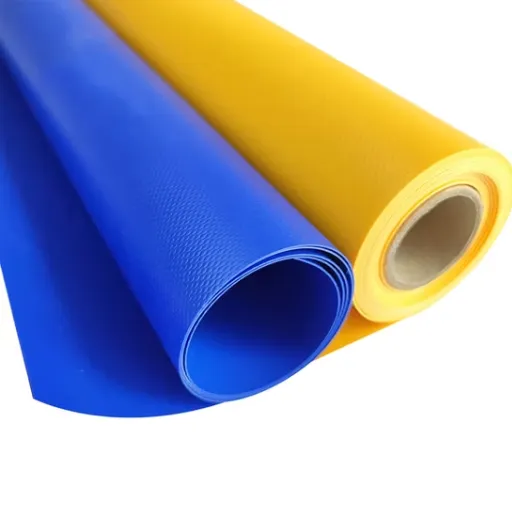
Roll supply lets a converter cut lengths for different jobs. A finished sheet is a defined piece with whatever edge treatment and fastening details the order specifies. Neither format alone tells you the material’s performance or the work still needed before use.
Start with the item you need at the end of the process. Write down its finished width and length, fastening details, edge construction and intended use. Then decide whether your business can perform the cutting and finishing, or needs the supplier to quote that work.
For example, a cover drawing may require reinforced edges and eyelets. Those details don’t follow from a roll description. Ask which party supplies them and whether the quoted dimensions describe raw fabric or the completed cover. Our guide to finished dimensions and tolerances explains that separate sizing decision.
Compare the work, not just the price unit
| Decision | Roll enquiry | Finished-sheet enquiry |
|---|---|---|
| Dimensions | Usable fabric width and length per roll | Agreed finished cover dimensions |
| Conversion | Who cuts, joins and finishes? | Which finishing details are included? |
| Quantity | Rolls, linear metres and square metres | Pieces and sizes |
| Handling | Core, winding and packed dimensions | Folded or packed unit details |
| Acceptance | Fabric and roll requirements | Finished dimensions and construction |
Illustrative scenario: A buyer plans temporary covers and orders enough roll area. At the worksite, the team finds that its drawing also needs finished fastening points. The area calculation was correct, but the order description left the finishing work unassigned. Resolve that gap before comparing quotes.
Rolls don’t have a universal cost advantage at a fixed order volume. Compare the actual purchase price with cutting loss, labour, finishing, storage and handling. A cheaper square metre can still leave more work for your team.
If the format is undecided, discuss the roll or finished-sheet requirement with Chenlai. Include the intended use and a drawing, and ask what the quote includes. Keep any unanswered field visible rather than assuming it is included.
Specify usable width, length and seams
Nominal width versus cutting width
Nominal width is the stated supply dimension. Usable width is the width your cutting plan can accept under the agreed edge and seam requirements. Ask the supplier to define both where they differ. Don’t subtract an assumed allowance from every product; put the actual allowance in the order.
List the required width with its unit, allowed variation and measurement basis. Clarify whether edges are included, whether trimming is expected and whether the material is measured relaxed or under a specified condition. The person receiving it should be able to repeat the agreed check.
A cutting sketch helps expose ambiguity. Draw the pieces across the width, mark the required orientation and show any edge allowance. If a layout fits only when it uses the entire nominal width, ask for confirmation of the usable width before accepting the quote.
Does a wide roll contain a join?
Width alone doesn’t establish that fabric is seamless. Ask for the seam count, seam positions and whether joined areas are acceptable within your finished pieces. A supplier’s stated production range is not a universal limit for PE or PVC rolls.
Record whether a seam may cross a cut piece, must stay outside a defined panel or is prohibited for the order. If a join is permitted, agree how it will be identified and assessed. Avoid the word “standard” unless the order names the actual specification it refers to.
Material-specific selection deserves its own comparison. Use the PVC tarpaulin roll specifications guide for that adjacent topic, while keeping the general order fields here consistent across materials.
Agree how length and dimensions will be checked
Specify length per roll, quantity of rolls and the treatment of short ends or splices. State whether the purchase quantity is based on nominal area or an agreed usable quantity. Don’t let the quote, packing list and receiving sheet use different bases without explanation.
ISO 2286-1 addresses determination of roll length, width and net mass for rubber- or plastics-coated fabrics. Its scope helps identify relevant measurement topics; it does not set your order’s acceptable tolerances or prove that a shipment complies. Agree the applicable method and limits with the supplier.
There is no default tolerance in this guide. If the quote leaves variation unstated, send it back for clarification. A warehouse cannot make a reliable acceptance decision from a target dimension alone when the parties disagree about the allowed difference.
Calculate area, yield and handling mass
Area before cutting and theoretical fabric mass
For a rectangular length of fabric, area before cutting equals width multiplied by length. Keep both dimensions in metres to obtain square metres. Fabric mass in kilograms equals area multiplied by GSM, divided by 1,000; GSM means grams per square metre.
The following figures are assumed calculation examples, not available Chenlai specifications or measured shipment values.
| Assumed inputs | Area calculation | Theoretical fabric mass |
|---|---|---|
| 2 m wide, 100 m long, 120 GSM | 2 × 100 = 200 m² | 200 × 120 ÷ 1,000 = 24 kg |
| 3.2 m wide, 50 m long, 650 GSM | 3.2 × 50 = 160 m² | 160 × 650 ÷ 1,000 = 104 kg |
These results describe fabric only. They exclude the core, wrap, pallet and other packing. They also assume the stated area and GSM apply across the fabric. Use them as a reasonableness check, not a substitute for measured shipping information.
Turn purchased area into a cutting plan
Purchased area and usable yield answer different questions. Area describes how much fabric is supplied. Yield describes how many acceptable pieces your layout can produce after allowances, cuts, joins and unsuitable areas are considered.
For example, an assumed 100 m length divides into ten raw 10 m segments only when cutting loss and finishing allowances are ignored. If each finished item needs extra fabric for its edges, ten finished items may not fit. Work backwards from the finished drawing rather than dividing the invoice area by the finished area alone.
Mark each proposed cut on a layout and identify leftover strips. Check whether those strips have a planned use; don’t count them as useful yield merely because they remain physically present. Compare quotes using the same layout and finishing assumptions.
Obtain packed mass before arranging handling
Illustrative scenario: A purchaser calculates 24 kg of fabric from the first example. The receiving team sees a higher packed mass because the delivered unit includes a core and wrapping. There is no contradiction until the mass bases are compared. Record “theoretical fabric mass” and “packed gross mass” as separate fields.
Ask for the mass and dimensions of each handled unit, including palletized units where relevant. Confirm core dimensions, lifting arrangements and receiving equipment with the staff in charge of handling. A fabric-mass calculation is not a safe lifting plan.
For freight comparison, request packed dimensions, gross mass and the proposed load arrangement. Don’t estimate container capacity from GSM alone. The packing arrangement and shipment plan need their own confirmation before the order is released for dispatch.
Build a comparable waterproof tarpaulin roll enquiry
Define the application and material
Describe what the fabric will do, where it will be used and how it will be processed. Name the required material or ask for a named proposal if selection is still open. Keep a proposed option separate from the approved specification so that a lower price does not silently change the requirement.
GSM is a mass-per-area value, not complete proof of waterproofness, strength or outdoor life. Ask which performance properties matter for the intended use and what evidence supports them. A report should identify the tested material, method, conditions and result clearly enough to assess its relevance.
ASTM D751 covers test methods for coated fabrics, including distinct physical and performance tests. Referring to that standard is different from showing that a particular product passed an applicable test. Request the relevant evidence rather than accepting a standard number as a certificate.
Copy this quote worksheet
| Enquiry field | What to provide or ask |
|---|---|
| Application | Intended use, exposure and processing needs |
| Product identity | Material, construction or agreed product code |
| GSM | Target, allowed variation and measurement basis |
| Dimensions | Nominal and usable width; length per roll; units |
| Seams and splices | Permitted type, position, marking and acceptance |
| Finishing | Raw supply or specified cutting and edge work |
| Quantity | Rolls, linear metres or square metres; price basis |
| Core and winding | Core dimensions, winding direction and roll identification |
| Packing | Protection, packed dimensions and gross mass |
| Evidence | Applicable reports, sample identity and agreed checks |
| Commercial terms | Destination, inclusions, exclusions and delivery basis |
Ask the supplier to answer each field or mark it “to be agreed”. Separate a requested property from a confirmed offer. Keep the quote version with the purchase order so later staff can identify which version was accepted.
Resolve exceptions before approval
Two quotes are comparable only when their scope is comparable. Check whether prices include cores, packing, finishing and any requested documents. If one quote uses linear metres and another uses square metres, reconcile width and quantity before comparing totals.
Ask the supplier to confirm:
- Minimum order quantity for the proposed item.
- Stock status and expected delivery timing.
- Effects of colour, width, packing or finishing changes.
Get those answers for your exact order. Don’t assume a default MOQ or a fixed quote response time.
You can send the completed specification to Chenlai for discussion. Include open questions as well as fixed requirements. Ask for written confirmation of exceptions so they don’t disappear between the initial enquiry and the final order.
Check delivered rolls before releasing stock
Match identity and packing first
Use the purchase order, accepted quote and packing list as the starting record. Match product descriptions, roll IDs and quantities. Photograph damage before unwrapping where practical, and retain a connection between each photograph and the affected roll.
Check whether labels are readable and whether the delivered packing matches the agreed arrangement. Record missing or inconsistent information instead of guessing an identity from colour. A matching label supports traceability; it does not prove that all dimensions or performance properties are correct.
Record measurements against agreed limits
Choose rolls according to the agreed inspection plan. Our guide to inspection sampling covers selection decisions; this article does not prescribe a universal sample size. One convenient roll should not silently stand in for the whole shipment.
For each selected roll, record:
- Roll ID and place measured.
- Method used, result and unit.
- Agreed limit and order reference.
- Conditions that could affect the result.
Can you use the agreed method? If not, note the gap and ask for a decision. A different check may not answer the same question.
| Receiving record | Example of the information needed |
|---|---|
| Identity | Order reference, product code and roll ID |
| Observation | Packing damage, edge condition or winding issue |
| Measurement | Actual result with unit and measurement basis |
| Requirement | Agreed limit and specification revision |
| Evidence | Photo or report linked to that roll |
| Disposition | Hold, release or other authorized decision |
Separate visible checks from performance evidence
Look for visible damage, uneven winding, damaged cores, edge defects and marked splices. Record what you actually observe. A clean surface is not proof of waterproof performance, and a photograph cannot establish UV resistance or long-term service life.
Use the tarpaulin incoming inspection checklist for the wider receiving workflow. Keep dimensional checks, document review and any required performance testing distinct. Each answers a different part of the question of whether to accept the goods.
Hold and resolve a mismatch
Illustrative scenario: The delivered roll count matches the packing list, but one labelled roll has transit damage. Record the affected unit and observed condition, keep its status clear and seek an authorized disposition. A correct shipment count does not erase the damaged-roll finding.
When a result falls outside an agreed requirement, identify the affected stock and preserve the evidence. Don’t quietly rewrite the limit to match the delivered result. Use a tarpaulin nonconformance report to connect the requirement, observation and requested action.
The receiving record should show who released the stock and why. Keep pending tests, missing records and open issues on the hold list. They stay open until the person in charge records a decision. You can receive a delivery without accepting it for use.
Answer order questions and prepare the handoff
Is GSM enough to prove waterproof performance?
No. GSM describes mass per unit area. Define the relevant performance requirement and request evidence tied to the proposed material. Keep the test method, conditions and result together; don’t infer a pass from product appearance or from an unrelated report.
Are there universal standard roll dimensions?
Don’t assume one size table applies to every supplier or order. Ask the supplier to confirm available width and length for the proposed material, then record the dimensions and tolerances in your purchase order.
Can a roll become the finished sheet I need?
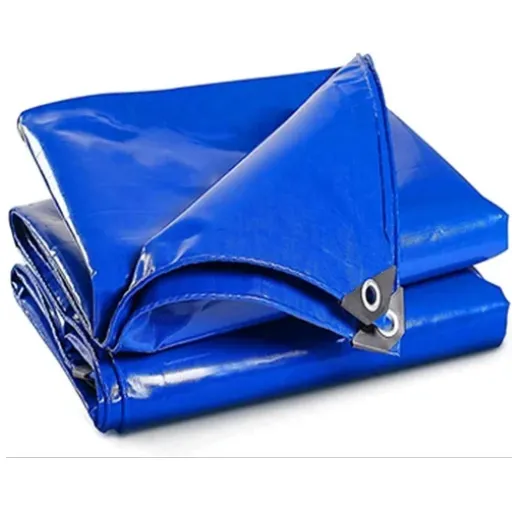
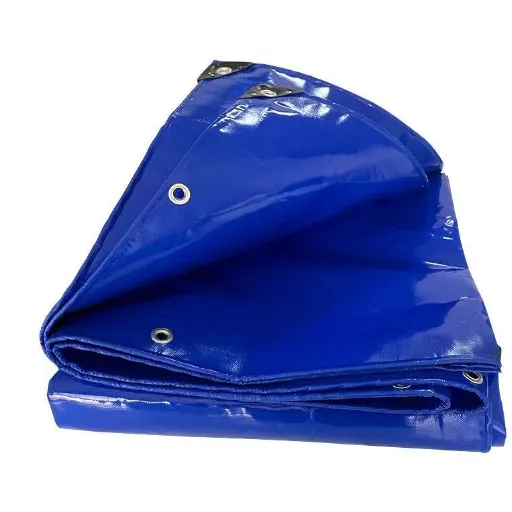
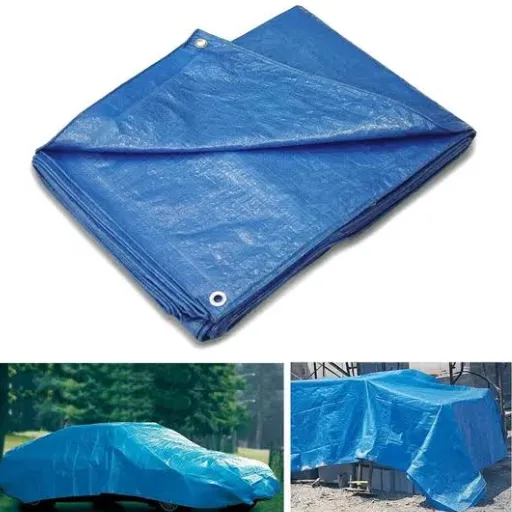
A finished sheet and raw roll supply are different order descriptions. The image above illustrates a folded sheet in this comparison; it does not establish the material, performance or services included in a roll quote. Confirm cutting, edge treatment, fastening details and finished dimensions separately.
What should accompany a mismatch?
Keep the order requirement, roll ID, what you found, measurement basis and photos that show the issue together. Add the report reference if a test is involved. This lets a colleague assess the same issue without reconstructing it from an email subject or an unlabelled image.
What needs confirmation before purchase?
Confirm dimensions, seams, material identity, finishing, quantity, packing, evidence and commercial terms. Ask for written storage instructions for the actual product instead of relying on a generic shelf-life claim. Verify that the receiving team has the same accepted specification as purchasing.
A useful order handoff lets another person answer three questions: what was agreed, what arrived and why it was accepted or held. Complete the worksheet, resolve open fields and discuss your roll specification with Chenlai before committing to the final order setup.