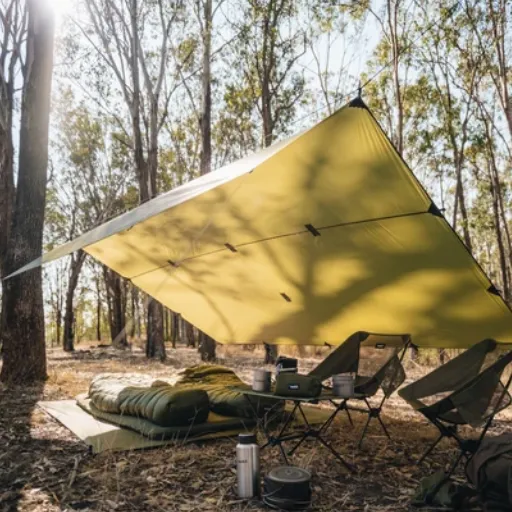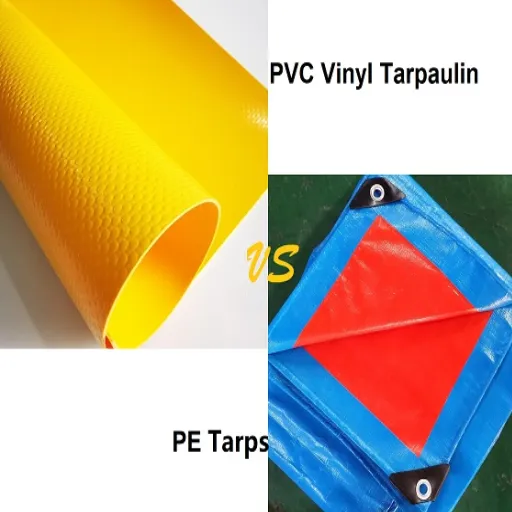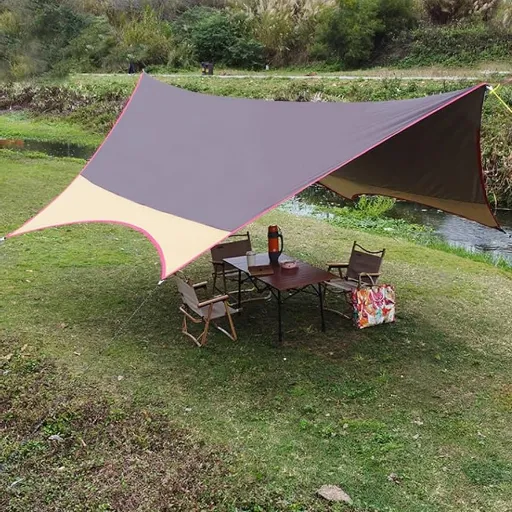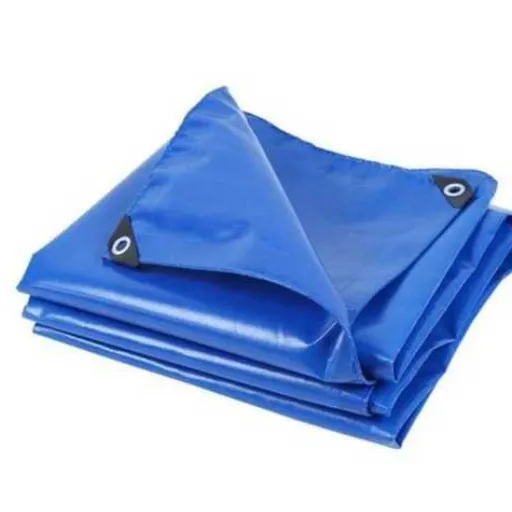
A solution to all water leakage is a waterproof tarp, while a water-repellent one only prevents water percolation. Water repellant covers in a steady shower start to get heavy with moisture as water begins to penetrate down to the supporting layer. And a real waterproof cover does not disappoint in its services.
This distinction seems straightforward. In reality, however, it is very costly to the buyers themselves each year because there is no distinction between the words “waterproof” and “water-resistant” in the product descriptions; most, if not all, labels do not include the test number that shows the integrity of the product in use.
If one needs to get tarpaulin for agricultural purposes, for the restricting of certain items’ mobility, or as a covering or for protection, one always realizes the importance of the right cover or the right moment. The sad fact is that the matter of which cover is which will not always be set out in the clever solutions replete with support-oriented phrases.
This article fixes that. You’ll get the rigorous definition of each term, the test standards that separate marketing from reality, a decision flowchart for picking the right one, and a manufacturer’s view of the red flags to watch for in product specs. For deeper specification guidance on materials, GSM, and manufacturing, see our complete waterproof tarpaulin guide.
Key Takeaways
- “Waterproof” and “water-resistant” are not synonyms. A true waterproof tarpaulin blocks water entirely; water-resistant covers only repel it temporarily.
- The number that proves a waterproof claim is hydrostatic head, measured in millimetres (mm). EN 343 sets ≥1,500 mm as the minimum waterproof threshold; ≥5,000 mm signals fully waterproof for sustained rain; ≥10,000 mm covers immersion-grade use.
- The honest classification is three tiers: water-repellent → water-resistant → waterproof. Most retailer listings collapse them into two and mislead buyers.
- Materials matter. PVC laminate and PE laminate are inherently waterproof, treated canvas is water-resistant, and coated polyester sits in between depending on construction.
- If a “waterproof” label has no hydrostatic head value, no seam description, and no test certificate available, treat the claim as unverified.
What Is the Difference Between Waterproof and Water-Resistant Tarpaulin?

It is engineered to exclude all water from entering a construction or a dwelling due to pressure or rain by using unventilated materials and no upright joints. The import resistant protective cover will only be prevented from dampness for some time; should there be much rain for some duration, the water gets to the substance and off.
The most straightforward way of assessing this assertion is by considering the claimed rated value given in millimeters of water column. The rating goes as follows – at what pressure the fabric bursts, a higher number indicating a higher resistance in comparson with a smaller number. If you have any questions or need further assistance, don’t hesitate to get in touch with us.
Waterproof vs. Water-Resistant Tarpaulin: Side-by-Side Comparison
The table below summarises the practical differences. Use it to pick the right starting point before going deeper into materials or specifications.
| Attribute | Waterproof tarpaulin | Water-resistant tarpaulin |
|---|---|---|
| Definition | Blocks water entirely | Repels water temporarily |
| Hydrostatic head | ≥5,000 mm (1,500 mm minimum) | <1,500 mm |
| Typical materials | PVC laminate, PE laminate, vinyl | Treated canvas, lightly coated polyester |
| Breathability | None, fully sealed | Some airflow |
| Relative cost | 1.5 to 3× | 1× baseline |
| Typical outdoor lifespan | 3 to 10 years | 1 to 3 years |
| Best uses | Heavy rain, transport, immersion, sealed storage | Light rain, breathable storage, vented machinery |
| Common failure mode | Pinholes at grommets, seam delamination | Saturation under sustained rain |
A practical rule of thumb: if water sits on the cover for more than thirty minutes at a time, you almost always want a true waterproof tarpaulin. If the cover has to breathe, over firewood, hay, or vented machinery, water-resistant is often the better engineering choice. For an example of where breathability beats sealing, see Sarah’s hay-barn case below.
Want to see what waterproof construction looks like up close? Browse our heavy-duty waterproof tarpaulin range to compare lamination grades and reinforcement options.
The Honest Truth: It’s Actually a Three-Tier Spectrum
Retailer blogs usually frame this as a two-tier choice. The truth is closer to three tiers, and the difference between Tier 1 and Tier 3 is not subtle.
Tier 1: Water-Repellent (Shower-Grade)
A water-repellent finish makes water bead and roll off the surface. It’s the lowest level of protection, typically a durable water-repellent (DWR) coating sprayed onto an otherwise breathable fabric. Under any sustained rain, the coating saturates within twenty to thirty minutes and water passes straight through. Useful for picnic blankets and short showers; useless under storage exposure or transport.
Tier 2: Water-Resistant (Light-Rain Protection)
Water-resistant tarpaulins use treated canvas or lightly coated synthetics. They handle drizzle and short rain events well, and they keep some breathability. Hydrostatic head usually sits between 800 mm and 1,500 mm. They’re the right choice when condensation under the cover is a bigger problem than rain on top of it.
Tier 3: Waterproof (Sealed Barrier)
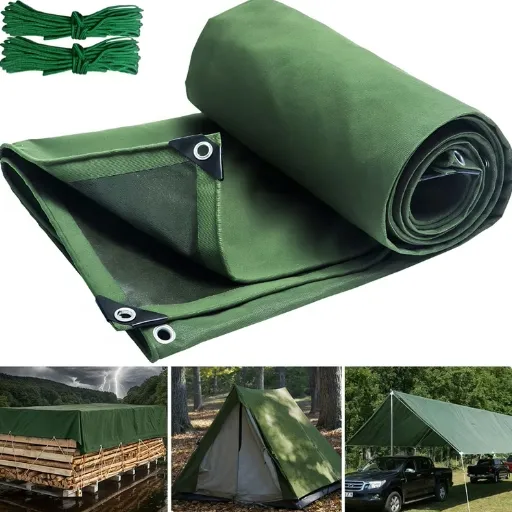
Waterproof tarpaulins use non-porous material, PVC laminate or PE laminate, bonded to a woven scrim, with seams welded shut by RF or heat. Hydrostatic head ratings of 5,000 mm and up are common; heavy-duty PVC products can test above 10,000 mm. Nothing breathes through them, and that’s the point.
A note on labels. When a product is sold as “waterproof” but no hydrostatic head value is published, treat it as Tier 1 or Tier 2 until proven otherwise. The number is what makes the claim verifiable.
How Waterproofing Is Tested and Verified
This is where most buying decisions go wrong. Most buyers see the word “waterproof” and stop reading. The number that backs it up is the only spec that matters.
ISO 811: The Hydrostatic Pressure Test
ISO 811 measures how much water pressure a fabric can hold before water passes through. The result is reported in millimetres of water column. EN 343, the European standard for protective clothing, uses the same measurement and sets ≥1,500 mm as Class 2 (waterproof) and ≥1,500 mm with sealed seams as Class 3 (sustained waterproof). For tarpaulin in industrial or transport use, the working benchmarks are:
- ≥1,500 mm: minimum waterproof. Adequate for light to moderate rain.
- ≥5,000 mm: fully waterproof for sustained rain and standard outdoor exposure.
- ≥10,000 mm: immersion-grade. Suitable for prolonged moisture, ponding, and high-pressure conditions.
AATCC 127 and EN 343: Adjacent Standards
AATCC 127 is the American equivalent test method, also reporting in mm water column. EN 343 is the European clothing standard often referenced in tarpaulin documentation. All three measure the same fundamental property, and a credible specification sheet will name at least one of them.
How to Read a Manufacturer’s Test Certificate
Three things to look for on any test certificate:
- The standard used (ISO 811, AATCC 127, EN 343, or all three).
- The mm water column value, not just a pass/fail flag.
- The sample condition tested. Is it the new fabric, or the fabric after UV ageing, flexing, or seam stress?
If a supplier can’t produce a certificate that names the standard, the value, and the sample condition, the “waterproof” label isn’t backed by data. We’ve spent decades testing tarpaulin in our own factory and reviewing competitor specs, and we promise: asking for the certificate is the single most useful thing a buyer can do.
When to Choose Waterproof vs. Water-Resistant Tarpaulin (Decision Flowchart)
The right choice almost always falls out of one or two questions. Run through these in order:
- Will the cover face sustained rain, more than one hour at a time, or repeated exposure over weeks? Choose waterproof, ≥5,000 mm hydrostatic head.
- Will moisture be trapped under the cover (firewood, hay, lumber, machinery that needs to breathe)? Choose water-resistant. Trapped condensation is a bigger problem than light rain seeping in.
- Will the cover move with a vehicle or be exposed to wind-driven rain? Choose waterproof and reinforce the hem and grommets. Pressure and motion compound water penetration.
- Is condensation already a known issue in this application? Choose water-resistant or a hybrid coated breathable laminate.
- Is the protection short-term or seasonal, with light rain only? Water-resistant is usually adequate and saves cost.
For deeper guidance on materials and GSM ratings by application, see our buying guide for waterproof tarpaulin, which breaks down PVC, PE, and canvas options.
When the Wrong Tier Costs Real Money: Marcus’s Story
When Marcus’s construction crew started a foundation pour in October 2025, they covered six pallets of cement with a “waterproof” tarpaulin bought online. No hydrostatic head listed, no test certificate. A 36-hour storm rolled through that weekend. By Monday, four pallets were soft and unusable; the cover had been water-resistant at best, with a working rating of about 800 mm. The replacement cement and lost weekend cost the project north of 4,000.Thetarpaulinhadsavedhim90 against a verified waterproof equivalent.
When Waterproof Is the Wrong Choice: Sarah’s Hay Barn
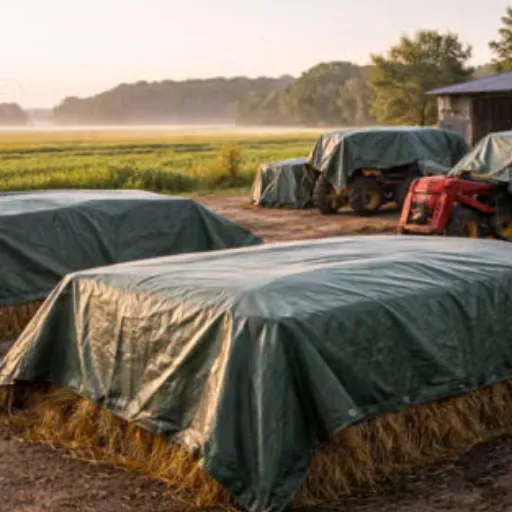
The opposite mistake is also common. When Sarah opened her hay barn after a humid week last June, she found mould creeping along the bottom layer of every covered bale. Her covers were heavy PVC laminate, fully waterproof, and inside the closed barn that meant condensation had pooled under the cover and rotted the hay below. Switching to a water-resistant treated canvas the next season cost her 30 percent less per cover and ended the mould problem. In breathable storage, full waterproofing is the wrong tool.
We’re here to help! Feel free to contact our team for more information or support.
Marketing Red Flags: How to Spot an Overstated “Waterproof” Claim
After thousands of shipments to buyers in over fifty countries, we’ve seen the same red flags appear on products that fail in the field. Watch for these on any spec sheet or product listing:
- “Waterproof” with no hydrostatic head value listed. The number is what makes the claim verifiable. Without it, treat the label as unverified.
- No description of seam construction. Welded (RF or heat-sealed) seams hold under pressure. Stitched seams leak through needle holes unless backed with seam tape. If the spec doesn’t say which, ask.
- No GSM, mil thickness, or denier specified. A serious tarpaulin spec quotes weight or thickness; a brochure that doesn’t is selling a generic.
- “Weatherproof” used as a synonym for “waterproof.” Weatherproof is a marketing term with no technical definition. Insist on hydrostatic head data.
- No certificate available on request. A real manufacturer can hand over an ISO 811, AATCC 127, or EN 343 certificate. If the supplier can’t, the test wasn’t done.
- Lifespan claims without environment context. “Lasts five years” is meaningless without sun load, temperature, and use pattern. The honest answer always names the environment.
- One-size-fits-all coverage promises. Different applications need different specifications. A vendor who recommends the same product for greenhouse, truck cover, and roofing isn’t paying attention.
If a product fails three or more of these checks, walk away or get a tested sample before committing to volume.
How to Test a Tarpaulin’s Waterproofing Yourself
You do not need a laboratory to find out whether the tarpaulin passes the test. You can perform three straightforward field tests:
- The water column test (estimation of hydrostatic head). Place a 30 cm by 30 cm piece of the sample over the neck of a transparent tall container, and fill the center of the sample with water very slowly, then measure the time taken for water to excrete from the bottom of the sample. An appropriate sample will be able to withstand a column of 5-10 cm for several minutes, while unsuitable variation bleeds through within a few seconds.
- The droop and spray test. Cover a sample on a thin frame that has slats and water it using a hose from far off for a period of 10 minutes. Inspect it from the other side. In any case, if a tarpaulin is actually impervious, its undersurface will be free from water, whereas in cases of microcapsules its undersurface contains water.
- Time-frame-simplified wetting test for emergency. Keep the sample flat surface side up, under a specified load and soaked in water for one hour. Once the liquid is absorbed, lift the mass up and inspect the tarpaulin sample from the ceiling head. Like if the tarpaulin mechanization is having static load applied and it soaked water, such a tarpaulin is not waterproof.
Naturally, one will appreciate the ability to reduce the process of detecting a noncompliance with the requirements of ISO 811 or any other similar standard to a matter of minutes and even reduce the probability of locating an unsuitable piping bit. This would then be the work to be done on the initial shipment of any new supplier.
Have inquiries? Reach out to us, and we’ll be happy to assist you with any concerns.
Frequently Asked Questions
Are all tarpaulins waterproof?
No. Many tarpaulins sold as “waterproof” only meet the lower water-resistant threshold. The proof is the hydrostatic head value (in mm water column) on the spec sheet. If the value isn’t published, the claim isn’t verified.
Is a water-resistant tarpaulin enough for outdoor use?
It depends on what “outdoor use” means. For light, intermittent rain or for goods that need to breathe, water-resistant is often the better choice. For sustained rain, transport, or sealed storage, you need waterproof.
What hydrostatic head counts as “fully waterproof”?
The international working benchmarks are ≥1,500 mm for minimum waterproof (per EN 343), ≥5,000 mm for fully waterproof under sustained rain, and ≥10,000 mm for immersion-grade applications.
Is canvas tarpaulin waterproof?
Treated cotton canvas is water-resistant, not waterproof. Hydrostatic head typically sits between 800 mm and 1,500 mm. Canvas is the right choice when breathability matters more than full water blocking.
Can a water-resistant tarpaulin be made waterproof with a coating?
A field-applied wax or silicone treatment will raise short-term performance, but it won’t reach factory-laminated waterproof levels and will degrade within months. For a real waterproof solution, choose a laminated tarpaulin from the start.
How long does waterproof coating last?
A factory-laminated waterproof tarpaulin retains its waterproofing for the life of the laminate, typically three to ten years outdoors, depending on UV load and use. Spray-on DWR coatings, by contrast, degrade within twelve to twenty-four months.
We value your feedback! Get in touch with us to share your thoughts or ask for help.
Conclusion
Waterproof and water-resistant are not synonyms, and treating them as one is how good projects get spoiled. The hydrostatic head number, measured in millimetres under ISO 811 or AATCC 127, is what proves the claim. Anything less is a label.
Three things to take away:
- Demand the hydrostatic head value on every “waterproof” spec sheet. ≥1,500 mm is the floor; ≥5,000 mm is the standard for sustained rain.
- Recognise the three-tier spectrum: water-repellent, water-resistant, waterproof. Match the rating to the application, not the marketing copy.
- Trust the certificate, not the claim. A serious manufacturer hands over the test data; an unserious one won’t.
For the next step, picking the right material, GSM, and reinforcement for your specific job, read our complete waterproof tarpaulin guide. For custom orders, sample requests, or a verified test certificate, contact our team. We’ve engineered tarpaulin for agriculture, construction, transport, and disaster relief in over fifty countries, and we publish the data behind every claim.