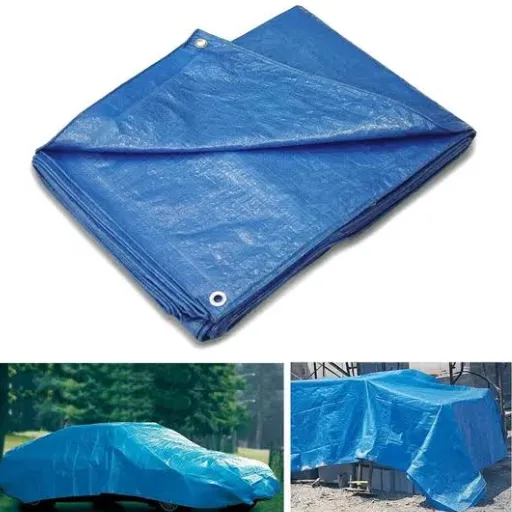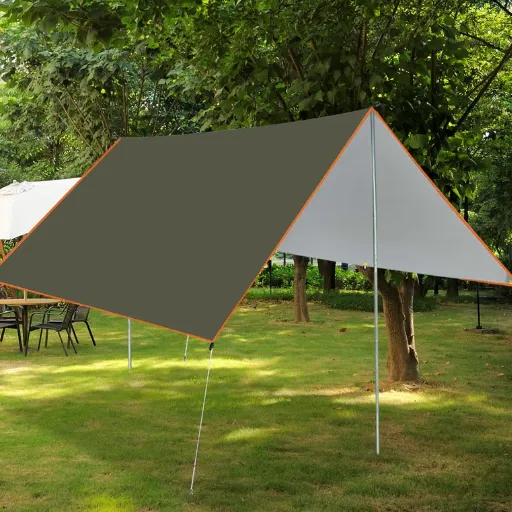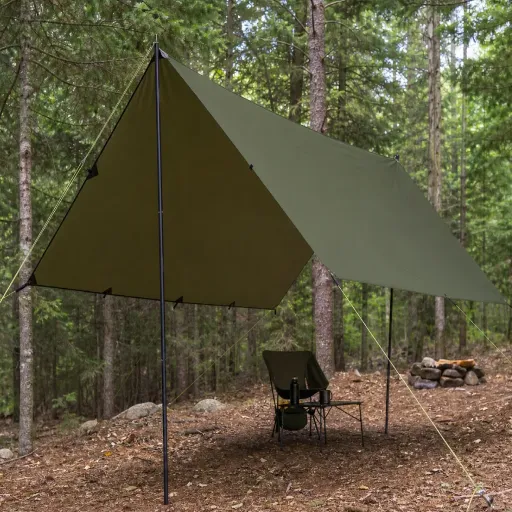
How long does a camping tarp last? It usually lasts one to three years in regular sun, or five to ten years if it is a PVC tarpaulin stored dry between trips.
Picture two campers who buy the same 12 x 16 ft, 240 GSM tarp in the same season. Daniel pitches his in March and leaves it up as a shade cover until October. Aisha folds hers away after every weekend and stores it in a dry garage.
Three years later, Daniel’s grommets have torn out and the coating feels chalky. Aisha’s tarp still sheds water.
Most advice stops at “it depends.” This guide gives realistic ranges by material, the failure points, a five-minute inspection, and a repair-versus-replacement rule.
If you are still choosing materials and sizes, our guide to tarpaulins for camping covers that decision first.
Key Takeaways
- Light PE camping tarps last 1 to 3 seasons; 240 to 300 GSM PE lasts 3 to 5 seasons; PVC lasts 5 to 10 years, or 12 to 15 at 900 to 1,100 GSM with careful storage.
- UV exposure, not rain, is the main reason tarps fail. Untreated PE can lose more than half its tensile strength within 12 months of direct sun.
- Inspect grommets, seams, coating, and fold lines before each season. A tarp that fails a firm tug test is no longer a reliable shelter.
- Repair makes sense for small holes and pulled grommets. Replace any tarp whose seam or grommet line fails under load.
- Buy UV-stabilized material and welded seams if you want service life measured in years rather than seasons.
How Long Does a Camping Tarp Last?

Most camping tarps last one to three years in regular sun. UV-stabilized polyethylene lasts three to ten years, PVC tarps last five to ten years, and lightweight silnylon or silpoly shelters last two to six seasons. UV exposure, storage, and pitch tension matter as much as the material.
The table shows what to expect from each material. Figures are manufacturer guidance, not a guarantee for every product.
| Material | Typical weight | Realistic service life | Main failure mode |
|---|---|---|---|
| Light PE | 120 to 180 GSM | 1 to 3 seasons | UV embrittlement, grommet tear-out |
| Medium PE | 240 to 300 GSM | 3 to 5 seasons | Grommet and corner wear |
| UV-stabilized PE | 300 GSM and up | 3 to 10 years | Seam failure, abrasion |
| PVC-coated | 450 to 900 GSM | 5 to 10 years | Weld failure, plasticizer loss |
| Premium PVC | 900 to 1,100 GSM | 12 to 15 years | Coating wear at folds |
| Silnylon | 15 to 30D | 2 to 5 seasons | UV degradation of nylon, seam slip |
| Silpoly | 15 to 30D | 3 to 6 seasons | Coating wear, abrasion |
| Polycotton | 200 to 350 GSM | 3 to 7 seasons | Mildew, rot if stored wet |
| Canvas | 300 to 600 GSM | 5 to 10+ years | Mildew, UV, abrasion |
Silpoly and canvas figures are industry estimates. More importantly, a tarp’s service life is a budget of exposure hours, and every season in full sun spends it faster. It’s not a fixed number.
Camping Tarp Lifespan by Material
Polyethylene: The Working Tarp
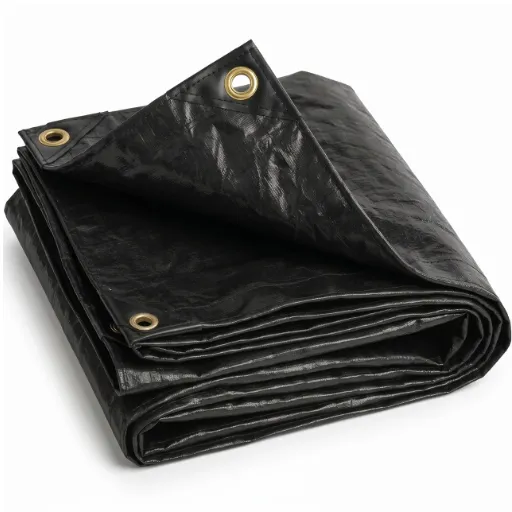
Polyethylene is the material most campers buy. It’s woven, coated, and sold by GSM or mil. A light 120 to 180 GSM tarp suits a weekend ground sheet or sun shade, but it usually gives out within one to three seasons.
The 240 to 300 GSM range is the practical sweet spot for family camping and scout groups. Expect three to five seasons of regular use.
UV stabilization separates a three-year tarp from a ten-year tarp. Untreated polyethylene can lose more than half its tensile strength within 12 months of direct sun. Stabilized PE can last three to ten years, and the additive typically adds about 20% to material cost.
PVC-Coated Tarps
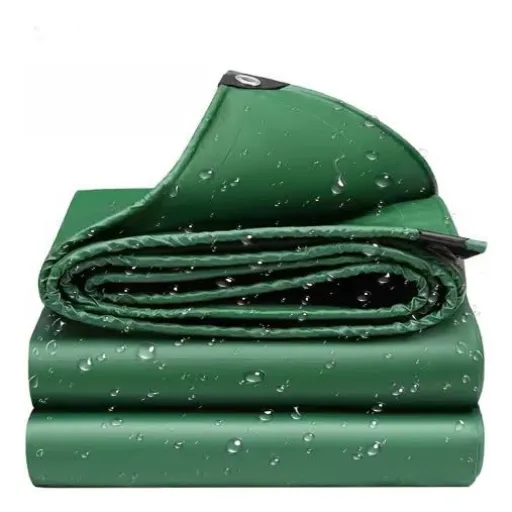
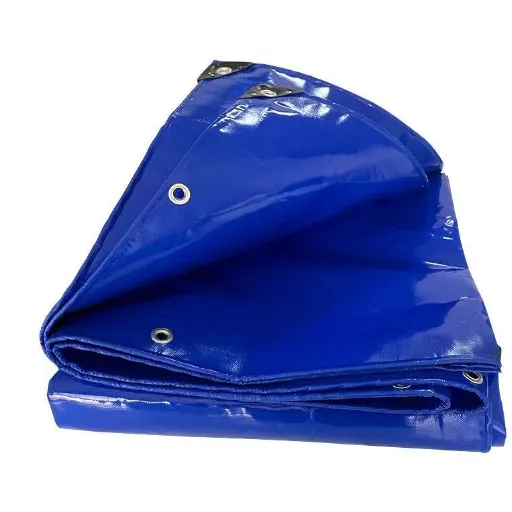
PVC-coated tarps last five to ten years outdoors in normal camping and basecamp use. Premium 900 to 1,100 GSM PVC, used seasonally and stored dry, can reach 12 to 15 years.
Construction matters as much as chemistry. PVC tarps are usually heat-welded rather than stitched, so there are no needle holes along the seam. They cost more, but for a basecamp or a tarp that stays pitched for weeks, the math often favors PVC. Our PE vs PVC tarpaulin comparison breaks down the cost crossover at 18 to 30 months of continuous outdoor use.
Silnylon, Silpoly, and Polycotton
Silnylon shelters last roughly two to five seasons. The coating resists weather, but the nylon base degrades under UV and loses tear strength, so failure usually comes as a tear rather than a leak.
Silpoly uses a polyester base, which resists UV better than silnylon and absorbs less water. Backpacking Light members describe silpoly as strong enough for tie-outs and less prone to morning sag. Expect three to six seasons from a well-made silpoly tarp.
Polycotton lasts three to seven seasons and breathes well, which makes it popular for bushcraft shelters. Its weakness is mildew: packed away damp, it can be ruined in a week.
What Shortens a Tarp’s Life
Exposure Hours, Not Calendar Years
A tarp pitched for 300 nights ages far faster than one pitched for 30. Tarp UV degradation is cumulative, so the useful question is not “how old is this tarp?” but “how many hours of sun has it seen?”
A tarp used two weekends a year and stored indoors can outlast its range. One left up as a permanent shade cover can fail in a single summer. Both are points on the same exposure curve.
Climate and UV Intensity
High altitude, tropical, and desert environments deliver more UV per hour than temperate lowlands. Coastal salt adds corrosion at grommets and snaps. Freeze-thaw cycles stress coatings and welds.
In those conditions, plan on the lower end of each range. A temperate tarp stored between trips can reach the upper end.
Pitch, Tension, and Storage
Water pooling is the leading cause of tarp failure in rain. A flat pitch holds water until a grommet tears or a seam splits. A sloped pitch with firm, flexible tension sheds water and reduces the flapping that fatigues coatings.
Storage matters just as much. A tarp folded wet and left in a bag grows mildew, which weakens fabric and leaves a permanent odor. Repeated sharp folds along the same line also fatigue the coating. Dry the tarp completely, fold loosely, and rotate the fold lines.
When to Replace a Camping Tarp: 6 Warning Signs
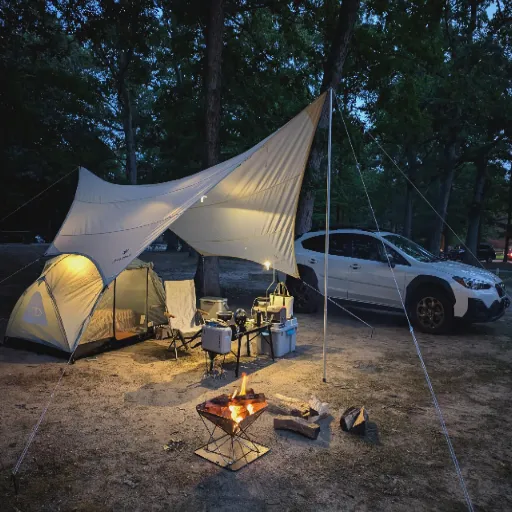
A tarp can look fine and fail under load. Check for these six signs before your next trip:
- Chalky or sticky coating. UV breakdown leaves powder on the surface or a tacky feel in the folds.
- Visible pinholes. Hold the tarp up to the sun. Light coming through in patterns means the coating is thinning.
- Grommets pulling through. Enlarged or torn grommet holes are a load failure waiting for wind.
- Lifted seam tape or pulled stitching. Run a thumb along the seam. If the tape peels, water will follow.
- Stiff, brittle fabric. A tarp that crackles when folded has lost plasticizer or UV resistance.
- Persistent mildew. Black spots that survive washing mean the fibers are already weakened.
Run a five-minute test at home. Hold the tarp against the light for pinholes, tug each corner and grommet, listen for cracking when you fold it, then pour water on a slope and see whether it beads.
How to Make a Camping Tarp Last Longer
- Pitch with slope. Never leave a flat panel where water can pool.
- Use shock cord or elastic tie-downs. They absorb wind gusts that would otherwise tear grommets.
- Pad sharp contact points. Use fabric or rope where the tarp meets vehicles, rock, or poles.
- Put a groundsheet under ground-use tarps. Sand and twigs abrade coatings from below.
- Dry before storage. Hang the tarp until every fold is dry, then store it loosely.
- Clean with mild soap. Harsh detergents and pressure washers strip coatings.
- Rotate fold lines. Do not crease the same line every time you pack.
- Retire it from shelter duty early. A tarp with a small hole can still serve as a groundsheet or windbreak.
Pitch technique affects lifespan more than most campers expect. Our guide to pitching a tarp shelter covers ridgeline height, tension, and drainage in detail.
Repair or Replace? A Simple Decision Rule
Repair a tarp when the damage is local: a hole smaller than a coin, a pulled grommet, a short seam separation, or a torn corner. Repair tape, a grommet kit, and seam sealer cost little and can add seasons.
Replace it when the damage is structural. A seam that fails under a firm tug, a grommet line tearing along the hem, or a panel gone brittle across its width can’t be trusted in weather. If the tarp is your primary shelter, any load-bearing failure means replacement.
Cost per season is the fairest comparison. A $50 PE tarp that lasts three seasons costs about $17 per season. A $180 PVC tarp that lasts ten years costs about $18 per year, with fewer mid-trip failures. The cheaper tarp isn’t always the better value.
Consider a basecamp coordinator named Kenji. He used to buy 20 budget tarps every spring and throw most away by autumn. Two years ago he switched to 12 UV-stabilized PVC tarps with welded seams and brass grommets. His replacement budget is now near zero.
Buying a Tarp That Lasts
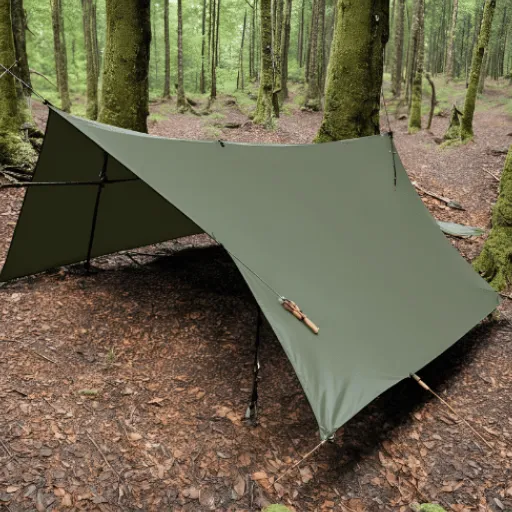
Specs That Predict Service Life
Four specifications predict lifespan better than marketing:
- GSM or mil. For three-season camping, 240 to 300 GSM PE or 600 GSM PVC is a sensible floor.
- UV stabilization. Ask for the additive, not just the phrase “UV resistant.” Stabilized PE can last three to ten years; untreated PE may fail in one.
- Seam construction. Welded or heat-sealed seams outlast stitched seams in PVC. In PE, look for reinforced hems and a rope sewn into the edge.
- Grommet spacing. Closer grommets and triangular corner patches spread load and delay tear-out.
Our heavy-duty camping tarp thickness and GSM guide explains how GSM, mil, and weave interact. If you already know you want PVC, the PVC tarpaulin specifications page lists available weights and finishes.
Replacement Cycles for Groups
Camps, scout troops, and rental fleets should plan replacement, not react to it. Standardize on one or two specs so a failed tarp can be swapped without re-rigging. Inspect at intake and return, and record the purchase batch so a bad roll can be traced.
A three-year cycle suits most groups using 240 to 300 GSM PE. Inspect every tarp at the start of each season and retire any that fail the tug or light test. For PVC fleets, review every five years with annual inspection. Our incoming inspection checklist shows what to check when a new batch arrives.
Need a replacement specification you can send to a supplier? Contact our team with your group size, climate, and setup style, and we will recommend a GSM and construction that match your replacement cycle.
Frequently Asked Questions
Do tarps expire if they are never used?
Not in the way food does. A tarp stored dry and out of sunlight can stay usable for years. Coatings can stiffen over time, so inspect it before the first trip after long storage.
How long does a poly tarp last in direct sun?
An untreated poly tarp may last one to two years in continuous sun. UV-stabilized polyethylene typically lasts three to five years, and 300 GSM or higher material can reach ten with seasonal use.
How long does a PVC tarp last?
A quality PVC tarpaulin lasts five to ten years outdoors. Premium 900 to 1,100 GSM PVC, stored dry between trips, can last 12 to 15 years. Welded seams and UV inhibitors explain the longer range.
Can a torn camping tarp be repaired?
Yes, if the tear is local. Repair tape handles holes and short splits, a grommet kit fixes a pulled eyelet, and seam sealer slows wicking along stitching. A torn seam line or brittle panel is not worth repairing.
Does UV spray extend tarp life?
A UV treatment can slow surface damage on an older tarp, but it doesn’t replace stabilization built into the material. Treat sprays as maintenance, not as a way to rescue an untreated tarp.
Is a heavier tarp always longer-lasting?
No. A 400 GSM tarp with untreated fabric can fail faster than a 240 GSM tarp with proper UV stabilization and reinforced corners. Weight helps, but stabilization and construction matter more.
Conclusion
So how long does a camping tarp last? It depends on the material, the UV exposure it accumulates, and how it is stored. Light PE gives one to three seasons, medium PE three to five, PVC five to ten years, and premium PVC 12 to 15 with care.
Check the tarp before each season, not after it fails. Repair local damage early, replace anything structural, and buy UV-stabilized material with reinforced grommets if you want to stop replacing tarps every spring.
If you are specifying tarps for a family, camp, or rental fleet, send us your requirements for a quote. A tarp that matches its use will outlast one chosen on price alone.