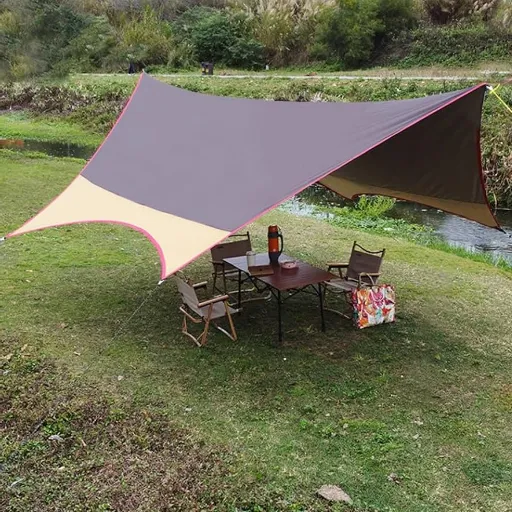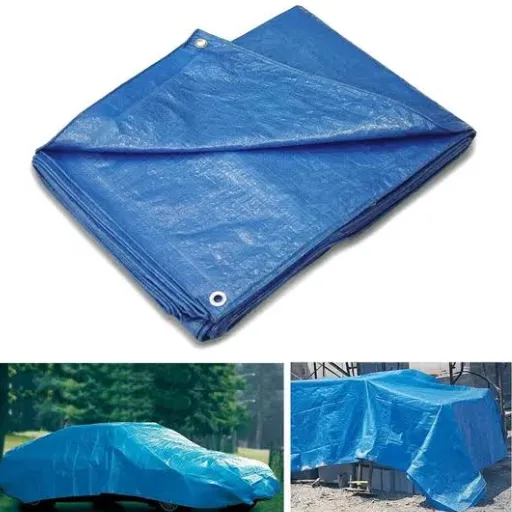
The best waterproof tarpaulin for car camping depends on the job. For overhead shelter, a 10 x 12 ft tarp is the practical default. For a groundsheet, choose one 2 to 4 inches smaller than your tent floor on every side. For a vehicle awning, go 10 x 16 ft or larger.
That’s three answers to one question. Most guides give only one, which is why so many campers end up with a tarp that pools water, flaps all night, or never leaves the boot.
If you already know which job you need to solve, you can browse our PE tarpaulin range or ask for a custom cut. Otherwise, this guide covers sizing, materials, attachment, and setup in the order most campers need them.
Key Takeaways
- One tarp rarely does all three car camping jobs well; size the groundsheet, shelter, and awning separately.
- A 10 x 12 ft tarp is the most versatile overhead size; 8 x 10 ft suits solo campers and 12 x 16 ft suits families.
- A groundsheet must sit inside the tent footprint, not outside it, or rain channels underneath.
- For regular rain, 240 GSM polyethylene is a sensible starting point; 80 to 110 GSM is enough for groundsheet-only use.
- A roof rack or rear hatch is a more reliable anchor than suction cups in wind.
What Does a Waterproof Tarpaulin Do for Car Camping?
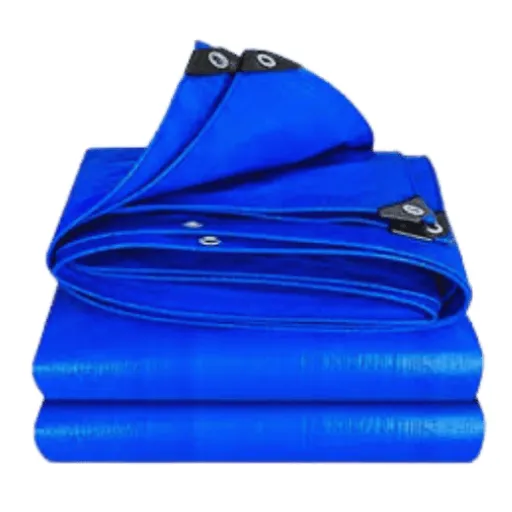
A car camping tarpaulin is a waterproof sheet used beside, over, or under a vehicle for three jobs: protecting the ground under a tent, creating a dry living and cooking area, and extending the vehicle into an awning. Each job sets different requirements for size, weight, and attachment.
Job 1: Groundsheet and Tent Footprint
Under a tent, the tarpaulin protects the floor from stones, roots, and mud. Weight and appearance barely matter here. Abrasion resistance and price matter a lot.
Job 2: Dining and Living Shelter
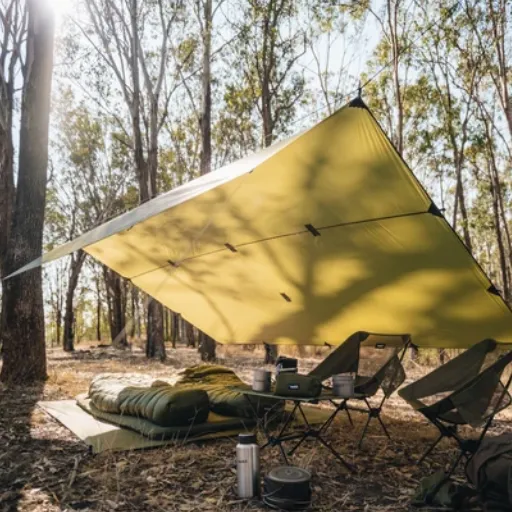
This is the tarp most families remember. It covers the table, stove, and chairs when rain sets in. It needs enough span to sit under without touching the fabric, and enough slope to shed water.
Job 3: Vehicle Awning and Porch
An awning extends the car’s roofline and creates a dry zone at the boot or rear hatch, where wet gear and cooking usually end up. This job puts the most stress on grommets and hems because the car end is fixed and the outer end moves in wind.
Consider the Alvarez family on a wet weekend in the mountains. Their tent leaked at the door, but a 10 x 12 ft tarp rigged off the rear hatch stayed dry. By the second evening it was the kitchen, the dining room, and the boot-removal station.
Waterproof Tarpaulin for Car Camping: What Size Do You Need?
For car camping, 10 x 12 ft is the most versatile overhead size, 8 x 10 ft suits solo campers or a cooking corner, and 12 x 16 ft fits a family of four or more. Groundsheets follow a different rule: 2 to 4 inches smaller than the tent floor on each side.
| Job | Recommended size | Notes |
|---|---|---|
| Groundsheet, 2 to 3 person tent | 7 x 9 ft to 9 x 12 ft, trimmed to fit | Must sit inside the tent footprint |
| Solo cooking lean-to | 8 x 10 ft | Easy to pitch alone |
| Couple living shelter | 10 x 10 ft | Covers a table and two chairs |
| Family of four | 10 x 12 ft to 12 x 16 ft | Room for a table, stove, and gear |
| Vehicle awning | 10 x 16 ft to 12 x 20 ft | One edge fixed to the car |
| Group or basecamp | 16 x 20 ft or multiple tarps | Plan for wind exposure |
Groundsheet Sizing: The Bathtub-Effect Rule
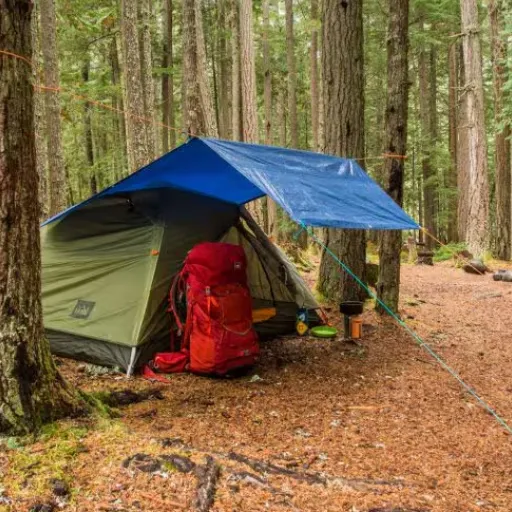
The most common groundsheet mistake is buying a tarp that extends beyond the tent floor. When rain runs off the tent, an exposed tarp edge catches it and channels water underneath. Campers call this the bathtub effect.
Measure your tent floor, then subtract 2 to 4 inches on every side. Fold any excess underneath. When the tent is pitched, you should not see a tarp edge at all. Appalachian Outfitters makes the same point in its footprint versus tarp comparison.
Overhead Shelter Sizing
Bigger is useful only until pitching becomes difficult. An 8 x 10 ft tarp is easy for one person to tension. A 10 x 10 ft tarp suits a couple, 10 x 12 ft is the usual sweet spot, and 12 x 16 ft is the practical ceiling for a family.
Above that, you need more poles and space than many campsites allow, as AutoRoamer’s car camping tarp guide notes. For six or more people, two 10 x 12 ft tarps beat one giant one: they are easier to pitch and replace.
Cut Size vs Finished Size
A tarp sold as 10 x 12 ft is usually a cut size. After hemming and reinforcement, the finished size can be 6 to 12 inches shorter in each direction. An 8 x 10 ft cut-size tarp often finishes around 7 ft 6 in by 9 ft 6 in.
If you are sizing a groundsheet to a tent floor or matching a pole height, ask for the finished dimensions. Our camping tarp sizing guide covers the full range by use case.
Marcus learned this the hard way. He bought a 12 x 20 ft bargain tarp for a standard campsite. The site was too narrow to pitch it taut, the middle sagged, rain pooled, and the weight pulled one corner grommet out overnight. A 10 x 12 ft tarp would have cost less and worked better.
Which Waterproof Tarpaulin Material Is Best for Car Camping?
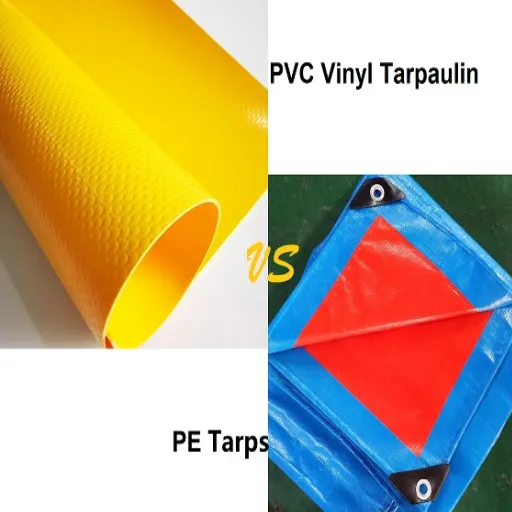
Polyethylene (PE) is the best all-round material for car camping. It is waterproof, UV-stabilized in most quality grades, and inexpensive. PVC is better for sustained rain and repeated use. Canvas is quiet but heavy, and coated Oxford nylon packs small for a higher price.
| Material | Typical weight | Waterproofing | Best for | Watch out for |
|---|---|---|---|---|
| PE (polyethylene) | 80 to 300 GSM | Fully waterproof when intact | Groundsheets, general shelters, budget builds | Noise in wind; grommet quality varies |
| PVC | 350 to 650 GSM | Fully waterproof, long-lived | Family shelters, frequent rain, basecamp | Heavy and bulky |
| Canvas | 300 to 600 GSM | Water-resistant, can swell to seal | Quiet living space, long trips | Very heavy when wet; needs drying |
| 210D Oxford / coated nylon | 100 to 250 GSM | Waterproof coating, 1,500 to 5,000 mm | Packable awnings, solo campers | Higher cost; coating wears over time |
PE: The Default Car Camping Choice
PE tarpaulins handle the groundsheet job and most overhead jobs at a low price. Look for UV stabilization, a rope-reinforced hem, and metal grommets. A 240 GSM PE tarp is a reasonable floor for regular rain. For groundsheet-only use, 80 to 110 GSM is often enough, and heavier material just adds bulk, as Tarpaflex notes in its groundsheet guide.
If you expect sustained wind and rain, our guide to heavy-duty tarps for camping explains when a thicker fabric is worth the weight.
PVC: Heavier, Longer-Lived, Better in Sustained Rain
PVC costs more and weighs more, but it holds up to repeated folding, abrasion, and long wet spells. It suits a family shelter that goes up every weekend or a basecamp that stays put for a week. Our PVC tarpaulin range covers fabrics from lightweight sheets to heavy-duty membranes. For full specifications, see our heavy-duty waterproof tarpaulin page.
GSM, Hydrostatic Head, and UV Treatment
GSM measures fabric weight per square meter; higher is usually thicker and stronger, though weave and coating matter too. Hydrostatic head measures water pressure resistance: 1,500 mm handles light rain, 3,000 mm moderate rain, and 5,000 mm or more suits storms.
UV treatment is the specification most buyers ignore. Without it, polyethylene can lose strength within a year of direct sun, so ask for UV-stabilized material if the tarp will live outside for a season.
How to Attach a Tarpaulin to Your Car
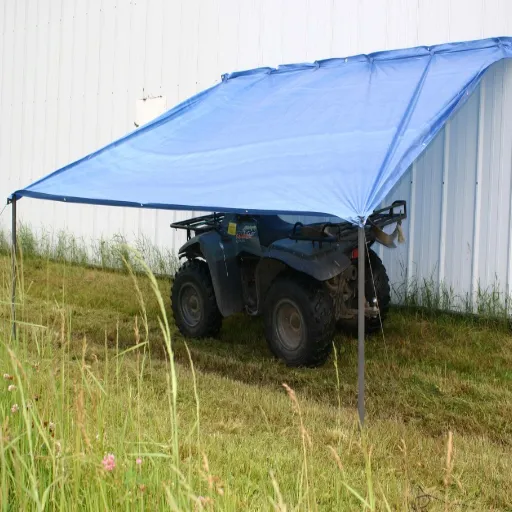
For a waterproof tarpaulin for car camping, the most reliable attachment is the roof rack or an open rear hatch as the fixed edge, with the outer corners tensioned by poles and guy lines. Suction cups work for short, calm trips, but they’re the least dependable option in wind.
- Roof rack or roof rails. Run a strap or rope over the rack and secure the tarp’s reinforced edge. This spreads load across the vehicle.
- Open rear hatch. Drape the tarp over the raised hatch, then tie to the strut mounts or close the hatch gently on the fabric.
- Suction cups. Attach only to clean, flat roof surfaces. Avoid seams, sunroof gaps, and curved edges, and recheck the cups when wind picks up.
- Magnetic hooks. Useful on steel panels for a light tarp. Not suitable for aluminum or plastic panels, and not a primary anchor in strong wind.
- Rain-gutter clamps. Common on vans and some SUVs. They grip the gutter above the door and leave the door usable.
- Standalone lean-to. Skip vehicle attachment. Guy the tarp to two poles and four stakes beside the car, using the vehicle as a windbreak.
Protect the paint with a soft cloth or paint-protection film under straps and magnets. Keep the tarp clear of door seals, and check that doors still open and lock before you tension the outer edge. Our tarpaulin rope and guy line options are sized for this kind of rigging.
The Lean-To Off the Rear Hatch
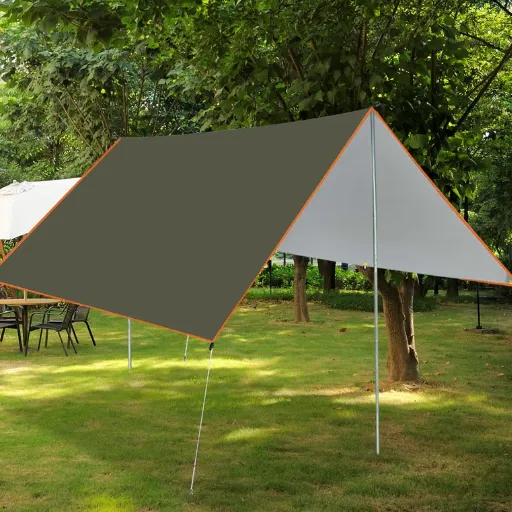
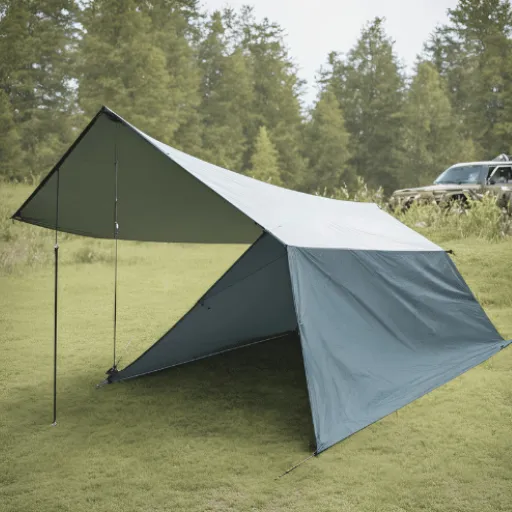
Open the hatch, drape the tarp over it, and run two poles at the outer corners. Angle the outer edge down so water runs away from the car. You get a dry boot area and a place to cook without blocking the doors.
The A-Frame Beside the Vehicle
Use two poles along a center ridgeline, then stake all four corners and add a center guy line on each long side. Park the car on the windward side if wind is forecast. For longer stays, pitch the shelter over the table and keep a separate, smaller tarp under the tent.
Rain, Wind, and Condensation: Setup Rules That Decide Comfort
To stop a tarp pooling water, pitch it with a slope and keep it taut but not drum-tight. Water collects in any flat or sagging section. A 15 to 25 degree slope, plus one or two extra guy lines, solves most pooling problems before they start.
Slope and Tension
Aim for a consistent slope across the whole sheet. Where the tarp sags between tie-outs, water finds the low point. Tension it until it sheds water but still gives a little in gusts; drum-tight tarps tear at grommets.
Wind
Face the lowest edge into the wind, or park the car as a windbreak. Use every tie-out, not just the four corners. In sustained wind, choose a heavier tarp and skip suction cups.
Condensation
Condensation is physics, not a leak. Moisture from breathing, cooking, and wet gear condenses under a cool tarp. Leave a gap at the ground and avoid sealing the shelter completely.
Campground Rules
Some parks require mesh or open-weave groundsheets so grass can breathe; solid tarps can trap water and damage turf. Check the rules before you arrive.
Car Camping with Family: Layout, Wet Zones, and Gear
A family car camping setup works best when you separate three zones: sleeping, living, and wet gear. The family camping tarp usually defines the living zone, so it should fit a table and chairs, not just standing room.
Separate Sleeping, Living, and Cooking Zones
Keep sleeping inside the tent or vehicle, the table and stove under the tarp, and boots and wet bags at the entry on a small mat. This stops mud migrating into the sleeping area.
The Wet-Zone Rule
Give wet gear its own corner. A dedicated wet zone keeps the rest of the shelter usable, makes morning packing easier, and keeps water off the tent floor.
What Changes for Four or More People
Four people need space to sit, eat, and change clothes without stepping over each other. A 12 x 16 ft tarp gives that space. Add a second smaller tarp for cooking if the group splits chores.
General Tarp vs Purpose-Built Car Awning: Honest Costs
A general waterproof tarpaulin plus two poles typically costs 40to80. A purpose-built car awning tarp costs several hundred dollars. The premium product buys faster setup, integrated mounting, and a cleaner look, but not necessarily better rain protection.
Frequency decides the value. For a family that camps four nights a year, a $60 tarp does the same job for a fraction of the price. For a solo traveler who sets up every night in the rain, the purpose-built awning can be worth it.
A roof-rack awning at about $400 works out to roughly $4 per night over 100 nights. A $60 tarp over the same 100 nights is $0.60 per night, but takes longer to pitch. Neither answer is wrong.
Bulk and Custom Tarpaulins for Fleets and Camps
If you manage rental vehicles, overlanding tours, scout programs, or campgrounds, standardizing on one tarp size simplifies replacement and training. Custom sizes, reinforced attachment points, and printed branding are available at production volume.
Priya runs a small overland tour company with 12 vehicles. She switched from mixed retail tarps to 24 identical 10 x 12 ft PE tarps with reinforced corners. Guides now pitch the same shelter the same way on every trip, and a damaged tarp is replaced from stock instead of hunted down online.
To discuss custom sizes, reinforcement, or a bulk quote, contact our team. We can produce tarpaulins to your finished dimensions, not just standard cut sizes.
Frequently Asked Questions About Tarpaulins for Car Camping
What size tarp do I need for car camping?
A 10 x 12 ft tarp is the most versatile size for overhead shelter. Use 8 x 10 ft for solo camping or a cooking area, and 12 x 16 ft for a family of four or more. For a groundsheet, choose a tarp 2 to 4 inches smaller than your tent floor.
Can you put a tarp under a tent?
Yes, and it protects the tent floor from abrasion and moisture. Trim or fold the tarp so it sits entirely inside the tent footprint. An exposed edge catches runoff and channels water under the tent, which is worse than using no groundsheet at all.
How do you attach a tarp to a car?
Use the roof rack or an open rear hatch as the fixed edge, then tension the outer corners with poles and guy lines. Suction cups and magnets work in calm conditions but are less reliable in wind. Protect painted surfaces and check door clearance.
What is the best material for a car camping tarp?
Polyethylene is the best all-round choice for price, waterproofing, and durability. PVC suits frequent use and sustained rain. Canvas is quiet but heavy when wet. Coated Oxford nylon packs small but costs more per square foot.
How thick should a car camping tarp be?
For overhead shelter in regular rain, look for 240 GSM polyethylene or heavier. For groundsheet-only use, 80 to 110 GSM is often sufficient. Heavier material lasts longer but adds bulk, which matters less in a car than on a hike.
How do you stop a tarp pooling water?
Pitch it with a consistent slope of roughly 15 to 25 degrees, keep it taut without over-tensioning, and add guy lines at any low point. Water pools wherever the fabric sags. A slight slope and firm tension prevent most problems.
Conclusion
The right waterproof tarpaulin for car camping is the one sized for the job you actually need. Start with 10 x 12 ft for overhead shelter, size the groundsheet to sit inside your tent floor, and choose a heavier tarp only when rain and wind justify it.
Match the material to the climate. PE covers most trips. PVC handles frequent rain and long stays. Check the finished size before you buy, and attach to the roof rack or hatch rather than relying on suction cups.
If you need a standard size, a custom cut, or a bulk order for a fleet or camp program, request a quote and tell us the job you need the tarp to do. We will help you match the size, weight, and reinforcement to the way you camp.