Tarpaulin inspection sampling needs a written agreement on the lot, unit to inspect, how to choose it, checks and acceptance rules. Agree these before opening packages, so the buyer, supplier and inspector work from the same rules.
One container can hold different materials, sizes and batches. A note saying only “AQL 2.5” leaves basic questions unanswered: which goods belong together, how many units will be checked, and what happens after a failure? Those gaps can turn a clear inspection result into a disputed delivery.
This guide shows what to put in the agreement, with sheet and roll examples and a worksheet. Start with the approved drawing and specification, then define how you will check the delivered lot. Sample approval before production and acceptance of a delivered lot answer different questions.
Key Takeaways
- Define each lot and its quantity ready to inspect before selecting units.
- Record the standard edition, sample size and class-specific decision rules.
- Keep the item count, defect log and cut test pieces separate.
- Keep required test reports and release authority visible alongside sampling results.
Preparing an order? Send Chenlai your specification and sampling questions for discussion before you finalize the inspection requirements.
Define the lot for tarpaulin inspection sampling
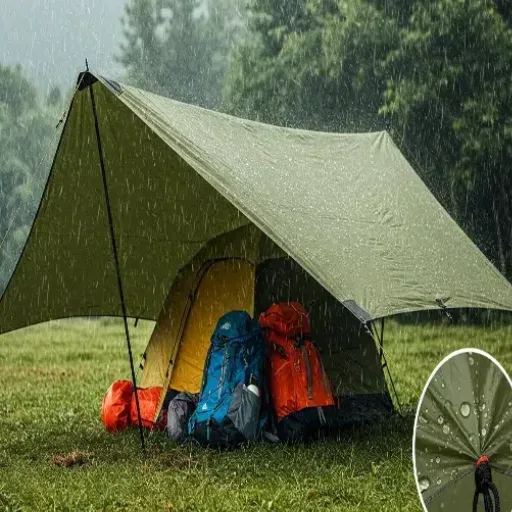
Shipment, lot, unit and specimen are different
A shipment is the delivery being moved. A lot is the defined group on which you intend to make an acceptance decision.
A sampling unit is the item you choose to check. A specimen is a piece cut or taken for a named test. Write all four into the order file; don’t assume the packing list defines them.
For tarpaulin inspection sampling of finished sheets, the unit might be one finished sheet. A carton then identifies where those sheets are packed. For roll goods, the unit might be one roll, while cut pieces have their own specimen references. Confirm the roll dimensions and ordering requirements before you decide how to check a chosen roll.
Illustrative scenario: A delivery contains PE finished sheets and PVC rolls. The buyer proposes separate lot records for the two constructions, with sizes and batch references listed under each. The quality lead checks if the groups need to be split further. The example highlights a lot-boundary question, without assigning a universal grouping rule.
That distinction matters because one pooled result can hide a product group no one checked. Ask whether the proposed grouping lets you make the needed decision for each product. If it doesn’t, settle separate boundaries before anyone chooses goods.
Record boundaries before selecting items
For tarpaulin inspection sampling, give each proposed lot a reference, included SKUs, material and construction, quantity, and package list you can trace. State what you leave out too: unfinished goods, a different drawing revision, or a product group with its own checks. The tarpaulin inspection sampling record should explain why those goods sit outside this lot. Confirm what is complete and available at inspection time.
Tarpaulin inspection sampling should use that frozen group of goods. If the quantity changes, record it. Ask the plan approver what this means for the checks before you go on. Quietly moving items between lots after seeing findings makes the first decision hard to check.
VIS Global’s third-party video introduces the same mixed-SKU question. Use it to discuss lot boundaries; it does not select the standard or thresholds for your order.
Before signing the lot definition, ask: can another inspector identify each unit that belongs in the lot from this record? If only the forwarder’s container number is available, add the missing package or product references.
Agree the tarpaulin inspection sampling plan
Name the standard, edition and decision context
A usable tarpaulin inspection sampling plan names its reference document and edition. The ISO catalog for ISO 2859-1 lists the 2026 third edition, published in January 2026. This is a reason to check the edition written into an order, not a reason to silently replace an agreed older edition.
Ask the responsible quality person whether this is a continuing series of lots or an isolated lot decision. That choice affects the applicable approach. A weekly delivery alone does not prove you have the records and rules for a continuing scheme. Record the chosen approach and why it fits the purchase.
The buyer should get the chosen standard or approved procedure. A public abstract, online calculator or old training video is not the full document you agreed to use. For tarpaulin inspection sampling, cite the document used to set the rules rather than merely naming “international AQL.”
Keep the plan inputs separate
An acceptance quality limit (AQL) is not a shortcut for multiplying a percentage by the sample quantity. The inspection level, severity, lot size, plan type and chosen tables or procedure set the sample and decision rules. Record the resulting values so they can be checked before inspection.
| Plan field | What the agreement should state |
|---|---|
| Reference | Standard or procedure, edition and approved revision |
| Context | Continuing scheme or isolated-lot basis |
| Level and severity | Selected level and applicable normal, tightened or reduced status |
| Plan type | Single, double or another explicitly approved method |
| Sample | Unit definition and required sample size for each check |
| Classes | Defined categories and any agreed class-specific AQLs |
| Decision | Acceptance and rejection numbers, including later-stage rules if relevant |
Ac means acceptance number; Re means rejection number. For a single-sample attributes plan, compare the agreed count with those limits. A tarpaulin inspection sampling plan with two stages needs its own first- and second-stage instructions; don’t borrow the single-sample decision rule.
Explain risk without a zero-defect promise
NIST explains acceptance sampling as a decision about a lot based on a randomly selected sample. Even if Ac is zero, a passing sample does not prove the lot has no defects. A plan can pass a poor lot or fail a good one. Ask the quality lead to explain both risks for the chosen plan.
Tarpaulin inspection sampling therefore needs an explicit risk discussion. Ask which features need their own checks, reports or screening beyond the chosen plan. Don’t invent universal critical, major and minor AQL values. The agreed use, consequences and quality requirements should guide the quality lead’s choice.
Keep the approved plan with the specification. Keep both at hand when checks start, so a missing decision rule is resolved before findings create pressure to release goods.
Select items across the defined lot

Choose items and retain their identities
Tarpaulin inspection sampling begins with access to the whole defined lot. Agree a random selection procedure using units or packages with clear IDs, and say how the inspector will find the chosen goods. Taking whichever sheets are easiest to reach does not follow that method.
Record the selection method, package references and IDs of the units checked. If sheets have no individual serial numbers, assign inspection references tied to their carton and position. The purpose is to connect findings to the examined goods while keeping the inspection label distinct from a factory batch code.
Illustrative scenario: An inspector selects packages from a complete list, but only the front row is reachable. The buyer logs the blocked access and asks to reach the goods or set a new visit. Taking easy-to-reach front packages instead would change the method. It needs approval.
A tarpaulin inspection sampling report should state that limitation plainly. List the intended and completed quantities, who was informed, and what action was authorized. Don’t label a sample with missing units as a completed random sample merely because the available pieces look sound.
Agree who will open, handle and repack the selected goods. These arrangements help staff finish the checks; they do not change the required sample size or excuse skipped units. Record any damage caused during handling separately from findings present before inspection.
Give destructive tests their own specimen instructions
Ten cut pieces from one roll still come from one selected roll. They are not automatically ten independently selected rolls. For tarpaulin inspection sampling, log both counts: rolls chosen and pieces cut for a test.
For destructive tarpaulin inspection sampling, specify the test method, required specimen quantity, source units, cutting locations and orientation where relevant. Agree who may cut goods, how to label what is left, and how test pieces will reach the test provider. Follow the named method for technical details.
Keep a separate specimen log linked to the lot and roll or sheet references. A laboratory result then has a stated material source. Without that link, even a full report may not show which delivered goods it covers.
Classify and count nonconformities consistently
Define defect classes by agreed use and consequence
Tarpaulin inspection sampling requires clear rules that two inspectors can use for the same defect. If the agreement uses critical, major and minor classes, describe the risks and give examples for the product. A label alone does not tell someone how to classify a torn hem or misplaced grommet.
Use the approved drawing to define the requirement. For hardware checks, refer to the grommet layout and reinforcement requirements, then record the order-specific location, count and fixing details. Do not substitute a generic spacing rule for an approved layout.
Keep borderline examples in the agreement: what is cosmetic, what prevents intended use, and who decides if a finding falls outside the examples? Flag an unclear class for review. Do not lower it just to get a pass. This is a proposed control, not a claim about Chenlai’s factory procedures.
Record observations separately from decision counts
ASQ’s description of attributes sampling distinguishes percent nonconforming from nonconformities per 100 units. Agree the counting basis in advance. The number of observations and the number of affected items can differ.
Illustrative scenario: Sheet A has a missing grommet and a tear. The observation log contains both findings. Under an agreed nonconforming-item basis, that sheet is one affected item; under a nonconformity basis, the separate findings enter the applicable count. For multiple classes, specify how an item with findings in different classes is counted.
| Record | Entry for this illustration |
|---|---|
| Item reference | Sheet A, linked to its package |
| Observations | Missing grommet; tear, with location and photographs |
| Classification | Apply the agreed definition to each finding |
| Decision count | Apply the agreed item or nonconformity counting rule |
No sample size or acceptance threshold is prescribed by this illustration. Tarpaulin inspection sampling needs both the observation record and the stated counting rule to explain the decision.
Keep measurements and laboratory evidence distinct
A sampled appearance pass does not prove UV life, waterproof performance, fire compliance or tensile strength. List the required test methods and performance evidence separately, with the property, limit, method and report reference. Keep missing reports visible even if workmanship passes.
To discuss that scope, send the defect definitions, drawing and required-report list to Chenlai. State the evidence you need without assuming that a particular test service is included.
Record acceptance, hold and reinspection decisions
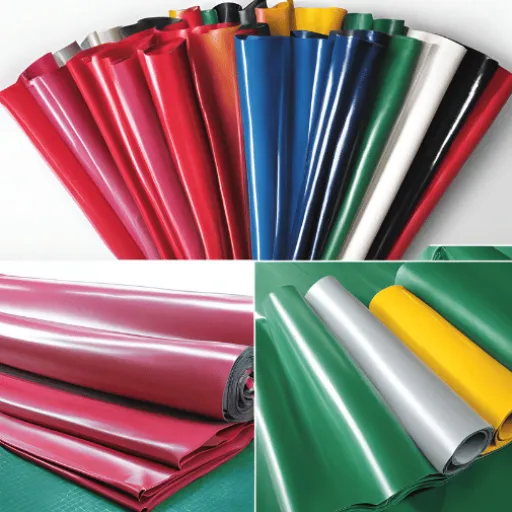
Compare results using the plan already agreed
Tarpaulin inspection sampling ends with a recorded decision using the agreed rules. Show the lot reference, actual sample size, classified counts, agreed Ac/Re and the result for each check. Attach measurements and photographs to item references so another person can check the decision.
Distinguish “sampling result acceptable” from “order released.” A required laboratory report, drawing approval or other agreed condition may still be open. Name the person authorized to release or hold the goods and record their decision. An inspector’s findings and a buyer’s decision on what to do with the goods are separate records.
Do not turn a measurement into a pass/fail count without naming the limit and measurement basis. For dimensional tarpaulin inspection sampling, connect the result to the finished dimensions and measurement basis. This preserves the agreed requirement rather than introducing a new tolerance after measurement.
Keep the report clear if only part of the work is done. Write which checks passed, failed or remain open. An overall green label should not hide a blocked report or a selection shortfall. A reviewer needs to see the reason for the hold.
Preserve the failed result and authorize the next action
Removing a defective unit from the sample does not erase the recorded finding. In the Sheet A illustration, retain both observations and their classification even if that sheet is later repaired or replaced. Tarpaulin inspection sampling should leave a first result that others can trace.
Agree the available actions after failure: hold, investigation, authorized sorting, correction, return or a defined reinspection route. These are proposed contract fields, not automatic rights or promises. Record who approves the action and how to label and track the goods during that work.
If sorting or rework occurs, retain its scope and completion record. Any later inspection should identify the goods presented, the authorized plan and its link to the failed inspection. Do not keep drawing fresh samples until one passes or invent a reduced sample as a compromise.
Tarpaulin inspection sampling also needs the applicable switching rules when a continuing scheme is used. Have the quality person apply the chosen document. Neither a single failure nor a successful retest allows staff to make up a new severity rule.
Sampling agreement worksheet and buyer questions
Worksheet: make the decision reproducible
Use this tarpaulin inspection sampling worksheet as a proposed attachment to the order, not a completed statistical plan. Fill the blanks with the supplier and responsible quality person. Tarpaulin inspection sampling is ready to start when another inspector can find the goods, do the checks and use the same pass/fail rule.
| Agreement field | Complete before inspection |
|---|---|
| Order and lot references | Order ; lot ; inspection stage/location ___ |
| Population | Included SKUs/materials/batches ; exclusions ; eligible quantity ___ |
| Sampling unit | Finished sheet, roll or other defined unit ___; package list ___ |
| Product reference | Specification/drawing revision ___; approved sample reference ___ |
| Controlled plan | Standard/procedure and edition ___; continuing/isolated context ___ |
| Plan settings | Type ; level ; severity ___; applicable switching record ___ |
| Counting basis | Nonconforming items or nonconformities ___; cross-class rule ___ |
| Class definitions | Definitions/examples ___; agreed AQLs if applicable ___ |
| Decision rules | Sample size by check/class ; Ac/Re ; later-stage rules ___ |
| Selection and access | Random method ; unit IDs ; access/replacement rule ___ |
| Destructive work | Source units ; method/specimens ; cutting permission ___ |
| Other evidence | Measurements ___; required test reports and release conditions ___ |
| Findings and action | Report/photos ; hold rule ; authorized correction/reinspection ___ |
| Authority | Plan approvers ; release decision maker ; approval record ___ |
Give the worksheet a revision ID and attach the agreed plan. If a lot or rule changes, keep the old version and name who approved the change. Leave no unexplained blanks in the approved version.
Write “not applicable” with a reason where appropriate. Keep the completed tarpaulin inspection sampling agreement with the final report, instead of saving just a calculator screenshot.
How many tarpaulins should we sample?
The count comes from the agreed plan, not a universal shipment percentage. Define the lot, inspected unit, checks and decision context first. Then have the responsible quality person confirm the required sample size and limits. Record separate requirements for destructive specimens or property tests rather than treating them as interchangeable samples.
Does AQL mean the allowable defect percentage in this sample?
No: for tarpaulin inspection sampling, use the acceptance and rejection rules derived from the approved plan. Do not calculate the acceptance number by multiplying AQL by the number inspected. State what you count too: affected sheets or separate defects. One damaged sheet can have more than one defect, so those counts can differ.
Can different sizes or materials share one lot?
Do not combine them solely because they share a container. List the proposed product groups and ask whether the plan supports the intended decision for each group. Where separate decisions are needed, define separate lots. Tarpaulin inspection sampling should make the covered population explicit before units are chosen or findings are known.
Does a visual inspection pass replace laboratory reports?
No. A visual result covers the features checked by that method, without proving a property you did not test. Specify the required method, limit, specimen source and report for each property claim. Keep that evidence separate from the workmanship result, and tell the person who can release goods if required evidence is missing.
Can we inspect another sample after the first one fails?
Follow the authorized plan and agreed disposition route: a planned second stage in double sampling differs from fresh samples after a single-sample plan fails. Preserve the original result and record any correction or sorting. Name who approved later checks and what they cover, keeping the first failure in the record.
Confirm the plan before the delivery arrives
A useful tarpaulin inspection sampling agreement lets both parties explain the same decision using the same records. Check the lot boundary, inspected unit, product reference, sample selection, counting basis and decision limits before goods arrive. Name who will resolve access problems, disputed classifications and outstanding reports.
Return to the mixed delivery: sheet findings should have a defined group of sheets, and roll specimens should point back to their source rolls. Keep those records connected without merging decisions that need different evidence. If a field is unresolved, settle it with the responsible person before you call the inspection ready.
For your next order, send Chenlai the proposed lot definition, approved specification and sampling questions. Use that packet to discuss tarpaulin inspection sampling requirements and record the agreed plan before inspection starts.