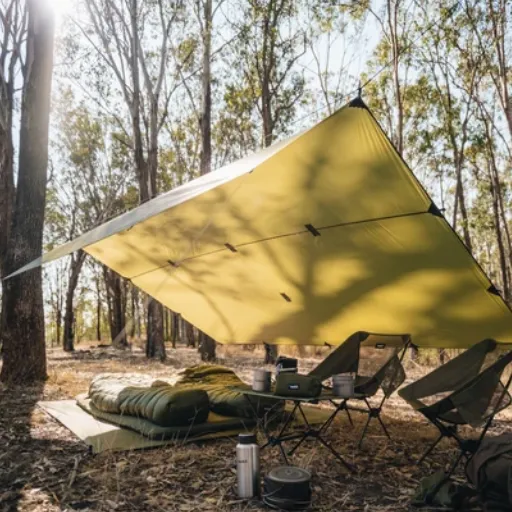
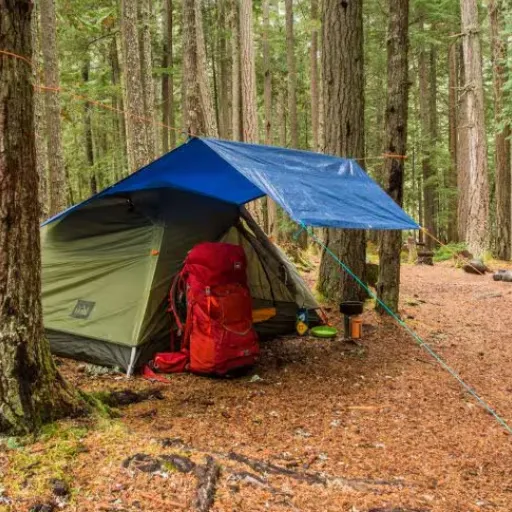
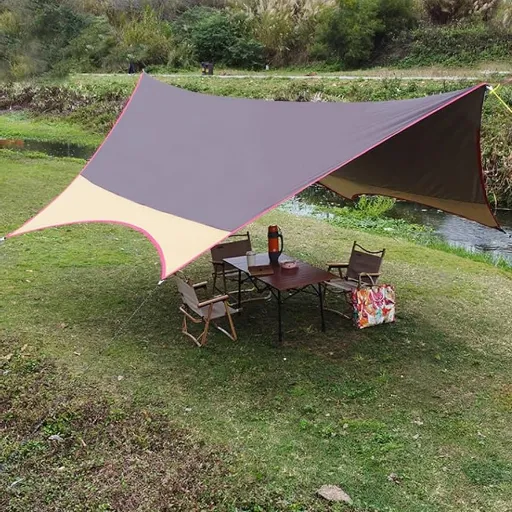
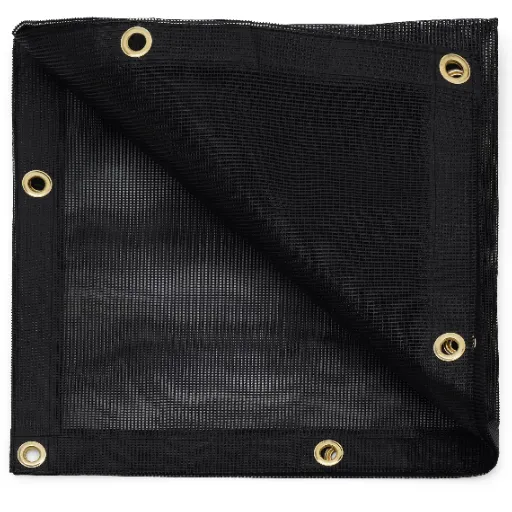
A custom tarpaulin is a made-to-spec protective cover engineered to exact dimensions, materials, hardware, and finishes for a specific application. Designing one means translating the demands of your environment into a factory-ready specification that fits precisely, performs reliably, and ships efficiently.
Last year, a procurement manager named Elena ordered standard-size covers for an irregular grain dryer. The tarps flapped in the wind, pooled rainwater, and tore at the corners within eight weeks. The replacement cost, plus three days of downtime, was three times the price of a properly designed custom tarpaulin. Her story is common. Buyers often treat customization as a final step, when it should be the first decision.
You already know that protection matters. What this guide delivers is a practical framework for designing a custom tarpaulin that matches your real-world conditions. By the end, you will know how to choose materials, specify dimensions, select hardware, prepare print files, evaluate manufacturers, and avoid the mistakes that cause early failure.
Key Takeaways
- Custom tarpaulin design starts with the application environment, not the price list.
- PVC-coated polyester suits heavy-duty outdoor use; PE/HDPE works for light, temporary covers.
- GSM ranges from 400 for light duty to 1,200 for industrial heavy duty.
- Grommet spacing, seam placement, and reinforcements determine wind and tear resistance.
- OEM orders typically run 3,000–5,000 m² with 15–25-day lead times; ODM formulations start at 10,000–15,000 m².
- Always request a sample or prototype and review the Technical Data Sheet before approving mass production.
What Is a Custom Tarpaulin?
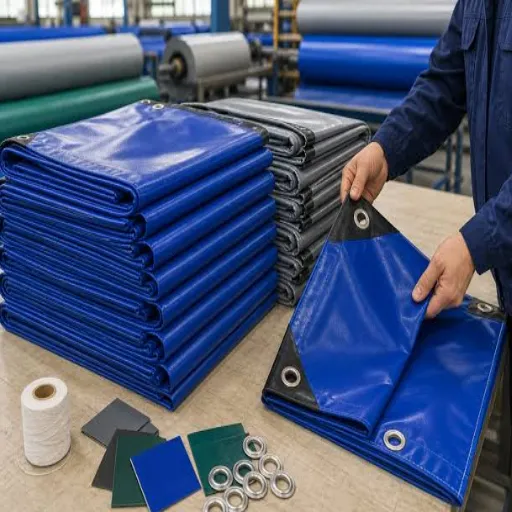
A custom tarpaulin is a protective cover manufactured to a buyer’s exact specifications rather than pulled from a standard size chart. It can be tailored in size, shape, material, weight, color, finish, hardware, printing, and packaging.
When Custom Design Makes Sense
Custom design is the right choice when standard sizes create gaps, waste, or failure. Common triggers include irregular equipment shapes, branded covers for events or fleets, extreme climates, high-wind installations, and high-volume repeat orders where fit directly affects lifespan.
For example, a construction company covering a curved scaffolding structure needs a tarp that follows the contour. A logistics fleet needs truck covers with exact dimensions, reinforced stress points, and company branding. An agricultural operator needs greenhouse covers with precise widths and UV stabilization for the local climate.
OEM vs. ODM: Choosing the Right Model
Understanding the difference between OEM and ODM helps you set realistic expectations for cost, MOQ, and lead time.
| Model | Definition | Typical MOQ | Lead Time | Best For |
|---|---|---|---|---|
| OEM | Your branding applied to proven standard specifications | 3,000–5,000 m² | 15–25 days after sample approval | Custom sizes, colors, logos, and packaging |
| ODM | New polymer matrix or formulation engineered from scratch | 10,000–15,000 m² | 25–45 days after lab-dip approval | Extreme performance requirements or proprietary products |
OEM is the right fit for most buyers. ODM becomes valuable when you need a unique formulation, such as a cold-crack-resistant tarp for arctic logistics or an anti-ammonia cover for intensive agriculture.
Key Design Parameters for Custom Tarpaulins
Every custom tarpaulin design starts with five core parameters: size, material, weight, finish, and hardware. Get these right, and the rest of the specification falls into place.
Size, Shape, and Dimensional Tolerance
Measure the object or area you need to cover, then add overhang for fastening. Account for slope, curvature, and any protrusions. Standard PVC roll widths typically range from 1.5 m to 5.1 m. Wider panels can be created by heat-welding sections together, but seam placement should avoid high-stress or high-visibility areas.
Most manufacturers accept dimensional tolerances of ±2–4%. If your application requires tighter precision, such as a machine cover with moving parts, specify this before production.
Mini-story: A greenhouse operator in Spain ordered a 12 m-wide cover without accounting for the roof curve. The flat measurement left the sides 40 cm short. The replacement order added three weeks to the project and cost 30% more than measuring the first time correctly.
Material Selection
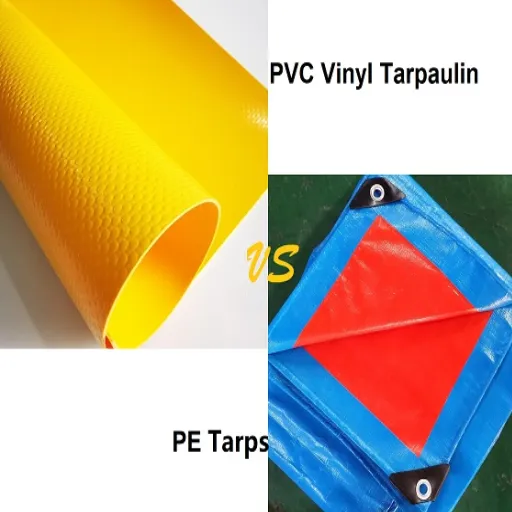
The material determines durability, flexibility, weight, and cost. The three most common options are PVC-coated polyester, PE/HDPE, and TPU or specialty fabrics.
PVC-coated polyester is the standard for heavy-duty outdoor use. It resists tearing, UV damage, and chemical exposure. It suits truck covers, industrial enclosures, tents, and long-term agricultural structures. Our heavy-duty tarpaulin options use this construction for demanding environments.
PE/HDPE is lighter and more economical. It works well for temporary covers, ground sheets, and seasonal agricultural use. It is easier to handle but has a shorter lifespan than PVC.
TPU and specialty fabrics offer flexibility, food-grade compliance, or inflatable applications. These are less common but essential for specific industries.
For most outdoor industrial applications, PVC-coated polyester offers the best balance of lifespan and performance. For waterproof covers exposed to sun and rain, PVC is usually the safer investment.
GSM, Thickness, and Duty Rating
GSM, or grams per square meter, measures fabric weight and is the simplest indicator of durability.
| Duty Level | GSM Range | Typical Use | Expected Lifespan |
|---|---|---|---|
| Light duty | 400–500 | Indoor covers, light shading, short-term events | 1–3 years |
| Medium duty | 550–700 | General outdoor use, agriculture, temporary shelters | 3–5 years |
| Heavy duty | 750–1,200 | Industrial covers, truck curtains, construction sites, extreme weather | 5–10+ years |
Higher GSM means more material, better tear resistance, and longer life. However, it also means more weight and higher cost. Match the GSM to the stress of the application rather than defaulting to the heaviest option.
UV stabilizers can extend outdoor lifespan from 2–3 years to 5–10+ years. For covers in direct sunlight, this additive is not optional.
Color, Finish, and Surface Treatment
Color affects more than appearance. Dark colors absorb heat. Light colors reflect it. White or silver tarps stay cooler underneath, which matters for livestock shelters and stored goods. Black or green tarps hide dirt and blend into outdoor environments.
Most manufacturers offer standard colors and can match RAL or Pantone codes for custom orders. Color matching typically adds 10–20% to the unit cost and may raise the MOQ.
Surface finishes include matte, glossy, embossed, and lacquered. Functional treatments include:
- UV stabilizers for sun protection
- Anti-mildew agents for humid environments
- Fire-retardant coatings certified to NFPA 701, DIN 4102 B1, or equivalent
- Anti-fouling treatments for marine or dusty environments
CTA: Not sure which material or GSM fits your project? Contact our team for a free specification review.
Hardware, Reinforcements, and Finishing Details
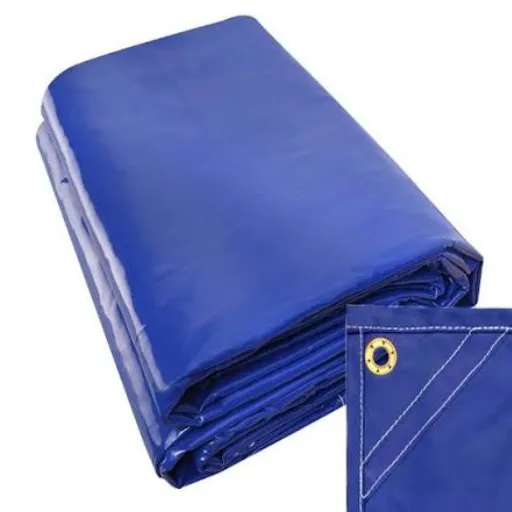
Hardware and edge finishing are where many custom tarpaulin designs succeed or fail. A perfectly chosen fabric will still tear if the grommets pull out or the seams split under load.
Grommets, Eyelets, and D-Rings
Grommet material should match the environment:
- Brass: corrosion-resistant and cost-effective for general use
- Nickel-plated steel: stronger than brass, suitable for medium loads
- Stainless steel: maximum corrosion resistance for marine or coastal use
- Aluminum: lightweight and economical for low-load applications
- Plastic: chemical-resistant and common on PVC tarps
Grommet spacing controls how evenly tension is distributed. Standard spacing is 0.5 m or 1.0 m. For high-wind applications, use 0.5 m spacing. For low-wind or indoor use, 1.0 m is sufficient.
D-rings and windproof pull rings provide extra anchor points for high-tension installations such as truck side curtains and large site enclosures.
Hems, Seams, and Edge Reinforcement
Hems protect the edge of the fabric and create a clean anchor line. Rope-in hems add strength along the entire edge. Webbing reinforcement provides extra load-bearing capacity.
Seams can be heat-welded or sewn. Heat welding creates a waterproof bond and is preferred for PVC. Sewing is sometimes used for PE or where flexibility at the seam is important.
Corner patches and stress-point reinforcement increase tear resistance by 40–60% at the points where most failures begin.
Fastening Accessories
Depending on the application, you may need straps, bungee cords, Velcro flaps, zippers, or drawcords. These should be specified during design so the manufacturer can place anchor points correctly.
Custom Printing and Branding
Custom printing turns a functional cover into a marketing asset, safety marker, or private-label product.
Printing Methods
Digital printing offers high resolution, full color, and short runs. It is ideal for complex logos, gradients, and photographic images. Resolution can reach 1,440 dpi.
Screen printing is cost-effective for simple, one- or two-color logos at volume. It is durable but less flexible for detailed artwork.
UV printing uses ultraviolet-cured inks that resist fading outdoors. It is the best choice for branded covers exposed to direct sunlight.
File Requirements
Supply vector files in AI, EPS, or PDF format at 300 dpi or higher. Raster images should be high resolution to avoid pixelation when scaled up. Leave safe margins around the edges to avoid hems and seams. Include bleed if the artwork extends to the edge.
Branding Applications
Printed tarpaulins are used for fleet branding, event banners, safety warnings, construction site signage, and OEM private-label packaging. For distributors, custom printing adds value and differentiation.
Step-by-Step Custom Tarpaulin Design Process
Designing a custom tarpaulin becomes straightforward when you follow a structured process. Here is the workflow we use with buyers at our tarpaulin factory.
Step 1: Define the Application and Environment
Start with the conditions, not the catalog. Ask:
- What is being covered?
- How long will the cover stay in place?
- What wind, rain, UV, and temperature ranges will it face?
- Are there safety or regulatory requirements?
Step 2: Choose Material, GSM, and Finish
Match the material and weight to the environment. For long-term outdoor industrial use, choose PVC-coated polyester at 750 GSM or higher with UV stabilization.
Step 3: Specify Exact Dimensions and Shape
Measure carefully. Add overhang for fastening. Account for curves, slopes, and obstacles. Provide a simple drawing or template when possible.
Step 4: Select Hardware, Reinforcements, and Spacing
Specify grommet material, spacing, corner patches, hems, and any D-rings or straps. For windy sites, tighten grommet spacing and reinforce all stress points.
Step 5: Add Printing or Branding Requirements
Provide print files, specify colors, and note any safe zones or seam placements to avoid.
Step 6: Request a Sample or Prototype
A physical sample confirms color, feel, weight, and hardware placement. For large orders, a prototype of the final shape is worth the extra two weeks.
Step 7: Review the TDS and Approve for Mass Production
The Technical Data Sheet (TDS) lists tensile strength, tear strength, hydrostatic head, UV rating, and other verified properties. Review it before approval.
Downloadable Checklist CTA: Want a printable version of this process? Download our Custom Tarpaulin Design Checklist and share it with your procurement team.
How to Evaluate a Custom Tarpaulin Manufacturer
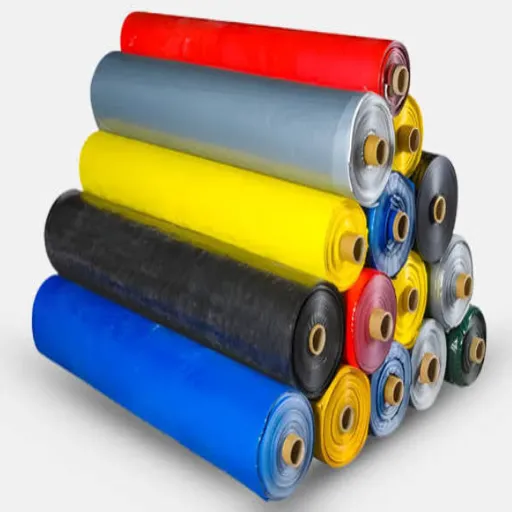
Not every supplier that offers custom tarpaulin manufacturing has the equipment, staff, or quality systems to deliver consistently. Here is how to separate capable manufacturers from trading companies.
Green Flags
Look for in-house production equipment, an engineering team, a formal sample program, ISO 9001 certification, and export experience. A real manufacturer can share photos or videos of the production line, provide a TDS, and explain the coating or lamination method used.
Mini-story: Marcus, a buyer in Rotterdam, sourced tarps through a broker who promised high tensile strength. When the shipment arrived, independent testing showed the fabric was 22% below the quoted figure. The replacement cost the company EUR 47,000 plus fleet downtime. A factory visit or TDS review would have caught the issue before production.
Red Flags
Be cautious if a supplier cannot provide samples, avoids questions about MOQ, refuses to share QC documentation, or is unwilling to supply certifications. Vague claims like “heavy duty” without GSM or test data are another warning sign.
Documents to Request
Before placing a large order, request:
- Technical Data Sheet (TDS)
- Material Safety Data Sheet (MSDS)
- Copies of relevant certifications
- Production timeline with QC checkpoints
- Sample approval process
Understanding MOQ, Pricing, and Lead Times
Custom manufacturing involves setup costs for materials, tooling, and labor. Understanding MOQ and lead time helps you plan and budget accurately.
Typical MOQ Ranges
- Stock-color custom sizes: 3,000–5,000 m²
- Custom colors: 5,000 m²+
- Full ODM formulations: 10,000–15,000 m²
Some factories offer trial orders as small as 50–200 m² for prototypes, but production pricing only becomes competitive at volume.
Lead-Time Expectations
- Sample or prototype: 2–3 weeks
- Bulk OEM production: 15–25 days after sample approval
- Bulk ODM production: 25–45 days after lab-dip approval
Shipping adds 2–4 weeks by sea, depending on destination.
Cost Drivers
Price depends on material, GSM, color matching, additives, printing complexity, hardware type, and order volume. Factory-direct sourcing typically reduces per-unit cost by 20–40% compared to retail custom pricing.
CTA: Ready to get a detailed quote for your custom tarpaulin project? Request a free quote with your specifications.
Common Custom Tarpaulin Design Mistakes to Avoid
Even experienced buyers make errors that lead to poor fit or early failure. Avoid these common mistakes:
- Undersizing or forgetting overhang. A tarp that is too small cannot be secured properly.
- Ignoring wind load. High-wind sites need tighter grommet spacing and reinforced edges.
- Choosing the wrong material. PE is not a substitute for PVC in heavy-duty outdoor environments.
- Poor print-file preparation. Low-resolution images become pixelated at large sizes.
- Skipping sample approval. A sample prevents mass production of a flawed design.
- Neglecting seam placement. Seams should run away from high-stress and high-visibility areas.
Mini-story: A logistics fleet in Hamburg used standard-size tarps on irregular trailers. Within two months, 43 of 200 tarps had torn at the corners. After switching to custom-fit reinforced covers with 0.5 m grommet spacing, the fleet cut annual cover costs by 62%.
Care and Maintenance for Custom Tarpaulins
Proper care extends the life of any tarpaulin, custom or standard.
Cleaning
Remove dirt, chemicals, and organic matter promptly. Use mild soap and water. Avoid harsh solvents that can degrade coatings.
Storage
Dry the tarpaulin thoroughly before folding. Store it in a cool, dry place out of direct sunlight. Avoid sharp creases that can weaken the fabric over time.
Inspection
Check grommets, seams, and stress points regularly. Small tears are easy to repair if caught early. Replace the cover when you see thinning, UV cracking, or repeated seam failures.
Conclusion
Custom tarpaulin design is not about adding options to a standard product. It is about matching the cover to the conditions it will face. Start with the application and environment, choose the right material and GSM, specify dimensions and hardware carefully, and never skip the sample approval step.
The global tarpaulin market is projected to grow from approximately USD 11.5 billion in 2026 to USD 15.9 billion by 2033, driven by demand in construction, agriculture, and logistics. As buyers become more sophisticated, the advantage goes to companies that design covers for performance rather than buying off the shelf.
At Linyi Chenlai Plastic Products Co., Ltd., we help buyers translate their requirements into factory-ready specifications. Whether you need a custom size, branded cover, or specialized formulation, our engineering team can guide you from design to delivery.
Ready to design your custom tarpaulin? Contact us today for a free consultation, sample, and detailed quote.