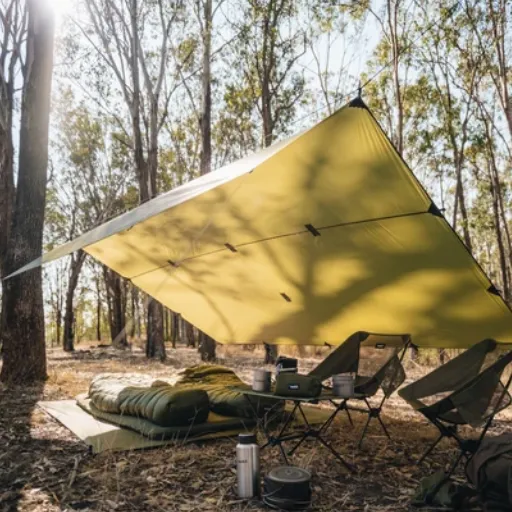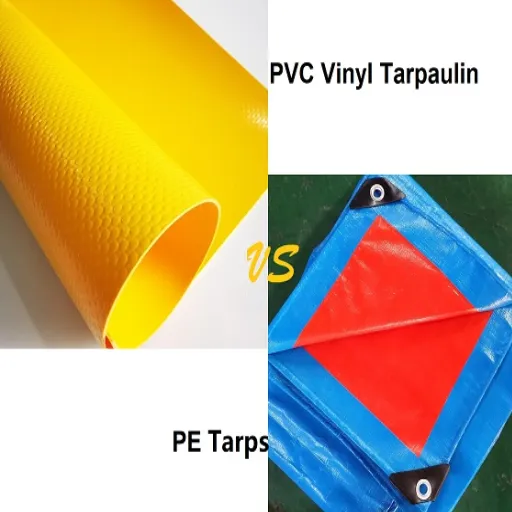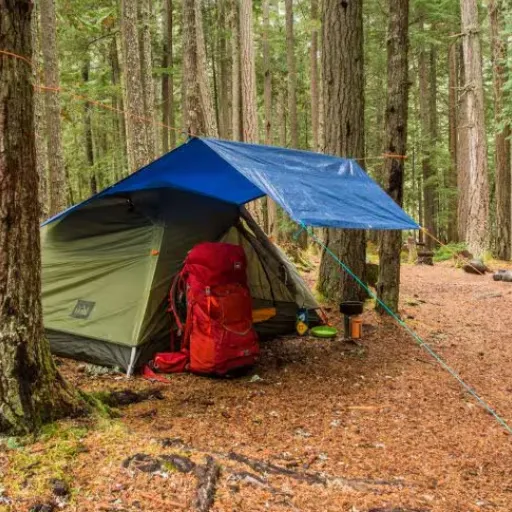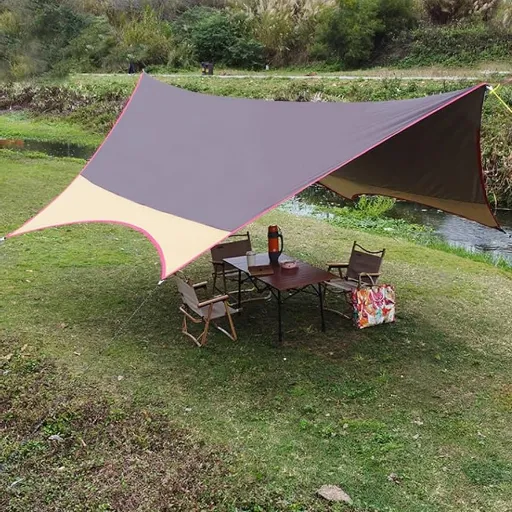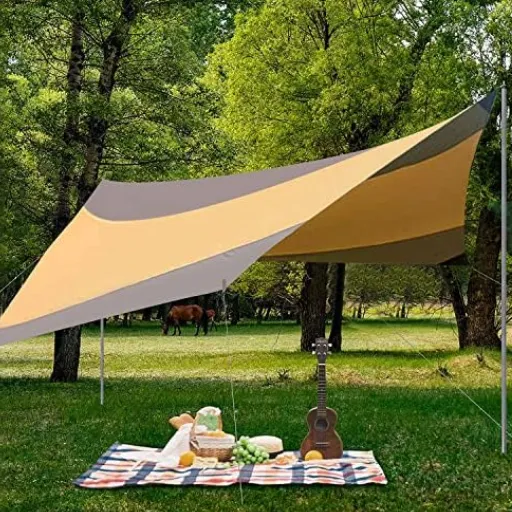
The best waterproof tarpaulin for camping is a 180-240 GSM polyethylene (PE) tarpaulin sized 3x4m or 4x5m for most family and pair camping, with 450+ GSM PVC reserved for basecamp or group dining shelters. This guide covers materials, sizes, six pitching configurations, and the bulk-procurement angle that consumer gear sites ignore.
A wet tent ruins a weekend. A wet tarp ruins an expedition. Yet most camping-tarp guides are written for ultralight thru-hikers chasing pack-weight grams, not for the family of four heading to the lakes, the scout leader equipping twelve patrol sites, or the outfitter sourcing forty dining shelters for a summer programme. If that describes you, the typical “best camping tarp” article points you at the wrong product.
We’ve supplied tarpaulins to camp organisations, outfitters, and outdoor retailers in over fifty countries. This guide covers what consumer reviews leave out: how to pick a material that survives multiple seasons, what size you actually need for your group, how to pitch six core configurations safely, and when bulk or custom sizing makes sense. If you have any questions or need further assistance, don’t hesitate to get in touch with us.
Key Takeaways
- For most weekend campers, a 180-240 GSM PE tarpaulin in 3x4m or 4x5m delivers the best balance of waterproofing, weight, and cost-per-night.
- PVC tarpaulin at 450+ GSM lasts five to fifteen years and suits basecamp or group dining shelters where weight is irrelevant.
- Waterproofing should be quantified by hydrostatic head (mm), not vague marketing language. 3,000mm handles moderate rain; 5,000mm+ handles storms.
- Pitch angle matters more than material. A taut A-frame at 30 degrees sheds rain; a flat tarp pools water and tears its grommets.
- Bulk and custom tarpaulin sizing is available for scout troops, summer camps, outdoor-education programmes, and festival organisers.
What Is a Waterproof Tarpaulin for Camping?

A waterproof tarpaulin for camping is a single sheet of woven plastic or coated fabric, sized and treated to repel water, used as a shelter roof, ground sheet, dining canopy, or hammock rain fly. Unlike a tent, it has no walls and no floor. That gives ventilation and flexibility in exchange for less insulation and no bug protection.
The industry measures waterproofing as hydrostatic head in millimetres, under the ISO 811 standard. A well-made PE tarpaulin sits in the 3,000-8,000mm range; PVC routinely exceeds 10,000mm. If a product page says “100% waterproof” without a hydrostatic head number, treat that as marketing copy.
According to the KOA North American Camping Report, roughly 57 million households went camping in 2024, with hammock and tarp-based setups among the fastest-growing segments. The right tarpaulin matters more every year.
Tarp vs Tent: When to Choose a Waterproof Tarpaulin
Advantages of a Tarp Shelter
A tarpaulin shelter is lighter, cheaper, more ventilated, and more versatile than a comparable tent. You can pitch it as a sleeping shelter, dining canopy, vehicle cover, or wind break. It dries faster, packs smaller, and costs a fraction of a four-season tent. The open structure also means no condensation pooling on the inside surface.
When a Tent Still Wins
Tents win in cold weather, insect-heavy environments, and deep winter when condensation matters. Beginners and privacy-conscious campers also prefer tents. A tent’s walls matter more than people admit when strangers are metres away.
Hybrid Setups
The most flexible setup is a tarpaulin pitched over a small tent or bivy bag. The tent handles bugs and privacy; the tarp creates a dry porch and protects the tent fly from UV. REI’s tarp shelter guide covers the philosophy in more detail. For the full material comparison, see our complete waterproof tarpaulin buying guide.
Choosing the Right Camping Tarpaulin Material
PE (Polyethylene) Tarpaulin: Affordable, Reliable, Heavy-Duty
Polyethylene tarpaulin is the workhorse of camping cover material. It’s woven from PE strands and laminated on both sides for waterproofing. Quality PE tarpaulin in the 180-300 GSM range provides genuine waterproofing (3,000-8,000mm hydrostatic head), reasonable tear resistance, and a two to four season service life under regular weekend use.
PE tarpaulin is the right choice for car camping, family camping, basecamp use, scout troops, and anyone whose camping budget is measured in tens rather than hundreds of pounds. A 4x5m 240 GSM PE tarpaulin typically costs between £25 and £55. The same coverage in ultralight silnylon costs £200 or more.
PVC Tarpaulin: Premium Heavy-Duty for Multi-Season Use
PVC tarpaulin is significantly heavier and significantly more durable than PE. Quality PVC in 450-900 GSM offers welded (not stitched) seams, very high hydrostatic head ratings, abrasion resistance, and five to fifteen years of service life with reasonable care.
PVC is the right material for basecamp dining shelters that stay up for a season, scout-troop equipment that gets used and abused for years, festival shelters that face heavy weather, and anywhere you want to set the tarp up once and not think about it again. It’s too heavy for backpacking. It’s excellent for everything else.
Silnylon and Polycotton: When Ultralight Matters
Silicone-coated nylon (silnylon) and Dyneema Composite Fabric (DCF) are the ultralight backpacker’s choice. They weigh a fraction of PE or PVC for the same size. They also cost five to ten times more, abrade more easily, and need careful handling.
If you’re thru-hiking a long trail and weight matters more than budget, ultralight materials are the right tool. For everyone else, they’re an expensive answer to a question you probably aren’t asking.
Camping Tarpaulin Material Comparison
| Material | GSM / Weight | Hydrostatic Head | Lifespan | Cost (4x5m) | Best For |
|---|---|---|---|---|---|
| PE (light) | 120-180 GSM | 1,500-3,000mm | 1-2 seasons | £15-£30 | Occasional warm-weather use |
| PE (mid) | 180-240 GSM | 3,000-5,000mm | 2-4 seasons | £25-£55 | Family camping, weekenders |
| PE (heavy) | 240-300 GSM | 5,000-8,000mm | 3-5 seasons | £40-£80 | Basecamp, wet climates |
| PVC | 450-900 GSM | 10,000mm+ | 5-15 years | £80-£180 | Group camps, permanent shelters |
| Silnylon | 70-100 g/m² | 1,200-2,500mm | 30-100 nights | £150-£300 | Thru-hiking, ultralight |
| DCF (Dyneema) | ~50 g/m² | Effectively waterproof | 50-200 nights | £250-£500 | Premium ultralight |
When Marcus, a Wirral-based scout leader, replaced his troop’s fleet of cheap unbranded blue PE tarpaulins (each lasting one season before tearing at grommets) with custom-cut 4x4m 240 GSM PE tarpaulins, his per-shelter cost rose from £14 to £38. Three years later, every tarpaulin is still in service. The headline price tripled. The cost-per-camping-night dropped by more than half.
Sourcing camping tarpaulin for a programme or outfit? Request a custom quote with your sizes and quantity.
What Size Waterproof Tarpaulin Do You Need for Camping?
The right size waterproof tarpaulin for camping depends on group size and use. Solo backpackers need 6×8 ft (about 1.8×2.4m); pair camping needs 8×10 ft (about 2.4x3m); family car camping needs 10×12 ft (3×3.6m) or larger; group dining shelters start at 16×20 ft (4.9x6m). Always size up if your pitch angle steals coverage.
Solo Backpacking
A 6×8 ft (1.8×2.4m) tarpaulin pitched as a half-pyramid or A-frame covers a single sleeper and a pack. Some ultralight backpackers go smaller (5×7 ft) but that leaves no margin for sideways rain.
Couples and Pair Camping
An 8×10 ft (2.4x3m) tarpaulin gives two sleepers plus packs reasonable A-frame coverage. For wetter climates or longer trips, step up to 10×10 ft.
Family Car Camping
A 10×12 ft (3×3.6m) tarpaulin works as a dining canopy over a picnic table. For sleeping shelter with three or four people, 12×14 ft (3.6×4.3m) gives more comfort and weather margin.
Group and Basecamp Dining Shelters
Scout troops, summer camps, and basecamp programmes typically use 16×20 ft (4.9x6m) or larger. A 5x6m PVC dining shelter comfortably hosts a patrol of eight under cover, including a cooking area at one end.
Hammock Camping
Hammock-tarp coverage follows different rules. The tarp must extend beyond the hammock at both ends and provide diagonal rain coverage. A 10×10 ft (3x3m) symmetric tarp works for single hammocks; asymmetric tarps with doors extend protection in driving rain.
Measure the hammock’s hung length, then add at least 60cm beyond each end for the tarp’s footprint. You can browse our standard tarpaulin sheet sizes or order custom dimensions to fit specific configurations.
How to Set Up a Waterproof Tarpaulin Shelter for Camping
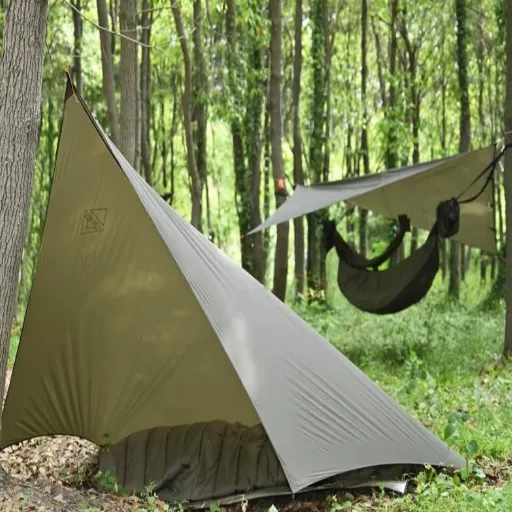
Setting up a tarpaulin shelter for camping takes six steps: choose a site, pick a pitch configuration, set a ridgeline, attach and tension the tarp, stake the corners with proper guy-line angle, and test the drainage. A taut pitch at 30 degrees beats a slack pitch at any angle.
Step 1: Choose your site. Pick high ground above any water flow. Note the drip line of any trees overhead (water concentrates and falls from leaf edges). Orient the open side of the tarp downwind.
Step 2: Decide your pitch configuration. A-frame for general use, lean-to for fair weather, plow point or half-pyramid for storms, flat for basecamp gatherings.
Step 3: Set your ridgeline. Run paracord between two trees, or use trekking poles or tarp poles. The ridgeline must be taut. Use a taut-line hitch at one end to allow re-tensioning.
Step 4: Attach the tarpaulin and pull it taut. Use the centre grommets, or run the ridgeline through fabric loops. The fabric should be drum-tight along the ridge with no sag.
Step 5: Stake the corners at proper angle. Drive stakes at roughly 45 degrees, pointing away from the tarp. The guy line should extend the line of the tarp’s edge, not pull straight down. This prevents grommet tear-out.
Step 6: Test for drainage. Pour water on the highest point and watch where it goes. Adjust ridgeline height or stakes until water runs cleanly off without pooling.
For a visual walkthrough of the A-frame and plow-point pitches in particular, this short tutorial covers the most common camping tarp configurations:
Best Tarpaulin Pitching Configurations for Different Weather
A-Frame
The default pitch. Equal slope both sides, ridgeline along the centre. Sheds wind and rain from both directions. Suits general camping.
Lean-To
One edge along the ground, opposite edge raised. Open front for views and ventilation, closed back for wind protection. Suits fair weather and warm nights.
Plow Point
One corner staked low, opposite corner raised by a single pole. Creates a wedge that sheds wind hard. The classic storm shelter.
Diamond Pitch
Tarp rotated 45 degrees, then pitched as a plow point. Gives a solo backpacker the smallest, most aerodynamic profile possible. Minimalist.
Half-Pyramid
Like a plow point with the open side closer to vertical. Adds head room and wind shedding. Good middle ground for mixed weather.
Dining Fly (Flat Tarp)
Pitched roughly parallel to the ground with slight slope for runoff. Used for group gatherings, cooking shelters, and base camps.
We’re here to help! Feel free to contact our team for more information or support.
Anchoring, Guy Lines, and Knot Selection
Stakes vary by ground. Standard aluminium stakes work in firm soil; long aluminium nail stakes work in soft ground; sand or snow stakes work in beach or winter conditions. Rocky ground may need cord tied to rocks or trees instead of stakes.
Guy lines should be braided polyester or paracord in 3-4mm diameter. Length depends on tarp size: at least one metre of free line per anchor point gives room for re-tensioning. Reflective guy lines reduce trip hazards at night.
Three knots cover almost every tarp setup. The bowline creates a fixed loop at the tarp’s corner. The taut-line hitch is a sliding loop for re-tensioning under load. The prusik knot adjusts ridgeline height. Practice these at home, not in the dark in a downpour.
If the grommets feel under-engineered, reinforce by tying through twice or using a stone-on-line technique: wrap the corner around a small smooth stone, then tie the line around the stone bulge. This distributes load without trusting the grommet. We value your feedback! Get in touch with us to share your thoughts or ask for help.
How Long Does a Waterproof Camping Tarpaulin Last?
Realistically, a 180-240 GSM PE camping tarpaulin lasts two to four years of regular weekend use, three to five years of occasional use. A 450+ GSM PVC tarpaulin lasts five to fifteen years with proper care. Ultralight silnylon lasts 30-100 nights of heavy use before showing fatigue.
The main failure modes are UV degradation, grommet tear-out from wind flapping, seam delamination from water ponding, and abrasion at high-contact points. Warning signs include visible thinning at fold lines, cracking when you bend a corner, pinhole leaks under water spray, grommets pulling out under tension, and persistent seam leaks after re-sealing.
When Emma compared her £45 240 GSM PE tarpaulin (fifty camping nights in Scotland and the Lake District) to a friend’s £270 silnylon equivalent across the same period, both tarps were still functional. Emma’s PE had visible UV fade; the silnylon had two pinhole punctures from a rough pack-out. Emma’s cost-per-night came out at £0.90. Her friend’s came out at £5.40. Silnylon may be six times lighter; it’s also six times more expensive per-night for typical UK weekend use. Have inquiries? Reach out to us, and we’ll be happy to assist you with any concerns.
Caring for Your Waterproof Camping Tarpaulin
Always dry the tarpaulin completely before storage. Mildew forms in 24-48 hours in folded wet fabric. If you pack it wet at the end of a trip, dry it out within a day of getting home.
Clean with cool water and a soft brush. Avoid harsh detergents, which strip waterproof coatings. Rinse fully and air-dry. Never machine-wash a PE or PVC tarpaulin; agitation damages the coating and heat warps the fabric.
Field repairs work surprisingly well. A small tear in PE responds to gaffer tape or a peel-and-stick tarp patch applied to both sides. PVC accepts heat-welding repair. Grommets can be replaced with a hand grommet kit costing under £15.
For long-term storage, fold loosely rather than tightly along the same crease. Tight repeated folds wear out the coating along the fold lines.
Bulk and Custom Tarpaulin for Group Camping, Camps, and Outfitters
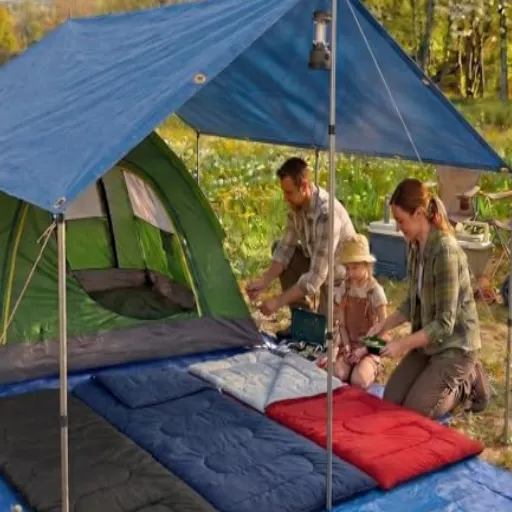
This is the angle the consumer SERP ignores entirely when reviewing waterproof tarpaulin for camping. If you run a scout group, a summer camp, an outdoor-education programme, a festival camp, or a disaster-relief operation, your needs differ from a recreational camper’s. You buy in tens or hundreds rather than ones. You need consistent sizing, durable material, and ideally branding or colour coding.
Standard vs Custom Sizes
Standard PE tarpaulin sizes (3x4m, 4x5m, 4x6m, 5x6m) cover most needs at lower cost. Custom sizes suit specific applications: a dining shelter for a 12-person mess table, a cover for a specific equipment trailer, a ground sheet for a fixed sleeping platform. Lead time for custom sizing is typically 7-21 days from order.
Branding and Colour Options
PE tarpaulin accepts logo printing well. Colour options run from standard blue, green, white, and silver/grey through to custom Pantone matches for branded camp programmes. Colour matters more than people realise: dark green disappears into woodland (preferred by some outdoor-education programmes); white reflects heat (preferred for dining shelters in hot climates); high-visibility orange is standard for disaster-relief use.
Procurement Considerations
Minimum order quantities vary by manufacturer. For custom-printed tarpaulin, MOQ typically starts at 20-50 units. Shipping for bulk PE tarpaulin to the UK or EU runs 4-6 weeks from China by sea freight, or 7-14 days by air freight at higher cost. For year-round programmes, plan procurement 8-12 weeks before season start.
You can read more about our tarpaulin factory and quality control, or explore heavy-duty tarpaulin options for the longest-life specifications and tarpaulin applications across industries if your group’s needs go beyond camping.
Running a camp or outfitting programme? Contact our team for bulk and custom pricing. We supply scout troops, summer camps, festival organisers, and outdoor-education programmes across more than fifty countries.
Frequently Asked Questions
What is the best material for a waterproof camping tarp?
For most campers, mid-weight PE (polyethylene) tarpaulin in the 180-240 GSM range offers the best balance of waterproofing, durability, weight, and cost. PVC suits long-term basecamp use; silnylon and DCF suit ultralight thru-hiking only.
What size tarp do I need for camping?
6×8 ft for solo, 8×10 ft for pair camping, 10×12 ft for family car camping, 12×14 ft or larger for groups, 16×20 ft or larger for dining shelters. Size up if your pitch angle reduces coverage or if you want a margin against sideways rain.
Can you use a tarpaulin as a tent?
Yes, with two caveats. You need a ground sheet or bivy bag to handle floor moisture, and you need a bug net in seasons or locations where insects are present. Many backpackers prefer a tarp-plus-bivy setup over a full tent for weight savings.
Are PE tarpaulins truly waterproof for camping?
Quality PE tarpaulin (180+ GSM, properly laminated, with welded or heat-bonded seams) achieves 3,000-8,000mm hydrostatic head ratings, which exceeds the waterproofing of many cheaper “waterproof” tents. Marketing claims like “100% waterproof” should be backed by a hydrostatic head number.
What GSM is best for a camping tarpaulin?
120-180 GSM for occasional warm-season use, 180-240 GSM for general camping, 240-300 GSM for wet climates or basecamp, 450+ GSM for group dining shelters or multi-season permanent structures.
How do you stop water pooling on a flat camping tarp?
Increase the pitch angle to at least 15-20 degrees from level. If pitch cannot be increased (low overhead clearance, for example), set internal supports under the tarp to create high points that direct water flow.
Conclusion
The right waterproof tarpaulin for camping is the one that matches your actual use. For weekend campers and families, a 180-240 GSM PE tarpaulin in 3x4m or 4x5m delivers genuine waterproofing, multi-season life, and honest cost-per-night maths. For scout troops, summer camps, and outfitters, custom PE or 450+ GSM PVC tarpaulin provides the durability and bulk pricing that consumer gear sites do not address.
Pitch angle matters more than material. A taut A-frame at 30 degrees beats a slack pitch in any fabric. Quantify waterproofing in hydrostatic head millimetres. Choose size by group and intended use. Repair small failures rather than replacing whole tarps.
If you run a programme that buys camping tarpaulin in quantity, the manufacturer route gives you control over specifications, sizing, colour, and price that consumer retailers cannot match. Our team supplies scout troops, summer camps, festival organisers, and outdoor-education programmes in more than fifty countries.
Browse our waterproof tarpaulin range or request a custom quote with your sizes, quantities, and target deployment date. We typically respond within one business day with sizing recommendations and pricing.