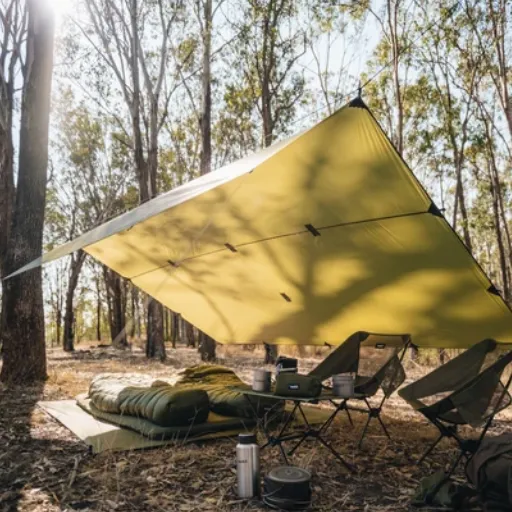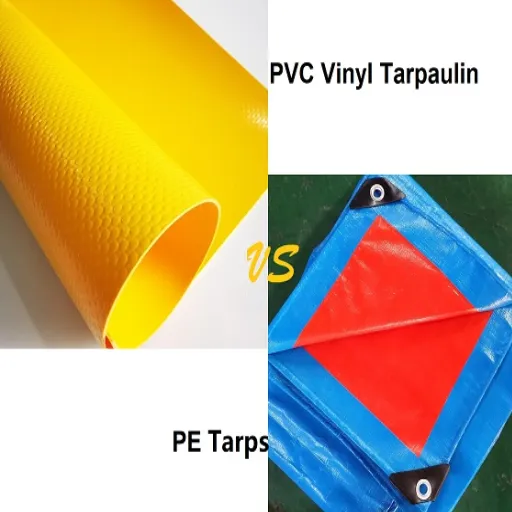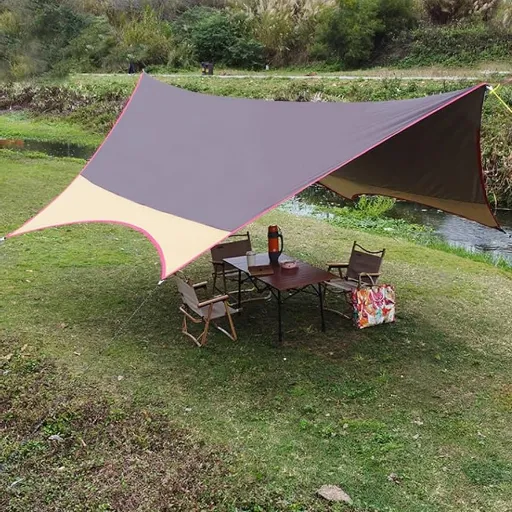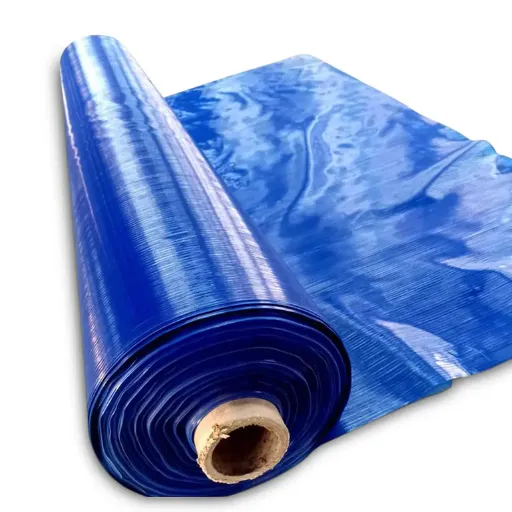
A waterproof tarpaulin roll is a continuous length of waterproof fabric wound onto a core, supplied in bulk format for large-scale coverage projects. A single standard roll typically covers 100 to 200 square metres, making it the most cost-effective format for agricultural, construction, and industrial buyers who need hundreds or thousands of square metres of waterproof protection.
Yet most buyers searching for a waterproof tarpaulin roll face a wall of marketplace listings with inconsistent specs, no guidance on width limits, and zero explanation of whether rolls are even the right choice for their job. The result? Costly mistakes: ordering the wrong GSM, discovering the roll won’t fit through a site gate, or paying 30% more than necessary because pre-cut sheets would have worked fine.
At Linyi Chenlai Plastic Products Co., Ltd., we manufacture both roll-format and sheet-format waterproof tarpaulins for export to over 50 countries. We have loaded thousands of rolls into containers, slit master rolls to custom widths, and heard every buyer question twice. This guide distils that experience into actionable specifications you can use to quote, compare, and order with confidence. If you have any questions or need further assistance, don’t hesitate to get in touch with us.
Key Takeaways
- PE waterproof tarpaulin rolls typically come in 0.9m to 4m widths and 50m to 200m lengths at 50–300 GSM; PVC rolls range from 1m to 3.2m+ widths at 260–900+ GSM.
- Roll format costs 20–40% less per square metre than pre-cut sheets, but only makes sense for orders above 500 square metres.
- PE rolls max out at roughly 4m seamless width; PVC can reach 5.1m on advanced calendering lines.
- A 40-foot HQ container holds 18–22 tonnes of PE rolls or 15–18 tonnes of PVC rolls depending on GSM.
- Always specify material, GSM, width, length, core type, colour, and performance requirements when requesting a quotation.
What Is a Waterproof Tarpaulin Roll?
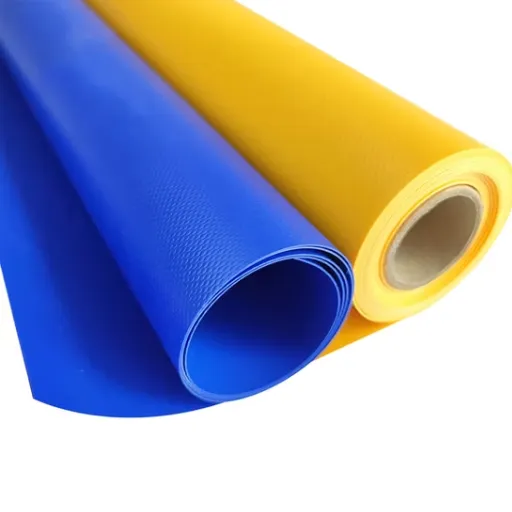
A waterproof tarpaulin roll is a continuous length of laminated or coated fabric supplied in wound format on a cylindrical core. Unlike pre-cut sheets, which are finished to fixed dimensions and individually folded or baled, rolls are manufactured in long continuous runs and wound onto paper or plastic cores for bulk handling.
The roll format is the standard delivery method for B2B buyers, distributors, and large-scale operators. It is the format of choice for agricultural greenhouse liners, construction site hoarding covers, truck curtain manufacturers, and industrial lining contractors who cut material to length on-site or in their own fabrication facilities.
Rolls are not simply sheets that have been rolled up. The manufacturing process differs: the fabric is extruded, laminated, or calendered in continuous runs, wound under controlled tension, and often finished with reinforced selvedge edges to maintain structural integrity during unrolling. This continuous production method reduces labour costs, eliminates cut-off waste at the factory, and allows buyers to purchase exactly the linear metres they need.
Want to understand how waterproof tarpaulins are classified and tested? Read our complete tarpaulin guide for the full technical overview.
Standard Waterproof Tarpaulin Roll Sizes and Dimensions
Roll dimensions are determined by three variables: width, length per roll, and grammage (GSM). Each material — PE and PVC — has different manufacturing constraints that set practical limits on what is available.
PE Waterproof Tarpaulin Roll Sizes
PE (polyethylene) waterproof tarpaulin rolls are woven from high-density polyethylene (HDPE) tapes and laminated with low-density polyethylene (LDPE) on both sides. The loom width determines the maximum seamless width.
| Width (seamless) | Standard Lengths | GSM Range | Typical Applications |
|---|---|---|---|
| 0.9m – 1.5m | 50m, 100m, 200m | 50–120 | General purpose, small covers |
| 1.83m – 2.0m | 50m, 100m, 200m | 80–200 | Agriculture, construction |
| 2.44m – 4.0m | 50m, 100m | 120–300 | Greenhouse lining, large covers |
Wider PE rolls beyond approximately 2.44m require heat-sealed longitudinal joints. While functional, these joints create a slight ridge and a potential waterproofing weakness if not properly executed. For applications where a perfectly flat surface is critical — such as pond liners or precision greenhouse roofing — seamless width limits matter.
PVC Waterproof Tarpaulin Roll Sizes
PVC waterproof tarpaulin rolls are produced by coating or calendering PVC onto a woven polyester base fabric. The calendering line width determines the maximum seamless roll width, which is typically larger than PE loom widths.
| Width (seamless) | Standard Lengths | GSM Range | Typical Applications |
|---|---|---|---|
| 1.0m – 2.5m | 10m – 50m | 260–450 | Medium-duty covers, awnings |
| 2.5m – 3.2m | 10m – 50m | 350–650 | Truck curtains, tents, industrial |
| 3.2m – 5.1m | 10m – 50m | 450–900+ | Premium industrial, marine |
Not all manufacturers can produce the full 5.1m seamless width. That capability requires specialised wide-body calendering equipment. At Linyi Chenlai, we produce standard widths up to 3.2m seamless, with wider welded options available on request.
Roll Dimension Quick-Reference Table
| Material | Seamless Width | Max Welded Width | Standard Lengths | GSM Range |
|---|---|---|---|---|
| PE | 0.9m – 2.44m | Up to 4.0m | 50m – 200m | 50 – 300 |
| PVC | 1.0m – 3.2m | Up to 5.1m | 10m – 100m | 260 – 900+ |
Roll Format vs. Pre-Cut Sheet: Which Should You Choose?
Not every buyer benefits from roll format. The decision depends on order volume, storage capacity, cutting capability, and how the material will be deployed.
When Roll Format Wins
Roll format is the clear choice when:
- You need 500+ square metres of coverage. The per-square-metre cost drops significantly at volume.
- Your application requires custom lengths. A 100m roll can be cut into ten 10m sections or four 25m sections as needed.
- You have cutting equipment on-site or in-house. A simple rotary cutter or hot-knife table handles PE and PVC easily.
- Storage space is available. Rolls require more floor space than folded sheets but stack efficiently on pallets.
- You want reduced packaging waste. Rolls use one outer wrap; sheets require individual folding, baling, and often bagging.
When Pre-Cut Sheets Win
Pre-cut sheets are the better option when:
- Your order is under 500 square metres. The cutting labour, storage inconvenience, and potential waste often erase the unit-cost savings.
- You need immediate deployment. Sheets arrive folded and ready to unfold; rolls must be unrolled, measured, and cut.
- Storage space is tight. A folded 4m × 6m sheet occupies roughly 0.05 cubic metres; a 2m × 100m roll occupies 0.3+ cubic metres.
- Your team lacks cutting tools. Improvised cutting with hand tools produces frayed edges on PE and uneven cuts on PVC.
Cost Comparison: Roll vs. Sheet
Roll format typically costs 20–40% less per square metre than equivalent pre-cut sheets at the same GSM and material. The savings come from reduced cutting labour, simplified packaging, and lower handling costs at the factory.
However, the total project cost calculation must include:
- Cutting labour and equipment on the buyer’s side
- Higher storage and handling requirements
- Potential off-cut waste if lengths do not divide evenly into the roll length
For buyers with in-house cutting capability and adequate storage, rolls are almost always more economical above 500 square metres.
We’re here to help! Feel free to contact our team for more information or support.
Waterproof Tarpaulin Roll Materials Compared
The two dominant materials for waterproof tarpaulin rolls are polyethylene (PE) and polyvinyl chloride (PVC). Each has distinct performance characteristics, cost profiles, and ideal applications.
PE (Polyethylene) Waterproof Rolls
PE waterproof tarpaulin rolls are constructed from a woven HDPE tape base laminated with LDPE coating on both faces. This creates a fully waterproof barrier with heat-sealable seams.
Strengths:
- Lightweight and easy to handle manually
- Lower cost per square metre than PVC
- Good waterproof performance when new
- Available in very long lengths (up to 200m)
Limitations:
- Shorter outdoor lifespan: 6–12 months for untreated, 1–3 years with UV stabilisers
- Lower tear strength than PVC
- Susceptible to UV degradation without additive packages
- Not weldable; seams rely on heat sealing or stitching with tape
Recommended GSM for roll applications:
- 80–120 GSM: Light-duty temporary covers, dust protection
- 120–180 GSM: General agriculture, construction scaffolding
- 180–250 GSM: Medium-duty roofing, debris containment, high-wind areas
- 250–300 GSM: Heavy-duty PE applications, long-term outdoor storage
Explore our heavy-duty tarpaulin options for demanding environments where maximum durability is required.
PVC (Polyvinyl Chloride) Waterproof Rolls
PVC waterproof tarpaulin rolls consist of a woven polyester base fabric coated or calendered with PVC on both sides. The polyester provides tensile strength; the PVC provides waterproofing, UV resistance, and weldability.
Strengths:
- Fully waterproof with weldable seams for permanent joints
- 5–10+ year outdoor lifespan with proper formulation
- Superior tear and tensile strength
- Wide colour range; accepts printed branding
- Available in fire-retardant, anti-mildew, and anti-static grades
Limitations:
- Heavier per square metre than PE
- Higher cost per square metre
- Requires proper winding tension to prevent edge curl in storage
- Shorter standard roll lengths due to weight
Recommended GSM for roll applications:
- 350–450 GSM: Medium-duty covers, awnings, temporary structures
- 450–550 GSM: Truck side curtains, trailer covers, event tents
- 550–650 GSM: Heavy-duty industrial, long-term construction, mining
- 750–900+ GSM: Premium industrial, marine, military-grade applications
Material Selection Quick-Reference
| Application | Material | GSM | Expected Lifespan |
|---|---|---|---|
| Temporary agricultural cover | PE | 120–150 | 1–2 years |
| Greenhouse lining | PE | 150–200 | 2–4 years |
| Construction hoarding | PE | 180–200 | 1–3 years |
| Truck side curtain | PVC | 450–650 | 5–10 years |
| Event tent | PVC | 350–450 | 5–8 years |
| Industrial long-term cover | PVC | 550–650 | 8–10+ years |
Manufacturing and Quality Considerations for Rolls
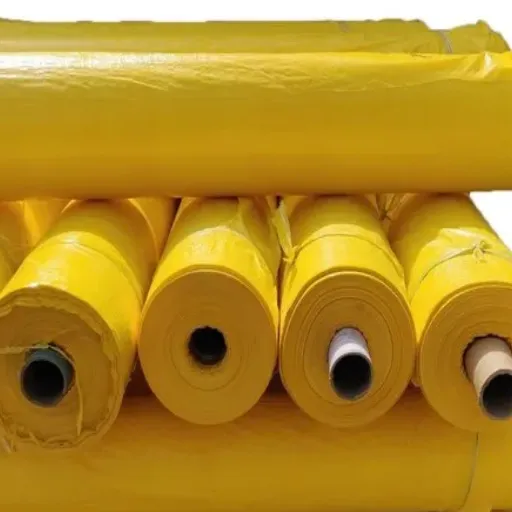
Roll quality is determined by factors invisible in a product photograph: winding tension, edge alignment, core specification, and seam integrity.
Seamless Width vs. Welded Width
The maximum seamless width is a hard manufacturing constraint.
For PE tarpaulin, the weaving loom sets the limit. Standard looms produce fabric 1.83m to 2.44m wide. Wider PE fabric requires joining two or more loom-width sections with a longitudinal heat seal. A well-executed heat-sealed joint maintains waterproof integrity, but it creates a visible seam and slight thickness variation. For applications where a perfectly flat surface is essential — such as reservoir lining or precision greenhouse roofing — specify seamless width and accept the narrower coverage.
For PVC tarpaulin, the calendering or coating line sets the limit. Standard equipment produces 1.5m to 3.2m seamless. Specialist wide-body calendering lines can reach 5.1m. PVC joints, when required, are typically RF-welded or hot-air welded, producing a bond that is often stronger than the base fabric.
When specifying width for quotation, always state whether seamless or welded width is acceptable. This single specification can change the available supplier pool and the per-metre price. If you have any questions or need further assistance, don’t hesitate to get in touch with us.
Winding Quality and Core Specification
A poorly wound roll is a liability. Winding defects include:
- Telescoping: Layers slip sideways, creating an uneven roll face that complicates unrolling.
- Edge misalignment: The fabric does not track straight, causing wrinkles and tension variation.
- Insufficient tension: Loose winding allows air pockets and compression damage during stacking.
Quality rolls are wound under controlled tension with edge-guidance systems that maintain alignment within +/- 2mm.
Core specifications:
- Standard core diameter: 76mm (3 inches) — compatible with most unrolling equipment
- Core material: Cardboard (cost-effective, single-use) or plastic (durable, reusable, moisture-resistant)
- Core length: Matches roll width exactly to prevent edge damage
Reinforcement and Edge Treatment in Roll Format
Rolls are typically supplied with raw cut edges or selvedge-reinforced edges depending on the application:
- Raw cut edges: Standard for buyers who will slit or finish edges themselves.
- Reinforced selvedge: A denser woven edge that resists fraying during unrolling and handling.
- Pre-hemmed with eyelets: Rare in roll format but available for buyers who want partially finished material.
Logistics: Packaging, Weight, and Container Loading
Roll format changes the logistics equation. Buyers need to understand weight, volume, and handling requirements before placing an order.
Roll Packaging Standards
Standard export packaging for waterproof tarpaulin rolls includes:
- Individual wrapping: Each roll is wrapped in the same fabric or a protective PE film to prevent surface abrasion during transit.
- Labelling: Roll tags specify material, GSM, width, length, colour, batch number, and handling instructions.
- Palletisation: Rolls are loaded vertically or horizontally on wooden pallets, typically 8–16 rolls per pallet depending on roll diameter.
Roll Weight and Handling
Roll weight is a practical constraint that determines whether material can be moved by hand or requires mechanical handling.
Example calculations:
- PE roll: 2.0m width × 100m length × 120 GSM = 24 kg (manually manageable)
- PE roll: 4.0m width × 100m length × 200 GSM = 80 kg (requires two-person lift or trolley)
- PVC roll: 2.5m width × 50m length × 450 GSM = 56 kg (manually manageable with care)
- PVC roll: 3.2m width × 50m length × 650 GSM = 104 kg (requires forklift or hoist)
Always confirm roll weight with your supplier before ordering. A 104 kg roll cannot be unloaded from a container by hand.
Container Loading Calculations
For import buyers, container capacity determines the economic order quantity.
| Container Type | PE Rolls (120 GSM) | PE Rolls (200 GSM) | PVC Rolls (450 GSM) | PVC Rolls (650 GSM) |
|---|---|---|---|---|
| 20ft GP | ~8–10 tonnes | ~10–12 tonnes | ~10–12 tonnes | ~12–14 tonnes |
| 40ft HQ | ~18–22 tonnes | ~20–24 tonnes | ~15–18 tonnes | ~15–18 tonnes |
Linear metres per 40ft HQ container (example):
- 2.0m × 100m × 120 GSM PE: approximately 750–900 rolls (150,000–180,000 linear metres)
- 3.2m × 50m × 650 GSM PVC: approximately 90–110 rolls (4,500–5,500 linear metres)
The exact count depends on roll diameter, pallet configuration, and weight distribution. Always request a container loading plan from your supplier for large orders.
Planning a bulk import? Contact our team for a customised container loading plan based on your exact specifications.
How to Specify a Waterproof Tarpaulin Roll for Quotation
A precise specification eliminates quotation delays, sample mismatches, and delivery disputes. Provide the following ten parameters when requesting a quote:
- Material type: PE or PVC
- GSM or thickness: Specify exact grammage or acceptable range
- Width: State whether seamless or welded/jointed width is acceptable
- Length per roll: Standard or custom linear metres
- Core specification: Diameter (76mm standard), material (cardboard or plastic)
- Colour: Standard colours (blue, green, silver, white, orange, black) or custom Pantone match
- Printing requirements: Logo, text, or pattern; number of colours; position
- Reinforcements: Hem type, eyelet spacing, corner patches, D-rings
- Performance specifications: UV stabilisation, fire retardancy (B1/B2/B3), anti-mildew, hydrostatic head requirement
- Quantity and delivery terms: Total order volume, target delivery date, Incoterms (FOB, CIF, DDP)
The more specific your quotation request, the faster and more accurate the response. Vague requests such as “waterproof tarpaulin roll, best price” require multiple clarification rounds that delay production scheduling.
Customisation and Cut-to-Length Services
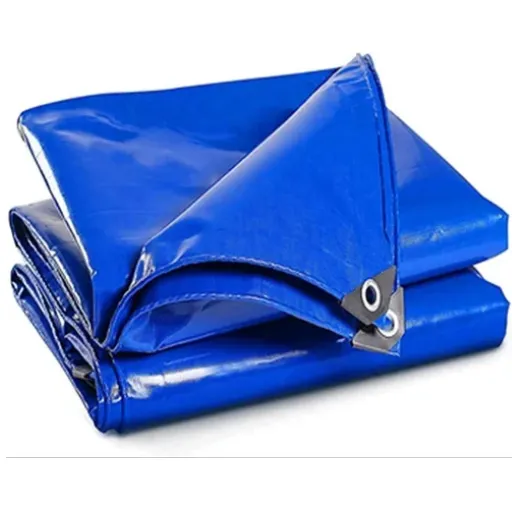
Not every buyer needs standard roll dimensions. Many require material converted from master rolls to finished sizes.
Slitting Services
Slitting converts a wide master roll into multiple narrower rolls. For example, a 4.0m × 100m master roll can be slit into two 2.0m × 100m rolls or four 1.0m × 100m rolls.
Slitting tolerances:
- Standard tolerance: +/- 5mm
- Precision tolerance: +/- 2mm (requires specialised equipment)
Slitting adds a processing step and typically carries a small per-metre surcharge. However, it eliminates the buyer’s need for in-house cutting equipment and ensures clean, straight edges.
Cut-to-Length Services
Cut-to-length converts long rolls into shorter rolls. A 100m master roll can be cut into two 50m rolls, four 25m rolls, or ten 10m rolls.
Considerations:
- Minimum cut length varies by supplier; typically 5m or 10m
- Each cut creates two new roll ends that must be secured to prevent unravelling
- Cut-to-length increases packaging and handling costs per roll
MOQ Implications of Custom Sizing
Custom roll dimensions typically increase the minimum order quantity. Standard sizes can often be supplied from stock or short production runs. Custom widths, lengths, or colours require dedicated production setup, which is only economical at higher volumes.
| Customisation | Typical MOQ Impact |
|---|---|
| Standard size, standard colour | 1,000–2,000 sq m |
| Custom width (slitting) | 2,000–3,000 sq m |
| Custom colour | 3,000–5,000 sq m |
| Custom print | 5,000+ sq m |
Sustainable Waterproof Tarpaulin Roll Options
Environmental responsibility is an increasing priority for B2B buyers, particularly in European and North American markets.
Recycled-Content PE Rolls
Post-consumer recycled (PCR) polyethylene content of 30–50% is now available for PE waterproof tarpaulin rolls. The recycled content is blended with virgin resin to maintain strength and waterproof performance while reducing reliance on fossil-based feedstock.
Performance characteristics of recycled-content PE are comparable to virgin material at the same GSM, though colour consistency may vary slightly between batches.
REACH- and RoHS-Compliant PVC Rolls
Standard PVC formulations historically relied on plasticisers and stabilisers that raised environmental concerns. Modern REACH- and RoHS-compliant formulations use alternative plasticisers and calcium-zinc stabilisers that meet EU regulatory requirements without compromising performance.
Roll Format as a Sustainability Choice
Roll format inherently reduces packaging waste compared to pre-cut sheets. A single roll requires one outer wrap; the equivalent coverage in sheets requires individual folding, baling, and often poly-bagging. For large orders, the packaging waste differential is substantial.
Learn more about our eco-friendly tarpaulin options and how sustainable materials protect both your assets and the environment.
Frequently Asked Questions
What is the maximum seamless width for a waterproof tarpaulin roll?
PE waterproof tarpaulin rolls typically max out at 2.0m to 2.44m seamless, with wider widths requiring heat-sealed joints. PVC waterproof tarpaulin rolls reach 3.2m on standard calendering lines and up to 5.1m on specialised wide-body equipment.
How many square metres are in a standard waterproof tarpaulin roll?
Multiply width in metres by length in metres. A 2.0m × 100m roll contains 200 square metres. A 3.2m × 50m roll contains 160 square metres. Always confirm the exact length with your supplier, as manufacturing tolerances of +/- 1% are standard.
What is the difference between a waterproof tarpaulin roll and a sheet?
A roll is a continuous length of material wound on a core, supplied in bulk for buyers who cut to size. A sheet is a pre-cut piece finished to fixed dimensions, folded, and individually packaged. Rolls are more economical per square metre for large orders; sheets are more convenient for small jobs.
How much does a waterproof tarpaulin roll weigh?
Weight equals width (m) × length (m) × GSM ÷ 1,000. A 2.0m × 100m × 120 GSM PE roll weighs 24 kg. A 3.2m × 50m × 650 GSM PVC roll weighs 104 kg. Always confirm weight before ordering to arrange appropriate handling equipment.
Can waterproof tarpaulin rolls be customised in width and length?
Yes. Standard widths and lengths are available from stock or short production runs. Custom dimensions require dedicated production and carry higher minimum order quantities. Slitting and cut-to-length services can also convert standard master rolls to custom sizes.
What is the typical MOQ for waterproof tarpaulin rolls?
Minimum order quantities vary by specification: standard sizes start at 1,000–2,000 square metres; custom colours typically require 3,000–5,000 square metres; custom printing may require 5,000+ square metres. Contact your supplier for exact MOQs based on your requirements.
How should waterproof tarpaulin rolls be stored?
Store rolls horizontally on pallets in a dry, ventilated area away from direct sunlight and heat sources. PE rolls should be used within 12 months of manufacture to prevent UV inhibitor degradation. PVC rolls can be stored for 24+ months if kept away from solvents and plasticiser-migration sources.
Which is cheaper per square metre: rolls or sheets?
Roll format is typically 20–40% cheaper per square metre than equivalent pre-cut sheets. However, the total project cost must include cutting labour, storage, and handling. For orders below 500 square metres, pre-cut sheets may be more economical overall.
Conclusion
Choosing the right waterproof tarpaulin roll requires more than comparing prices. It demands an understanding of width limitations, material differences, weight logistics, and the honest trade-off between roll and sheet formats.
The key points to remember:
- PE rolls offer lightweight, low-cost waterproofing for 1–3 year applications at 80–300 GSM.
- PVC rolls deliver heavy-duty, weldable, long-life waterproofing for 5–10+ year applications at 350–900+ GSM.
- Roll format saves 20–40% per square metre above 500 square metres but requires cutting capability and storage space.
- Seamless width limits are real manufacturing constraints: roughly 2.0–2.4m for PE, 3.2m for standard PVC, and up to 5.1m for specialist PVC equipment.
- Container loading capacity determines your economic order quantity: 18–22 tonnes in a 40ft HQ for PE, 15–18 tonnes for PVC.
A waterproof tarpaulin roll is an investment in protection at scale. The buyers who get the best results are those who specify precisely, plan for logistics, and match the material to the application’s demands.
Ready to order? Send us your specifications — material, GSM, width, length, colour, and quantity — and our team will return a detailed quotation with delivery options within 24 hours. Request your waterproof tarpaulin roll quote today.