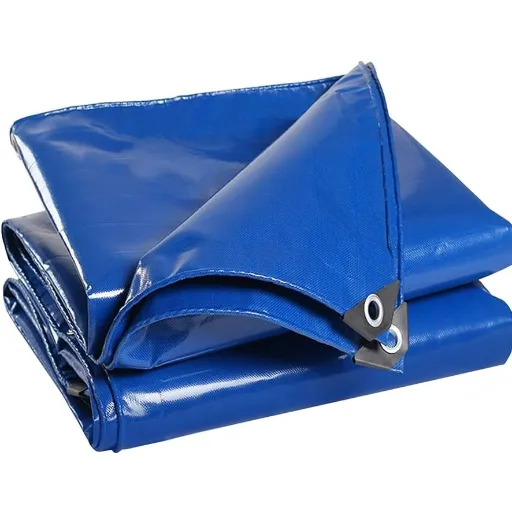
PVC Tarpaulin is a kind of polyester fabric which is covered with plastic in order to form water resistant sheets or covers for protection towards either shipping, agriculture, constructions among other. It is not similar to polyethylene which protects water and eventually penetrates as this is completely covered with a polymer and the weld seams in PVC tarpaulin are perfectly done to lock up any water or moisture that may get in. So, be it animal shelter, classic car, a sports car or a furniture there will be always a need to find a suitable solution to protect it from various environmental factors. Much more pertaining for commercial applications, it is critical to be equipped with the requirements, normative documents and selection factors especially with regard to PVC Tarpaulin and the absence of any doubts, these are indeed cost-effective measures that can safeguard your investments and prevent the escalation of overheads in your project.
When Marcus Chen’s company in Guangdong region finally decided to replace their ordinary PE tarpaulins three times fully in a span of two years, they adopted ‘torne’ heavy-duty PVC ones. These tarps were 40% more expensive to purchase upfront. But as a consequence, their Life cycle costs went down by 60% over the next five years.
Because of stories similar to Marcus’ tale, PVC has become the dominant material used for tarpaulin. It makes up 55% – 60% of the coated tarpaulin market. As per the Business Research Insights analysis, this particular market will be worth $7.4 billion and over in 2025. And in this PVC water proof tarpaulin guide, we shall look into the very details about what makes it different. You will also be able to study the procedure for Producing it As well as how to select the most suitable tarps for your projects.
By the end of this article, you’ll understand the anatomy of a PVC coated tarpaulin, know how to read technical specifications, and have a practical framework for evaluating suppliers. Whether you need waterproof tarpaulin options for agricultural coverage or heavy-duty tarpaulin specifications for industrial storage, the information here will help you make an informed purchase decision.
Key Takeaways
- PVC waterproof tarpaulin uses a polyester base fabric coated with PVC on both sides, achieving true waterproofing through material architecture rather than surface treatment.
- Quality PVC tarpaulin lasts 5 to 15+ years outdoors, compared to 1 to 3 years for standard PE tarpaulins — making the higher upfront cost significantly cheaper per year of use.
- Industrial-grade PVC tarpaulin achieves 1,000 to 3,000mm water column resistance per ISO 811 testing and maintains flexibility from -30°C to +70°C.
- Welded seams reduce water penetration by up to 92% compared to stitched seams — a critical but often overlooked specification.
- Demand ISO 9001, REACH, and relevant flame-retardant certifications from any supplier before placing bulk orders.
What Is PVC Waterproof Tarpaulin?
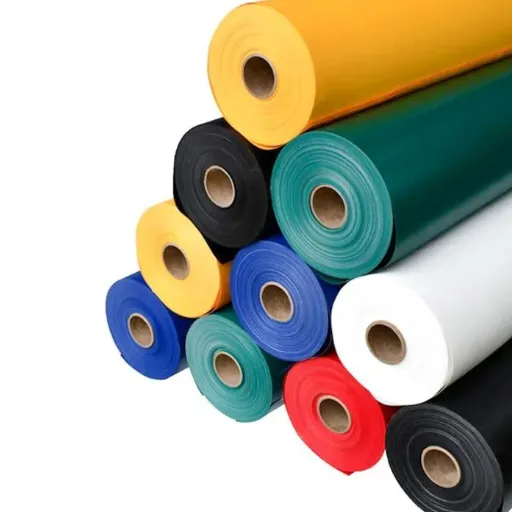
Waterproof tarpaulin refers to a layer of three laminations. At its middle layer is material woven from polyester. It is sold in denier ratings of between 200D x 300D and 1,000D x 1,000D. The warp or “K” yarns are chafed out of particularly strong filaments and constitute the prime redaction material of the woven core. This core is the main reinforcing weave – measured in terms of tear, tensile and stability resistance – which prolongs the existence of the tarp irrespective of the nature of the application it is exposed to (Mechanical loading, environmental factors etc).
At either side of the reinforcing warp and weft grid formation, a PVC layer is imparted by manufacturers. This topping is designed to not end at the surface since even it is enclosed within the steel wires. The topping is bonded to the fabric giving rise to a concrete- like material where reinforcement is inbuilt and equally, sealing and repulsion of the fabric is achieved. The end product is a typically laminated pvc sheet which not only repels water completely but also keeps a textile like elasticity as well as strength. We’re here to help! Feel free to contact our team for more information or support.
The Anatomy of a PVC Tarpaulin
Understanding what goes into a PVC coated tarpaulin helps buyers evaluate quality. Here are the four components that determine performance:
Base Fabric: The woven polyester scrim provides structural integrity. Higher denier counts (1,000D vs. 500D) mean thicker, stronger yarns and greater overall durability. The weave pattern matters too — plain weave offers balanced strength, while basket weave enhances tear resistance for demanding applications.
PVC Coating Layers: The PVC compound applied to both sides typically includes polyvinyl chloride resin, plasticizers (DOP, DINP, or DOTP), stabilizers, and fillers. The thickness and uniformity of these layers directly affect waterproof performance. Industrial-grade products often use multiple coating passes to build up thickness gradually.
Functional Additives: Quality manufacturers incorporate UV stabilizers, anti-fungal agents, flame retardants, and anti-aging compounds into the PVC formulation. These additives extend outdoor lifespan, prevent mildew in humid environments, and meet safety requirements for regulated industries. A PVC tarpaulin sheet order with custom additives can specify exactly which treatments your application requires.
Seam Construction: This is where waterproofing often fails. Stitched seams create thousands of needle holes that compromise the water barrier. High-frequency welded seams fuse the material together without perforations, maintaining the waterproof integrity across joints and edges.
Want to see how these components work together in practice? Explore our complete tarpaulin buyer’s guide for application-specific recommendations.
Manufacturing Process: From Polyester Fabric to Waterproof Cover
The manufacturing process for PVC waterproof tarpaulin determines everything from coating uniformity to long-term durability. Two primary methods dominate the industry: knife-over-roll coating and calender coating.
Knife-Over-Roll Coating Process
The majority of heavy-duty PVC tarpaulin utilizes suer knife-over-roll coating to the above-described procedure:
A roll of woven polyester fabric acts as the substrate and is coated while the fabric is inserted through the machine. A control measures the distance between a sharp set of knives and the fabric’s surface, with the purpose of cleaning the material with liquid PVC plastisol. The thickness of coating is determined by the distance between the two blades which is covered by liquid. The gm may be achieved by enveloping it inside the pvc which is a thixotropic fluid, with a variation carried out in the target GSM by applying from 0.35mm to 1.2mm thickness to attain the target.
The coated product is then led through a drying oven at 160°C to 220°C. When the resin particles are heated and the gelation takes place, the plasticizers flow inside the particles. This, together with fusion bonding, combines all resin particles into a molten mass. The coming together of processes of gelation and fusion in the oven gives the perfect density and high waterproofing properties characteristic for a good PVC tarpaulin.
Heavy-duty coatings are covered in multiple layers by manufacturers. The number of such a case increases the application of the PVC with partial curing after each layer. Usually they might apply the similar type of pass 3 or 4 times for a 900 – 450 G S M GSM product. In case of 450 GSM product, the request is completed in one or two passes. Multipasses give a good finish without any pinholing of coating under pressure.
We’re here to help! Feel free to contact our team for more information or support.
Calender Coating Alternative
Calender coating uses heated rollers rather than a knife blade. Molten PVC passes through a series of precision rollers that press it onto the base fabric. This method produces the smoothest surface finish and is preferred for applications requiring printability or specific surface textures. However, knife coating achieves greater thickness and is generally preferred for heavy-duty waterproof PVC sheet production.
Quality Control at Every Stage
Rigorous quality control separates premium PVC waterproof tarpaulin from commodity-grade alternatives. At Linyi Chenlai Plastic Products Co., Ltd., every production batch undergoes multiple inspection stages:
Online Inspection: Thickness gauges and pinhole detectors scan the material in real time during coating. Any deviation from specification triggers immediate adjustment.
Mechanical Testing: Sample strips undergo tensile strength testing (per GB/T3923.1), tear strength assessment, and peel adhesion tests to confirm the bond between coating and base fabric.
Environmental Testing: Accelerated UV exposure trials (per ISO 4892-2), low-temperature flexibility tests, and hydrostatic pressure measurement verify real-world performance.
Seam Integrity: For finished products, weld strength testing ensures joints meet or exceed the base material’s performance specifications.
This multi-stage approach ensures that every PVC tarpaulin roll leaving the facility meets the standards customers depend on for critical applications.
PVC Waterproof Tarpaulin Technical Specifications
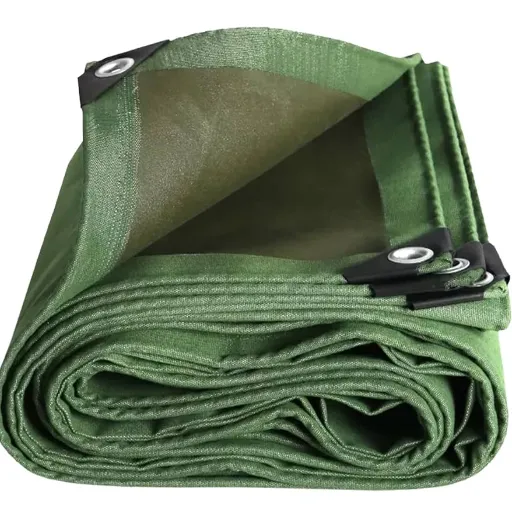
Reading a specification sheet for PVC waterproof tarpaulin can feel overwhelming. Here is what each metric means and why it matters for your application. These PVC tarpaulin specifications determine performance, lifespan, and suitability for your specific use case.
Understanding GSM and Thickness
GSM stands for grams per square meter. It measures the total weight of the finished material, including both the base fabric and PVC coating. Higher GSM generally indicates thicker, more durable tarpaulin, though the relationship isn’t linear because coating density varies by formulation.
| Grade | GSM Range | Thickness (mm) | Typical Applications |
|---|---|---|---|
| Light-Duty | 300-450 | 0.35-0.50 | Temporary covers, indoor storage, short-term outdoor use |
| Medium-Duty | 450-650 | 0.50-0.70 | Truck covers, agricultural protection, general outdoor use |
| Heavy-Duty | 650-900 | 0.70-1.00 | Construction sites, industrial storage, long-term exposure |
| Extra Heavy-Duty | 900-1,200 | 1.00-1.50 | Marine applications, extreme weather, permanent installations |
Important: Higher GSM does not always mean better. A 450 GSM product with premium additives and proper welding often outperforms a 650 GSM commodity product with inferior formulation. Focus on the complete specification, not just the weight.
For demanding environments, explore our heavy-duty tarpaulin specifications to find grades engineered for maximum durability.
Tensile and Tear Strength Standards
Tensile strength measures how much force the material can withstand before breaking. For industrial PVC waterproof tarpaulin, look for warp and weft values of at least 2,000 N/5cm for heavy-duty applications. Tear strength indicates resistance to puncture propagation — critical for applications where sharp objects or wind stress may create initial damage.
Hydrostatic Pressure Resistance
This metric measures waterproof performance under pressure. Quality industrial PVC tarpaulin achieves 1,000 to 3,000mm water column resistance according to ISO 811 testing. To put this in perspective, 1,000mm resistance handles heavy rainfall, while 3,000mm resistance withstands standing water and pressurized conditions.
Temperature Range and Flexibility
Standard PVC waterproof tarpaulin maintains flexibility from -30°C to +70°C per FZ/T01007 testing. In cold climates, plasticizer selection becomes critical — inferior formulations become brittle below -10°C, leading to cracking and failure. For freezing environments, specify DOTP-based plasticizers rather than traditional DOP.
UV Resistance and Lifespan Ratings
UV stabilizers prevent the PVC polymer from degrading under sunlight. Quality products incorporate UV absorbers and hindered amine light stabilizers (HALS) that extend outdoor lifespan. Accelerated weathering tests per ISO 4892-2 using xenon arc exposure should show less than 20% strength loss after 1,000+ hours — roughly equivalent to 3 to 5 years of outdoor exposure in temperate climates. Don’t hesitate to connect with us—our team is ready to help you with any questions you may have.
PVC Tarpaulin vs Other Materials: A Durability Comparison
Not all waterproof covers are created equal. Understanding how PVC waterproof tarpaulin compares to alternatives helps buyers make cost-effective choices.
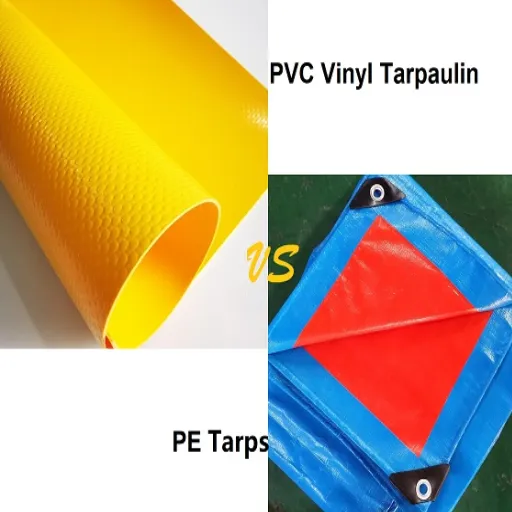
PVC vs PE (Polyethylene) Tarpaulin
Polyethylene tarpaulins dominate the consumer and light-commercial market because they’re cheap and lightweight. But the cost advantage disappears quickly under demanding conditions.
| Property | PVC Tarpaulin | PE Tarpaulin |
|---|---|---|
| Typical Lifespan | 5-15+ years | 1-3 years |
| Waterproof Rating | 1,000-3,000mm water column | 500-1,000mm water column |
| Tear Strength | High (2,000+ N/5cm) | Medium (500-1,000 N/5cm) |
| UV Resistance | Excellent (3-5+ years) | Poor to Moderate (6-18 months) |
| Abrasion Resistance | Excellent | Moderate |
| Weight | Heavy (450-900+ GSM) | Light (80-200 GSM) |
| Cost per Square Meter | Higher upfront | Lower upfront |
| Cost per Year of Use | Lower long-term | Higher long-term (due to replacement) |
The math is straightforward. A PE tarpaulin costing 2persquaremeterlasts18months.Thatworksoutto1.33 per year. A PVC waterproof tarpaulin at 5persquaremeterlasts10years.That′s0.50 per year. The “cheaper” option is actually 2.5x more expensive over time.
PVC vs HDPE Tarpaulin
High-density polyethylene tarpaulins offer better durability than standard PE but still fall short of PVC for long-term applications. HDPE works well for temporary construction covers and short-term agricultural use. For permanent or semi-permanent installations, PVC waterproof tarpaulin remains the superior investment.
PVC vs Canvas
Canvas tarpaulins are breathable and eco-friendly but require wax or chemical treatment to achieve water resistance. Even treated canvas is water-resistant, not waterproof. Canvas absorbs moisture, adds significant weight when wet, and is prone to mold and rot. PVC tarpaulin outperforms canvas in any application requiring reliable, long-term waterproofing.
If you have any questions or need further assistance, don’t hesitate to get in touch with us.
When to Choose PVC: A Decision Framework
Choose PVC waterproof tarpaulin when:
- The application requires true waterproofing, not just water resistance
- The cover will remain in place for more than 12 months
- The environment includes heavy rainfall, strong UV exposure, or chemical contact
- Asset protection failure would cause significant financial loss
- You need customizable sizes with welded seams and reinforced fittings
For short-term, temporary coverage where replacement is acceptable, PE or HDPE may suffice. For everything else, PVC is the professional choice. Explore our PVC tarpaulin for construction projects.
Industrial Applications Across Agriculture, Construction, and Transport
PVC waterproof tarpaulin serves diverse industries because it combines waterproofing with durability, customizability, and cost efficiency over time.
Agriculture: Greenhouses, Crop Covers, and Equipment Protection
The operator of a 200-hectare vegetable plantation in Nigeria, Sarah Okafor has a lot to cater for. She opted for a PE greenhouse cover which she later had to switch to PVC after two harvests were lost due to funguses. The history of the project is fascinating even in the context of the humid subtropics.
What bothered her more were the old tarpaulins that always formed moisture in the greenhouse. Her new PVC covers contain mildew inhibitors and are designed for 85% light transmittance. To this day, she has not gotten around to changing them even though it has been four years. The cost of setting up was three times offering its own problems but she got there in 18 months.
Agricultural applications for PVC waterproof tarpaulin include:
- Greenhouse covers: Temperature and humidity regulation with UV-stabilized transparency
- Crop protection: Waterproof barriers that prevent moisture-related diseases while allowing ventilation when designed with proper flap systems
- Equipment covers: Protection for tractors, harvesters, and storage machinery against rain, dust, and UV degradation
- Irrigation containment: Pond liners and reservoir covers that resist fertilizers and agricultural chemicals
- Hay and grain storage: Moisture-proof covers that prevent mold and preserve nutritional value
For farming applications, PVC tarpaulin for agriculture typically specifies 450 to 650 GSM with UV stabilizers and anti-fungal treatments. Custom sizes accommodate irregular field dimensions and equipment profiles.
Construction: Scaffolding Covers, Temporary Roofing, and Material Protection
The construction industry accounts for approximately 42% of global tarpaulin demand. PVC waterproof tarpaulin dominates this sector because it withstands the abrasive, high-stakes environment of active job sites.
Common construction applications include:
- Scaffolding covers: Weather protection that allows work to continue in rain and wind while containing dust and debris
- Temporary roofing: Waterproof seals for buildings under repair or construction, preventing water damage to interiors
- Building material covers: Protection for cement, lumber, steel, and insulation from moisture that would compromise structural integrity
- Concrete curing covers: Moisture-retaining tarps that ensure proper hydration and prevent surface cracking
- Debris containment: Safety-compliant mesh and solid barriers that protect workers and pedestrians
Construction-grade PVC waterproof tarpaulin typically requires 650 to 900 GSM with flame-retardant certification. Reinforced edges and welded seams are non-negotiable for safety compliance on regulated job sites.
Transportation: Truck Covers, Cargo Protection, and Side Curtains
A booming industry in more than 35% which is the transport and infrastructure sector is where we find a huge demand for tarps around the world. Most of the owners of fleets do like pvc waterproof tarps in preventing water based cargo damage because rear cover materials are far more expensive to utilize.
David Kim, a fleet manager is looking after 120 trucks which function to different parts in Southeast Asia. These,”600GSM,” pvc truck tarps with welded high frequency and a self spacing of 50 cm from other brass holes are the kind the company used to use at this point. The number of cargo damage claims was significantly decreased by 78% in the first year of application. The covers are therefore self-sustaining through a decrease in the cost of premiums and no more periods of replacement.
Transportation specifications vary by cargo type:
| Cargo Type | Recommended GSM | Key Features |
|---|---|---|
| General freight | 450-550 | Standard waterproofing, reinforced grommets |
| Heavy machinery | 650-750 | High tear strength, abrasion resistance |
| Temperature-sensitive | 550-650 | Insulated backing options |
| Bulk materials | 600-800 | Dust-sealed edges, high wind resistance |
| Flatbed open transport | 680-900 | Side curtain compatibility, roll-up systems |
Industrial Storage and Disaster Relief
Beyond the three core sectors, PVC waterproof tarpaulin serves industrial warehousing, military applications, and emergency response. Disaster relief organizations value PVC covers for rapid deployment, durability in extreme conditions, and the ability to create weather-resistant shelters without specialized tools.
Quality Standards and Certifications to Demand
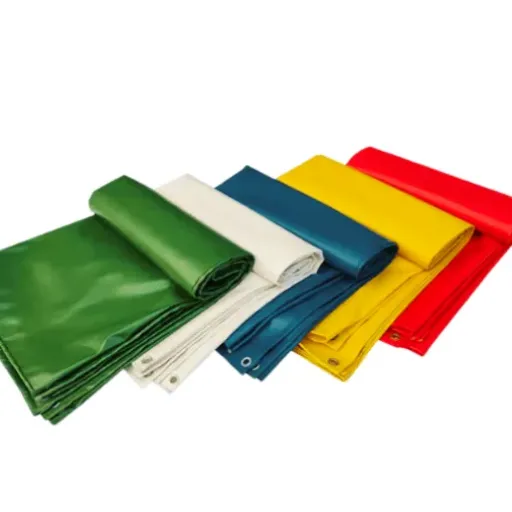
Any supplier can claim their PVC waterproof tarpaulin is “high quality.” Certifications prove it. Here are the standards serious buyers should verify before placing orders. For a broader overview of selection criteria, see our complete tarpaulin buyer’s guide.
ISO 9001 and Manufacturing Quality
ISO 9001:2015 certification indicates a manufacturer follows documented quality management systems. It doesn’t guarantee product quality, but it does mean the factory has processes for consistency, traceability, and continuous improvement. Request the certificate number and verify it through the issuing body’s online database.
REACH and RoHS Compliance
REACH (Registration, Evaluation, Authorisation and Restriction of Chemicals) and RoHS (Restriction of Hazardous Substances) regulate chemical content in products sold in the European Union. Even if you don’t export to Europe, these certifications indicate responsible formulation practices. Look for:
- Phthalate-free or 6P-free plasticizers
- Cadmium-free stabilizers
- Heavy metal testing per EN 71-3 for applications involving children or food contact
Flame Retardant Standards
For construction, military, and event applications, flame retardancy is often legally required. Different markets recognize different standards:
| Standard | Region | Application |
|---|---|---|
| NFPA 701 | United States | Fire safety for textiles and films |
| BS 5867 / BS 7837 | United Kingdom | Flame-resistant fabrics for curtains and drapes |
| B1 / B2 / M2 | Europe | European fire classification system |
| GB/T 5455 | China | Chinese flame resistance testing |
Red flag: Some suppliers treat standard PVC with surface flame retardants that wash off or degrade within months. Demand documentation showing the flame retardant is integrated into the PVC formulation, not just applied as a coating.
UV Resistance Testing
ISO 4892-2 specifies xenon arc exposure testing for weathering resistance. Reputable manufacturers test samples for 1,000 to 2,000 hours and report the percentage of original tensile strength retained. Anything above 80% retention after 1,000 hours indicates quality UV stabilization. We value your feedback! Get in touch with us to share your thoughts or ask for help.
How to Choose the Right PVC Waterproof Tarpaulin
Selecting the right PVC waterproof tarpaulin requires matching specifications to your specific application. Follow this five-step framework.
Step 1: Define Your Application and Environment
Start with the basics. What are you covering? For how long? Under what conditions?
- Climate: Tropical humidity demands anti-mildew additives. Desert sun requires maximum UV stabilization. Freezing temperatures need cold-flexible plasticizers.
- Duration: Temporary covers (under 6 months) can use lighter grades. Permanent installations need heavy-duty specifications.
- Mechanical stress: Wind exposure, abrasion from contact, and tension from fastening all affect required strength.
- Chemical exposure: Agricultural chemicals, industrial solvents, or salt air near coastlines require specialized formulations.
Step 2: Determine Required GSM and Thickness
Use the grade table from the specifications section above as a starting point, then adjust for your specific risk tolerance. When in doubt, spec up one grade. The cost difference between 550 GSM and 650 GSM is typically 10% to 15%. The performance difference in harsh conditions can be 50% or more in lifespan.
Step 3: Evaluate Seam Quality
This step separates professional-grade products from commodity tarpaulins. Always specify welded seams for waterproof applications. Two welding methods dominate:
High-Frequency Welding: Uses electromagnetic energy to melt PVC at the joint, creating a molecular bond as strong as the base material. Ideal for straight seams and large covers.
Hot-Air Welding: Uses heated air to soften overlapping PVC layers before pressing them together. More versatile for complex shapes and field repairs.
Both methods achieve seam strengths of 70 to 100 N/5cm — far superior to stitched seams that typically achieve 30 to 50 N/5cm and leak at every needle hole.
Step 4: Verify Additives and Treatments
Match additives to your environment:
- UV stabilizers: Essential for any outdoor application exceeding 3 months
- Anti-mildew agents: Required for humid climates and agricultural use
- Flame retardants: Mandatory for construction, events, and regulated facilities
- Anti-static treatments: Important for explosive environments and fine powder handling
Step 5: Request Samples and Test Data
Never commit to a bulk order without physical samples. Test for:
- Flexibility at your lowest expected temperature
- Water resistance under realistic conditions (spray test, not just specification review)
- Color consistency if ordering multiple batches
- Seam strength by attempting to pull welded joints apart
Budget Planning: Cost Per Square Meter by Grade
While prices fluctuate with raw material costs, here’s a general framework for budgeting:
| Grade | Price Range (USD/m²) | Lifespan (years) | Cost Per Year (USD/m²) |
|---|---|---|---|
| Light-Duty (300-450 GSM) | 1.50−2.50 | 2-4 | 0.38−1.25 |
| Medium-Duty (450-650 GSM) | 2.50−4.00 | 5-8 | 0.31−0.80 |
| Heavy-Duty (650-900 GSM) | 4.00−6.50 | 8-15 | 0.27−0.81 |
| Extra Heavy-Duty (900+ GSM) | 6.50−10.00 | 12-20 | 0.33−0.83 |
Notice the cost-per-year curve. Medium-duty and heavy-duty grades typically deliver the best long-term value. Light-duty saves money upfront but requires frequent replacement. Extra heavy-duty is only cost-effective when the application genuinely demands maximum durability. Contact our team for a free consultation and sample request.
Supplier Evaluation Checklist
Before placing an order with any PVC waterproof tarpaulin manufacturer, verify:
- ISO 9001 certification is current and verifiable
- Product test reports are available for the exact GSM and specification you need
- Samples match the specification sheet in weight, thickness, and feel
- Seam welding method is documented and demonstrated
- Delivery timeline is guaranteed in writing with penalty clauses
- Custom sizes and colors are available without excessive minimum order quantities
- After-sales support includes replacement for manufacturing defects
Need help specifying the right grade for your project? Contact our team for a free consultation and sample request. We produce PVC tarpaulin sheet solutions tailored to exact specifications, with no minimum order quantity for standard grades.
Maintenance and Care: Extending Tarpaulin Lifespan

Even the best PVC waterproof tarpaulin degrades without proper care. Simple maintenance routines can extend service life by 30% to 50%.
Cleaning Best Practices
Clean PVC tarpaulin every 3 to 6 months, or more frequently in dusty or polluted environments. Use mild soap and water with a soft brush. Avoid harsh detergents, solvents, and abrasive scrubbers that damage the PVC surface and accelerate UV degradation. Rinse thoroughly and allow complete drying before storage.
For agricultural applications where chemical residues accumulate, neutralize acidic or alkaline deposits with a baking soda or diluted vinegar solution before soap washing.
Proper Storage Techniques
When not in use, store PVC waterproof tarpaulin in a cool, dry place away from direct sunlight. Roll rather than fold to prevent crease stress. If folding is necessary, vary fold lines between storage cycles. Never store wet — trapped moisture breeds mold that stains and weakens the material.
Inspection Schedule and Repair
Inspect covers monthly during active use. Check for:
- Abrasion wear at contact points and fastening locations
- Seam integrity, especially at corners and stress points
- Grommet condition and attachment strength
- Surface cracking, discoloration, or stiffness indicating UV degradation
- Accumulated debris that traps moisture against the surface
When to Replace: Warning Signs of Degradation
Replace PVC waterproof tarpaulin when you observe:
- Surface cracking or crazing that exposes the base fabric
- Loss of flexibility — material that won’t bend without cracking
- Seam separation or grommet pull-through
- Permanent discoloration indicating UV stabilizer depletion
- Water penetration during rain that wasn’t occurring previously
Most quality PVC waterproof tarpaulin shows gradual degradation rather than sudden failure. Regular inspection catches problems before they compromise protection.
Conclusion
PVC waterproof tarpaulin represents the professional standard for applications where water protection, durability, and long-term value matter. Unlike cheaper alternatives that require frequent replacement, quality PVC tarpaulin delivers reliable performance for 5 to 15 years with proper specification and maintenance.
The five principles every buyer should remember:
- True waterproofing comes from material architecture, not surface treatment — the polyester-PVC composite and welded seams create the barrier
- GSM matters, but formulation matters more — a well-specified 550 GSM product outperforms a poorly made 750 GSM alternative
- Welded seams are non-negotiable for any application requiring reliable waterproofing
- Total cost of ownership beats upfront price — calculate cost per year, not cost per square meter
- Certifications prove claims — ISO 9001, REACH, and application-specific standards separate professionals from pretenders
The growth rate of the global market for PVC tarpaulins is 4.7% to 6.5%. A lot of this is achieved thanks to the progress of construction coming in; increase in agricultural modernization and logistics as well. As the need for these tarps grows, there is a major disparity between the top notch suppliers and those who deal in common products. Sensible customers know precisely what they want in a product. They want all kinds of written proof as well. They also want test samples of products before they make an order. For these reasons, they are able to acquire better products and services at surprisingly low costs.
At Linyi Chenlai Plastic Products Co., Ltd., we manufacture PVC waterproof tarpaulin for clients across more than 50 countries. Our facilities handle standard tarpaulin rolls. We also produce fully customized solutions. Specialized additives, colors, and dimensions are all available. Every batch undergoes the quality testing protocols described in this guide.
Ready to specify your PVC waterproof tarpaulin? Request a sample or quote today. Our team will help you match the right grade, GSM, and features to your exact application — ensuring you get the protection you need at the lowest possible cost per year of service.