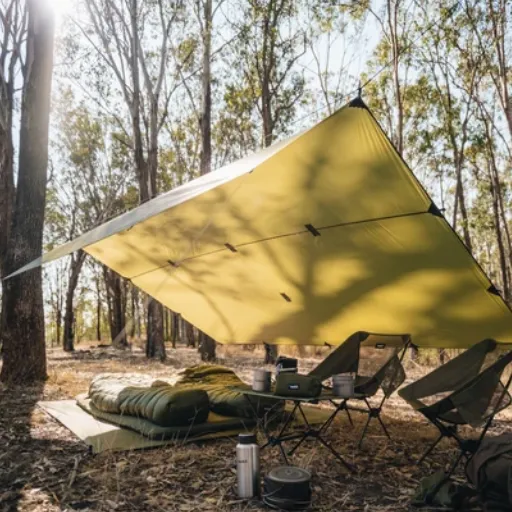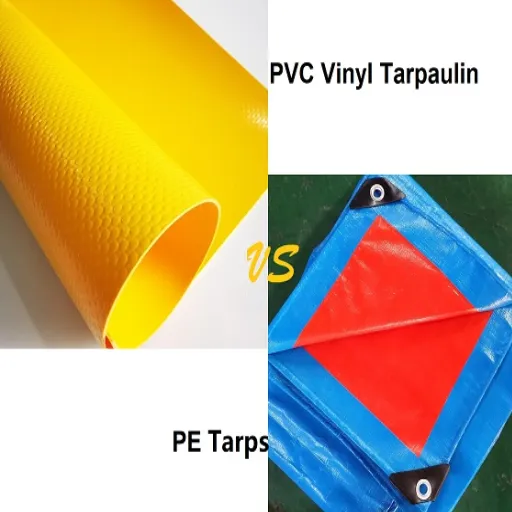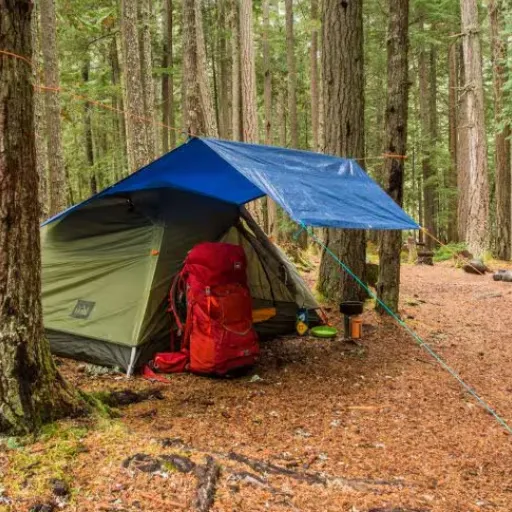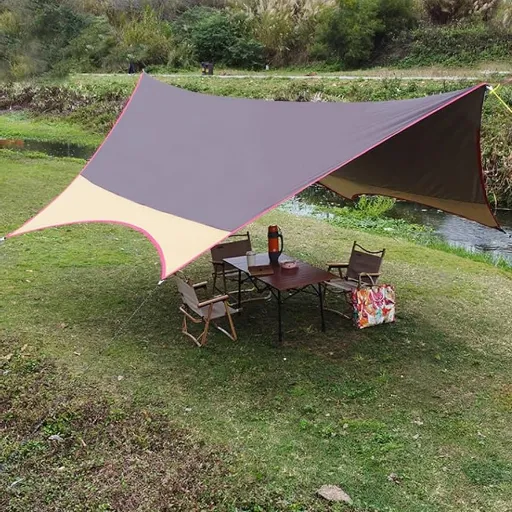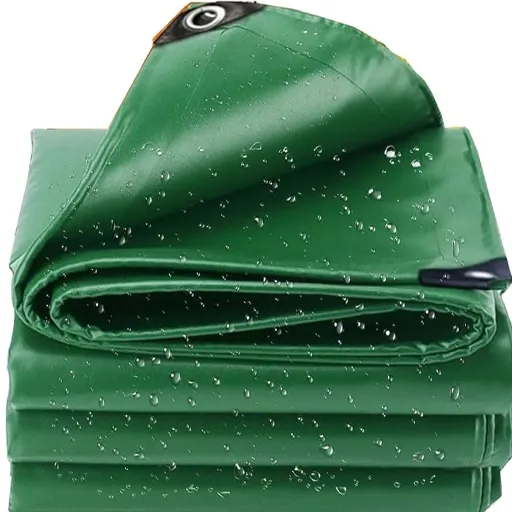
A waterproof canvass is a waxd or stuck fabric where different layers are glued together consisting tripically two layers of PVC or polyethylene that have hydrostatic head rating greater than allows water to get through permanently rather than just simply allow the surface droplets to get absorbed. Their suitability for your requisite is based on three quantifiable factors, namely, the fabric, GSM(Grams Per Square Metre), and the stitch
Last spring, when we were building close to Hangzhou, 6 cargo weight bags of cement froze one rainy weekend. The ‘water resistant’ tarpauline that covered them had the words ‘100% waterproof’ inscribed and for this reason, the manager – Mr. Wang thought that was waterproof. Three months later, the seams of this waterproof cloth had come unstuck, thus customers were left reeling with losses exceeding forty thousand and the only company remedial action was to offer similar product at no extra charges.
Mr. Wang’s experience is more common than the industry likes to admit. Many products marketed as a waterproof tarpaulin meet only the loosest definition: a 1,500 mm hydrostatic head test that passes a brief shower but fails under sustained rain or pooling water. As a manufacturer, we see returns and warranty claims tied to these specifications all the time.
We have prepared this guide that contains the unusual aspects of waterproof tarpaulins, answers to some questions, and sets forth material specifications for waterproof tarpaulins in a sequence that distortion folding of the content is minimized. This guide is intended to help inform clients who use tarpaulins if they have to make a purchase or if they are doing a performance evaluation of the existing tarpaulins. Indeed, if any client provides LLINs, he / she is likely to ask many questions especially during the inspection and acceptance stages. We will at the end make sure that all the questions asked within this LLINs corresponding guide are answered.
For personalized assistance or more details, please contact us via our support page.
Key Takeaways
- A genuine waterproof tarpaulin holds a hydrostatic head of at least 1,500 mm; for sustained outdoor use, look for 5,000 mm or higher.
- PVC waterproof tarpaulins (450–1,100 GSM) deliver the longest field life and weldable seams; PE waterproof tarpaulins (90–300 GSM) cost less but degrade faster without UV inhibitors.
- Seam construction matters as much as material: RF-welded seams outperform stitched or heat-sealed seams under load.
- GSM should be selected by use case, not assumed. A greenhouse cover needs 180 GSM PE; a construction stockpile cover needs 610 GSM PVC.
- Always specify hydrostatic head, tensile strength, grommet pitch, and certification requirements in the RFQ. Vague specs invite vague products.
What Is a Waterproof Tarpaulin?
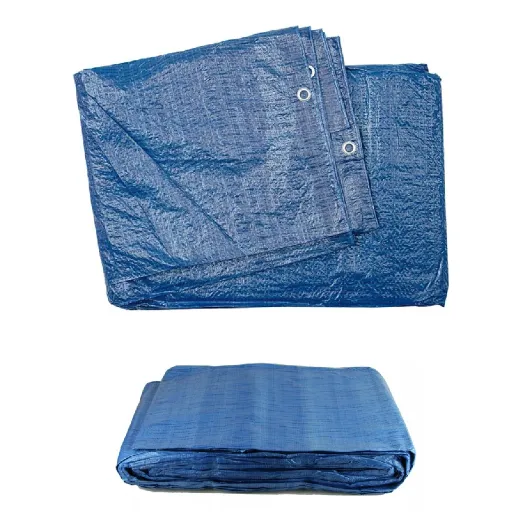
Manufacturers of waterproof products produce tarps with fabrics that have specific waterproofing values warrantied in terms of various intensities of pressure in a water column. This kind of tests uses a principle of the water resistance of the fabric to measure performance under varying pressure. For instance, hydrostatic pressure is a test that determines a fabrics water resistance by withstanding the pressure of standing water, taking a water column as an example. Such methods are incorporated into other methods of testing in such a way that you may find the categorization of tarpaulins into waterproof classes defined as are other waterproof outdoor products like certain praising schemes.
- 1,500 mm hydrostatic head: minimum waterproof rating; handles light rain.
- 5,000 mm hydrostatic head: fully waterproof for sustained rain.
- 10,000 mm and above: handles prolonged immersion-grade exposure.
It is essential to note that materials that are below or equal to 1,500 millimeters of water column are considered water-resistant and not waterproof, regardless of any waterproof claim. You should recall that a water-resistant canvas allows water droplets to roll off it, a waterproof canvas prevents some water from entering its body. The two terms become highly relevant when you are about to protect a million yuan’s worth of building materials or a season’s grain crop that has been harvested. We value your feedback! Get in touch with us to share your thoughts or ask for help.
Waterproof vs. Water-Resistant
| Property | Water-Resistant Tarpaulin | Waterproof Tarpaulin |
|---|---|---|
| Hydrostatic head | < 1,500 mm | ≥ 1,500 mm (5,000+ mm preferred) |
| Holds standing water | No, weeps under pressure | Yes |
| Seam treatment | Often stitched only | RF welded or heat-sealed |
| Typical material | Untreated woven PE | Coated PVC, laminated PE |
| Use case | Light rain, short duration | Sustained outdoor exposure |
If a supplier quotes you “waterproof” without a hydrostatic head number, that is your first red flag. Reputable manufacturers test every batch. We will cover what to ask for in your RFQ later in this guide. To see how Chenlai documents these specs, you can explore our heavy-duty tarpaulin range for sample test reports.
Waterproof Tarpaulin Materials Compared
Three materials dominate the waterproof tarpaulin market. Each has a clear performance window. Choosing well starts with matching the material to the operating environment, not the lowest unit price.
PVC Waterproof Tarpaulin
PVC is the industry workhorse for demanding applications. A PVC waterproof tarpaulin is built by laminating or coating polyester scrim with plasticised PVC compound, then calendering it to a uniform thickness. Typical weight ranges run 450 to 1,100 GSM, with 510 GSM and 650 GSM the most common workhorse weights for trucking and construction.
Strengths:
- True 100% waterproof barrier; hydrostatic head commonly 5,000 to 10,000 mm.
- RF-weldable seams; no needle holes to leak.
- Tensile strength typically 2,000+ N per 5 cm strip.
- Service life of 5 to 10 years outdoor with UV inhibitors.
Tradeoffs:
- Heavier than PE, so more shipping cost per square metre.
- Higher unit cost.
- Plasticiser composition matters for compliance (REACH, RoHS, Prop 65).
PVC is the right call when failure costs more than the tarpaulin: industrial covers, truck side curtains, multi-year construction enclosures, livestock shelters.
PE / Poly Waterproof Tarpaulin
A PE waterproof tarpaulin uses woven HDPE tape laminated on both sides with LDPE film. Weight ranges from 90 to 300 GSM, with 180 GSM the volume sweet spot for general use.
Strengths:
- Lightweight, easy to handle and ship.
- Fully waterproof when new; hydrostatic head typically 2,000 to 3,000 mm.
- Lower unit cost; ideal for high-volume or single-season use.
- Recyclable end-of-life through standard polyethylene streams.
Tradeoffs:
- Shorter outdoor life (1 to 3 years typical without UV stabilisers).
- Less tear resistance than PVC.
- Stitched seams can develop pinhole leaks at the needle holes.
PE earns its place in agriculture covers, packing protection, disaster relief, and any application where the tarpaulin is consumable rather than capital equipment.
Coated Canvas Waterproof Tarpaulin
Traditional canvas waterproof tarpaulins use cotton or poly-cotton fabric treated with wax, acrylic, or silicone-based water-repellent coatings. They are heavier than PVC at equivalent areas, breathable, and aesthetically warm. Have inquiries? Reach out to us, and we’ll be happy to assist you with any concerns.
Strengths:
- Breathable surface reduces condensation under the cover.
- Familiar look for outfitters, market stalls, and historical-style applications.
- Repairable and re-treatable.
Tradeoffs:
- Coating wears off; periodic re-treatment needed.
- Heavy when wet, slow to dry.
- Not as waterproof as laminated PVC under prolonged rain.
For most B2B tarpaulin buyers, canvas is a niche choice. The volume market is split between PVC and PE.
How Waterproof Tarpaulins Are Manufactured

Most buying guides skip this section because most buying guides are not written by manufacturers. The way a waterproof tarpaulin is built decides how long it lasts, and the cheapest products typically cut corners in places you cannot see from a sample swatch. For a deeper look at our production environment, see our tarpaulin factory page.
Calendering and Lamination
The process of calendering is used for PVC in which the PVC compound is fed into the hot rollers centrally and squished on to the polyester scrims. Both the gap between the rollers and the temperature play an important role in obtaining the final desired thickness as well as assuring uniform thickness. For nosotros sizing, keep in mind that a thin area even as low as externally 5% can lead to the drop in hydrostatic pressure. Controlled rolls are further measured for thickness while the product is in the process of being bulit (sic).
As for polyethylene, the process involves pressing temperature lashes of LDPE over a woven polyethylene cloth. The bond between the polyethylene film and the cloth fabric as well as the treatment process covers the crevices ensuring a moisture resistant cefs of the specified damp. In case there is a deviation in the lamination temperature, the bond breaks and the tarp actually starts to swell in the laminate or in some other areas after about three months.
We’re here to help! Feel free to contact our team for more information or support.
Seam Construction
This is where field failures most often start. A waterproof tarpaulin is only as waterproof as its seams.
- RF (radio frequency) welded seams: the gold standard for PVC. The seam is melted molecularly and is as strong as the parent material. No needle holes.
- Heat-sealed seams: hot-air or hot-wedge welding for PE. Reliable when temperature and dwell time are controlled.
- Double-stitched seams: traditional construction. Strong mechanically, but every needle hole is a potential leak point unless tape-sealed.
When Mr. Wang’s tarpaulin failed in Hangzhou, the failure mode was almost certainly a stitched seam where the needle holes were never sealed. The fabric stayed waterproof; the seams did not.
Reinforcement and Quality Checkpoints
The hem, the corner reinforcement, and the grommet pattern all carry load. A thin hem with sparse grommets concentrates stress at each tie-down point and rips out under wind loading. Our standard heavy-duty specification uses a folded webbing-reinforced hem with brass grommets every 50 cm or 100 cm, depending on intended use.
A reputable waterproof tarpaulin manufacturer runs at least four checkpoints:
- Incoming material: scrim weight, polymer melt index, plasticiser purity.
- Inline thickness: every roll measured, drift triggers stop and recalibration.
- Hydrostatic head testing: batch sample tested before release.
- Finished goods: dimension, grommet count, seam integrity, packaging spot-check.
If a supplier cannot show you these reports, walk away. A few hundred yuan of audit time saves the kind of loss Mr. Wang took.
Want to see real test data? We are happy to share batch hydrostatic head reports and tensile certificates for any of our waterproof tarpaulin SKUs. Request a sample and test report →
Choosing the Right GSM and Thickness
GSM tells you how much material is in a square metre of tarpaulin. Higher GSM generally means a thicker, heavier, longer-lasting product, but only up to the point where it matches your real load and lifespan needs. Over-spec’ing wastes money on shipping; under-spec’ing wastes money on early replacement.
Use this table as a starting point. For deeper guidance on dimensions and roll quantities, see our tarpaulin sheet sizing guide.
| Application | Recommended Material | Recommended GSM | Typical Service Life |
|---|---|---|---|
| Greenhouse cover | PE laminated | 180 GSM | 1 to 2 years |
| Hay and grain stack cover | PE or PVC | 200 to 400 GSM | 2 to 4 years |
| Truck and trailer cover | PVC | 610 to 900 GSM | 5 to 8 years |
| Construction stockpile cover | PVC | 510 to 650 GSM | 4 to 6 years |
| Outdoor event tent | PVC fire-retardant | 650 to 900 GSM | 5 to 10 years |
| Disaster relief shelter | PE laminated | 200 GSM | 6 to 18 months |
| Marine deck cover | PVC marine-grade | 900+ GSM | 5 to 8 years |
| Truck side curtain | PVC laminate | 900 to 1,100 GSM | 7 to 10 years |
When Lin, a greenhouse operator we worked with in Shouguang, switched from a 100 GSM PE film to a 180 GSM laminated waterproof tarpaulin, his cover life jumped from one season to nearly three. The film cost was higher, but his per-season cover budget dropped 40%. Heavier is not always better; correctly specified is.
Key Applications for Waterproof Tarpaulin
A waterproof tarpaulin earns its keep across very different environments. The same material principles apply, but the priorities shift.
Agriculture and Greenhouse Covers
Crop covers, hay stack covers, and greenhouse film all rely on a waterproof tarpaulin to protect against unseasonal rain and condensation. Light is sometimes a factor (translucent film for greenhouses; opaque covers for grain).
According to the FAO, post-harvest losses in humid climates can exceed 20% without proper crop protection. Even modest covers pay for themselves in a single season. Our tarpaulin for agriculture range is engineered for these humidity and UV conditions.
Construction Site Protection
Waterproof sheets tend to be employed on sites for covering items, passing through scaffolds less early stairs and walls. Fire-resistant linings are seen in sites where burning, welding, or hot work is in progress. The inceptive case of Mr. Chai Wei suggests that a two-pronged approach needs to be adopted to prevent roofing-like challenges: the use of 510+ GSM PVC tarps, which are especially manufactured using RF welding and with a provision of grommets made of brass every 50 cm.
Truck and Trailer Covers
As far as tarpaulin uses go, verandah covers and sidewalls of an awning are the objects of the highest loads and impacts because they have to endure repeated flexing, various ultraviolet effects, dirt from the sky and abrasives from the road below causing some tension in the material implanted in them. Standard fabrics are PVC and have a minimum mass per square area of 900 grammes. Special emblems or the use of there reflective elements quite often can also be seen.
Outdoor Events and Temporary Shelters
Event tents, market canopies, and pop-up shelters rely on waterproof tarpaulin roofing for safety. Fire-retardancy certifications (DIN 4102, NFPA 701) are often legally required.
Disaster Relief and Emergency Roofing
Lightweight 200 GSM laminated PE waterproof tarpaulin is the dominant product in humanitarian use. The priorities are weight (for airlift), packaging density, and reasonable durability for 12 to 18 months of service. UNHCR, IFRC, and similar bodies publish specifications for this category.
If you have any questions or need further assistance, don’t hesitate to get in touch with us.
How to Specify Waterproof Tarpaulin for an RFQ
Vague specifications are the single biggest cause of disputes between buyers and tarpaulin suppliers. The fix is a structured request that pins down every variable. Here is the seven-point checklist we recommend buyers send to any waterproof tarpaulin supplier they are evaluating.
- Material and GSM: state both (e.g., “PVC laminated, 650 GSM”), not just “heavy-duty.”
- Dimensions and tolerance: width × length and acceptable ±tolerance (typically ±2%).
- Color, print, and branding: specify Pantone or RAL where possible. Two-sided print or one?
- Reinforcement: hem type (folded, webbing-reinforced), grommet material (brass preferred), grommet pitch in cm.
- Performance specs: minimum hydrostatic head in mm, tensile strength in N/5cm, UV resistance in months minimum, fire retardancy if required.
- Certifications: REACH, RoHS, DIN 4102, ASTM D751, list whichever your end market requires.
- Packaging, MOQ, lead time: rolled or folded, plastic bag or carton, container loading plan, lead time in calendar days.
A buyer who sends this list signals competence. A supplier who cannot answer all seven points is not ready to take the order.
Care, Storage, and Realistic Lifespan
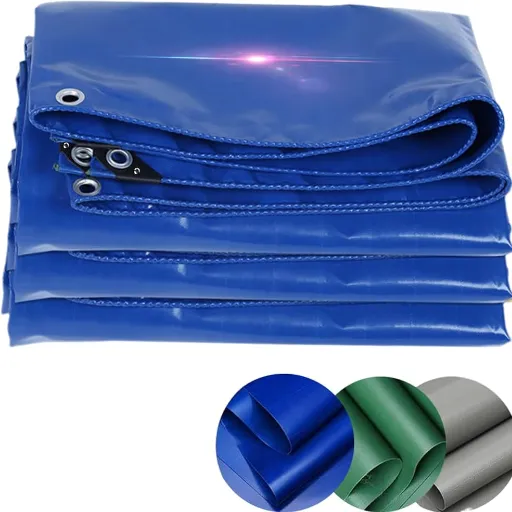
A waterproof tarpaulin’s service life depends as much on how it is used as how it is made. Some practical guidance, drawn from our customer-service files:
- Clean before storage: rinse off salt, fertiliser, and grit; let dry completely. Dirty PVC develops surface staining and accelerates UV damage.
- Fold loosely, never crease repeatedly along the same line: a sharp repeating crease becomes a leak path within months.
- Store off concrete, off direct sunlight: pallet or shelf storage in a covered, dry space.
- Repair early: small tears and pinholes can be welded or patched. Once delamination starts, it spreads.
- Don’t drag: drag damage to the underside is invisible until water finds it.
Realistic lifespan ranges from 1 year (cheap PE in harsh sun) to 10+ years (PVC marine-grade with proper care). Most published “5+ year” claims assume good handling. Train your crews; budget for inspection. Have inquiries? Reach out to us, and we’ll be happy to assist you with any concerns.
Sustainable and Eco-Friendly Waterproof Tarpaulin Options
Sustainability is no longer a marketing add-on. EU and California regulations on PVC plasticisers continue to tighten, and many large buyers (retail, automotive, construction conglomerates) now require eco-friendly materials documentation. We see three paths buyers are taking:
- Recycled-content PVC: post-industrial recycled scrim or PVC compound, typically 20 to 40% recycled content while keeping performance constant.
- Phthalate-free plasticisers: DOTP, DINCH, or bio-based plasticisers replacing DEHP, meeting REACH Annex XVII.
- PE with end-of-life recyclability: PE waterproof tarpaulin can be recycled through standard plastic streams, unlike PVC, when the buyer commits to take-back.
In cases where it is practicable to use the practice, lighter GSM solutions can save material per square meter and shipping CO2 simultaneously. A Grand View Research forecast predicts that the value of the global tarpaulin market will reach almost USD 12bn by the year 2024 and it is moving towards more sustainable options progressively. The providers that leverage this trend are granted the bulk of the long-term deals. We value your feedback! Get in touch with us to share your thoughts or ask for help.
Frequently Asked Questions
Are all tarpaulins waterproof?
No. Many tarpaulins are only water-resistant (hydrostatic head below 1,500 mm) and will weep under sustained rain. A true waterproof tarpaulin is rated, tested, and labelled with a hydrostatic head value.
What GSM is fully waterproof?
GSM and waterproofness are related but separate. A 180 GSM PE laminated tarpaulin can be fully waterproof; a 250 GSM stitched canvas may not be. Look for hydrostatic head and seam construction, not GSM alone.
Which lasts longer, PVC or PE waterproof tarpaulin?
PVC at 510 GSM or above typically lasts 5 to 10 years outdoors; PE at 180 GSM typically lasts 1 to 3 years. PVC is the better long-term value for capital-equipment use; PE is better for short-term, high-volume, or weight-sensitive applications.
Can waterproof tarpaulins be customised in size and colour?
Yes. Most reputable manufacturers, including Chenlai, offer custom dimensions, colours, branded printing, grommet patterns, and corner reinforcement on order. MOQs and lead times vary by specification.
How do I test that a tarpaulin is truly waterproof?
Ask for a current batch hydrostatic head test report. For incoming inspection, the simplest field test is a 24-hour standing-water test on a sample swatch with a 1.5 m water column. No leaks, no weeping = waterproof.
What is the typical lead time for a custom order?
For a standard custom waterproof tarpaulin (size, colour, grommets), 15 to 30 days production is typical. Branded printing or specialty certifications add 5 to 10 days. Container loading and shipping is separate.
Conclusion
A waterproof tarpaulin is not a generic commodity. The label is easy to print; the performance is harder to engineer. Get the three pillars right (material, GSM, and seam construction) and you avoid the kind of failure that cost Mr. Wang ¥40,000 in a weekend.
To recap what matters most:
- Insist on a hydrostatic head specification (1,500 mm minimum, 5,000 mm preferred for sustained outdoor use).
- Match material to lifespan: PVC for capital-equipment applications, PE for high-volume or short-term use.
- Verify seam construction. RF-welded seams outperform stitched seams for any sustained-use scenario.
- Specify GSM by application, not by gut feel. Use the table above as a starting point.
- Send a structured RFQ. A vague request gets a vague product.
If it is not an odd request, would you step in this situation: how to order the waterproof tarp from 6 10 20 custom greenhouse construction tents or 20 40 foot CB from and how to do so in the best possible way, why not the cheapest. Be free to order at special price by sending a request to send price quotation or a free tarpaulin sample – right from the site →, or see in our full tarpaulin guide and other tarps in product range in the meanwhile – what we export and ship to more than 50 nations annually.