A single uncovered load on a rainy highway can destroy thousands of dollars in cargo and trigger fines that exceed the cost of the tarpaulin itself. For fleet managers and owner-operators alike, choosing the right tarpaulin for truck covers is not just about convenience. It is about protecting assets, staying compliant, and running a profitable operation.
You already know that cargo damage hurts your bottom line. What you may not know is how much the right material, size, and installation method can reduce risk and extend the life of your investment. In this guide, you will learn exactly how to select, secure, and maintain the ideal truck tarpaulin for your fleet or vehicle. We will cover material comparisons, sizing formulas, step-by-step securing techniques, legal requirements, and maintenance best practices.
Marcus Chen, a fleet manager based in Guangzhou, learned this lesson the hard way. In early 2025, he outfitted twelve flatbed trucks with low-cost polyethylene tarps to save on upfront costs. Three months later, a sudden storm on the Shenzhen highway ripped three tarps loose and soaked a shipment of industrial electronics. The repair bill, cargo claim, and delayed delivery penalties cost his company nearly $18,000. A single set of properly fitted PVC truck tarpaulins would have prevented the entire disaster.
Why Tarpaulin Protection Matters for Truck Operations
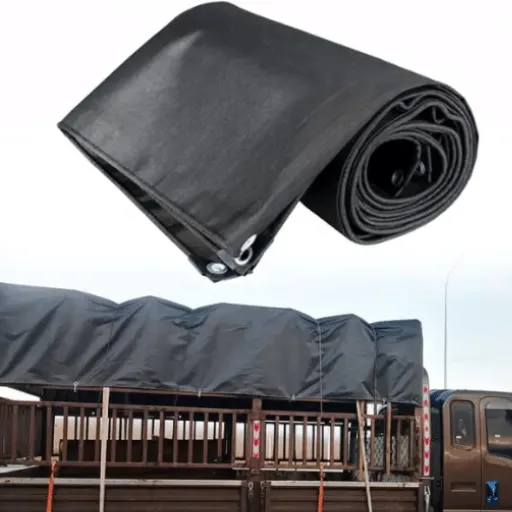
Every day, open trucks move goods through weather, road debris, and strict regulatory checkpoints. Without proper coverage, even short hauls become high-risk propositions. Water damage, UV exposure, and flying debris can ruin cargo before it reaches its destination.
Its economic impact extends far beyond the goods themselves. According to Business Research Insights, the global truck tarpaulin market is projected to reach approximately $1.53 billion in 2025, with a compound annual growth rate of 6.5%. This growth reflects the increasing demand from industries such as logistics, construction, and agriculture. It also indicates that more and more operators are investing in professional-grade tarpaulins, rather than viewing them as optional consumables.
For your business, the right tarpaulin for truck covers delivers three core benefits. First, it protects cargo quality and customer relationships. Second, it keeps you compliant with transportation safety laws that carry steep fines. Third, it reduces long-term costs by lasting years instead of seasons.
Choosing the Right Truck Tarpaulin Material
Not all truck tarpaulins are built the same. The material you choose determines waterproofing, UV resistance, weight, handling ease, and lifespan. Understanding the differences between PVC-coated polyester, polyethylene, and mesh tarpaulin will help you match the product to your specific hauling needs.
PVC-Coated Polyester: The Heavy-Duty Standard
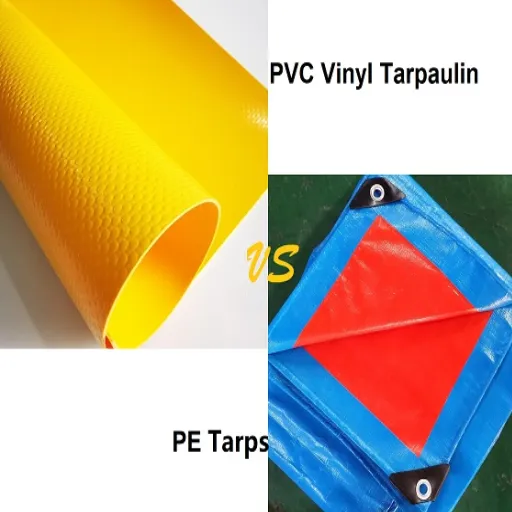
PVC-coated polyester is the industry benchmark for professional trucking. It combines a woven polyester scrim with layers of polyvinyl chloride to create a fabric that resists tearing, puncturing, and abrasion.
This material is fully waterproof and maintains flexibility in temperatures ranging from -20°C to 70°C. It also offers superior UV resistance, which prevents brittleness and fading after prolonged sun exposure. For operators hauling weather-sensitive cargo over long distances, PVC truck tarpaulin is the most reliable choice.
A well-made PVC tarpaulin typically lasts between five and ten years with proper care. It supports heavy-duty hardware like welded D-rings and reinforced grommets, which are essential for secure fastening on flatbeds and dump trucks. Many PVC options also come with flame-retardant coatings, making them suitable for transporting hazardous materials.
If you are looking for maximum durability and weather protection, explore our heavy-duty tarpaulin options designed specifically for demanding transport applications.
PE (Polyethylene): The Budget Option
Polyethylene, or PE, tarpaulins are lightweight, easy to handle, and significantly cheaper than PVC alternatives. They work well for light-duty applications, short local hauls, and emergency covers where longevity is not the top priority.
However, PE tarps come with clear limitations. They are water-resistant rather than fully waterproof, and prolonged exposure to heavy rain or pooling water can eventually seep through seams and coatings. UV resistance is moderate at best. After one to three seasons of constant sun, PE tarps often become brittle, fade, and develop tears.
For occasional use or temporary coverage, PE is a practical choice. For daily operations, professional fleets, or long-haul transport, the frequent replacement costs of PE usually outweigh the initial savings.
Mesh Tarpaulin: Breathable Cargo Protection
Mesh tarpaulin is a specialized option made from woven polyethylene or vinyl with deliberate gaps that allow airflow. It is not waterproof, but it excels at preventing wind flap and reducing aerodynamic drag.
This makes mesh ideal for hauling aggregates like sand, gravel, and demolition debris. Dump trucks commonly use 10-ounce mesh tarps to comply with debris containment laws while minimizing the sail effect that solid tarps create at highway speeds. Some mesh options also feature fine-weave designs that provide partial rain protection for less sensitive loads.
Material Comparison at a Glance
| Feature | PVC-Coated Polyester | PE (Polyethylene) | Mesh Tarpaulin |
|---|---|---|---|
| Waterproofing | 100% waterproof | Water-resistant | Not waterproof |
| UV Resistance | Superior | Moderate (1-3 seasons) | Good |
| Lifespan | 5-10 years | 1-3 years | 3-5 years |
| Weight | Heavy (500-900+ gsm) | Light (70-260 gsm) | Light |
| Best For | Weather-sensitive cargo, long haul | Budget, short haul, emergencies | Aggregates, debris, ventilation |
Finding the Perfect Size and Specifications
Choosing the right dimensions is just as important as choosing the right material. A tarp that is too small leaves cargo exposed and risks regulatory fines. A tarp that is too large creates excess flapping material that tears in the wind and wears prematurely.
Standard Sizes by Truck Type
Flatbed and lumber tarps are the most common configurations in general freight. The industry-standard size for lumber loads is a 24-by-27-foot tarp with an 8-foot drop and rear flaps. This size covers approximately 95 percent of standard lumber and general flatbed loads. Steel tarps, which are designed for lower-profile metal loads, typically measure 16 by 20 feet.
Dump trucks require tarps that match bed length and width while allowing for the curved profile of loaded material. Common dump truck tarpaulin sizes range from 7 by 16 feet to 8 by 24 feet. Automatic roll systems are increasingly popular for dump trucks because they reduce manual handling and improve consistency.
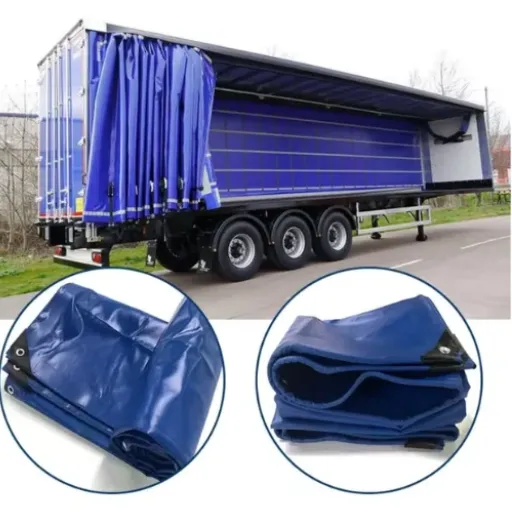
Curtainside trailers require a different approach entirely. Instead of a single throw-over tarp, they use custom-welded panels fabricated from 3.2-meter fabric rolls. These panels are precision-cut to match trailer dimensions and welded into seamless sheets that attach to sliding rail systems.
Understanding GSM and Denier
GSM, or grams per square meter, measures fabric weight and density. Denier, expressed as a “D” rating, measures the thickness of the individual fibers in the woven scrim. Both numbers matter when evaluating a truck tarpaulin.
The industry sweet spot for most commercial flatbed and dump truck applications is 600 to 750 GSM. Specifically, a 650 GSM fabric with a 1000D by 1000D polyester base has become the most popular specification among fleets worldwide. It offers an excellent balance of strength, durability, and handling weight.
Beware of products that advertise high GSM but use weak scrim fibers. A 750 GSM tarp with a low-denier base can tear more easily than a 650 GSM tarp with a 1000D reinforcement. Always evaluate both metrics together.
For transport operators in extreme climates or heavy-abrasion environments, 850 to 1100 GSM options provide extra thickness and protection. However, they are heavier to handle and typically cost more per square meter.
If you need customizable tarpaulin sheets cut to precise fleet dimensions, our manufacturing team can match your exact specifications.
How to Secure a Tarpaulin on a Truck: Step-by-Step
Even the best truck tarpaulin will fail if it is not secured properly. Wind lift, road vibration, and sudden stops all place stress on tie-down points. Learning how to secure a tarpaulin on a truck correctly protects your cargo, your tarp investment, and the drivers around you.
Pre-Trip Preparation
Start by inspecting the tarpaulin, straps, and grommets before every load. Look for tears, frayed edges, worn stitching, or rusted hardware. Check ratchet straps and bungee cords for cracks, corrosion, or weakened elastic. Replace any damaged equipment immediately.
Clean the truck bed of debris, dirt, and sharp objects that could puncture the tarp from below. If your cargo has sharp corners, place edge protectors or padding over them before draping the tarp. Many tarp failures begin at a sharp corner, not from the fabric itself.
Gather your securing hardware before you start. You will need ratchet straps for primary tension, bungee cords or rubber tarp straps for flexible edge hold-downs, and ball bungees for managing excess material.
The Front-to-Back Securing Method
Always drape the tarp from the front of the truck bed first. This prevents wind from catching underneath the material while you are still working. Center the tarp so equal amounts hang down on both sides, and make sure the highest points of the load are fully covered.
Secure the front grommets or D-rings to the truck chassis first. Use a diagonal crossing pattern with your straps to prevent the front edge from shifting forward under wind pressure. The front edge should overlap the cab area by at least 18 inches and angle slightly downward to deflect airflow.
Next, work systematically down both sides from front to rear. Attach tie-downs to every grommet or D-ring, spacing them approximately every two to three feet. Use criss-cross patterns with ratchet straps to distribute tension evenly across the load surface. The tarp should be taut and flat, but not stretched to the point of stressing the grommets.
The rear of the truck is the most vulnerable area for wind infiltration. Pull the rear section as tight as possible and use the triangle method for corners. This means creating three separate attachment points at each corner to distribute stress and prevent tearing. Double-strap the rear if necessary.
Finally, fold and tuck any excess material neatly along the sides. Secure folded sections with additional ball bungees or short straps so they cannot flap in the wind. Flapping is one of the fastest ways to wear through even heavy-duty fabric.
Elena Rodriguez, an owner-operator from Mexico City, used to struggle with torn tarps every six weeks on her construction material route. After switching to a front-to-back securing routine with diagonal front straps and corner triangle tie-downs, her tarps now last nearly two years. “The difference was not the tarp,” she says. “It was the system I used to put it on.”
High-Wind and In-Transit Safety
The main cause of tarp failure on the road is wind getting underneath and creating lift. Minimize airflow by sealing gaps, securing bottom edges tightly to the frame, and using side flaps or drop tarps when available.
Before driving, walk around the truck and test every strap and corner by hand. Simulate wind resistance by pulling firmly on the fabric. After 15 to 30 minutes of driving, stop and re-inspect. Road vibration often causes straps to loosen during the first stretch of highway.
In high winds, reduce your speed and avoid sudden lane changes. Bridges and open highways create the strongest crosswinds. If conditions become severe, pull over and check tension before continuing.
Legal Requirements and Safety Regulations
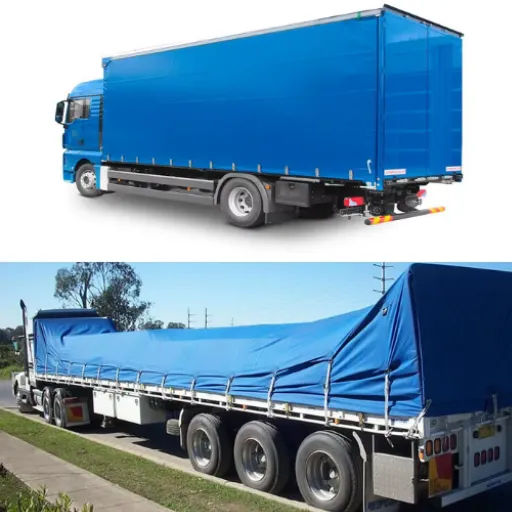
Cargo securement is not optional. In most jurisdictions, uncovered or improperly secured loads carry significant fines and liability risks. Understanding the regulations that apply to your routes helps you avoid penalties and protect public safety.
United States DOT and FMCSA Rules
In the United States, the Federal Motor Carrier Safety Administration requires that all cargo be properly secured so that no material can escape from the vehicle. Open-top trucks carrying dirt, gravel, sand, or refuse must use a close-fitting tarpaulin or equivalent cover. Fines for non-compliance can exceed $1,000 per violation, and liability for road debris damage can run much higher.
Individual states may impose additional requirements. California, for example, has strict particulate matter regulations that affect uncovered aggregate loads. Always verify state-level rules for the jurisdictions you operate in.
European Union Standards
In the European Union, curtainside tarpaulins must meet EN 12641 standards for strength and tear resistance. These specifications define minimum performance levels for curtain fabrics, hardware attachment points, and seam welding quality. Trucks operating across EU borders should carry documentation proving compliance.
Asia-Pacific Regulations
Many countries in the Asia-Pacific region, including China and Australia, require sealed or close-fitting tarp systems on open trucks. These rules are designed to reduce noise, prevent debris escape, and improve road safety in dense urban traffic. Exporters shipping goods from Chinese ports should ensure their truck tarpaulins meet destination-country standards as well as domestic requirements.
Tarping Safety Risks
Tarping a truck is one of the most common causes of injury in the trucking industry. A 2006 study by the CDC and NIOSH found that 20% of all trucking injuries involved tarps. Common risks include falls from height, muscle strains, cuts from sharp cargo or grommets, and loss of balance in wind or rain.
Best practices for tarping safety include using ladders or mechanical aids rather than climbing on cargo, wearing cut-resistant gloves, using automatic tarp systems where possible, and never working alone on high or uneven loads. For detailed safety procedures, refer to the CDC/NIOSH Tarping Safety Tip Sheet.
Maintenance Tips to Extend Tarpaulin Life
A high-quality PVC truck tarpaulin can last five to ten years. With disciplined maintenance, some fleets achieve seven years or more from a single tarp. The key is regular cleaning, prompt repairs, and proper storage.
Clean and Dry After Every Major Trip
Remove dirt, dust, and chemical residues with mild soap and fresh water. Avoid harsh solvents or stiff brushes that can degrade the PVC coating. After washing, allow the tarp to dry completely before folding or storing. Trapped moisture leads to mold and mildew, which weakens fabric and creates odors.
Inspect Monthly for Wear
Check seams, hems, grommets, and D-rings for signs of stress or corrosion. Look for small tears, punctures, or areas where the coating has worn thin. Catching damage early prevents it from spreading.
Repair Small Tears Immediately
Patch small holes and tears as soon as you find them. PVC tarpaulins can be repaired with hot-air welding kits or specialized adhesive patches. PE tarps can often be patched with tape designed for polyethylene. Do not wait until a small rip becomes a large failure.
Store Properly
Fold tarps neatly and store them in a cool, dry place away from direct sunlight. UV exposure during storage will degrade fabric almost as quickly as UV exposure on the road. Keep tarps off concrete floors, which can draw moisture and promote mildew.
David Okonkwo runs a logistics company in Lagos that specializes in cross-border freight. By enforcing a strict wash-and-inspect protocol every two weeks, his fleet has extended average tarp life from three years to over six years. “The upfront cost of a good PVC tarp is high,” he notes. “But the real savings come from how you take care of it.”
Conclusion
Choosing the right tarpaulin for truck covers comes down to four fundamentals. Match the material to your cargo and climate. Select sizes that fit precisely without excess flapping. Secure every edge using a systematic front-to-back method. And maintain your tarps with regular cleaning, inspection, and prompt repairs.
Get any of these four wrong, and you risk cargo damage, regulatory fines, and shortened tarp life. Get them right, and your tarps become a long-term asset that protects your reputation as much as your freight.
If you are ready to upgrade your fleet coverage, contact us today for a free quote on custom truck tarpaulin solutions. Whether you need standard sizes, tarpaulin rolls for large-scale operations, or specialized PVC coatings for extreme conditions, Linyi Chenlai Plastic Products Co., Ltd. delivers precision-engineered products trusted by businesses in over 50 countries.